
How to Care for Licuala Grandis in Hong Kong | Plantjai


Plantjai 植仔 · Care Encyclopedia
Licuala Grandis
Hong Kong care guide — useful before you buy and after it arrives.
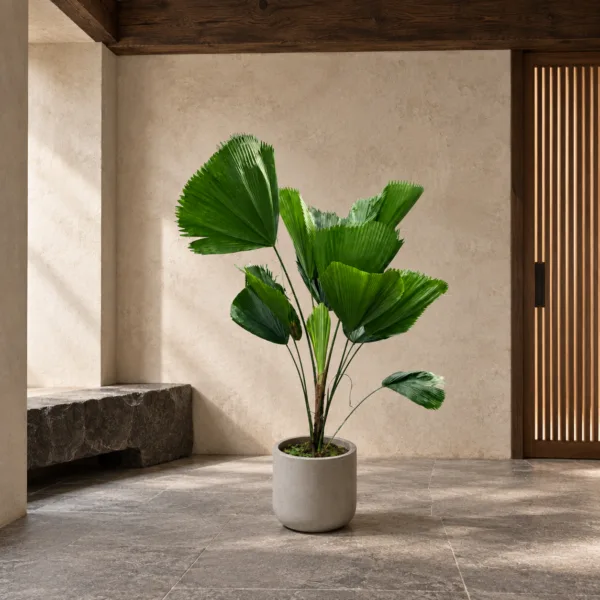
Shop this plantEnormous, perfectly round pleated fan leaves bring instant tropical resort vibes to your living room — a real presence-commander among indoor plants.
Origin & characteristics
- Native range: the tropical rainforests of Vanuatu and the Solomon Islands
- Family/genus: Arecaceae (palm family), genus Licuala
- Growth habit: a single-trunk palm, reaching 3-4.5 metres outdoors, though indoor potted specimens typically stay at 1.5-2 metres
- Leaf characteristics: round, pleated, fan-shaped leaves up to 60 cm in diameter, glossy deep green with distinct pleated texture and wavy leaf margins
- Stem: slender and upright, gradually becoming visible with age, with ring-shaped leaf scars on the surface
- Flowering and fruiting: mature plants produce small pale yellow flowers, followed by small fruit that turns from green to red
- Growth rate: slow, only a few centimetres per year
- Toxicity: non-toxic, safe for pets and children
Light
- Bright indirect light is best, accepting east-, south-, or west-facing windowsill positions
- Avoid harsh direct sun, especially summer midday sun, which scorches the leaves and causes dried, burnt edges
- When grown outdoors, choose a shaded or dappled-shade position
- Young plants are more shade-tolerant and can adapt to lower light conditions; mature plants need more light to stay healthy
- Rotate the pot periodically (90 degrees every 2-3 months) for even light exposure on all sides, avoiding lopsided growth
Watering
- Keep the soil lightly moist, watering once the top 2-3 cm of soil dries out
- Never let the soil dry out completely, but also never let it become waterlogged
- Frequency reference:
- Summer/autumn (growing season): roughly once every 5-7 days (depending on pot size)
- Winter/spring (slower growth): roughly once every 7-12 days, letting the soil dry a bit more before watering
- Water quality recommendation: use room-temperature filtered water or tap water left standing overnight, avoiding mineral buildup
- Notes: drainage holes at the base are essential, and saucer runoff should be discarded after watering
Soil & pot
- Soil recipe: needs to be rich in organic matter while draining well, try — peat soil + perlite + quality potting soil (roughly 1:1:1), or use a dedicated palm/tropical plant soil
- pH: highly adaptable, tolerating acidic to slightly alkaline conditions
- Pot choice:
- Either a terracotta or plastic pot with drainage holes works, ideally with a saucer
- Licuala grandis' roots need room to grow downward, so a deeper pot is recommended
- Repotting: repot every 2-3 years, best done in spring, moving to a new pot 5-8 cm larger in diameter than the current one
Temperature & humidity
- Ideal temperature: 21-30°C, with the optimal range around 25-28°C
- Minimum temperature: shouldn't stay below 15°C for extended periods; mature plants can briefly tolerate temperatures near 0°C, though strong winds and cold will cause damage
- Winter care: move indoors when temperatures drop below 10°C, away from AC vents and heater outlets
- Humidity requirement: a high-humidity environment is ideal, aim to maintain above 50%
- Mist the leaf surface every morning (allowing the leaves time to dry during the day)
- Using a humidifier is even more effective
- Or place it on a pebble tray to raise ambient humidity
- A bathroom (with sufficient light) is an ideal placement
Common problems
| Symptom | Likely cause | What to do |
|---|---|---|
| Brown, dried leaf tips | Humidity too low / exposure to strong winds | Increase misting frequency or use a humidifier, move away from AC vents |
| Entire leaf turning yellow | Overwatering / root rot | Check roots, trim rot and repot in fresh soil, reduce watering |
| Scorched yellow spots on leaves | Sunburn from harsh sun | Move to an indirect light position |
| Dull leaves, stalled growth | Insufficient light | Move to a brighter position |
| Lower older leaves yellowing then browning | Natural ageing | Trim off dried leaves from the base with clean scissors |
| Fine webbing pattern on leaves | Spider mite infestation | Increase humidity, rinse leaf undersides with warm water, spray with soapy water if necessary |
Common pests: scale insects, spider mites (more likely in dry conditions). Prevention involves regular misting to maintain humidity and frequently checking leaf undersides.
Important note: yellowing then browning of lower, older leaves is a normal part of ageing — regular pruning keeps the plant looking tidy and encourages new leaf growth. Never prune the top growth point, or the plant will die.
How to explain to customers
"Licuala grandis is such a commanding plant — its leaves are perfectly round like a folding fan, and placing it in the living room instantly elevates the whole space! Remember it's native to tropical rainforest, so it likes high humidity and bright indirect light — don't place it somewhere with direct sun exposure. For watering, let the top inch or two of soil dry out before watering again, and water less in winter. Hong Kong's high summer humidity actually suits it quite well, though in winter with the AC running, keep an eye on humidity — a morning mist helps. It also grows very slowly, so you won't need to repot often — really great value for the care it needs!"
Fun facts
- Licuala grandis' leaves are among the most perfectly round in the entire palm family, reaching up to 60 cm in diameter, shaped like an Eastern folding fan
- Indigenous people in its native Vanuatu traditionally used its leaves for shade and weaving
- It grows extremely slowly — it can take more than a decade for a small seedling to reach 2 metres in height
- It's one of the few palms that tolerates semi-shade, making it especially well-suited for indoor growing
- Mature plants produce small red fruit that can be used for propagation via seed, though germination takes quite a long time
Keywords
Licuala grandis, Ruffled Fan Palm, Vanuatu Fan Palm, Arecaceae, fan-shaped leaves, tropical plant, high humidity, bright indirect light, non-toxic, pet-safe, large indoor plant, slow-growing, Vanuatu, rainforest plant, presence-commanding plant, living room plant
參考資料(想知來源可展開)
References
- Royal Botanic Gardens, Kew — Plants of the World Online: Licuala grandis, https://powo.science.kew.org/
- ASPCA — Toxic and Non-Toxic Plant List, https://www.aspca.org/pet-care/animal-poison-control/toxic-and-non-toxic-plants
⚠️ Non-toxic, safe for pets and children.
Plantjai · Causeway Bay collector indoor plants · WhatsApp +852 66807550
Plantjai shop · In stock online
Ruffled fan palm
Licuala grandis
from HK$680.00
Hong Kong delivery · Causeway Bay pickup
For Hong Kong homes and offices. Stock and pricing follow the product page.
IN STORE NOW
Plants for this guide
Related plants in stock now — live prices, delivery or Causeway Bay pickup.
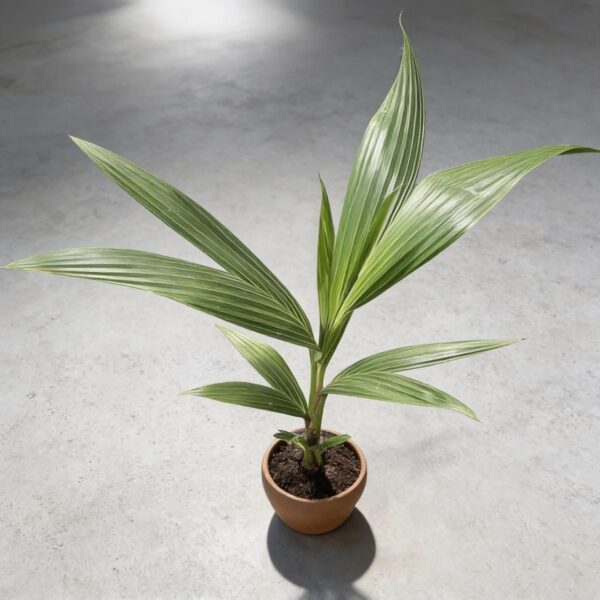
Cocos nucifera
Cocos nucifera
Original price was: HK$398.00.HK$298.00Current price is: HK$298.00.
In stock · store pickup
View plant
FREE PLANT ADVICE
Send us a photo before you change anything
WhatsApp a photo of the plant and your window light. Our Causeway Bay team will suggest care steps or plants that suit your space.
STORE · CAUSEWAY BAY
4/F, 39 Yiu Wa Street, Causeway Bay
Daily 12:30–8:00pm · ~3 min walk from Times Square
Map & directionsPlant Care