
How to Care for Hoya Waymaniae in Hong Kong | Plantjai

Plantjai 植仔 · Care Encyclopedia
Hoya Waymaniae
Hong Kong care guide — useful before you buy and after it arrives.
Shop this plantFuzzy, wavy-edged leaves paired with pink star-shaped flowers — a dreamy rarity that Hoya collectors race to snap up.
Origin & characteristics
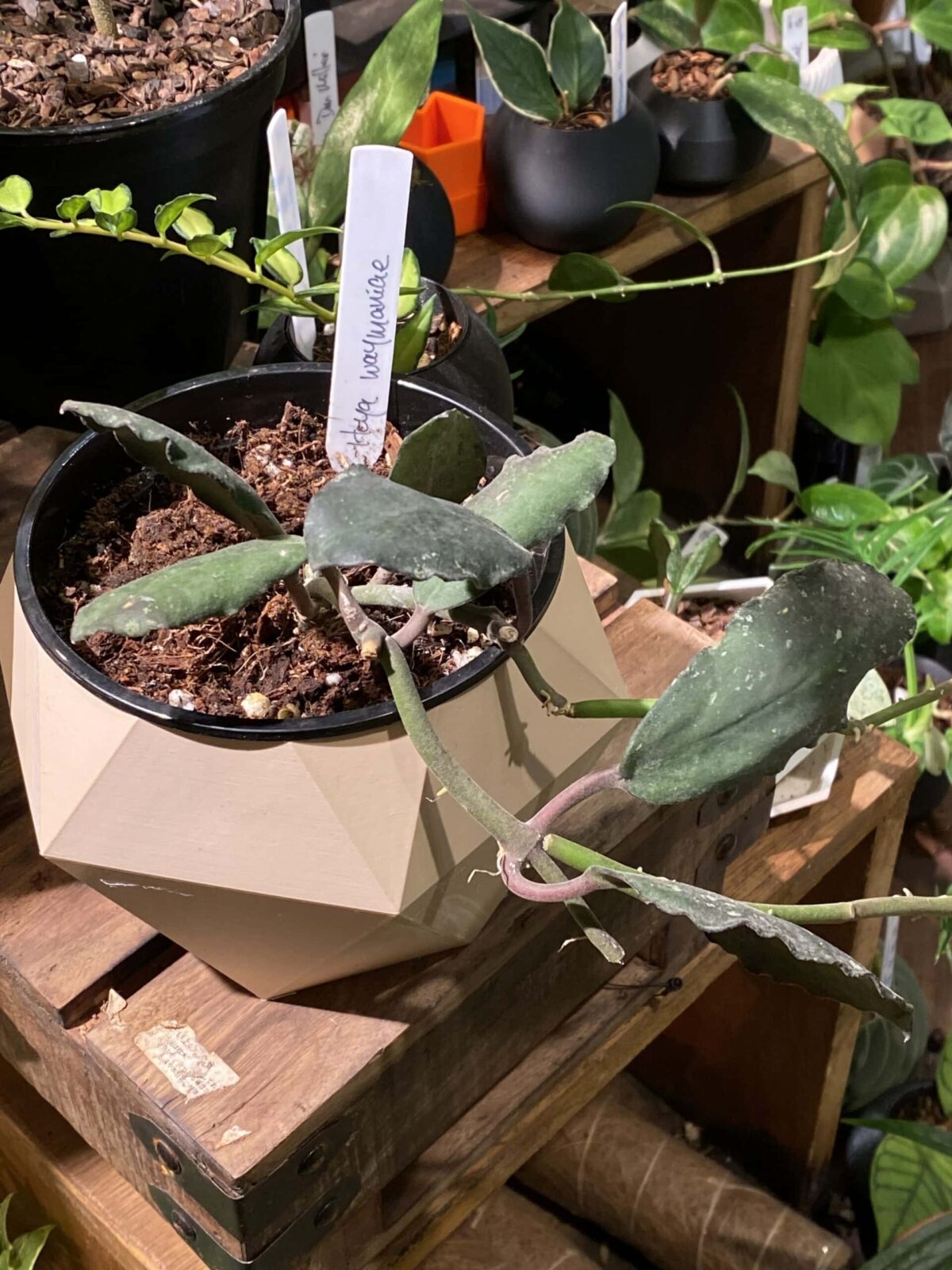
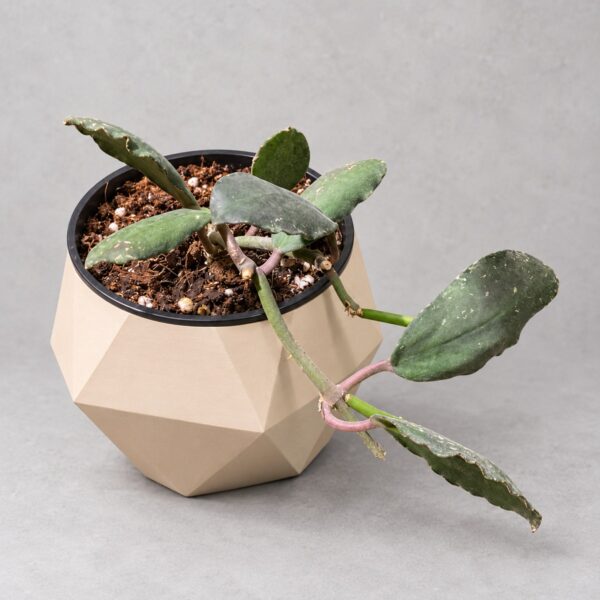
Hoya waymaniae is native to Borneo (primarily distributed across Sabah and Sarawak) and belongs to a perennial evergreen vining species in the family Apocynaceae, genus Hoya. Its most distinctive feature is its round, thick leaves covered in fine fuzz, with wavy, ruffled edges resembling a lotus-leaf frill — quite unique. Mature plants produce pink to deep red star-shaped waxy flowers, clustered into globe-shaped flower clusters, with exceptional ornamental value. Growth is moderate, with fairly sturdy stems, and an overall climbing habit that can attach to a tree trunk or support and grow upward.
Toxicity note: Hoya waymaniae's sap is toxic, and skin contact may cause allergic reactions or redness and swelling, while ingestion can cause symptoms like vomiting and diarrhoea. Wear gloves when handling, wash your hands thoroughly afterward, and keep it out of reach of pets and children.
Light
Hoya waymaniae needs bright indirect light to half-day sun, with an east-facing window or a south-facing window (behind a sheer curtain) being most suitable. 4-6 hours of gentle daily light supports leaf fuzz development and promotes flowering. It needs more light than some other Hoya species — insufficient light causes leaves to thin, fuzz to diminish, and the wavy edges to become less pronounced.
Note: harsh summer midday sun scorches the fuzz on the leaf surface, causing brown spots; but prolonged placement in dim spots weakens the plant and causes leaf drop.
Watering
Follow the "water thoroughly once dry" strategy. Since its thick, fuzzy leaves transpire more slowly, it's more drought-tolerant than many other Hoyas. During the spring/summer growing season, water once the soil is completely dry, roughly every 7-10 days; this can be extended to every 10-14 days during autumn/winter dormancy.
Tip: avoid pouring water directly onto the leaves — the fuzz traps moisture easily, leading to rot. If the base of a leaf feels slightly soft, it's time to water. Use room-temperature water, avoiding cold water that shocks the roots.
Soil & pot
Needs an extremely fast-draining, breathable medium. Use a mix that's primarily chunky: perlite + coconut chunks + bark chips + a little peat (roughly 4:3:2:1 ratio), ensuring excess water drains quickly after watering. A breathable terracotta pot is the first choice, and drainage holes are essential.
Note: Hoya waymaniae has a well-developed root system but dislikes stuffiness — don't use regular garden soil. When repotting, carefully protect the fuzzy leaves; repotting once every 1-2 years, ideally in spring, is recommended. Since it can grow fairly large, leave enough room for growth.
Temperature & humidity
The ideal growing temperature is 20-30°C — as a tropical plant, it dislikes cold. The minimum tolerable temperature is roughly 15°C; growth stops below 15°C for extended periods, and cold damage may occur below 10°C. For humidity, 50-70% relative humidity is ideal, since it's native to tropical rainforest and prefers moist air.
Humidity tips: Hong Kong summer humidity is usually sufficient; if running the AC or during dry winter conditions, place it on a humidity tray (raising the pot base, not letting it touch the water directly) or use a nearby humidifier. Avoid spraying water directly onto the leaf surface.
Common problems
| Issue | Likely cause | What to do |
|---|---|---|
| Fuzz falling off, leaf surface becoming smooth | Humidity too low or frequent touching | Increase ambient humidity, avoid touching the leaves with your hands |
| Wavy leaf edges becoming less pronounced | Insufficient light or improper fertilising | Increase indirect light, reduce nitrogen fertiliser ratio |
| Yellowing, mushy leaves | Overwatering / poor drainage | Check roots immediately, trim rot, repot in fast-draining soil |
| Soft, weak stems | Prolonged underwatering or root issues | Adjust watering frequency, check base drainage |
| Prolonged failure to flower | Immature plant / insufficient light | Ensure adequate light, be patient, consider switching to a high phosphorus-potassium fertiliser |
| Brown spots on leaves | Sunburn from strong light or fungal infection | Move away from direct light, improve ventilation, use fungicide if necessary |
| Poor new leaf development, deformity | Pest damage (aphids, spider mites) | Check leaf undersides, spray with neem oil or soapy water |
How to explain to customers
"Hoya waymaniae is a must-have for Hoya enthusiasts — its leaves are fuzzy with wavy edges, and the texture feels amazing to touch! But remember not to touch it too often, since the oils from your hands can damage the fuzz. It's native to Borneo's rainforest, so it likes a more humid environment, but for watering, let it dry out fully before watering again — these are two separate things to keep straight. When it flowers, the pink star-shaped blooms cluster together beautifully, well worth the wait! Since it's toxic, remember to keep it somewhere cats and dogs can't reach."
Fun facts
Hoya waymaniae's botanical name "waymaniae" honours a Bornean woman, Mrs. Wayman, who was passionate about collecting Hoyas — hence its charming name. Its wavy leaf edges are actually an adaptation to its native environment — in the rainforest understory, the wavy edges help the leaf shed excess rainwater while also increasing surface area to absorb more moisture. Also, when Hoya flowers, they secrete nectar, sometimes so much that it drips down — which is why Hoya growers often place a tissue underneath to "catch the drips"!
Keywords
Hoya waymaniae, Hoya, Apocynaceae, fuzzy leaves, wavy leaf edges, Borneo, climbing plant, waxy flowers, pink flowers, toxic plant, keep away from pets, high humidity, well-draining soil, water thoroughly when dry, collector's species
參考資料(想知來源可展開)
References
- Royal Botanic Gardens, Kew — Plants of the World Online: Hoya waymaniae, https://powo.science.kew.org/
- ASPCA — Toxic and Non-Toxic Plant List, https://www.aspca.org/pet-care/animal-poison-control/toxic-and-non-toxic-plants
⚠️ Contains toxins; skin contact may cause allergic reaction, and ingestion can cause vomiting or diarrhoea. Keep away from pets and children.
Plantjai · Causeway Bay collector indoor plants · WhatsApp +852 66807550
For Hong Kong homes and offices. Stock and pricing follow the product page.
IN STORE NOW
Plants for this guide
Related plants in stock now — live prices, delivery or Causeway Bay pickup.
FREE PLANT ADVICE
Send us a photo before you change anything
WhatsApp a photo of the plant and your window light. Our Causeway Bay team will suggest care steps or plants that suit your space.
STORE · CAUSEWAY BAY
4/F, 39 Yiu Wa Street, Causeway Bay
Daily 12:30–8:00pm · ~3 min walk from Times Square
Map & directionsPlant Care