
How to Care for Hoya Villosa Cao Dang in Hong Kong | Plantjai

Plantjai 植仔 · Care Encyclopedia
Hoya Villosa Cao Dang
Hong Kong care guide — useful before you buy and after it arrives.
Shop this plant"Fuzzy leaves with a naturally soft, gentle appearance — the Cao Dang Hoya is a must-have for plant lovers who appreciate texture; once you've touched it, you won't forget it."
Botanical note: this species is labelled Hoya aff. villosa (affinis = "closely related to"), indicating it closely resembles Hoya villosa but hasn't been fully confirmed in its classification. The botanical name is pending further confirmation.
Origin & characteristics
Hoya aff. villosa 'Cao Dang' was collected from the Cao Bằng region of northern Vietnam, a mountainous area with a tropical to subtropical climate at roughly 500-1,200 metres elevation. It naturally grows in evergreen broadleaf forest, mostly epiphytic on tree trunks or in rock crevices.
Cultivar characteristics:
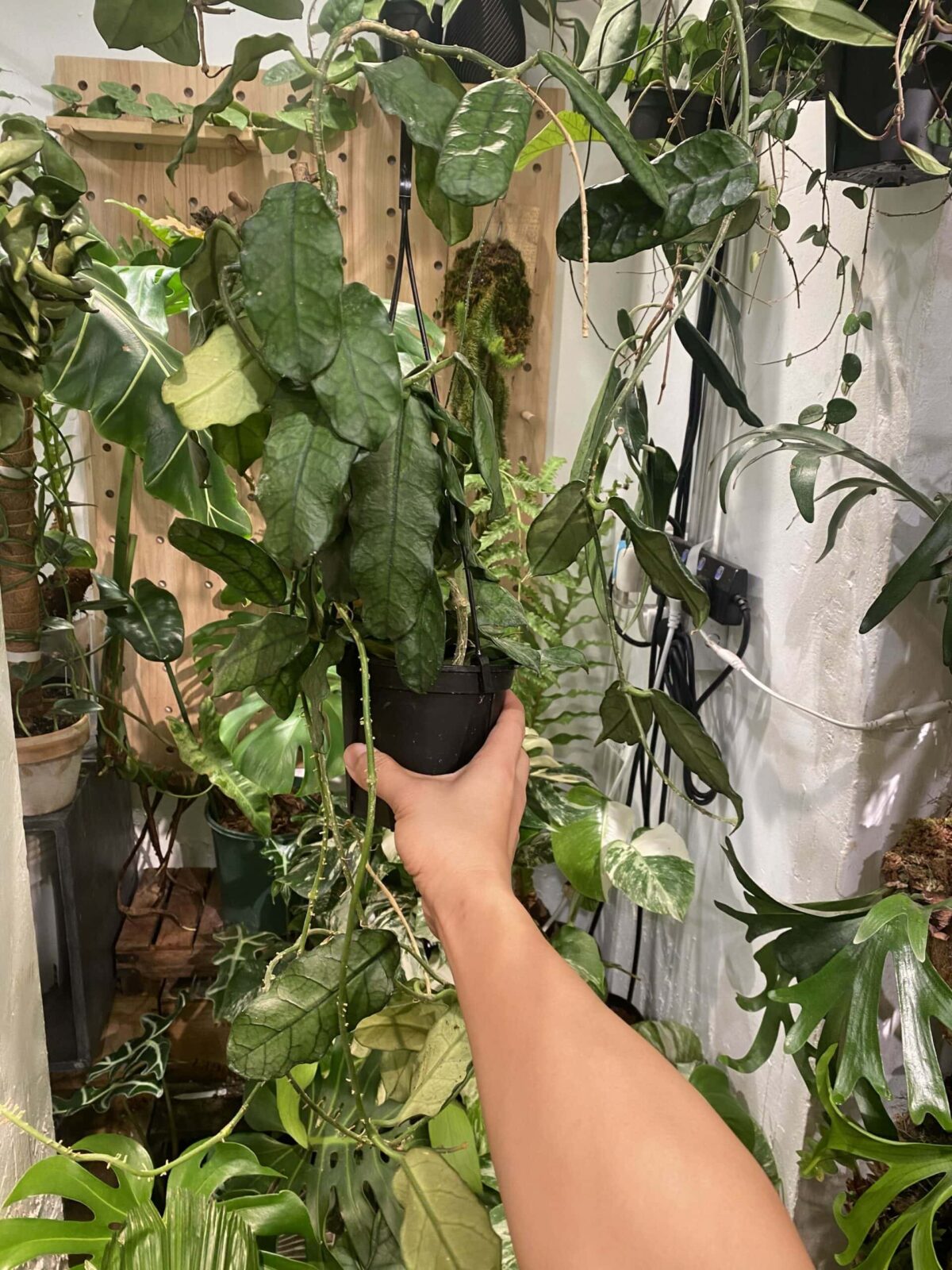
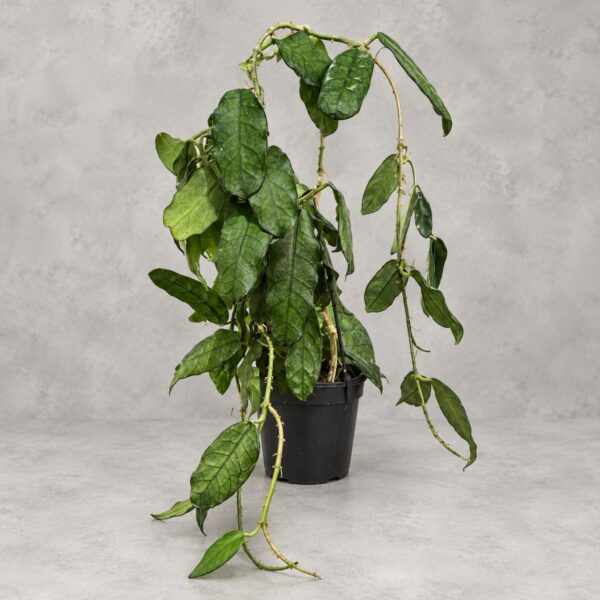
- Thick, soft leaves covered in fine fuzz (trichomes), with a velvety-smooth touch
- Long-oval to obovate leaf shape, with recessed veins and a deep green colour with a grey-blue tone
- Semi-climbing growth habit, with vines reaching 1-2 metres, suited to hanging or a climbing trellis
- Mature plants produce fuzzy, five-pointed star-shaped flower clusters ranging from pale red to deep reddish-brown, with an intense nighttime fragrance
- Non-toxic to pets — safe for households with cats and dogs
- Moderate growth rate, considered an easier entry-level Hoya species
Light
- Ideal environment: bright indirect light (roughly 400-700 fc), an east- or north-facing windowsill is best
- Acceptable: at least 1.5 metres from a south-facing window, or filtered through a sheer curtain
- Avoid: harsh midday direct sun, as the fuzzy leaves easily scorch and develop brown spots
- Note: insufficient light causes thinner leaves and sparser fuzz, affecting its ornamental texture
💡 Plantjai tip: rotate the pot every two weeks to avoid uneven, lopsided growth from one-sided light exposure. The fuzzy leaves accumulate dust easily — gently dust with a soft brush.
Watering
- Principle: water once the top 2-3 cm of soil dries out, following the "water thoroughly once dry" rule
- Frequency reference:
- Spring/summer (growing season): roughly every 5-7 days
- Autumn/winter (semi-dormant): roughly every 10-14 days
- Method: water slowly around the rim until it drains from the base, discarding saucer runoff after 15 minutes
- Water quality: room-temperature tap water is fine; the fuzzy leaves can occasionally be misted (done in the morning)
- Warning signs: wrinkled, soft leaves = underwatering; yellowing, soft base = overwatering causing root rot
⚠️ Fuzzy Hoyas dislike standing water! Prolonged root moisture easily causes root rot — always confirm the soil surface is dry before watering.
Soil & pot
Recommended soil mix (dedicated fuzzy-leaf series recipe):
- 30% pine bark / orchid bark (coarse grade, promotes air circulation)
- 25% perlite / pumice
- 25% coco coir (moderate moisture retention)
- 10% coconut husk charcoal (absorbs moisture, inhibits bacteria)
- 10% slow-release fertiliser / worm castings
Pot choice:
- First choice: a breathable terracotta pot or side-vented pot with drainage holes
- Second choice: a regular plastic pot (ensure the drainage hole stays unobstructed)
- Avoid: decorative pots without drainage holes, or oversized pots (prone to standing water)
- Repotting: every 2-3 years, since Hoyas like being slightly pot-bound, there's no rush to size up
Temperature & humidity
| Item | Ideal range | Minimum tolerance |
|---|---|---|
| Daytime temperature | 20-28°C | 16°C |
| Nighttime temperature | 16-22°C | 12°C |
| Air humidity | 50-70% | 40% |
- Typical Hong Kong indoor conditions suit it well; avoid direct AC airflow onto the leaves in summer air-conditioned rooms
- The fuzzy leaves can absorb moisture from the air — leaves become plumper and glossier above 50% humidity
- When winter humidity drops below 45%, place a water dish near the pot or mist occasionally
- Good heat tolerance, but improve ventilation above 33°C to avoid stuffiness
Common problems
Q1: The leaf fuzz has become sparse or is falling off?
A: Usually due to humidity being too low or frequent handling of the leaves. Move to a higher-humidity spot and avoid touching the leaves often — the fuzz will gradually recover.
Q2: Brown spots appearing on leaves?
A: Possibly sunburn from strong light or residual water spots from watering. Check whether the position gets too much light, and avoid splashing water on the leaf surface when watering.
Q3: New leaves getting smaller with less fuzz?
A: Insufficient light or lack of nutrients. Move to a brighter spot first, and apply a diluted balanced liquid fertiliser (half strength) once a month during the growing season.
Q4: Leggy vines, elongated internodes?
A: A classic sign of insufficient light. Move to a brighter position; already-leggy stems can be pruned in spring to encourage branching.
Q5: Should I cut off the peduncle after flowering?
A: Never cut it off! Hoyas rebloom from the same peduncle repeatedly — cutting it wastes the next flowering opportunity.
Q6: Growth has stalled?
A: Cao Dang Hoya has a natural dormancy period, which is normal. Reduce watering frequency, and resume normal care once new growth appears.
How to explain to customers
"This is the Cao Dang Hoya, from the Cao Dang mountain region of Vietnam. Its biggest feature is the layer of fuzz on the leaves, so comfortable to touch, just like velvet! It's a relatively easy-to-grow Hoya, suitable even for beginners. Remember 'water only once dry' — touch the soil surface, and once it's dry, water thoroughly. It likes a bright but not sun-exposed spot, with an east-facing windowsill being best. When it flowers, you get a ball of fuzzy red little flowers, with fragrance at night! It's non-toxic to cats and dogs, so you can bring it home worry-free."
Fun facts
🧤 A natural warm coat: the leaf fuzz (trichomes) helps collect moisture from the air in its native habitat, while also reducing water loss from direct sun exposure — a natural protective mechanism.
🇻🇳 A Vietnamese hideaway: Cao Bằng is located in northern Vietnam, bordering China's Guangxi province, with karst terrain often shrouded in cloud and mist year-round — the native home of many rare Hoya species.
🌺 A fuzzy flower ball: the flowers of the Cao Dang Hoya are also covered in fine fuzz, resembling a red pom-pom from a distance, incredibly charming.
🦋 Nighttime fragrance: the flowers release an intense sweet scent at night, specifically to attract nocturnal moths for pollination — a classic "night-blooming" strategy.
Keywords
Hoya, Cao Dang Hoya, fuzzy Hoya, Hoya villosa, Hoya aff. villosa, Cao Dang, Vietnamese Hoya, foliage plant, indoor plant, epiphyte, non-toxic plant, pet-friendly, Hong Kong indoor growing, shade-tolerant plant, hanging plant, flowering plant, Plantjai
參考資料(想知來源可展開)
References
- Royal Botanic Gardens, Kew — Plants of the World Online: genus Hoya, https://powo.science.kew.org/
- ASPCA — Toxic and Non-Toxic Plant List, https://www.aspca.org/pet-care/animal-poison-control/toxic-and-non-toxic-plants
⚠️ Non-toxic to cats and dogs.
Plantjai · Causeway Bay collector indoor plants · WhatsApp +852 66807550
Plantjai shop · In stock online
Hoya Villosa Cao Dang
HK$328.00
Hong Kong delivery · Causeway Bay pickup
For Hong Kong homes and offices. Stock and pricing follow the product page.
IN STORE NOW
Plants for this guide
Related plants in stock now — live prices, delivery or Causeway Bay pickup.
FREE PLANT ADVICE
Send us a photo before you change anything
WhatsApp a photo of the plant and your window light. Our Causeway Bay team will suggest care steps or plants that suit your space.
STORE · CAUSEWAY BAY
4/F, 39 Yiu Wa Street, Causeway Bay
Daily 12:30–8:00pm · ~3 min walk from Times Square
Map & directionsPlant Care