How to Care for Hoya Verticillata Yangzhi in Hong Kong | Plantjai

Hong Kong care guide for Hoya Verticillata Yangzhi.
White-edged, green-centred variegated leaves paired with creamy ball-shaped flowers, blooming reliably and easy to grow — the "perfect pick" for beginners entering the Hoya world, flowering faithfully year after year!
Brand: Plantjai
Botanical name: Hoya verticillata 'Yangzhi' albomarginata
Classification: family Apocynaceae, genus Hoya
Toxicity: non-toxic to pets (ASPCA-certified)
Origin & characteristics
Yangzhi ("Mutton Fat Jade") variegated Hoya is a horticultural cultivar bred from a variegated mutation of Hoya verticillata (also known as Hoya acuta). The parent species is native to Southeast Asia, including Thailand, Malaysia, and Indonesia, and is widely distributed with strong adaptability.
Most eye-catching features:
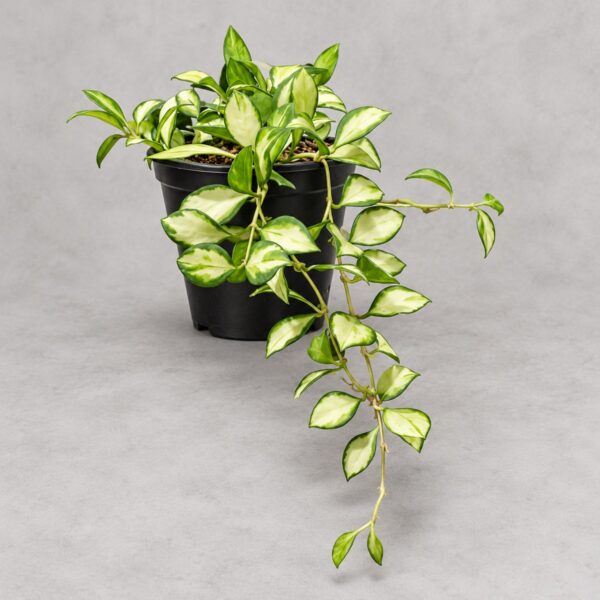
- Marginal variegation: the leaf edges show creamy-white variegation (albomarginata = white margin), with green retained in the centre, creating an elegant contrast; under strong light, the leaves develop a pink blush
- Creamy ball-shaped flowers: star-shaped flowers clustered into hemispherical umbels, with creamy-white petals and a pink centre, releasing a subtle sweet fragrance
- Reliable bloomer: known as a "flowering machine," it can bloom multiple times a year with proper care, with the flowering season lasting from April through September
- Highly adaptable: compared to other rare Hoyas, Yangzhi is very easy to grow, with relatively relaxed environmental requirements, making it suitable for beginners
This cultivar has a moderate to fast growth rate, with a clear vining habit, suitable for climbing a trellis or hanging.
Light
- Ideal position: an east- or west-facing windowsill, providing bright indirect light; it can accept 1-2 hours of gentle direct sunlight daily (especially morning sun), which helps promote flowering
- Acceptable range: good shade tolerance — it can grow and flower in semi-shade, though the number of flowers will decrease
- Avoid: harsh direct summer midday sun, which causes yellowing and scorching of the leaves; prolonged placement in dim spots causes legginess, fading leaf colour, and reduced flowering
- Tip: for more vivid variegation and more flowers, aim for at least 3-4 hours of bright indirect light daily. Rotate the pot every two weeks for even light exposure on all sides
Watering
- Principle: "water thoroughly once dry" — water once the soil is completely dry
- Growing season (spring/summer): roughly every 7-10 days, shortened to every 5-7 days in hot weather
- Dormant season (autumn/winter): roughly every 10-14 days, keeping the soil on the drier side
- Method:
- Water thoroughly, letting it drain completely from the base
- Discard any excess water, avoiding standing water in the saucer
- Bottom-watering works well, especially suited to Hong Kong's humid season
- Notes:
- Yangzhi has decent drought tolerance — better to underwater slightly than overwater
- Variegated cultivars (with more white areas) are relatively more prone to root rot, requiring stricter water control
- Slightly withholding water 1-2 months before flowering helps promote flower bud differentiation
Checking method: insert a finger about 2-3 cm into the soil, and only water once it feels dry. Or observe the leaves — slight softening indicates it's time to water.
Soil & pot
- Soil recipe: prioritise fast drainage and breathability, recommended recipe:
- 30% quality potting soil
- 30% coco chips
- 20% orchid bark
- 20% perlite
- Simple version: cactus soil mixed with orchid mix (roughly 6:4 ratio), plus a handful of perlite
- Pot choice:
- Key: use a small pot! Like other Hoyas, Yangzhi channels its energy into flowering rather than leaf growth when its roots are slightly pot-bound; an oversized pot easily leads to "only growing, never flowering"
- Use a pot just one size smaller than the root system, and only consider repotting once roots emerge from the base
- Drainage holes are essential; either plastic or terracotta pots work
- Repotting: roughly every 2-3 years, best done in spring. Don't jump to a much larger pot when repotting — go up just one size at a time
- pH: slightly acidic to neutral (roughly 6.0-7.0)
Temperature & humidity
| Item | Ideal range | Minimum |
|---|---|---|
| Growing temperature | 20-28°C | Never below 10°C in winter (15°C+ recommended) |
| Humidity | 50-70% | Never below 40% |
- Temperature: likes warm conditions and grows most vigorously in summer; growth slows in winter, but no special dormancy treatment is needed. Compared to other Hoyas, Yangzhi has slightly better cold tolerance, though prolonged exposure below 10°C still carries risk
- Humidity: adapts to moderate humidity, and typical household conditions are usually sufficient. If the air is too dry (below 40%), place a small water tray nearby or mist occasionally
- Note: avoid placing near AC vents or heaters, since dramatic temperature swings affect flowering
Common problems
| Issue | Likely cause | What to do |
|---|---|---|
| Won't flower | Pot too large, insufficient light, or plant too young | Switch to a smaller pot, increase light, be patient (usually starts flowering after 1-2 years) |
| Yellowing leaves | Overwatering or poor drainage | Reduce watering, check that the base drainage hole is unobstructed |
| Soft, wrinkled leaves | Underwatering | Water promptly |
| Variegation disappearing/turning green | Insufficient light | Increase bright indirect light — the white variegation needs enough light to stay vivid |
| Scorched leaf edges | Excessive sun or fertiliser damage | Move to a shadier spot, dilute fertiliser concentration |
| Leggy vines (elongated internodes) | Light too weak | Move closer to a window or add artificial lighting |
| White cottony pests | Scale insects | Wipe with an alcohol-soaked cotton swab, spray with neem oil if severe |
| Should I cut the peduncle after flowering? | — | Never cut it off! The old peduncle will flower again next year — cutting it means waiting for a new one to grow |
How to explain to customers
"This Yangzhi variegated Hoya is a great choice for beginners entering the Hoya world! The leaf edges have white variegation with green in the centre, so elegant, and when it flowers, you get clusters of creamy blooms with pink centres, fragrant and beautiful. Best of all, it's a reliable bloomer — with good care, you'll see flowers every year from late spring through autumn. Care is simple — remember to use a small pot, not a large one, since it prefers being a bit pot-bound before it'll flower; keep it in bright indirect light, water once the soil has dried out, and water even less in winter. It's non-toxic to cats and dogs, so grow it worry-free. After it flowers, never cut off the peduncle, since it will rebloom from the same spot — a real money-saver!"
Fun facts
- Where "Yangzhi" comes from: the horticultural cultivar name "Yangzhi" (mutton fat jade) is taken from a prized white jade from Xinjiang, China, describing how the white variegation on its leaves has a warm, smooth quality reminiscent of that jade.
- The beauty of marginal variegation: "albomarginata" is a horticultural term referring to white-margined variegation. Marginal variegation cultivars are typically more stable than central variegation (white in the middle, green at the edges), less prone to "reverting" to solid green.
- The secret to flowering: Yangzhi's "money-saving" trait — the same peduncle can be reused repeatedly over many years, producing new flowers at the same spot each year, so the more peduncles it has, the more flowers it produces.
- Flower-promoting technique: starting each March, slightly reducing watering frequency (water restriction) while increasing the phosphorus-potassium fertiliser ratio helps stimulate flower bud formation.
- A pink surprise: under strong light, Yangzhi's leaf edges and new leaves develop a subtle pink blush, adding an extra touch of softness to the plant.
- Descended from a widespread parent: its "parent," Hoya verticillata, is one of the most widely distributed species in the genus, with extremely strong adaptability — Yangzhi has inherited this "easy-to-grow" trait.
Keywords
Yangzhi variegated Hoya, Hoya verticillata, Yangzhi, albomarginata, marginal variegation, white edge green centre, Hoya verticillata, mutton fat jade, creamy flowers, pink centre, reliable bloomer, beginner-friendly, easy to grow, small pot growing, water thoroughly when dry, bright indirect light, flowering in semi-shade, non-toxic to pets, Plantjai, horticultural cultivar, stable variegation, water restriction for flowering, reusing peduncles, don't cut the peduncle, pink sun-stress, native to Southeast Asia
參考資料(想知來源可展開)
References
- Royal Botanic Gardens, Kew — Plants of the World Online: Hoya verticillata, https://powo.science.kew.org/
- ASPCA — Toxic and Non-Toxic Plant List, https://www.aspca.org/pet-care/animal-poison-control/toxic-and-non-toxic-plants
⚠️ Non-toxic to cats and dogs.
Plantjai · Causeway Bay collector indoor plants · WhatsApp +852 66807550
For Hong Kong homes and offices. Stock and pricing follow the product page.
IN STORE NOW
Plants for this guide
Related plants in stock now — live prices, delivery or Causeway Bay pickup.
FREE PLANT ADVICE
Send us a photo before you change anything
WhatsApp a photo of the plant and your window light. Our Causeway Bay team will suggest care steps or plants that suit your space.
STORE · CAUSEWAY BAY
4/F, 39 Yiu Wa Street, Causeway Bay
Daily 12:30–8:00pm · ~3 min walk from Times Square
Map & directionsPlant Care