
How to Care for Hoya Snow Cui Silver in Hong Kong | Plantjai

Plantjai 植仔 · Care Encyclopedia
Hoya Snow Cui Silver
Hong Kong care guide — useful before you buy and after it arrives.
Shop this plantEvery leaf is a work of art in silvery-white, instantly elevating any indoor space — a collector's dream cultivar with near-total variegation.
Botanical status: confirmed (horticultural cultivar)
Brand: Plantjai
Origin & characteristics
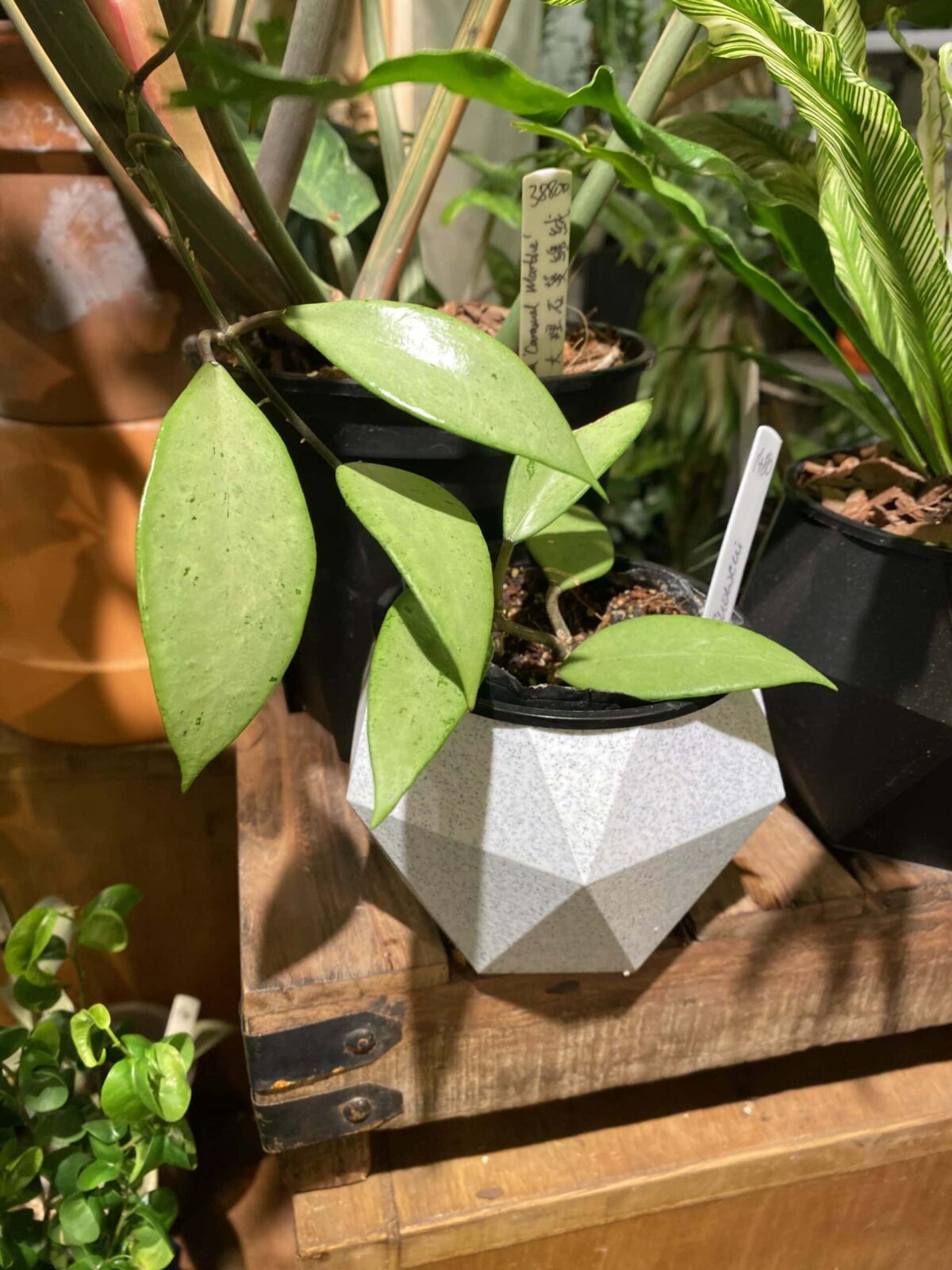
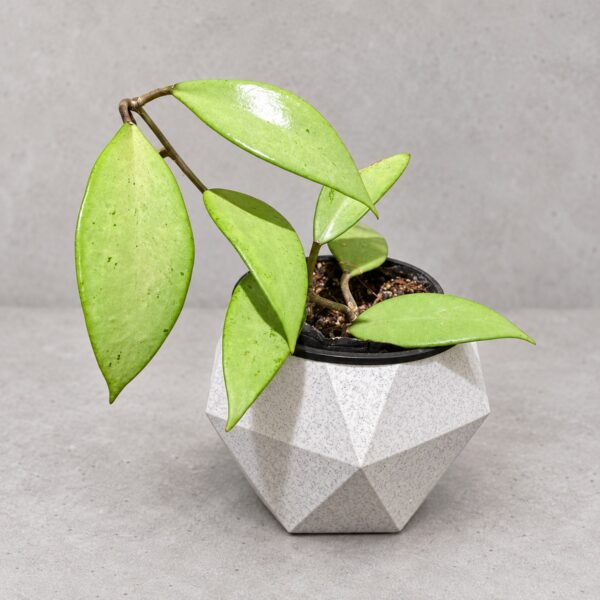
Fully Silvered Snow Cui Hoya is a horticultural cultivar bred from a mutation of the standard Snow Cui Hoya. Its most distinctive trait is that the leaf surface is almost entirely covered in silvery-white patterning, with very little green remaining, giving it a snowy, luminous visual effect. The leaves are thick with a waxy texture, and it has a vining growth habit; mature plants produce star-shaped, waxy little flowers with a subtle, pleasant fragrance. Growth is moderate, and it's considered one of the easier variegated Hoya cultivars to care for.
Light
- Ideal position: an east- or north-facing window, receiving gentle filtered light
- Light requirement: 300–800 foot-candles of filtered light, roughly equivalent to being about 1.2 metres from an unobstructed south-facing window
- Notes: the silvery-white portions lack chlorophyll, so direct sun must absolutely be avoided — even morning sun can cause the silver patterning to bleach out and the edges to scorch
- Signs of insufficient light: fading patterning, reverting to green, stalled growth
- Tip: rotate the pot a quarter turn every week for even light exposure and a more attractive distribution of silver patterning
Watering
- Principle: "soak thoroughly, then drain well" — water once the top 3 cm of the mix dries out, and check again 72 hours after watering
- Frequency: roughly every 5–7 days in summer, roughly every 9–12 days in winter (adjust to ambient humidity and temperature)
- Checking method: insert a bamboo skewer 5 cm deep — it should come out clean and dry before watering
- Water temperature: use 20–22°C water in winter, since cold water shocks the roots
- Notes:
- ❌ Don't mist the leaves, as it washes away the protective waxy layer and increases fungal infection risk
- ❌ Don't rely on bottom-watering for extended periods, as it causes salt buildup
- ✅ Alternate watering methods every other time, and once a month, water thoroughly from the top
Soil & pot
- Soil recipe (fast drainage and breathability are paramount):
- 3 parts coarse perlite (4–6mm)
- 2 parts pumice (2–4mm)
- 2 parts aged pine bark chips (1/4 inch)
- 1 part low-salt coco coir
- 0.5 parts horticultural charcoal
- Pot choice: a terracotta pot is ideal (helps regulate moisture), with a diameter 20% smaller than the plant's size (better snug than oversized)
- Drainage requirement: at least 3 drainage holes of 6mm at the base
- ❌ Absolutely avoid: self-watering pots, sphagnum moss (retains too much water), vermiculite (compacts when wet)
Temperature & humidity
| Item | Ideal range | Minimum/maximum |
|---|---|---|
| Growing temperature | 20–29°C | Below 13°C causes cold damage |
| Humidity | 50–75% | Can tolerate 30–40% |
| Winter temperature | 16–18°C | Never below 13°C |
- Higher humidity helps keep leaves plump, but ensure good ventilation above 60% humidity
- Avoid placing near AC vents or heaters
Common problems
| Issue | Likely cause | What to do |
|---|---|---|
| Entire leaves turning yellow then dropping | Prolonged overwatering or root rot | Repot immediately, trim rot, withhold water for 10 days |
| Silver patterning fading to green | Insufficient light or excess nitrogen fertiliser | Check light levels first; if adequate, switch to a urea-free fertiliser |
| No flowering after two years | Plant not yet mature (typically needs 3+ years) or peduncle was pruned | Never cut off the peduncle; give it 3 weeks below 15°C in winter to encourage buds |
| Sticky residue and black mould on leaves | Mealybugs | Spot-treat with 70% alcohol on a cotton swab, every 5 days for 3 rounds |
| Brown, scorched leaf tips | Hard water (high sodium/fluoride content) or irregular watering | Switch to filtered water or rainwater |
How to explain to customers
"This Fully Silvered Snow Cui Hoya is a highly sought-after cultivar! Look at how the entire leaf is silvery-white — it looks like a work of art wherever you place it at home. Remember not to put it under direct sun, since the silver portions are very sensitive to sunlight — indirect light is best. For watering, let the soil dry out fully before watering; better a bit dry than wet, since root rot can't be undone. Typical household humidity is fine, though a humidifier would make it even happier. After it flowers, don't cut off the peduncle — it'll flower from the same spot again next time!"
Fun facts
- The silvery-white patterning of the Fully Silvered Snow Cui Hoya is actually a physiological adaptation — the silver areas lack chlorophyll, meaning the plant is more sensitive to environmental stress and needs more precise care
- In a Toronto experiment, one Fully Silvered Snow Cui Hoya flowered continuously for 8 years in a northeast-facing unit, proving that with the right care, it can be a remarkably long-lived plant companion
- The genus Hoya is non-toxic to cats and dogs, making it a safe choice for pet-owning households
Keywords
Fully Silvered Snow Cui Hoya, Hoya Snow Cui Silver, variegated Hoya, silver-patterned Hoya, indoor plant, pet-safe plant, shade-tolerant plant, Plantjai, waxy flower, vining plant, horticultural cultivar, collector's cultivar
參考資料(想知來源可展開)
References
- Royal Botanic Gardens, Kew — Plants of the World Online: genus Hoya, https://powo.science.kew.org/
- ASPCA — Toxic and Non-Toxic Plant List, https://www.aspca.org/pet-care/animal-poison-control/toxic-and-non-toxic-plants
⚠️ Non-toxic to cats and dogs; sap may cause mild skin irritation in sensitive individuals.
Plantjai · Causeway Bay collector indoor plants · WhatsApp +852 66807550
Plantjai shop · In stock online
Hoya snow cui silver
HK$1,480.00
Hong Kong delivery · Causeway Bay pickup
For Hong Kong homes and offices. Stock and pricing follow the product page.
IN STORE NOW
Plants for this guide
Related plants in stock now — live prices, delivery or Causeway Bay pickup.
FREE PLANT ADVICE
Send us a photo before you change anything
WhatsApp a photo of the plant and your window light. Our Causeway Bay team will suggest care steps or plants that suit your space.
STORE · CAUSEWAY BAY
4/F, 39 Yiu Wa Street, Causeway Bay
Daily 12:30–8:00pm · ~3 min walk from Times Square
Map & directionsPlant Care