
How to Care for Hoya Archboldiana Albomarginata in Hong Kong | Plantjai

Plantjai 植仔 · Care Encyclopedia
Hoya Archboldiana Albomarginata
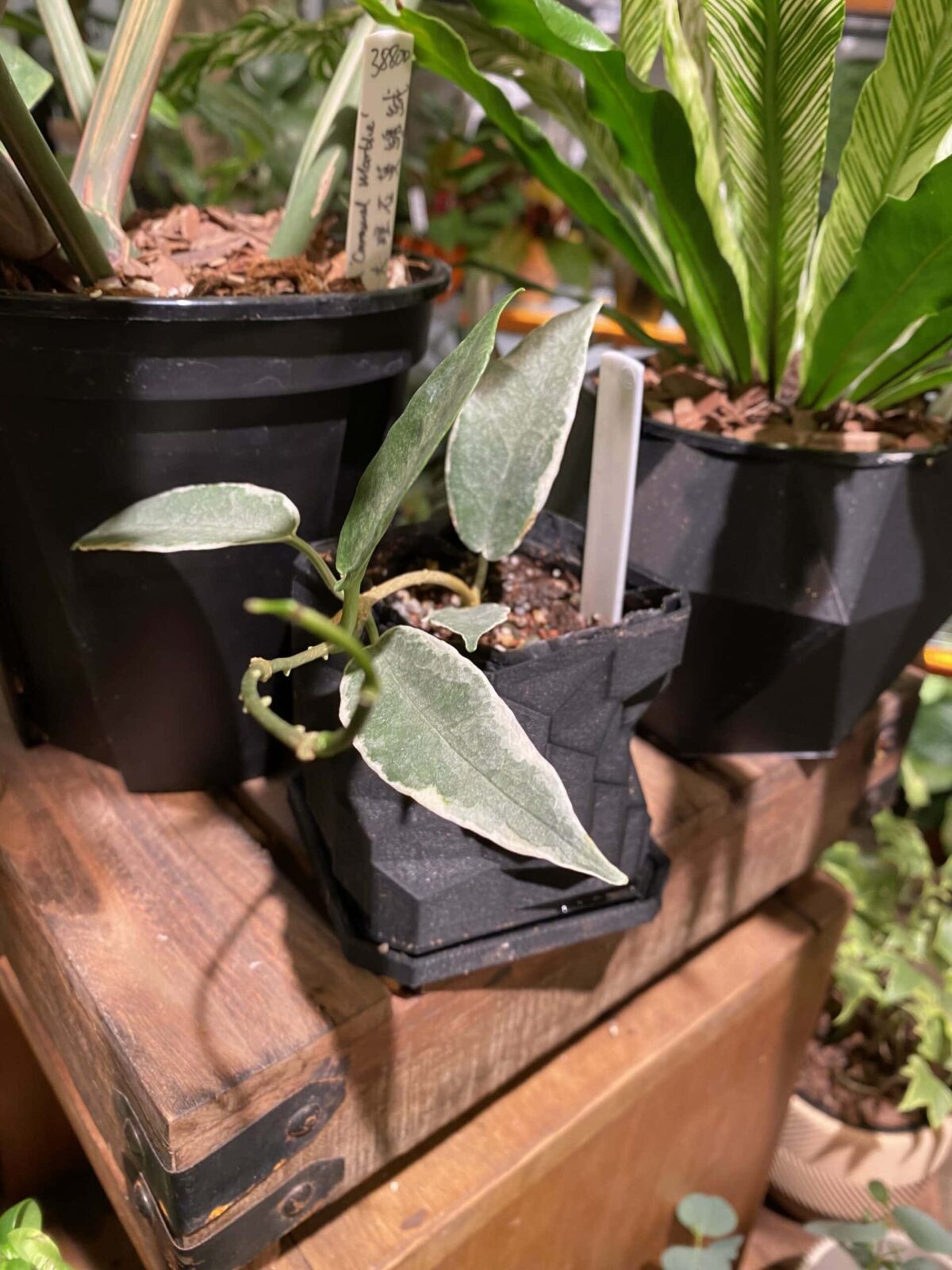
Hoya archboldiana albomarginata 鈴鐺外錦毬蘭
Hong Kong care guide — useful before you buy and after it arrives.
Shop this plantHuge bell-shaped blooms paired with white-edged variegated leaves — a dream-list plant for serious Hoya collectors, and an absolute showstopper when it flowers.
Botanical note: 'Albomarginata' is a white-margined variegated selection of Hoya archboldiana, a garden cultivar. Some literature lists it as Hoya archboldiana var. albomarginata.
Origin & characteristics
Hoya archboldiana is native to New Guinea (Papua New Guinea and Indonesian Papua) and the Solomon Islands in the South Pacific, growing as a large epiphytic climber from lowland to mid-elevation rainforest. 'Albomarginata' is a variegated selection with creamy-white to pale yellow margins on the leaves, giving it exceptional ornamental value.
Cultivar characteristics:
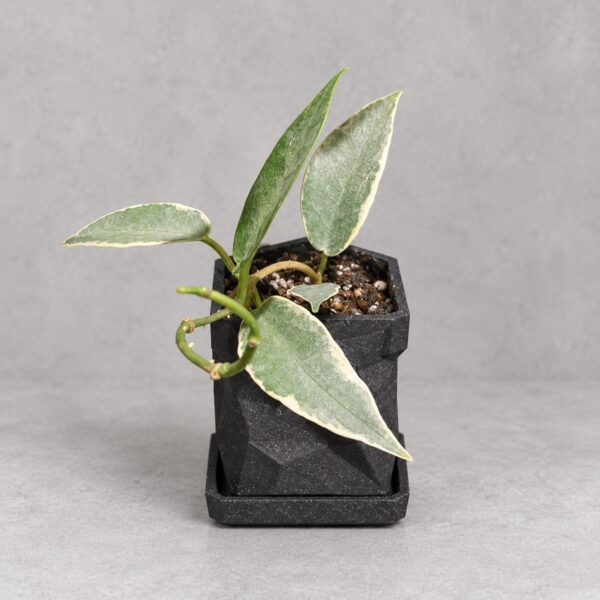
- Thick, leathery, long-oval leaves edged with a band of creamy-white to pale yellow variegation
- Vigorous grower, with vines reaching 2–3 metres — great trained onto a large trellis or arch
- Spectacular flowers — large, bell/campanulate shaped blooms up to 3–5 cm across, ranging from deep pink to magenta with a striking contrasting centre
- Flower clusters form a heavy, semi-spherical umbel, noticeably larger and heavier than most Hoya species
- Flowers carry a light fragrance that intensifies at night
- Non-toxic to pets, safe for households with cats and dogs
- Moderate to fast growth rate — a fairly vigorous species
Light
- Ideal: bright indirect to gentle direct light (roughly 600–1,000 fc), east- or west-facing windows work best
- Acceptable: a south-facing window behind a sheer curtain, or about 1 metre from the glass
- Avoid: harsh midday summer sun — the white margins scorch and brown easily
- Note: this cultivar needs a long light period (12–14 hours daily) to reliably flower; insufficient light makes blooming difficult
💡 Plantjai tip: the variegated (chlorophyll-poor) portions actually need more light than solid-green varieties — but it must be gentle, indirect light, not harsh sun. If the variegation looks dull or is reverting to green, that's a sign of insufficient light.
Watering
- Principle: let the top 2–3 cm of soil dry out before watering — err on the dry side
- Frequency guide:
- Spring/summer (active growth): roughly every 5–7 days
- Autumn/winter (semi-dormant): roughly every 10–14 days
- Method: water slowly around the rim until it runs from the drainage holes, then empty the saucer after 15 minutes
- Water quality: room-temperature tap water is fine — variegated types aren't especially fussy
- Dormancy management: when the plant stops producing new growth, cut watering roughly in half, or extend to every two weeks
- Warning signs: slightly wrinkled leaves = mild underwatering; yellow, soft leaves = overwatering/root rot
⚠️ Keep conditions stable while it's flowering! Once buds form, don't move the pot or change your watering routine, or you risk bud drop.
Soil & pot
Recommended mix (for large-growing Hoyas):
- 35% orchid bark / pine bark (coarse grade for root aeration)
- 25% perlite / pumice
- 20% coco coir (moderate moisture retention)
- 10% coconut husk charcoal (moisture absorption, antifungal)
- 10% worm castings / slow-release base fertiliser
Pot choice:
- First choice: a breathable terracotta pot or large glazed pot with drainage
- Second choice: a concrete planter (ensure drainage holes stay clear) — good for anchoring heavy vines
- Avoid pots without drainage holes
- Repot every 2–3 years — Hoyas like being a little pot-bound and don't need oversized containers
- Tip: pair with a trellis, arch, or moss pole to let the vines climb naturally, which also encourages flowering
Temperature & humidity
| Item | Ideal range | Minimum tolerance |
|---|---|---|
| Daytime temperature | 22–30°C | 16°C |
| Nighttime temperature | 18–24°C | 15°C |
| Air humidity | 50–70% | 40% |
- This species hails from tropical lowlands, so it handles heat well but is not cold-hardy
- Typical Hong Kong indoor conditions suit it well; keep it away from direct AC airflow in summer
- If winter humidity drops below 45%, place a water tray nearby
- Growth slows noticeably below 15°C — reduce watering accordingly
Common problems
| Issue | Likely cause | What to do |
|---|---|---|
| Variegation fading or reverting to green | Insufficient light or unstable temperature | Move to a brighter (but still indirect) spot; new growth may regain variegation, and reverted stems can be pruned |
| Won't flower after years | Immature plant, insufficient daily light, or disturbed environment | Ensure 2–3+ years maturity, 12–14 hours of steady light, and 6–8 uninterrupted weeks of true darkness at night; don't move the pot before flowering |
| White margins turning brown | Sunburn or underwatering | The chlorophyll-poor margin is fragile — move to gentler light and keep watering consistent |
| Yellowing, dropping leaves | Overwatering, root rot | Check drainage, repot and trim rotten roots if needed |
| Growth stalling | Natural dormancy, especially autumn/winter | Reduce watering; growth resumes naturally in spring, feed very dilute fertiliser monthly if desired |
⚠️ Never cut off the flower peduncle after blooming! Hoya archboldiana re-blooms repeatedly from the same peduncle — cutting it off means losing future blooms from that spot.
How to explain to customers
"This is our collector-grade Hoya archboldiana albomarginata — its biggest draw is those huge bell-shaped red-pink flowers when it blooms, they're genuinely spectacular! The leaf edges carry a band of white variegation, so it looks great even without flowers. It needs bright light — ideally 12+ hours a day — so an east- or west-facing window works best. Remember: let the soil dry out before watering. And please, never trim off the flower stalk after it blooms, because it flowers again from that exact same spot next time! It's non-toxic to cats and dogs, so you can grow it worry-free."
Fun facts
🔔 King of bell flowers: Hoya archboldiana produces some of the largest flowers in the entire genus, up to 5 cm across — a full umbel can get heavy enough to bend the stem, earning it the nickname "Bell Hoya."
🏝️ South Pacific treasure: native to New Guinea's tropical rainforests, first collected in the 1920s by plant explorer Richard Archbold, after whom it's named.
🎨 The mystery of variegation: the white margin ("Albomarginata") results from a genetic mutation in the marginal leaf cells that prevents chlorophyll production, forming a natural white border — stability of this trait varies between individual plants.
🐝 Pollination trick: the flowers release a strong fragrance at night specifically to attract moths and bees, a refined evolutionary strategy.
🏆 Collector's favourite: thanks to its fast growth, huge flowers, and elegant variegation, this cultivar is highly sought-after among Hoya enthusiasts, with mature flowering specimens often commanding a premium.
Keywords
Hoya, Hoya archboldiana, Albomarginata, bell Hoya, variegated Hoya, white margin, variegated plant, flowering plant, epiphyte, indoor plant, large Hoya, climbing plant, non-toxic plant, pet-friendly, Hong Kong indoor growing, collector plant, Plantjai
參考資料(想知來源可展開)
References
- Royal Botanic Gardens, Kew — Plants of the World Online: Hoya archboldiana, https://powo.science.kew.org/
- American Society for the Prevention of Cruelty to Animals (ASPCA) — Toxic and Non-Toxic Plant List, https://www.aspca.org/pet-care/animal-poison-control/toxic-and-non-toxic-plants
⚠️ Non-toxic to cats and dogs, but sap may cause mild skin irritation — wear gloves when pruning.
Plantjai · Causeway Bay collector indoor plants · WhatsApp +852 66807550
Plantjai shop · In stock online
Hoya archboldiana albomarginata
HK$1,080.00
Hong Kong delivery · Causeway Bay pickup
For Hong Kong homes and offices. Stock and pricing follow the product page.
IN STORE NOW
Plants for this guide
Related plants in stock now — live prices, delivery or Causeway Bay pickup.
FREE PLANT ADVICE
Send us a photo before you change anything
WhatsApp a photo of the plant and your window light. Our Causeway Bay team will suggest care steps or plants that suit your space.
STORE · CAUSEWAY BAY
4/F, 39 Yiu Wa Street, Causeway Bay
Daily 12:30–8:00pm · ~3 min walk from Times Square
Map & directionsPlant Care