
Houseplant Care While You Travel: A 7–14-Day Plan

In this guide (6)
A seven- to fourteen-day trip is not a reason to give every plant twice as much water. A better plan groups plants by observed drying behaviour, tests any watering arrangement beforehand and provides informed human help for higher-risk plants. Unrooted cuttings, seedlings, recently repotted plants and struggling specimens should not be treated like stable, established containers.
Plan for the home you will leave behind, not only the home you occupy: air-conditioning may be off, curtains may be closed and lighting schedules may change. The number of days in this guide describes the trip, not a guaranteed water-free interval for any plant.
Group by root-ball behaviour and setting, not name alone
| Group | Observed clues | Priority |
|---|---|---|
| Needs water sooner | Small pots, active growth and a record of quickly approaching the watering point | A reliable sitter or a tested, appropriate water supply |
| Currently dries more slowly | Slow drying that is compatible with the plant’s needs | Decide from departure-day conditions; avoid unnecessary standing water |
| Unstable or higher risk | Recent root damage, seedlings, cuttings, pests or active acclimatisation | Individual instructions and closer observation |
The same species can behave differently in different pots, media and positions. Do not automatically label every Monstera “water weekly”. Identify each pot and work from the root ball’s actual behaviour.
Rehearse the empty-home conditions
While you can still monitor safely, trial the curtain and lighting arrangement planned for your absence. Observe room temperature and drying behaviour. If air-conditioning normally runs for long periods but will be switched off, the old drying record is a reference—not a precise forecast.
Avoid an overheating sun patch where necessary, but do not move the entire collection into darkness. Windows, balconies and electrical equipment must first satisfy home-safety requirements. Plant care should not depend on an unattended arrangement vulnerable to rain, wind or leaks.
The RHS holiday-care guide discusses cooler positions, reservoirs and sitters while warning about both oversupply and interrupted watering. Test these approaches in your own setup rather than importing an overseas winter assumption that plants can be ignored for a week or two.
Drippers, wicks and reservoirs need a rehearsal
A device does not understand the plant’s needs simply because it is installed. Medium, wick material, relative heights and water level can affect delivery. A dripper that behaves well over an empty cup may behave differently when inserted into the intended pot.
- Test on the actual plant, in its actual position, using the planned setup.
- Record the starting reservoir level and check for reliable delivery, rapid emptying or interrupted flow.
- Observe the root ball for excessive drying or persistent saturation. Reservoir level alone is insufficient.
- Inspect the base, floor and nearby furniture for leakage.
- Cover representative operating conditions. If the arrangement cannot be shown to last safely for the planned absence, arrange human backup.
Do not convert an unfamiliar plant to a reservoir pot immediately before departure. An ordinary pot submerged in deep water is not equivalent to a purpose-designed watering system.
A sitter sheet should explain a decision, not just a weekday
| Field | What to explain |
|---|---|
| Pot ID and photograph | Unambiguous identification, not only a common name or pot colour |
| Where to check | Where to feel the mix and how to compare weight; demonstrate once |
| When water is needed | The criteria used for this pot; do not water while it remains adequately moist |
| How to water | Water source, drainage location and emptying the cover pot |
| What not to do | No fertiliser, pesticide, root pruning or move into strong sun |
| If something looks wrong | Photograph the whole plant and root-zone conditions; contact the agreed person |
| Visit record | Date, observations, watering decision and drainage |
If you specify a measured volume, first establish how that amount wets and drains from that particular pot. Do not assign one millilitre quantity to an entire collection. A sitter needs plant identification and practical decisions more than specialist terminology.
Departure and return each need one final check
Before departure, confirm that the arrangement still matches the rehearsal. Decide whether each plant actually needs water. Check reservoirs, wicks, timers, electrical connections and runoff protection. Avoid last-minute concentrated feeding, upsizing or untested equipment. Leave accessible instructions and confirm which plants need no additional intervention.
On return, inspect before watering. Pots visited by a sitter may still be moist. Dry root balls may need careful, even rewetting. Check for pests, leaks and new damage before restoring the usual routine. Do not attempt to “replace two weeks of water” in every pot.
A successful trip should leave useful information for the next one: which pots needed attention first, which devices worked and which instructions were misunderstood. Those observations are more valuable than a generic “lasts fourteen days” label.
Further reading and next steps
IN STORE NOW
Plants for this guide
Related plants in stock now — live prices, delivery or Causeway Bay pickup.
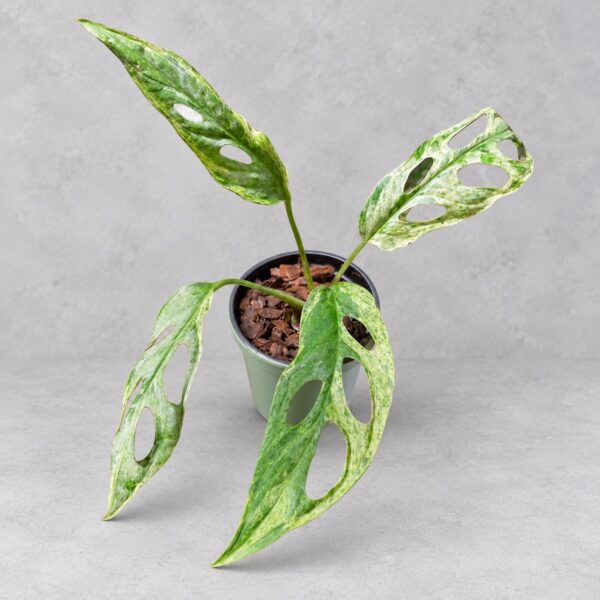
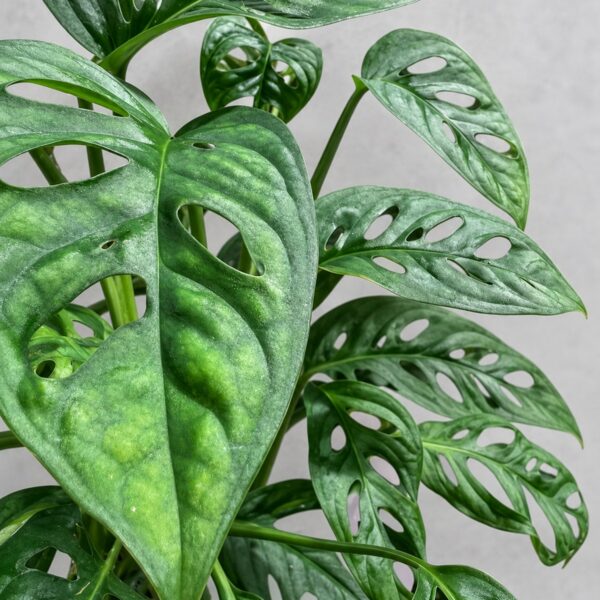
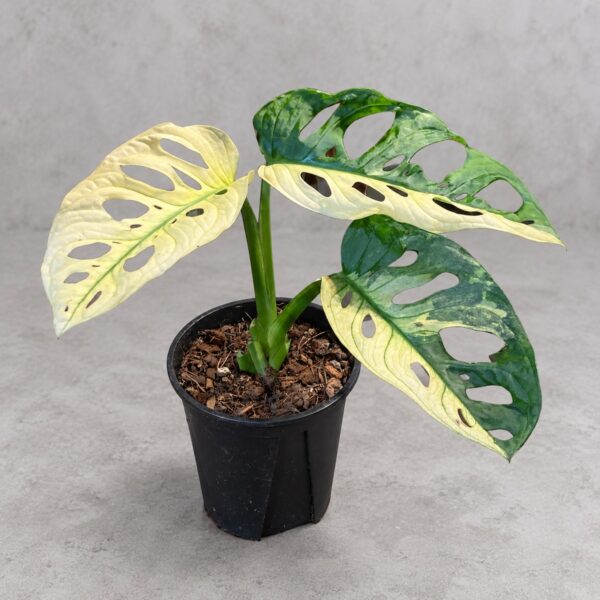
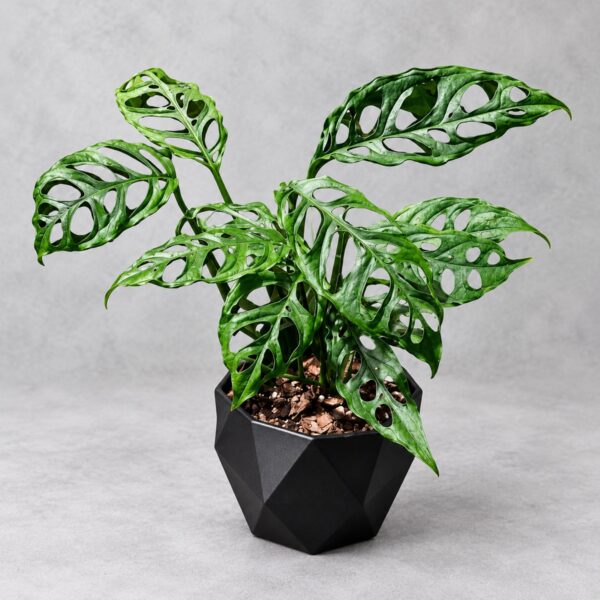
Monstera obliqua Peru
Original price was: HK$480.00.HK$280.00Current price is: HK$280.00.
In stock · store pickup
View plant
FREE PLANT ADVICE
Send us a photo before you change anything
WhatsApp a photo of the plant and your window light. Our Causeway Bay team will suggest care steps or plants that suit your space.
STORE · CAUSEWAY BAY
4/F, 39 Yiu Wa Street, Causeway Bay
Daily 12:30–8:00pm · ~3 min walk from Times Square
Map & directionsPlant Care