
Is Hong Kong Tap Water Suitable for Houseplants?


In this guide (7)
- 01Hong Kong’s water context is not a hard-water template
- 02What does leaving water to stand actually change?
- 03Five water options: benefits and limits belong together
- 04Brown tips: do not make water quality the universal explanation
- 05A water-source record that keeps inference in check
- 06Get the basics right before upgrading the water source
- 07Further reading and next steps
Under normal supply conditions, fresh tap water in a Hong Kong home is generally a reasonable starting point for most common foliage houseplants. You do not need to switch the entire collection to bottled water by default. Plant sensitivity varies, however, and water, fertiliser and accumulation in the medium must be considered together. Brown tips on one plant do not prove a problem with the whole home’s supply.
The key distinctions are simple: soft water is not mineral-free, residual chlorine is not fluoride, and water left standing is not distilled water. Identify the issue you are trying to change before paying to treat it.
Hong Kong’s water context is not a hard-water template
The Water Supplies Department’s water-use information describes treated Hong Kong water as soft, with a small amount of minerals. The supply also retains residual chlorine and is fluoridated. These are background facts, not a diagnosis of damage to an individual plant.
“Hong Kong tap water is too hard for all plants” is therefore a poor starting assumption. Naturally soft supply water is also different from water treated by a household ion-exchange softener. Iowa State’s houseplant guidance considers most municipal water suitable for most indoor plants while warning about salt accumulation from heavily softened water.
If there is abnormal colour, odour or a building supply issue, follow official water-supply and property-management information. Plant appearance cannot certify drinking-water safety. This article concerns horticultural choices, not drinking-water testing.
What does leaving water to stand actually change?
Standing allows water temperature to approach room conditions, and some residual chlorine can dissipate depending on the circumstances. It does not certify complete dechlorination for every container and waiting period. WSD advice about chlorine odour should not be expanded into “overnight standing removes every additive”.
Fluoride and ordinary dissolved minerals do not disappear simply because water stands overnight. Question 22 of the US EPA’s fluoride questions and answers states that boiling does not remove fluoride and that typical charcoal filters are not a fluoride-removal guarantee; distillation and reverse osmosis are different treatment processes. The relevant point here is treatment chemistry, not the document’s historical drinking-water limits.
If the aim is to bring very cold water closer to an appropriate temperature, standing may help. If the aim is to control a particular dissolved substance, select an appropriate treatment instead of merely waiting longer.
Five water options: benefits and limits belong together
| Source | When to consider it | Limitation |
|---|---|---|
| Normal fresh tap water | A practical default for many foliage plants | Particularly sensitive plants need individual assessment |
| Standing water | Allowing temperature to approach room conditions | Does not remove fluoride or all minerals |
| Household filtered water | A clearly defined, appropriate treatment target | Performance depends on the filter and its certification |
| Reverse-osmosis or distilled water | A low-dissolved-solids option for sensitive plants | Still requires suitable nutrition; it is not a complete nutrient solution |
| Collected rainwater | A clean, manageable collection and storage arrangement | Quality depends on surfaces and storage; natural does not mean uncontaminated |
WSD also explains that filters differ and need maintenance and replacement according to their manufacturers’ instructions. Establish what a product actually removes before choosing it.
Brown tips: do not make water quality the universal explanation
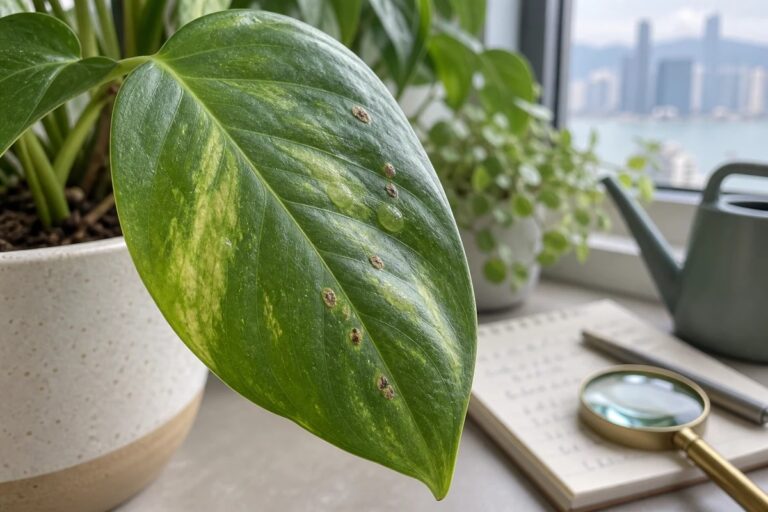
Brown edges may also involve uneven watering, damaged roots, heat, air conditions or fertiliser. Excess salts can interfere with water uptake, but “salts” does not mean only chlorine-related water treatment; fertilisers contribute dissolved ions too. Colorado State’s salinity guidance describes reduced water uptake and marginal leaf injury from excessive soluble salts, with sensitivity varying among plants.
- First exclude persistent waterlogging or repeated severe drying.
- Check feeding concentration, frequency and any fertiliser already in the mix.
- Record whether damage affects old leaves, new growth or mainly the window-facing side.
- If there is still a reasonable water-source concern, observe one plant over time while keeping other conditions as consistent as practical. Do not simultaneously repot, increase light and fertilise.
- Assess subsequent growth and further injury, not whether a dead edge repairs itself.
A water-source record that keeps inference in check
| Record | Why it matters |
|---|---|
| Source and treatment | “Filtered” is vague; record filter type or specification |
| Fertiliser and dates | Accumulation may continue despite a water-source change |
| Watering decisions and drainage | Avoid confusing improved watering with a water-chemistry effect |
| Consistent photographs | Distinguish existing scars from new damage |
| Other changes | Record relocation, season and air-conditioning changes |
A household TDS or conductivity reading does not identify individual ions or establish fluoride concentration. A low number is not a complete safety or suitability certificate. To investigate a particular substance, use an appropriate test rather than expecting a bulk measurement to identify it.
Get the basics right before upgrading the water source
For most common foliage plants, suitable light, root-zone-based watering, drainage and appropriate feeding should come before elaborate water-treatment equipment. Particularly sensitive plants need species-specific choices; carnivorous plants, for example, should not inherit the general starting point used here.
Use clean containers and avoid detergent residues, beverages, salt water or water from unrelated uses. Do not automatically equate dehumidifier condensate with commercially distilled water: collection equipment and long-term use conditions matter.
Spend on a defined problem, not on the belief that all tap water is bad. A consistent record helps establish whether changing the source actually benefits the particular plant.
Further reading and next steps
IN STORE NOW
Plants for this guide
Related plants in stock now — live prices, delivery or Causeway Bay pickup.
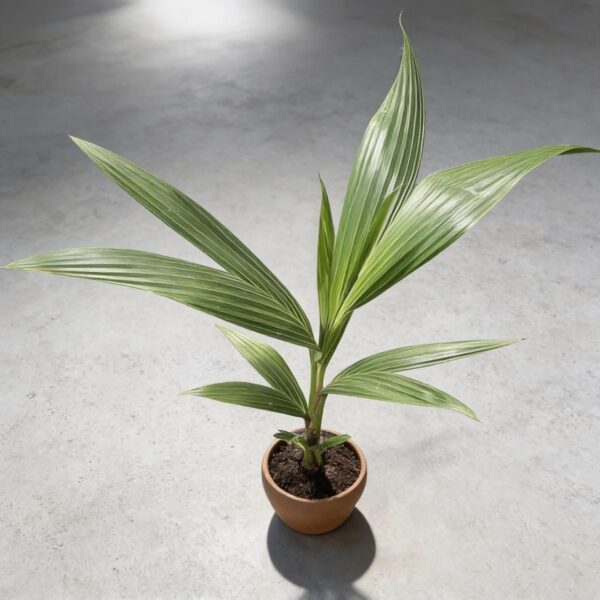
Cocos nucifera
Cocos nucifera
Original price was: HK$398.00.HK$298.00Current price is: HK$298.00.
In stock · store pickup
View plant
FREE PLANT ADVICE
Send us a photo before you change anything
WhatsApp a photo of the plant and your window light. Our Causeway Bay team will suggest care steps or plants that suit your space.
STORE · CAUSEWAY BAY
4/F, 39 Yiu Wa Street, Causeway Bay
Daily 12:30–8:00pm · ~3 min walk from Times Square
Map & directionsPlant Care