
How to Care for Hedera Helix Yukihotaru in Hong Kong | Plantjai

Hong Kong care guide for Hedera Helix Yukihotaru.
Plump, rounded leaves rimmed in snow-white — small and dainty, like scattered points of firefly light against the green, an ethereal little vine equally at home on a tabletop or in a hanging pot.
Brand: Plantjai
Origin & characteristics
'Yukihotaru' (雪ホタル, meaning "snow firefly") is a carefully selected cultivar of Western English ivy bred by Japanese horticulturists, belonging to the ginseng family (Araliaceae) as an evergreen vine. Its defining feature is a rounded, heart-shaped leaf with irregular creamy-white to pure white margins and a green centre, creating a fresh, striking contrast. Compared to standard ivy, 'Yukihotaru' has rounder, more compact leaves and a tighter growth habit, with slower growth overall — making it ideal for small spaces or as a tabletop accent.
⚠️ Toxicity note: the whole plant contains saponins and flavonoid compounds, toxic to both humans and pets (cats, dogs); ingestion can cause vomiting, diarrhoea, or skin irritation. Keep it out of reach of children and pets, and wash your hands thoroughly after pruning.
Light
- Ideal position: an east- or north-facing window with bright indirect light, aiming for about 3–4 hours of gentle daylight per day
- Maintaining variegation: adequate light is key to keeping the white margins crisp; insufficient light dulls the white edges and darkens the green centre, losing the fresh contrast
- Summer caution: avoid strong direct sun, especially between 10am and 3pm, which can scorch leaves and cause browning at the edges
- Winter adjustment: with weaker autumn/winter sun, move to a full-light position to help the plant absorb as much natural light as possible
- Supplemental lighting: if indoor light is inadequate, pair with a full-spectrum LED grow light (about 25–30 cm away) for 8–10 hours daily
Watering
- Basic principle: "err dry, not wet" — let the top 2–3 cm of soil dry out, and even wait an extra day once it feels just barely damp before watering; slightly drier soil favours healthier roots
- Seasonal adjustment:
- Spring/summer (active growth): check roughly every 5–7 days, keeping the soil lightly moist
- Autumn/winter (slow growth): roughly every 10–14 days, watering conservatively in cold weather
- Avoid overwatering: 'Yukihotaru' is even more sensitive to waterlogging than standard ivy — confirm dryness with a finger test before watering; a smaller pot helps maintain a healthier wet-dry cycle, since an oversized pot leaves roots sitting in moisture too long, causing wilting
- Misting caution: mist the surrounding air if it's dry, but never mist on rainy days or in poorly ventilated conditions; after misting, ensure good airflow so leaves dry quickly, or the leaf margins can rot
- Water quality: room-temperature tap water (settled overnight) or filtered water both work well
Soil & pot
- Soil recipes:
- Recipe one (recommended): peat 60% + perlite 25% + vermiculite 15%
- Recipe two (advanced): peat + coarse coco coir + perlite + a small amount of bamboo charcoal (roughly 5:3:2:0.5)
- Drainage first: the medium must be loose and aerated — never use dense garden soil (especially alkaline northern-style garden soil, which suffocates roots and causes yellowing)
- Pot selection: start with a small pot (10–12 cm diameter), even for an already-established plant; a terracotta pot or a plastic pot with ample drainage holes both work — 'Yukihotaru' has a slow-growing root system, and an oversized pot is more likely to cause waterlogged rot
- Repotting timing: roughly every 1–2 years in spring, sizing up just one pot each time; use the opportunity to trim old roots and apply a slow-release fertiliser as a base dressing
- Base fertiliser tip: when repotting, sprinkle a small amount of slow-release fertiliser granules on the soil surface to provide basic nutrition
Temperature & humidity
| Item | Ideal range | Tolerance limits |
|---|---|---|
| Growing temperature | 20–25°C | Minimum 10°C, maximum 30°C |
| Humidity | 50–70% | Not below 40% |
- 'Yukihotaru' dislikes heat and isn't very cold-hardy — growth slows above 28°C in summer, so move it somewhere well-ventilated and cool
- Keep winter indoor temperatures above 10°C — below 5°C risks cold damage and yellowing
- Hong Kong's hot, humid summers require good ventilation, avoiding prolonged direct AC drafts (large temperature swings can trigger disease)
- Dry air causes crispy leaf edges — use a humidifier or group several plants together to raise local humidity
Common problems
| Symptom | Likely cause | Solution |
|---|---|---|
| Soft, wilting leaf margins | Overwatering / overly wet medium / misting too frequently | Stop watering immediately, check for root rot, repot if necessary; reduce misting frequency |
| Fading or dulling white margins | Insufficient light | Move to a brighter spot, aiming for at least 3–4 hours of indirect light daily |
| Smaller, pointed leaves | Insufficient light or excess nitrogen fertiliser | Increase light, switch to a balanced NPK fertiliser |
| Scorched, browning leaf margins | Direct sun exposure or misting followed by sun exposure | Move away from strong light, avoid misting the leaves directly |
| Elongated, leggy stems | Severe light deficiency | Prune leggy stems, move to a brighter position |
| Yellowing new growth, stalled growth | Nutrient deficiency or depleted soil | Feed with a diluted liquid fertiliser every 2–3 weeks during the growing season |
| Brown spots on leaves | Leaf spot disease or poor ventilation | Remove affected leaves, reduce watering, improve ventilation |
| Natural yellowing of older, lower leaves | Normal ageing | Simply trim off with clean scissors |
How to explain to customers
"'Yukihotaru' is a Japanese cultivar, and its signature look is those round, plump leaves with a snow-white border — really fresh and dainty. There are a few key points to get right: first, use a small pot — don't be tempted to size up too early, since before the roots have filled it, a bigger pot holds too much moisture and can cause rot. Second, be patient with watering — check with a finger that the soil is fully dry before watering, and even if it's just slightly damp, hold off a bit longer. Third, don't mist it carelessly, especially on rainy days or when ventilation is poor — if the leaf margins stay wet too long, they can rot. It needs adequate light to keep that white pattern looking sharp. And remember, it's toxic — keep it well away from cats, dogs, and small children."
Fun facts
- What the Japanese name means: "雪ホタル" (Yukihotaru) means "snow firefly," describing how the white leaf margins seem to glow like fireflies against the green backdrop on a winter night.
- How it was bred: 'Yukihotaru' was carefully selected by Japanese horticulturists from among many ivy variants, prized for its stable, rounded, adorable leaf form, and has become a hugely popular plant across Asia in recent years.
- The pattern can "shift": if fed too much nitrogen-heavy fertiliser or given insufficient light for too long, 'Yukihotaru's white margins gradually fade back toward solid green, earning it the nickname "the plant that changes colour."
- A compact build: while standard ivy can easily grow to two or three metres, 'Yukihotaru' grows much more slowly and stays compact, making it ideal for Hong Kong's smaller living spaces.
- Effortless to propagate: cut a stem section with 3–4 leaves attached and place it in water — it will root in about 2–3 weeks, with a very high success rate, making it an excellent plant for beginners practising propagation.
Keywords
Yukihotaru ivy, Yukihotaru Ivy, snow firefly, Japanese ivy, round-leaf variegation, white margins, miniature climbing plant, tabletop plant, hanging plant, beginner-friendly, ginseng family, Hedera helix, foliage plant, toxic plant, office plant
Plantjai · Causeway Bay collector indoor plants · WhatsApp +852 66807550
For Hong Kong homes and offices. Stock and pricing follow the product page.
IN STORE NOW
Plants for this guide
Related plants in stock now — live prices, delivery or Causeway Bay pickup.
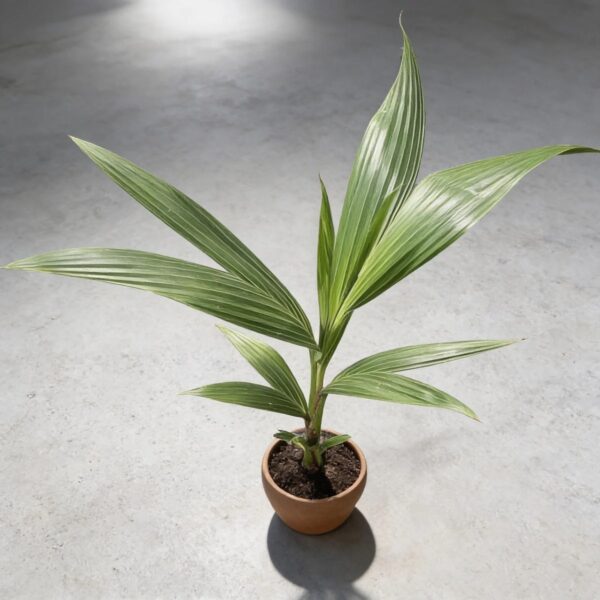
Cocos nucifera
Cocos nucifera
Original price was: HK$398.00.HK$298.00Current price is: HK$298.00.
In stock · store pickup
View plant
FREE PLANT ADVICE
Send us a photo before you change anything
WhatsApp a photo of the plant and your window light. Our Causeway Bay team will suggest care steps or plants that suit your space.
STORE · CAUSEWAY BAY
4/F, 39 Yiu Wa Street, Causeway Bay
Daily 12:30–8:00pm · ~3 min walk from Times Square
Map & directionsPlant Care