
How to Care for Hedera Helix Moonlight in Hong Kong | Plantjai

Hong Kong care guide for Hedera Helix Moonlight.
Silvery-white veins scattered across the leaves like moonlight spilling over foliage — one of the rare variegated trailing plants that seems to genuinely glow, gorgeous whether hanging or climbing.
Brand: Plantjai
Origin & characteristics
'Moonlight' is a cultivar of English ivy, bred from wild ivy native to temperate Europe and western Asia, belonging to the ginseng family (Araliaceae) as an evergreen vine. Its palmately lobed leaves are deep green with silvery-white to pale yellow variegation, with vein patterns so clear they look like moonlight streaming across the surface — hence the name. It climbs using aerial roots along its stems, or trails naturally, making it an especially versatile choice for indoor styling. Growth is moderate, making it well suited to beginners.
⚠️ Toxicity note: the whole plant contains saponins and flavonoid compounds, toxic to both humans and pets (cats, dogs); ingestion can cause vomiting, diarrhoea, or skin irritation. Keep it out of reach of children and pets, and wash your hands thoroughly after pruning.
Light
- Ideal position: an east- or north-facing window with bright indirect light, aiming for about 4 hours of gentle daylight per day
- Maintaining variegation: variegated cultivars need slightly more light than solid-green forms to keep their silvery-white pattern vivid; prolonged low light causes fading variegation, dulled colour, and legginess (stretched internodes, smaller leaves)
- Summer caution: avoid intense midday direct sun, which can scorch leaves and leave crispy edges
- Winter adjustment: move to a brighter spot to help maintain vigour
- Supplemental lighting: if indoor light is inadequate, pair with an LED grow light (about 25–30 cm away) for 6–8 hours daily
Watering
- Basic principle: "water only when dry" — let the top 2–3 cm of soil dry out, then water thoroughly until it drains from the base
- Seasonal adjustment:
- Spring/summer (active growth): check roughly every 5–7 days, adjusting to ambient humidity
- Autumn/winter (slow growth): roughly every 10–14 days, watering more conservatively in cold weather
- Avoid overwatering: ivy fears waterlogging above all else — empty the saucer within 15 minutes of watering; testing soil moisture with a finger is the most reliable method
- Air humidity: prefers higher humidity (50–70%); mist the surrounding air occasionally or place a water tray nearby; never mist the leaves on rainy days or in poorly ventilated conditions, as trapped moisture can cause rot
- Water quality: room-temperature tap water (settled overnight) or filtered water both work well
Soil & pot
- Soil recipes:
- Recipe one (recommended): quality peat 40% + coarse bark 30% + medium perlite 20% + worm castings 10%
- Recipe two (simple): peat 60% + perlite 25% + vermiculite 15%
- Recipe three (advanced): peat + orchid bark + perlite + bamboo charcoal (roughly 4:2:2:1)
- Drainage first: the medium must be loose and aerated — never use dense, unamended garden soil, which quickly causes suffocated roots and yellowing leaves
- Pot selection: a terracotta pot with ample drainage holes (good breathability) or a plastic pot both work; avoid an oversized pot — one just slightly larger than the root ball is ideal, as an overly large pot holds too much moisture
- Repotting timing: roughly every 1–2 years in spring; use the opportunity to trim old roots and refresh the soil
Temperature & humidity
| Item | Ideal range | Tolerance limits |
|---|---|---|
| Growing temperature | 15–25°C | Minimum 5°C, maximum 32°C |
| Humidity | 50–70% | Not below 40% |
- 'Moonlight' is a temperate-climate plant that prefers cool conditions — hot, humid summer weather increases the risk of spider mites or fungal issues
- Keep it above 5°C in winter; cold drafts can also cause leaf drop
- In Hong Kong's hot summers, move it somewhere well-ventilated and cool, using a fan for extra airflow if needed
- A humidifier, or grouping several plants together, can effectively raise local humidity
Common problems
| Symptom | Likely cause | Solution |
|---|---|---|
| Yellowing, dropping leaves | Overwatering / poor drainage causing root rot | Check the roots, trim away rotten sections, repot in fresh soil |
| Brown, scorched leaf tips | Air too dry or direct sun exposure | Move away from strong light, raise ambient humidity, avoid misting the leaves directly |
| Fading or disappearing variegation | Insufficient light | Move to a brighter spot, aiming for at least 3–4 hours of indirect light daily |
| Elongated, leggy stems | Severe light deficiency | Prune leggy stems, move to a brighter position |
| Brown spots on leaves | Leaf spot disease (fungal infection) | Remove affected leaves, reduce watering, improve ventilation, use fungicide if severe |
| Withering new growth, curling leaves | Spider mite infestation | Rinse leaf undersides with water, isolate the plant, use insecticidal soap if severe |
| Natural yellowing of older, lower leaves | Normal ageing | Simply trim off with clean scissors — nothing to worry about |
How to explain to customers
"'Moonlight' ivy is a variegated cultivar, and there are three key rules to remember: don't let it get sunburnt, don't let it get waterlogged, and don't let it go hungry. Keep it near an east-facing window or somewhere bright indoors — that's what keeps the silvery-white variegation looking its best. For watering, always let the soil dry out first — test with a finger, 2–3 cm down; if it's dry, water; if it's still damp, hold off. This ivy doesn't like heat, so keep it somewhere well-ventilated in summer, and if your air conditioning dries the air too much, mist the surrounding air occasionally. And one more thing — it's toxic, so keep it away from cats, dogs, and small children."
Fun facts
- A symbol from ancient Rome: ivy was regarded as a symbol of eternity and loyalty in ancient Rome, often woven into wedding wreaths.
- A natural cooling agent: British research has found that buildings covered in ivy can be up to 3–5°C cooler indoors in summer, while offering insulation and moisture protection in winter.
- A recognised air purifier: ivy is one of NASA's certified air-purifying plants, effectively absorbing volatile organic compounds like formaldehyde and benzene.
- A plant with two personalities: ivy has both a "juvenile" and "adult" growth phase — in the juvenile stage, leaves are palmately lobed and the plant climbs; after around a decade, it transitions to its adult phase, where leaves become oval and it begins flowering and fruiting.
- The secret of aerial roots: the aerial roots along the stem secrete a natural adhesive that lets ivy cling firmly to walls or bark — a substance that scientists have even studied for developing medical adhesives.
Keywords
Moonlight ivy, Moonlight Ivy, variegated ivy, silver variegation, climbing plant, hanging plant, air-purifying indoor plant, ginseng family, Hedera helix, low-maintenance, foliage plant, beginner-friendly, toxic plant
Plantjai · Causeway Bay collector indoor plants · WhatsApp +852 66807550
For Hong Kong homes and offices. Stock and pricing follow the product page.
IN STORE NOW
Plants for this guide
Related plants in stock now — live prices, delivery or Causeway Bay pickup.
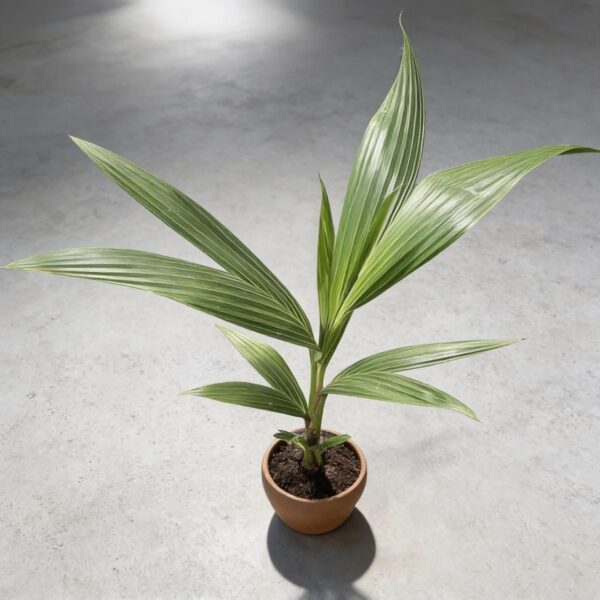
Cocos nucifera
Cocos nucifera
Original price was: HK$398.00.HK$298.00Current price is: HK$298.00.
In stock · store pickup
View plant
FREE PLANT ADVICE
Send us a photo before you change anything
WhatsApp a photo of the plant and your window light. Our Causeway Bay team will suggest care steps or plants that suit your space.
STORE · CAUSEWAY BAY
4/F, 39 Yiu Wa Street, Causeway Bay
Daily 12:30–8:00pm · ~3 min walk from Times Square
Map & directionsPlant Care