
How to Care for Guiana Chestnuts in Hong Kong | Plantjai


Plantjai 植仔 · Care Encyclopedia
Guiana Chestnuts
Hong Kong care guide — useful before you buy and after it arrives.
Shop this plant"The good-fortune plant for openings and housewarmings" — the money tree carries an auspicious name and a distinctive braided trunk, making it one of the most common feng shui plants in Hong Kong homes and offices. It…
Brand: Plantjai | Botanical note: Guiana Chestnut is the English name, corresponding to the botanical name Pachira aquatica. The braided "money tree" commonly sold in shops is almost always Pachira aquatica; this document uses that botanical name throughout.
Origin & characteristics
Native to the tropical swamps and riverbanks of Central and northern South America, this plant is found from southern Mexico down through Brazil and Peru. In its native habitat it can grow into a large tree 15–20 metres tall, producing big white flowers and cotton-like seed pods.
Key characteristics:
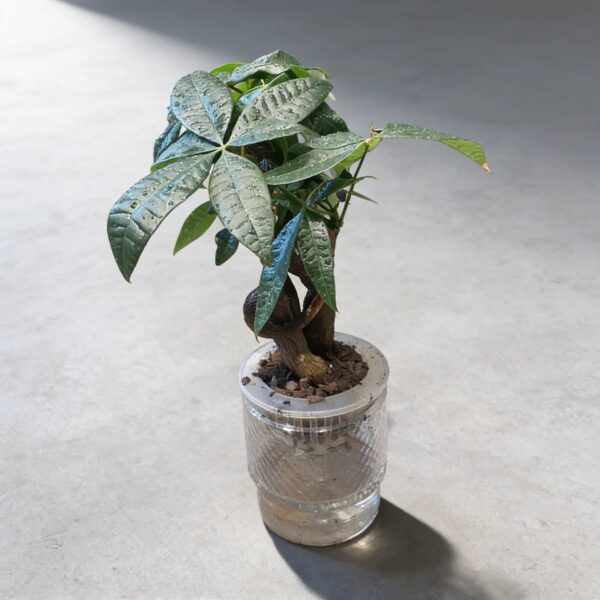
- Leaves: palmate compound leaves, typically with 5–7 leaflets per stalk (symbolising the "five elements bringing fortune"), glossy deep green and leathery
- Trunk: green and smooth when young, turning greyish-brown with maturity; potted specimens are commonly sold with several young stems braided into a decorative plait
- Growth habit: moderate growth rate, remarkably adaptable, tolerating shade, drought, and poor soil — a genuine "lazy person's plant"
- Air-purifying: capable of absorbing formaldehyde, benzene, and other volatile organic compounds
- Toxicity note: generally considered non-toxic — Pachira aquatica is not listed as a toxic plant and is relatively safe for humans and pets. Given individual sensitivity can vary, it's still best to avoid ingestion, and households with especially curious pets should exercise caution
Light
| Item | Recommendation |
|---|---|
| Ideal light | Bright, indirect light — an east- or north-facing window works well |
| Tolerable range | Partial shade to bright indirect light — the money tree is notably shade-tolerant |
| Avoid | Intense midday summer sun (may scorch leaves); complete darkness for extended periods (causes legginess and leaf drop) |
| Tip | Highly adaptable — it copes well whether moved from a bright spot to a dim one or vice versa, though expect a brief adjustment period after a big change; rotate the pot regularly for even growth |
The money tree is famously an "office plant," able to sustain itself under fluorescent lighting alone, even if growth slows somewhat.
Watering
| Item | Recommendation |
|---|---|
| Principle | Err on the dry side — the money tree's biggest enemy is waterlogging; a little underwatering is far safer than overwatering |
| Frequency | Roughly every 7–10 days in spring/summer; roughly every 10–20 days in autumn/winter (adjust to your environment) |
| Method | Water around the rim of the pot until it drains from the base, then stop; empty the saucer after 15 minutes |
| Water quality | Room-temperature water is fine — the money tree isn't fussy about water quality |
| Avoid | Standing water at the base under any circumstances; if it has a braided trunk, avoid pooling water in the gaps between the braided stems, which can cause rot |
Testing for dryness: insert a finger 3–5 cm into the soil and water only once it feels dry. The money tree's trunk and roots have some water-storage capacity, so short dry spells aren't a problem.
Special note: for braided specimens, water can collect in the gaps between the plaited stems — water carefully to avoid the top of the trunk, or wipe it dry afterward.
Soil & pot
Soil recipe:
The money tree needs excellent drainage, and can even tolerate fairly lean soil:
- Quality potting soil 40%
- Coarse sand or perlite 30% (for drainage)
- Coco coir or peat 20%
- A small amount of organic compost 10%
Pot selection:
- Material: terracotta or concrete pots are best; plastic pots require a more free-draining soil mix
- Drainage holes: essential — waterlogging is the number one cause of death for money trees
- Size: increase pot diameter by 5–8 cm each time; avoid an oversized pot for a small tree, since soil that's slow to dry increases rot risk
- Repotting timing: every 1–2 years in spring; if growth has clearly slowed or water struggles to penetrate the soil, that's a sign it may need repotting
- Extra tip: braided money trees shouldn't have their plait unwound at home — the braiding is done while the stems are young, and separating them later can damage the bark
Temperature & humidity
| Item | Recommendation |
|---|---|
| Ideal temperature | 18–27°C |
| Minimum temperature | Not below 10°C; risk of cold damage below 5°C |
| Humidity | 40–70% is fine — the money tree isn't fussy about humidity |
| Raising humidity | Typical indoor humidity is usually sufficient; mist occasionally if the air is especially dry |
| Note | Avoid AC vents and heaters; despite its adaptability, sudden temperature swings can still cause stress |
Although the money tree originates from tropical swamps and might seem to favour moisture, potted specimens actually need extra attention to drainage, since indoor conditions lack the airflow and sunlight of its native habitat.
Common problems
Q1: Yellowing, dropping leaves
- Most common cause: overwatering (by far the most common) — root rot prevents the plant from taking up nutrients
- Fix: stop watering immediately and check the roots; if rot has set in, repot with root pruning and fresh soil
- Other causes: sudden changes in light, overly dry air, or long-term nutrient deficiency
Q2: Soft, rotting trunk (braided stems)
- Most common causes: water pooling at the top of the braid, overwatering, or poor ventilation
- Fix: for mild softening, stop watering and monitor; for severe rot, cut away the affected section and let the wound dry before replanting
Q3: Brown spots on leaves
- Most common causes: fungal infection (excess moisture, poor airflow) or sunburn
- Fix: improve ventilation, reduce leaf moisture, remove badly affected leaves; sunburn requires repositioning
Q4: Stalled growth, small leaves
- Most common causes: insufficient light or lack of nutrients
- Fix: move to a brighter spot; feed with diluted liquid fertiliser every 2–4 weeks during the growing season
Q5: Curled or malformed new leaves
- Most common causes: pests (aphids, spider mites) or overly dry conditions
- Fix: check leaf undersides for pests; improve humidity; treat with soapy water or neem oil if needed
Q6: Does the money tree flower?
- Answer: it produces large white flowers in its native habitat, but potted indoor specimens rarely flower — don't expect blooms or seed pods.
How to explain to customers
"The money tree is just about the most beginner- and lazy-person-friendly plant out there — it's genuinely hard to kill! Its name carries great meaning, making it perfect for both home and office, and a natural go-to gift for store openings or housewarmings. Just remember the one most important thing: don't overwater it! Better a little dry than too wet — let the soil dry out fully before watering again, and you'll be perfectly safe. It's not fussy about light either — a bit of natural light is plenty, and it'll even grow under office fluorescent lighting. For braided specimens, just be careful not to let water pool between the plaited stems, or the trunk can rot. Basically, water it steadily, give it a little light, and it'll keep growing happily — one of the most low-stress, lucky plants you can own!"
Fun facts
- Where the name "money tree" comes from: the money tree isn't native to China at all — its popular name actually traces back to a clever marketing idea by a Taiwanese farmer, who braided Pachira aquatica stems together into a plait and marketed it with the auspicious "money tree" name, successfully spreading it to Chinese communities worldwide.
- Five leaflets, five elements: the money tree's palmate compound leaves typically have 5–7 leaflets, with 5 said to represent the "Five Elements" (metal, wood, water, fire, earth) all present at once, making it considered an excellent feng shui plant. Placing it in the southeast corner of a home (the wealth corner) is said to help attract fortune.
- The truth about the braid: the braided trunk is entirely man-made — young stems (3–5 of them) are woven together while still pliable, and they gradually fuse as they grow. However, if braided too tightly, growth can be restricted, so check for overly dense braiding when purchasing.
- It can grow in water too: the species name "aquatica" means "aquatic," reflecting its native riverside swamp habitat — it can even briefly tolerate flooding in the wild. That said, this only applies outdoors; potted specimens should never be allowed to sit in water, as indoor potted plants will rot quickly if waterlogged!
- Hydroponic option: although potted specimens fear waterlogging, the money tree can actually be grown hydroponically! Once its roots adapt, it can grow perfectly well in a bottle or glass container of water, offering another attractive display option.
Keywords
Guiana chestnut | Money tree | Pachira aquatica | Guiana Chestnuts | Money Tree | feng shui plant | lucky plant | prosperity plant | store opening gift | housewarming gift | office plant | low-maintenance plant | beginner plant | shade-tolerant | drought-tolerant | braided trunk | non-toxic plant | air-purifying | hydroponic plant | money tree care | money tree root rot | money tree yellow leaves | Plantjai
Plantjai · Causeway Bay collector indoor plants · WhatsApp +852 66807550
Plantjai shop · In stock online
Guiana Chestnuts
Pachira aquatica
Hong Kong delivery · Causeway Bay pickup
For Hong Kong homes and offices. Stock and pricing follow the product page.
IN STORE NOW
Plants for this guide
Related plants in stock now — live prices, delivery or Causeway Bay pickup.
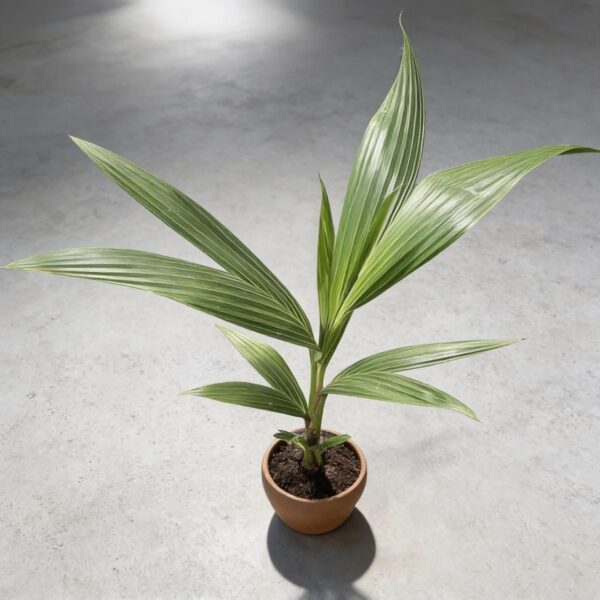
Cocos nucifera
Cocos nucifera
Original price was: HK$398.00.HK$298.00Current price is: HK$298.00.
In stock · store pickup
View plant
FREE PLANT ADVICE
Send us a photo before you change anything
WhatsApp a photo of the plant and your window light. Our Causeway Bay team will suggest care steps or plants that suit your space.
STORE · CAUSEWAY BAY
4/F, 39 Yiu Wa Street, Causeway Bay
Daily 12:30–8:00pm · ~3 min walk from Times Square
Map & directionsPlant Care