
How to Care for Fabaceae Little Tree in Hong Kong | Plantjai

Hong Kong care guide for Fabaceae Little Tree.
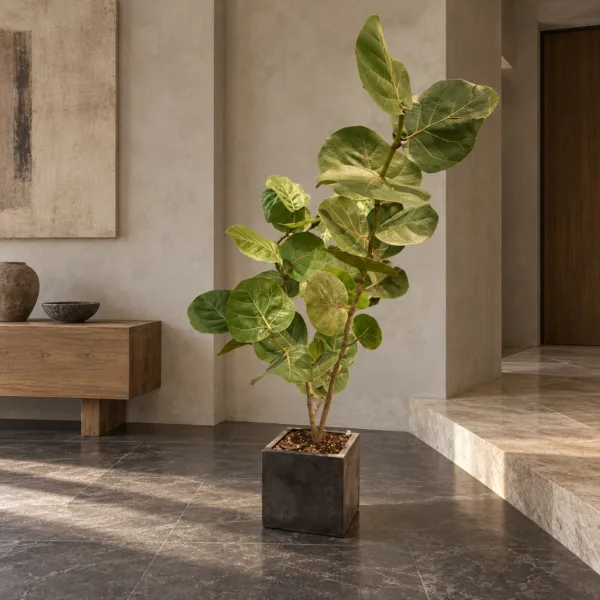
A miniature version of a Japanese garden tree, with leaflets so fine and dense they resemble tiny monkey ears — bringing a breath of Eastern serenity into any indoor space.
Origin & characteristics
The little bean tree, sometimes called "dense-leaf monkey earring," belongs to the pea/bean family (Fabaceae) and is native to tropical and subtropical Asia, commonly found in low-elevation forests across Southeast and East Asia. Its precise botanical name is still to be confirmed; in the trade it's often associated with small species in the genera Phyllodium or Archidendron.
The plant grows upright and elegant, with a slender, woody stem forming a small-tree shape. Its most eye-catching feature is a dense compound leaf structure — each leaf made up of many small, paired leaflets shaped like tiny monkey ears, which gives it its common name. The foliage is a glossy, deep green, soft in texture, and stirs gently in the breeze with an appealing, dynamic quality.
Growth is moderate; indoors it typically reaches 60–120 cm, making it one of the few foliage plants that genuinely reads as a "tree" indoors. With appropriate pruning, it can even be shaped into a bonsai-like form.
💡 Botanical note: the exact species name for this plant is still unconfirmed. It may be sold under names such as Phyllodium elegans, Phyllodium pulchellum, or other related legume species.
Light
The little bean tree prefers bright, indirect light to partial direct sun, needing somewhat more light than most typical houseplants to keep its dense foliage looking full.
- Ideal spot: near an east- or south-facing window (within 0.5–1 metre), or anywhere indoors with ample light
- Signs of adequate light: dense, deep green foliage, steady new growth, upright stems
- Signs of insufficient light: sparse foliage, elongated internodes, thinner and smaller new leaves, more frequent leaf drop
- Avoid: prolonged intense direct sun at midday in summer, which can scorch the leaves
- Tip: rotate the pot regularly so all sides receive even light, keeping the tree shape symmetrical
Watering
Follow the "let the topsoil dry out fully before watering thoroughly" rule. This plant's fine root system is sensitive to waterlogging — better to run slightly dry than too wet.
- Testing method: insert a finger 2–3 cm into the soil, water once it feels dry; or watch for the topsoil colour lightening
- Growing season (spring to autumn): roughly every 5–7 days, adjusted for environment
- Dormant season (winter): roughly every 10–14 days, as the soil takes longer to dry
- Method: water slowly around the rim of the pot until it drains from the base
- Saucer water: empty within half an hour to prevent root rot
- Note: because the foliage is so dense, avoid watering from directly overhead, which can trap moisture in the leaf clusters and cause rot
Soil & pot
Soil recipe
Needs a well-draining, loose, slightly acidic soil:
- Quality potting soil or peat, 40%
- Perlite or vermiculite, 25%
- Coco coir, 20%
- Pine bark or coconut husk chips, 10%
- A small amount of organic compost or slow-release fertiliser, 5%
Choosing a pot
- Terracotta: best breathability, recommended, helps the soil dry faster
- Concrete pot: its texture suits the tree-like form nicely, ideal for an Eastern-inspired aesthetic
- Plastic pot: lightweight but retains more moisture, requiring more careful watering
- Drainage holes: essential
- Repotting: every 1–2 years in spring, sizing up just one pot size — an oversized pot invites waterlogging
Temperature & humidity
Temperature
- Ideal growing temperature: 20–30°C
- Minimum tolerance: 15°C
- Summer caution: above 35°C growth may slow — ensure good airflow
- Winter caution: move indoors to a warm spot, away from AC vents and cold drafts from windows
Humidity
- Ideal humidity: 50–70%
- Hong Kong conditions: spring and summer humidity is generally sufficient
- Boosting humidity:
- Occasional misting around (not directly into) the foliage during dry autumn/winter weather
- A pebble tray method
- Grouping with other plants
Common problems
| Issue | Likely cause | What to do |
|---|---|---|
| Extensive leaf drop | Environmental change / temperature too low / improper watering | Keep conditions stable, check temperature and soil moisture |
| Yellowing, dropping leaves | Overwatering / poor drainage | Reduce watering, check drainage, repot if necessary |
| Thinner, paler leaves | Insufficient light | Move to a brighter position |
| Weak new growth, elongated spacing | Severe light deficiency or nutrient shortage | Increase light, feed with diluted liquid fertiliser during the growing season |
| Scorched, yellowing leaf tips | Air too dry or hard water | Raise humidity, switch to filtered water |
| Leggy, sprawling growth | Uneven light or lack of pruning | Rotate the pot regularly for even light, prune tips to encourage branching |
How to explain to customers
"This little bean tree has become really popular lately! Look at how fine and dense the leaflets are — they really do look like tiny monkey ears, so charming. Its elegant form gives any room an instant Japanese-garden feel. It's not difficult to care for — just let the soil dry out before watering, and keep it somewhere with decent light. It grows slowly, but you can gradually prune it into whatever shape you like, which is part of the fun. Repotting isn't needed often — once every year or two is plenty."
Fun facts
The little bean tree belongs to the pea/bean family, making it a distant relative of red beans and mung beans — though this ornamental variety is grown purely for its foliage and isn't meant to be eaten. Its leaves also show "nyctinastic movement" — the small leaflets close up slightly at night and reopen during the day, a trait shared by many legume family members. In Japan, small foliage trees of this style are highly prized and known as kanyoju (観葉樹), commonly used to bring a simple, natural feel to indoor spaces. Thanks to its dense foliage and upright form, the little bean tree is considered an excellent choice for building an "indoor mini-forest" aesthetic. Pruning the growing tip encourages side branches, filling out the crown — with a few years of dedicated shaping, you can cultivate a genuinely one-of-a-kind miniature tree.
Keywords
Little bean tree, dense-leaf monkey earring, legume foliage plant, Phyllodium, indoor miniature tree, dwarf tree, Eastern-style plant, bonsai-like plant, foliage tree, low-maintenance indoor plant, Hong Kong plant shop, indoor greening, Japanese-style plant, zen plant, Plantjai
Plantjai · Causeway Bay collector indoor plants · WhatsApp +852 66807550
For Hong Kong homes and offices. Stock and pricing follow the product page.
IN STORE NOW
Plants for this guide
Related plants in stock now — live prices, delivery or Causeway Bay pickup.
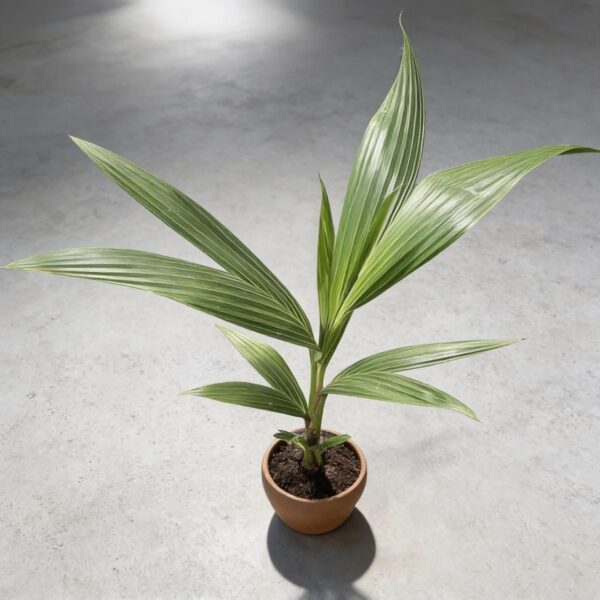
Cocos nucifera
Cocos nucifera
Original price was: HK$398.00.HK$298.00Current price is: HK$298.00.
In stock · store pickup
View plant
FREE PLANT ADVICE
Send us a photo before you change anything
WhatsApp a photo of the plant and your window light. Our Causeway Bay team will suggest care steps or plants that suit your space.
STORE · CAUSEWAY BAY
4/F, 39 Yiu Wa Street, Causeway Bay
Daily 12:30–8:00pm · ~3 min walk from Times Square
Map & directionsPlant Care