
How to Care for Cocos Nucifera in Hong Kong | Plantjai

Plantjai 植仔 · Care Encyclopedia
Cocos Nucifera
Hong Kong care guide — useful before you buy and after it arrives.
Shop this plantBring a slice of tropical beach home — a miniature version of a swaying palm grove.
Origin & characteristics
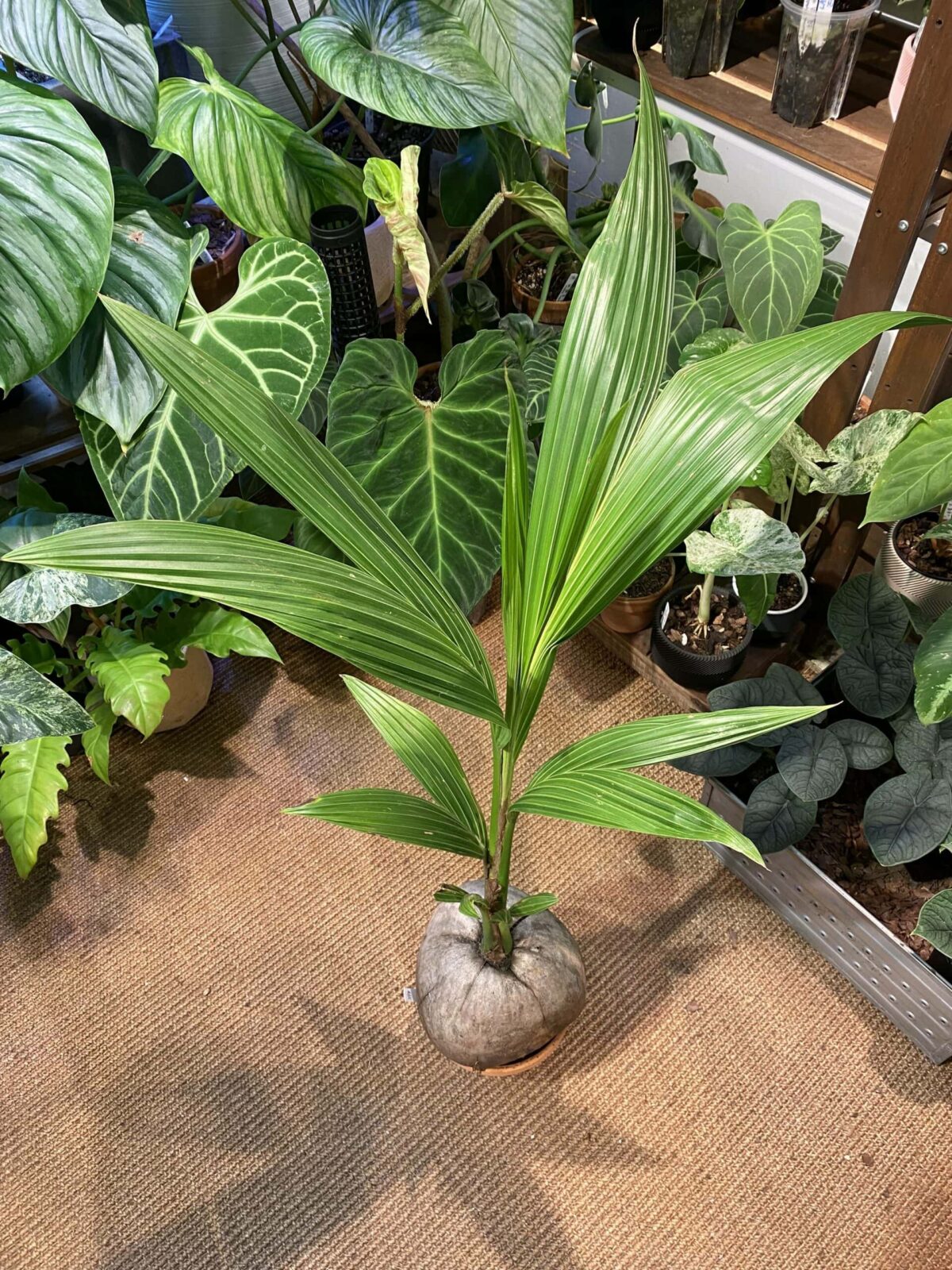
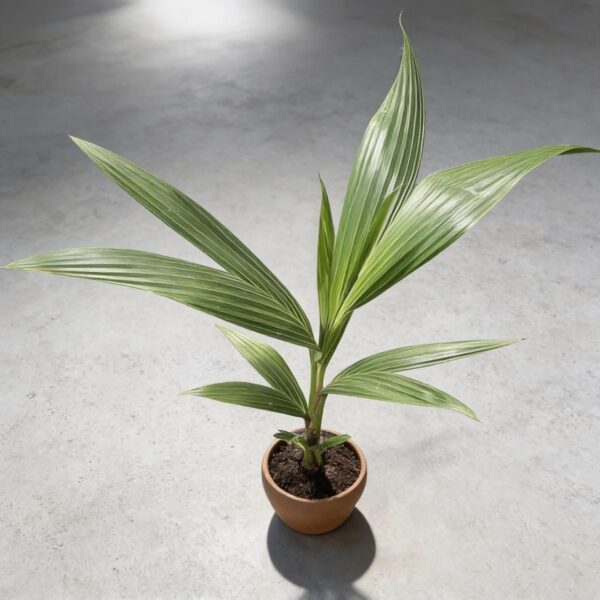
Coconut Palm Seedling is the juvenile stage of the evergreen tree in the family Arecaceae, genus Cocos, native to tropical coastal regions. The young plant grows as a single upright stem, topped with elegant feathery pinnate fronds, exuding pure tropical charm. While it eventually grows into a tree several metres tall, it grows slowly during its seedling stage and can be enjoyed indoors for several years. It needs ample sunlight and high humidity, making it the perfect choice for creating a tropical-style home.
Light
Coconut Palm Seedling loves abundant sunlight. Indoors, place it at the brightest south- or west-facing window available, needing at least 6 hours of bright light daily. Insufficient light severely affects growth, causing yellowing and thinning leaves. If indoor light is inadequate, consider using a plant grow light. In summer, it can be placed in partial shade outdoors, but should be gradually acclimated to avoid scorching.
Watering
Coconut Palm Seedling has relatively high water needs; keep the soil evenly moist, watering once the topsoil starts to feel slightly dry. Water every 2–3 days in summer, extending to every 5–7 days in winter. This species has some tolerance for salt, but filtered water or rainwater is still recommended. Avoid waterlogging, and the pot must have drainage holes. Regularly misting the leaves simulates a sea breeze environment, helping keep the foliage vividly green.
Soil & pot
Use a well-draining sandy soil, such as peat mixed with coarse sand and perlite (roughly 4:2:2). Coconut palms have a relatively long root system, so a deeper pot in the early stages allows the roots to extend. Terracotta is preferred for its breathability and drainage. As the plant grows, repot into a larger container each spring to accommodate root development.
Temperature & humidity
Suitable growing temperature is 22–30°C — a genuinely tropical plant, with winter temperatures never below 18°C, and severe damage or even death below 15°C. Humidity requirements are relatively high, ideally above 70%. Hong Kong summer humidity is usually sufficient, but pay special attention to moisture when heating is running in winter — use a humidifier or mist the surroundings frequently.
Common problems
- Yellowing, dry leaf tips: most commonly caused by dry air or water quality issues — increase surrounding humidity and switch to filtered water for watering
- Brown spots on leaves: possibly fungal infection from overwatering — reduce watering frequency and ensure good ventilation
- Growth stalling, sparse foliage: severe light deficiency — move to a brighter position or add a grow light
- Overall yellowing of leaves: possibly nutrient deficiency — apply a palm-specific fertiliser or balanced liquid fertiliser every 2–3 weeks during the growing season
- Root rot issues: poor soil drainage or oversized pot causing waterlogging — switch to a well-draining soil recipe and ensure the pot's drainage is unobstructed
How to explain to customers
"This Coconut Palm Seedling really gives your home that holiday feel — put it in your living room and the whole space instantly turns tropical! It loves sunlight and humidity, so remember to place it near your brightest window, and mist it a bit more when running the heater in winter to keep it from drying out."
Fun facts
Coconut is one of the world's most widely distributed plants — its fruit can float on the ocean for months while remaining viable, taking root once it washes ashore, which is why it's also called the "Tree of Life." While indoor coconut seedlings will eventually outgrow the space, they can be enjoyed for several years at the seedling stage, and can later be given away or transplanted into a garden.
Keywords
Coconut Palm Seedling, Cocos nucifera, Arecaceae, tropical plant, foliage plant, indoor potted plant, coconut tree, beach-style decor, sun-loving plant, high humidity plant, large potted plant
In-depth care guide
Introduction
Coconut (Cocos nucifera) is a perennial evergreen tree in the family Arecaceae, genus Cocos, native to coastal tropical regions from India to Malaysia. In its natural habitat, the coconut palm can grow up to 30 metres tall and live for over 100 years, making it one of the most iconic plants of tropical beaches. A "coconut seedling" refers to the young plant that sprouts from a germinated coconut, typically standing 30–60 cm tall, making it well suited as an indoor foliage plant.
The genus Cocos actually contains only a single species — the coconut itself. Its species name nucifera comes from Latin, meaning "nut-bearing." The English name "coconut" comes from the 16th-century Portuguese word "coco," meaning "skull," because the three holes on the coconut shell resemble a human face.
Successfully growing a coconut seedling indoors is genuinely challenging, since home environments differ significantly from tropical coastlines. Generally speaking, coconut seedlings often struggle to survive indoors for more than a year, but with sufficient light, temperature, and humidity, they can still become a genuinely eye-catching indoor focal point.
Light requirements
Coconut Palm Seedling is an incredibly light-hungry plant. In nature, it grows on sunny beaches, so indoor cultivation absolutely requires placing it in the brightest spot in your home. The ideal location is near a south- or west-facing window, ideally receiving several hours of morning or evening direct sunlight daily.
If you notice the seedling's new leaves becoming increasingly yellow, growth stalling, or the stem starting to soften, this is often due to insufficient light. Coconut seedlings have virtually no tolerance for low-light environments — if placed somewhere so dim you'd need to turn on a light to read a newspaper, it will quickly decline.
In summer, you can move the coconut seedling to a balcony or terrace, but acclimate it gradually — don't move it directly from indoors to full sun exposure, or the leaves will scorch. Start by placing it in partial shade for the first few days, gradually increasing sun exposure time, until it can handle full sun after about one to two weeks.
If your home genuinely lacks sufficient light, consider using a grow light for 12–16 hours daily to make up for the shortfall in natural light.
Temperature requirements
Coconut Palm Seedling is a tropical plant with fairly strict temperature requirements. The optimal growing temperature is between 22°C and 32°C, within which it grows best.
Minimum temperature: absolutely never below 18°C. If the temperature drops below 18°C, the coconut seedling's growth will stall, leaves may blacken, and in severe cases it may even die. In Hong Kong, winter temperatures sometimes drop below 18°C, so during this time it's important to bring the plant indoors to a warmer spot, away from doors, windows, and drafty positions.
Maximum temperature: the coconut seedling can briefly tolerate temperatures above 32°C, provided there's sufficient moisture and air circulation. In particularly hot summer weather, remember to water more frequently and maintain good airflow.
Also pay special attention to temperature fluctuations. Coconut seedlings dislike sudden temperature swings, such as being placed directly in front of an AC vent, or experiencing a sudden drop in nighttime temperature during winter. It's best to keep temperatures stable, with day-night differences no greater than 5°C.
Watering method
Coconut Palm Seedling is fairly sensitive to watering, particularly disliking waterlogged conditions. The correct approach is to wait until the upper half of the soil (roughly half the pot's depth) has dried before watering again. You can insert a finger about 5–8 cm into the soil to check for dryness before watering.
The coconut shell itself stores a small amount of water, giving this plant some tolerance for mild dryness, but it absolutely cannot tolerate prolonged drought. In hot summer weather, it may need watering twice a week; in winter, as growth slows, this can be reduced to once a week.
Use lukewarm water for watering, never ice-cold water. A simple test: if a glass of water is too cold for you to comfortably rinse your mouth with, it's too cold to use on your coconut seedling.
Overwatering is the most common cause of death for coconut seedlings. If the soil stays wet for prolonged periods, the roots will suffocate and rot, showing the following symptoms: rapidly yellowing leaves, stalled growth, and a soft, browning stem base. If you notice these signs, immediately check the roots, trim away any rotten portions, and replant in fresh soil.
Humidity management
Coconut Palm Seedling loves high humidity, ideally kept above 60%. If your home's air is dry (especially when running AC or heating), the leaf tips will easily turn brown — a clear sign that humidity is insufficient.
Here are several ways to boost humidity:
- Pebble tray: place the pot on a tray filled with water and pebbles, and the evaporation will raise surrounding humidity. Remember not to let the pot base directly touch the water, or the soil will absorb it continuously, becoming overly wet.
- Regular misting: mist the leaf surface lightly with lukewarm water daily or every other day, mimicking a tropical rainforest environment.
- Humidifier: if you have many tropical plants at home, consider investing in a humidifier to maintain consistent air humidity over the long term.
- Grouping plants: placing multiple plants together allows the moisture they release through transpiration to create a more humid microclimate.
Additionally, regularly spraying or rinsing the leaves with clean water not only boosts humidity but also removes accumulated dust and potential spider mite eggs, keeping the foliage healthier.
Soil and repotting
Coconut Palm Seedling needs well-draining, highly breathable soil. Use the following recipe:
- 2 parts peat (or coco coir)
- 2 parts perlite
- 2 parts leaf mould
- 2 parts coarse sand
Alternatively, a commercial palm-specific potting mix works well too. The key is ensuring the soil is loose enough for water to drain quickly, without pooling at the bottom of the pot.
When planting, lay a drainage layer of clay pebbles or gravel about 5–10 cm thick at the pot's base, ensuring excess water can drain freely.
Repotting requires some care, as coconut seedlings are prone to transplant shock. It's recommended to repot once every two to three years, and to water thoroughly 24 hours before repotting, ensuring the soil is moist. When repotting, avoid disturbing the roots as much as possible — simply move the entire root ball into a larger pot. If you find any rotten roots, carefully remove them and trim away the affected portions.
Fertilising recommendations
Coconut Palm Seedling needs regular fertilising during its growing season (spring to summer). Apply a palm-specific fertiliser or general indoor plant liquid fertiliser every three to four weeks, diluted according to package instructions.
Palm family plants have particular nutritional needs, especially requiring ample potassium (K) and magnesium (Mg). If you notice leaf tips turning brown, this may indicate potassium deficiency; if leaves show yellow striping, this may indicate magnesium deficiency.
Reduce fertilising in autumn and winter, to roughly once every six weeks, or stop fertilising entirely. Since growth slows in cooler temperatures, the plant simply doesn't need as much nutrition.
Before fertilising, water thoroughly first, then apply the diluted liquid fertiliser. Never pour concentrated fertiliser directly onto dry soil, as this will burn the roots.
Propagation methods
Coconut seedlings can be propagated by sprouting a coconut, and while the process requires patience, watching a coconut sprout is a genuinely satisfying experience:
- Choose a coconut: buy a whole, husked coconut from a supermarket or market, and shake it — hearing water sloshing inside indicates freshness. If there's no sound of water, it may already be dried out and unlikely to sprout.
- Soak: soak the coconut in lukewarm water for about three days, changing the water daily.
- Plant: choose a large tray or pot filled with well-draining soil. Lay the coconut on its side and bury it about one-third to one-half deep in the soil (leaving more than half the shell exposed).
- Keep moist: maintain consistently slightly moist soil — neither too wet nor too dry. Place in a warm (24–28°C), bright location.
- Wait for germination: germination time varies, potentially taking anywhere from one month to six months. Be patient during this period and avoid digging it up frequently to check.
- Transplant: once the seedling has grown several leaves and developed a good root system, it can be carefully transplanted into its own pot.
Common problems and solutions
Brown leaf tips
The most common cause is overly dry air. Coconut seedlings are extremely sensitive to low humidity, and if your home runs heating or AC, the leaf tips will quickly brown. The solution is to increase humidity using a pebble tray, humidifier, or regular misting.
Additionally, brown leaf tips can also result from nutrient deficiency, especially lacking potassium, magnesium, or boron. Try switching to a palm-specific fertiliser.
Yellowing leaves
If it's the lower, older leaves gradually yellowing, this may be normal ageing and not a cause for concern. But if the yellowing progresses quickly and new leaves are also yellowing, this very likely indicates overwatering causing root rot. Check soil moisture and root health.
Growth stalling
If the coconut seedling hasn't produced new leaves for a long time, possible causes include: insufficient light, temperature too low, or the root system having already filled the pot. Check each cause systematically to address the issue.
Spider mites
Coconut seedlings are particularly susceptible to spider mites in dry environments. They spin webs on the leaf undersides and feed on the sap, causing small yellow spots on the leaves. Prevention involves maintaining humidity and regularly misting the leaves to rinse them off. If already infested, treat with insecticidal soap or neem oil spray.
Transplant shock
After repotting, coconut seedlings may show symptoms of transplant shock such as drooping and yellowing leaves. Prevention involves watering thoroughly before repotting, disturbing the roots as little as possible during the process, and placing the plant in a shady spot for a few days afterward before gradually returning it to a bright location.
Pruning and maintenance
Coconut Palm Seedling doesn't need special pruning — simply remove withered, yellow older leaves regularly. When pruning, use clean scissors to cut at the base of the leaf, avoiding pulling or tearing, which could damage the stem.
Never forcibly detach the connection between the base and the coconut shell, as this creates a wound susceptible to bacterial infection. If the coconut naturally detaches on its own, that's fine, but if it's still attached, leave it be.
Special reminders
Successfully growing a coconut seedling long-term indoors is genuinely challenging, since home environments differ significantly from tropical coastlines. Here are a few tips to improve your success rate:
- Light is key: giving it the best possible light is the primary condition for success.
- Avoid cold drafts: in winter, keep it away from doors and windows, and avoid exposure to cold wind.
- Ensure sufficient humidity: running a humidifier long-term is the best option.
- Don't overwater: better a bit dry than wet — root rot is the most common cause of death.
- Have realistic expectations: even with the best care, coconut seedlings may only survive about a year indoors. Enjoy the tropical vibe it brings while you can.
參考資料(想知來源可展開)
References
- UK House Plants. "Our Care Guide for Coconut Palms!" https://www.ukhouseplants.com/plants/coconut-palms
- Baumbad. "Coconut palm care and location." https://baumbad.co.uk/blogs/giesslexikon/kokospalme-giessen
- My PlantIn. "Coconut palm Care." https://myplantin.com/plant/361
- PLNTS.com. "Coconut Care – Expert Tips." https://plnts.com/en/care/houseplants-family/cocos
- Idyl. "Why Are My Coconut Palms Getting Brown Leaf Tips?" https://www.idyl.co.in/blogs/blog/why-are-my-coconut-palms-getting-brown-leaf-tips
Plantjai shop · In stock online
Cocos nucifera
Cocos nucifera
Original price was: HK$398.00.HK$298.00Current price is: HK$298.00.
Hong Kong delivery · Causeway Bay pickup
For Hong Kong homes and offices. Stock and pricing follow the product page.
IN STORE NOW
Plants for this guide
Related plants in stock now — live prices, delivery or Causeway Bay pickup.
Cocos nucifera
Cocos nucifera
Original price was: HK$398.00.HK$298.00Current price is: HK$298.00.
In stock · store pickup
View plant
FREE PLANT ADVICE
Send us a photo before you change anything
WhatsApp a photo of the plant and your window light. Our Causeway Bay team will suggest care steps or plants that suit your space.
STORE · CAUSEWAY BAY
4/F, 39 Yiu Wa Street, Causeway Bay
Daily 12:30–8:00pm · ~3 min walk from Times Square
Map & directionsPlant Care