

How to Care for Christia Obcordata in Hong Kong | Plantjai

Plantjai 植仔 · Care Encyclopedia
Christia Obcordata
Hong Kong care guide — useful before you buy and after it arrives.
Shop this plantLeaves shaped like tiny fighter jets — a plant so distinctive it's unforgettable at first sight.
Origin & characteristics
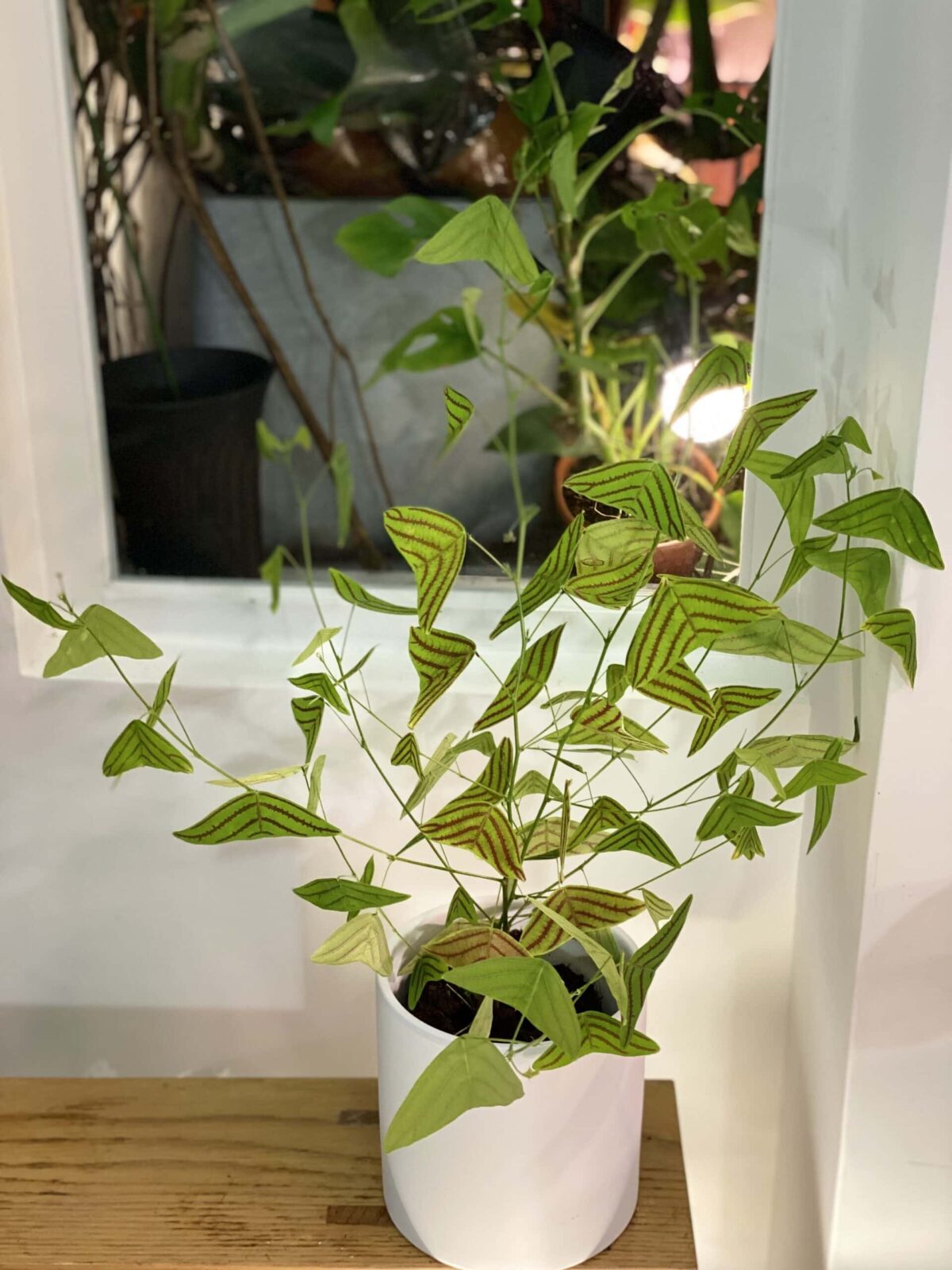
Butterfly Wing Plant is native to tropical Southeast Asia, a perennial herb in the family Fabaceae, genus Christia. Its most striking feature is its leaves, shaped like an inverted triangle with two "wings" spreading out on either side, resembling a tiny fighter jet — hence the common names "aeroplane plant" or "butterfly plant." The venation is clearly visible, and the leaf colour is bright green tinged with reddish-purple, giving it a light, elegant texture. The plant is compact, standing about 15–30 cm tall, making it well suited to small pots and a delightful tabletop foliage plant.
Light
Butterfly Wing Plant enjoys ample diffused light, ideally near an east- or north-facing window. It needs relatively bright conditions to maintain vivid leaf colour, and insufficient light causes fading and leggy stems. Avoid direct sun exposure in summer, which easily scorches the leaves. Receiving 4–6 hours of gentle light daily helps maintain its best appearance.
Watering
Keep the soil evenly moist without waterlogging, watering once the top 2 cm dries out. Water roughly every 3–5 days during spring and summer's growing season, extending to every 7–10 days in autumn and winter. It's somewhat sensitive to water quality; use filtered water or tap water left standing overnight to avoid chlorine effects. The leaves are relatively thin and not very drought-tolerant, wilting quickly if underwatered.
Soil & pot
Use a well-draining, breathable soil mix, such as peat mixed with perlite and vermiculite (roughly 4:2:1). The pot must have drainage holes, and a layer of clay pebbles can boost drainage further. A small pot 10–15 cm in diameter is sufficient — an oversized pot easily leads to waterlogging and root rot. Consider repotting once a year in spring to refresh the soil.
Temperature & humidity
Suitable growing temperature is 20–30°C. As a tropical plant, winter temperatures shouldn't drop below 15°C, as cold conditions easily cause leaf drop or even wilting. Humidity requirements are relatively high, ideally 60–80%. In dry conditions, leaf edges easily dry out — regularly mist the surrounding air or use a humidifier, but avoid directly misting the leaf surface to prevent waterlogging.
Common problems
- Dry, curling leaves: mostly caused by overly dry air or underwatering — increase surrounding humidity and check soil moisture
- Fading, dull leaf colour: insufficient light or nutrient deficiency — move to a brighter position and apply diluted liquid fertiliser every two weeks during the growing season
- Severe leaf drop: temperature too low or sudden environmental change — maintain a stable, warm environment, avoiding placement near AC vents
- Slow growth: possibly caused by too small a pot or nutrient-poor soil — consider repotting and supplementing with fertiliser
How to explain to customers
"This Butterfly Wing Plant is really charming — every leaf looks just like a miniature fighter jet! It likes a fairly humid environment, so remember not to let it dry out completely before watering, and misting occasionally to keep the surroundings moist will keep it looking its best."
Fun facts
In the botanical name Christia obcordata, "obcordata" means "inverted heart-shaped," perfectly describing its distinctive leaf shape. Like peanuts and red beans, it's a member of the legume family, and when flowering, it produces small purple-pink flower spikes — not the main attraction, but a charming bonus.
Keywords
Christia obcordata, Butterfly Wing Plant, aeroplane plant, Fabaceae, novelty plant, tabletop potted plant, foliage plant, Southeast Asian plant, tropical plant, indoor potted plant
In-depth care guide
One-line pitch
Leaves that look like butterfly wings — or a fighter jet diving — a genuinely mind-bending foliage plant within the legume family, giving you a daily view of "planes taking off and landing" right on your windowsill.
Origin & characteristics
Butterfly Wing Plant, botanical name Christia obcordata (Poir.) Bakh.f., belongs to the family Fabaceae (also called Leguminosae), genus Christia. This genus contains approximately 10–15 species, primarily distributed across tropical and subtropical Asia. According to Wikipedia and Plants of the World Online (POWO), C. obcordata is a well-recognised species within Fabaceae, and its unique leaf shape has made it a highly sought-after rare foliage plant in horticultural circles.
Taxonomic position
| Rank | Name |
|---|---|
| Kingdom | Plantae |
| Clade | Tracheophyta |
| Clade | Angiosperms |
| Clade | Eudicots |
| Clade | Rosids |
| Order | Fabales |
| Family | Fabaceae |
| Subfamily | Faboideae |
| Genus | Christia |
| Species | C. obcordata |
Closely related genera include Desmodium and Flemingia, which similarly have divided or compound leaf forms, but their leaf shapes are far less distinctive than C. obcordata's. Some botanists have previously merged the genus Christia into Lourea, but modern molecular systematics research supports Christia as a distinct genus.
Native distribution
C. obcordata is native to tropical Asia, including southern China, Taiwan, Japan (the Ryukyu Islands), the Philippines, Vietnam, Thailand, Malaysia, and Indonesia. It typically grows on low-elevation grassy slopes, roadsides, forest edges, and open ground, at elevations ranging from 0–800 metres. Compared with many tropical foliage plants, Butterfly Wing Plant has relatively higher light requirements — its native habitat tends to be more open, quite different from typical rainforest understory species.
Morphological features
Butterfly Wing Plant's most eye-catching feature is of course its leaves:
- Leaf shape: simple leaves, but obcordate (inverted heart-shaped), with a wedge-shaped narrowing at the base and a flat or slightly notched tip, spreading symmetrically on either side — the overall silhouette closely resembles a butterfly in flight or a plane viewed from above. Leaves are about 2–4 cm long and 1.5–3 cm wide.
- Leaf arrangement: alternate, with slender petioles about 1–2 cm long.
- Leaf colour: bright to deep green, with distinctly pinnate venation. New leaves may carry a faint purple-red tint.
- Stem: herbaceous, upright or leaning, about 20–40 cm tall, with many branches and a soft texture.
- Flowers: small, pale purple-pink or pink, arranged in loose racemes. While not particularly showy, they have the classic pea-flower (papilionaceous) form typical of legumes.
- Fruit: a jointed pod (loment) that splits into segments upon maturity — a typical feature of the genus Christia.
Since the plant is lightweight and its leaves so distinctive, Butterfly Wing Plant is well suited for a windowsill, bookshelf, or tabletop, where its "aeroplane wing" form can be appreciated from the side.
Medicinal value
According to the literature, C. obcordata has been used in traditional Japanese and Indonesian medicine for treating urinary blockages. A 2007 study even evaluated its potential as an antimalarial agent, but the results showed no significant inhibitory effect on the malaria parasite (see references below). While folklore attributes it with heat-clearing, detoxifying, and diuretic properties, Plantjai absolutely does not recommend customers consume any foliage plant on their own.
Light
Compared with most tropical foliage plants, Butterfly Wing Plant needs more light — its native habitat is relatively open, and the plant has evolved to need ample sunlight to maintain a compact form.
Practical recommendations
- Ideal light level: bright diffused light to light direct sun. An east-facing window (receiving gentle morning direct sun) is ideal. If near a south- or west-facing window, keep 0.5–1 metre back, or filter midday strong sun with a sheer curtain.
- Avoid strong direct sun: the harsh sun between noon and 3pm will scorch the leaves, especially in summer.
- Effects of low light: insufficient light causes elongated stem joints, thinner leaves, wider spacing, and loss of the compact "squadron of planes" effect.
- Hong Kong practical notes: in summer, an east-facing indoor window is ideal. If you only have a west- or south-facing window, place it within 1 metre of the window but slightly to the side, avoiding direct midday sun.
Watering
Butterfly Wing Plant prefers consistently moist soil, but cannot tolerate waterlogging. As an herbaceous plant, its root system is fairly shallow, giving it moderate drought tolerance — brief dryness will cause the leaves to droop, but they usually recover after watering.
Practical recommendations
- Finger test: insert your index finger about 2.5 cm (roughly 1 inch) into the soil surface. If it feels dry, water; if still slightly moist, wait 1–2 more days.
- Frequency: generally every 5–7 days, depending on season and environment. Hot summer weather might shorten this to every 3–4 days; winter can extend to every 7–10 days.
- Watering method: water thoroughly around the pot's edge until it flows from the base, then empty the saucer.
- Water quality: room-temperature tap water is fine. Butterfly Wing Plant isn't particularly demanding about water quality, though filtered water is even better.
- Important reminder: never let the soil dry out completely. The leaves will visibly droop during drought — a clear signal to water — but repeated drought will weaken the plant's overall health.
Soil & pot
Butterfly Wing Plant needs well-draining, organically rich soil. Its root system is relatively shallow, so a deep pot isn't necessary.
Recommended soil mixes
- Recipe A (balanced): 50% quality potting soil + 20% orchid bark chips + 20% charcoal chips + 10% perlite/vermiculite. This recipe closely mirrors the recommendations from Paraiso Plant Studio, formulated specifically for Butterfly Wing Plant.
- Recipe B (simple): 60% general potting soil + 30% perlite + 10% worm castings.
- Recipe C (breathable): 40% coco coir + 30% orchid bark + 20% perlite + 10% well-rotted compost.
Pot selection
- Shallow, wide pot: Butterfly Wing Plant's roots develop horizontally, and being a lightweight plant, a shallow pot helps keep the soil appropriately moist without waterlogging at the base.
- Must have drainage holes: even with a breathable soil recipe, drainage holes remain essential.
- Pot size: a single Butterfly Wing Plant does well in a 10–12 cm diameter pot. For a group planting effect, a 15–18 cm shallow pot works well.
Temperature & humidity
Temperature
- Ideal range: 20–28°C.
- Minimum tolerance: around 15°C; below 15°C, growth clearly slows, and prolonged cold may cause yellowing and leaf drop.
- Maximum tolerance: around 35°C, but the soil must stay moist under high heat, or the plant will wilt quickly.
- Hong Kong practical notes: typical indoor temperatures are perfectly suitable. Summer AC use is fine, but avoid direct airflow. If indoor temperature drops below 15°C in winter, move to a warmer spot.
Humidity
- Ideal humidity: 50–70% RH.
- Hong Kong practical notes: Hong Kong's average annual humidity of about 70% is perfectly suitable. In high summer humidity, ensure good ventilation to avoid fungal issues from stagnant, humid conditions.
- When heating is running in winter: if humidity drops below 40%, the leaves may start curling. Group Butterfly Wing Plant with other plants, or use a moist pebble tray to raise local humidity.
Fertilising
Butterfly Wing Plant grows at a moderate rate and has moderate fertiliser needs. Appropriate fertilising promotes richer leaf colour and denser branching.
- Growing season (March–October): apply a balanced liquid fertiliser (such as 20-20-20) diluted to half strength every 2–3 weeks.
- Fertilising timing: fertilise when the soil is slightly moist.
- Winter (November–February): reduce to once a month, or stop fertilising entirely.
- Organic option: diluted worm castings liquid (1:10) applied monthly offers gentle, low-burn-risk feeding.
Pruning and propagation
Pruning
- Pinching to encourage branching: Butterfly Wing Plant naturally branches well, but to promote a denser, "bushier" effect, pinch the growing tip in spring to stimulate side shoots.
- Remove dead leaves: trim off yellowed leaves promptly to keep the plant tidy.
Propagation
Butterfly Wing Plant can be propagated through seeds or cuttings:
Seed propagation:
- Collect seeds once the pods mature; fresh seeds have the highest germination rate.
- In spring, sow seeds on the surface of loose seedling soil, pressing gently — don't cover too deeply, since legume seeds need light to germinate.
- Keep the soil moist; germination typically occurs within 7–14 days.
Cutting propagation:
- In spring, select a healthy stem section, about 8–10 cm long with 2–3 pairs of leaves.
- Remove the lower leaves, keeping the top 1–2 pairs.
- Insert into loose, moist cutting soil, maintaining high humidity (can be covered with a plastic bag).
- Rooting typically takes about 2–3 weeks.
Common problems
| Issue | Likely cause | What to do |
|---|---|---|
| Yellowing, dropping leaves | Overwatering causing root rot, or light too weak | Check root health, improve drainage; or move to a brighter position |
| Elongated stem joints, thinner leaves | Severe light deficiency | Move immediately to a brighter position |
| Drooping, wilting leaves | Soil too dry | Water immediately; soak the pot for 10 minutes if necessary |
| Brown spots on leaves | Fungal infection, usually from poor ventilation | Trim off diseased leaves, improve air circulation |
| Growth stalling, no new leaves | Temperature too low (below 15°C) or insufficient fertiliser | Check ambient temperature, supplement with diluted fertiliser as appropriate |
| Sparse plant, bare base | Natural ageing, or long-term lack of pruning | Pinch in spring to encourage branching, or take cuttings to propagate anew |
How to explain to customers
"What makes Butterfly Wing Plant so much fun is that every leaf really does look like a tiny aeroplane — looking down at it from above on a windowsill is genuinely delightful. It likes a bit more light, so an east-facing windowsill is ideal — avoid placing it somewhere too dark, or it'll grow loose and leggy. Just remember not to let it dry out completely when watering — drooping leaves are its way of reminding you it needs a drink. It grows fairly fast, and a whole cluster on a tabletop looks really lovely."
Fun facts
Why is it called the "aeroplane plant"?
Christia obcordata's common name "aeroplane plant" comes entirely from its leaf shape — the symmetrically spread, inverted heart-shaped (obcordate) leaves, with a slightly notched tip, look exactly like an aeroplane or fighter jet viewed from above. Its English name is also "Butterfly Plant" or "Butterfly Wing Plant," since Westerners see it as resembling a butterfly in flight more than an aircraft. Other English names include "Swallowtail," "Iron Butterfly," and "Butterfly Stripe," all centred around the butterfly imagery. Interestingly, where Eastern viewers see a plane, Western viewers see a butterfly — a charming cultural difference in how the same leaf is interpreted.
An "outlier" within the legume family
Fabaceae is the world's third-largest flowering plant family, containing over 19,000 species, the vast majority known either as crops (soybeans, peanuts, peas) or flowering ornamentals (wisteria, Bauhinia). Christia obcordata is one of the rare legumes prized primarily for its foliage — most legume leaves are ordinary pinnate compound leaves, and it's rare to see such a distinctively designed simple leaf form. From an evolutionary perspective, obcordata's unusual leaf shape may help reduce water transpiration — the narrow base restricts water transport speed, while the symmetrically spread leaf maximises light absorption.
The 2007 antimalarial study came up empty
In 2007, a study published in an academic journal evaluated C. obcordata's potential as an antimalarial drug. Researchers isolated several compounds from Butterfly Wing Plant extracts and tested their inhibitory effect against the malaria parasite Plasmodium falciparum. Results showed that, despite its use in treating various ailments in traditional medicine, Butterfly Wing Plant showed no significant inhibitory effect on the malaria parasite. This study is a useful reminder that traditional herbal knowledge, while valuable, still requires scientific validation to confirm efficacy.
Legume family "root nodule" symbiosis
As a legume, Butterfly Wing Plant's roots form a symbiotic relationship with rhizobium bacteria — the bacteria form nodules on the roots, converting atmospheric nitrogen into a form the plant can absorb. This "biological nitrogen fixation" process allows legumes to grow well even in nutrient-poor soil. For gardeners growing Butterfly Wing Plant, this means the plant's nitrogen fertiliser needs are relatively low, and over-applying nitrogen fertiliser may actually suppress the activity of the rhizobium bacteria.
Keywords
Christia obcordata, Butterfly Wing Plant, aeroplane plant, Butterfly Plant, legume foliage plant, Hong Kong indoor plant, windowsill plant, obcordate leaf, rare foliage plant, Plantjai Christia
參考資料(想知來源可展開)
References
- Wikipedia. "Christia obcordata." https://en.wikipedia.org/wiki/Christia_obcordata
- Plants of the World Online (POWO). "Christia obcordata (Poir.) Bakh.f." Royal Botanic Gardens, Kew. https://powo.science.kew.org
- PictureThis. "Swallow tail – Christia obcordata Care Guide." https://www.picturethisai.com/wiki/Christia_obcordata.html
- Paraiso Plant Studio. "Christia Obcordata Butterfly Wing Plant." https://paraisoplant.studio/products/3in-christia-obcordata-butterfly-wing-plant
- Burkill, I.H. (1966). A Dictionary of the Economic Products of the Malay Peninsula. Ministry of Agriculture & Co-operatives, Malaysia.
- Takahashi, M. & Sato, S. (2007). "Antimalarial activity of Christia obcordata extracts." Journal of Ethnopharmacology 112(3): 561–563.
- Flora of China. "Christia obcordata (Poiret) Meeuwen." Vol. 10, p. 178. http://www.efloras.org
- Wu, D.L. & Thulin, M. (2010). "Fabaceae." Flora of China 10: 1–642.
⚠️ Toxicity/pet note: Butterfly Wing Plant belongs to Fabaceae, and according to horticultural sources such as Paraiso Plant Studio, it carries some toxicity to animals. While legume family toxicity is generally milder than that of Araceae, ingestion by pets may still cause gastrointestinal upset. Keep the plant out of pets' reach. As for medicinal use, although there's a history of traditional medicinal application, Plantjai absolutely does not recommend customers consume any foliage plant on their own.
Plantjai shop · In stock online
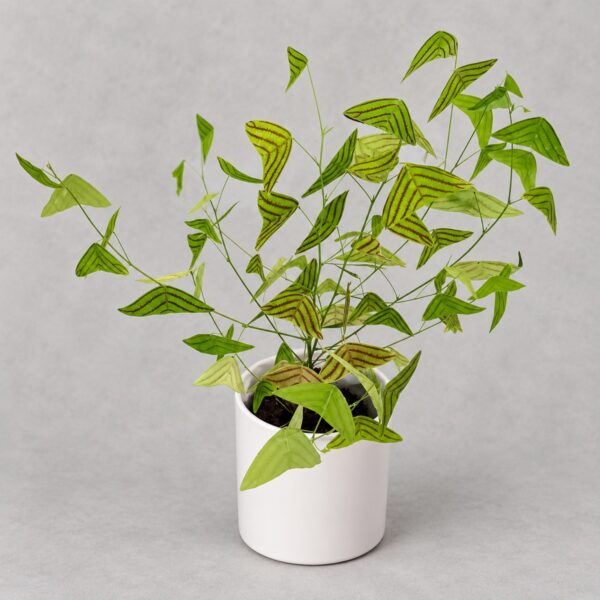
Christia obcordata
Christia obcordata
HK$268.00
Hong Kong delivery · Causeway Bay pickup
For Hong Kong homes and offices. Stock and pricing follow the product page.
IN STORE NOW
Plants for this guide
Related plants in stock now — live prices, delivery or Causeway Bay pickup.
FREE PLANT ADVICE
Send us a photo before you change anything
WhatsApp a photo of the plant and your window light. Our Causeway Bay team will suggest care steps or plants that suit your space.
STORE · CAUSEWAY BAY
4/F, 39 Yiu Wa Street, Causeway Bay
Daily 12:30–8:00pm · ~3 min walk from Times Square
Map & directionsPlant Care