
How to Care for Cercestis Mirabilis in Hong Kong | Plantjai


Plantjai 植仔 · Care Encyclopedia
Cercestis Mirabilis
Hong Kong care guide — useful before you buy and after it arrives.
Shop this plantA whimsical climbing foliage plant with leaf patterns like a ghostly face.
Origin & characteristics
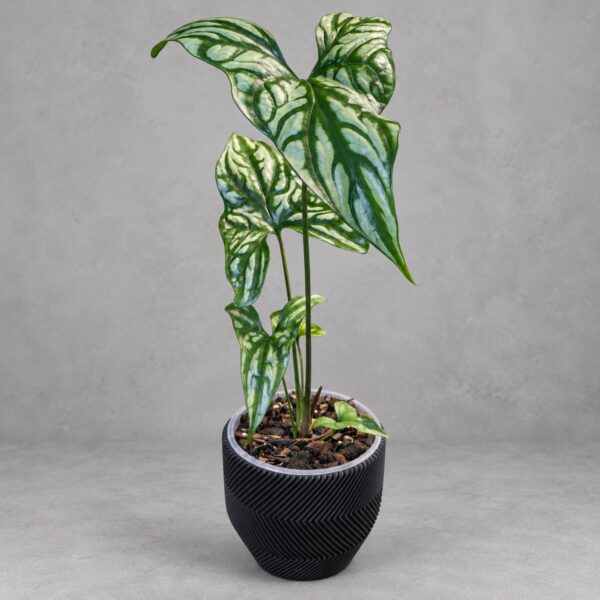
African Ghost Vine is native to the tropical rainforests of Africa and belongs to a climbing genus within the family Araceae. Young leaves are heart-shaped, and as they mature, the plant climbs up trunks or supports, with the leaf surface developing striking silvery-white patterning resembling a ghostly face — hence the name. Growth is moderate, making it well suited to indoor vertical greenery displays, and it needs an appropriate support structure to climb. This species' sap contains calcium oxalate crystals, which may cause an allergic reaction on skin contact — keep away from children and pets.
Light
African Ghost Vine enjoys bright, diffused light, and can tolerate brief periods of gentle direct sun. Indoors, place it near an east- or north-facing window, about 1–2 metres from the window. Avoid prolonged sun exposure, which easily scorches the leaves. If the environment is too dark, the leaf patterning fades, reducing its ornamental appeal.
Watering
During spring and summer, keep the soil lightly moist, watering once the top 2–3 cm dries out. In autumn and winter, growth slows, so watering intervals can be extended, letting the soil dry roughly halfway before watering again. Avoid waterlogging, or the roots easily rot. Room-temperature water is recommended, avoiding cold water that can shock the roots. Regularly misting the leaf surface helps maintain its glossy look.
Soil & pot
Use a well-draining, breathable soil mix, such as peat mixed with perlite and bark chips (roughly 5:3:2), maintaining a slightly acidic to neutral pH (5.5–7.0). A ceramic or plastic pot with drainage holes both work. Since the plant climbs, pairing it with a moss pole or coir pole helps simulate its natural environment.
Temperature & humidity
The ideal growing temperature is 18–28°C; winter temperatures shouldn't drop below 15°C, as it's not cold-hardy. Ideal humidity is 60–80%, with high humidity supporting healthy leaf growth. In dry indoor conditions, use a humidifier or place the pot on a moist pebble tray to raise surrounding humidity, but ensure the pot base doesn't touch the water.
Common problems
- Yellowing, dropping leaves: usually caused by overwatering leading to root rot, or overly dry conditions. Check soil moisture and adjust watering frequency.
- Fading leaf pattern: usually caused by insufficient light. Move to a brighter position, but avoid direct sun exposure.
- Growth stalling: may result from low temperature or insufficient nutrients. Apply diluted liquid fertiliser every two weeks during the growing season.
- Curling, dry leaves: insufficient air humidity. Increase surrounding humidity or mist regularly.
How to explain to customers
"This African Ghost Vine is really charming — it knows how to climb a support on its own, and if you give it a moss pole, it'll keep climbing while producing beautiful leaves. Just remember to keep it away from young children and pets, as it does have some mild toxicity."
Fun facts
African Ghost Vine's juvenile and mature leaves can look dramatically different — young leaves are typically smaller and rounder, and only develop the signature patterned, larger leaves as the plant climbs higher — a plant that genuinely "grows up."
Keywords
African Ghost Vine, Cercestis mirabilis, climbing plant, Araceae, foliage plant, patterned leaves, vertical greenery, indoor potted plant, toxic plant, tropical rainforest plant
In-depth care guide
One-line pitch
A silver-marked ghost from deep in the West African rainforest — young leaves entirely silver, mature leaves green with white patches, and as they mature further, the leaf surface naturally splits open. An exceptionally rare collector's vine.
Origin & characteristics
African Ghost Vine, botanical name Cercestis mirabilis (N.E. Br.) Bogner, belongs to the family Araceae, genus Cercestis. This genus is endemic to Africa, currently recognised as containing about 6–8 species, primarily distributed across the tropical rainforests of West and Central Africa. C. mirabilis was formally described by botanist Josef Bogner in 1985 in the journal Aroideana, volume 8, issue 3 (pages 73–79), making it one of the few Cercestis species to have been documented in detail.
Taxonomic history
C. mirabilis's classification history has been fairly winding. It was successively placed under several different genus names: it was first described as Nephthytis picturata N.E.Br., then later placed under Rhektophyllum mirabile N.E.Br. and Rhektophyllum congense De Wild. & T.Durand. It wasn't until 1985 that Bogner, after carefully comparing specimens, confirmed this species should be placed within the genus Cercestis, establishing Cercestis mirabilis as the currently accepted name, with all other names treated as synonyms.
It's worth noting that Cercestis and another African Araceae genus, Rhektophyllum, are mainly distinguished by mature leaf morphology: Cercestis plants develop natural splits (fenestration) or perforations in their mature leaves, similar to some Monstera species, though through a different mechanism. This trait is particularly pronounced in C. mirabilis — as the plant matures, its originally solid, arrow-shaped leaves gradually develop cracks and holes, creating a highly ornamental "torn leaf" effect.
Native habitat
C. mirabilis is native to the West African rainforest understory, distributed across Gabon, Uganda, Cameroon, Equatorial Guinea, the Democratic Republic of the Congo (formerly Zaire), Benin, Nigeria, and Angola. In its native habitat, it grows as a climbing or trailing plant on tree trunks and rock surfaces, belonging to the climbing aroid group. Some sources claim it's also distributed in Kenya, but this claim currently lacks support from reliable botanical specimen records.
Morphological features
C. mirabilis's greatest charm lies in how dramatically its leaf colour and shape change across growth stages:
- Juvenile leaves: nearly pure silvery-white or pale ivory, with the leaf surface having almost no chlorophyll, giving it a thin, somewhat translucent texture.
- Sub-adult leaves: gradually transition to a deep green base, but retain prominent silvery-white or milky-white veining and patches, creating a striking contrast.
- Mature leaves: the leaf shape develops from a simple arrow form into a more complex shape, with natural fenestration beginning to appear on the leaf surface, while the silver patterning remains but becomes more irregularly distributed.
The leaf texture is thick and glossy, with long, sturdy petioles. Given proper support, the plant can climb 1–2 metres tall. Growth is slow — compared with the visually similar Syngonium, C. mirabilis grows at roughly one-quarter to one-third the speed, which is also one of the reasons it maintains a high value in the horticultural market.
Light
C. mirabilis originates from the rainforest understory and needs bright but soft, diffused light.
Practical recommendations
- Ideal light level: bright diffused light, roughly 1,000–2,000 lux. An east-facing window or a spot 1.5–2 metres from a south-facing window is ideal.
- Avoid direct sun: harsh direct sunlight will scorch the leaves, and especially during the juvenile silvery-white leaf stage, when the leaves have almost no chlorophyll protection, they're even more vulnerable to damage.
- Effects of low light: insufficient light will further slow the already slow growth rate, dulling the silver patterning, and new leaves may lean toward all-green.
- Hong Kong practical tips: in summer, avoid placing near a south-facing window's direct sun exposure zone. Most bright indoor spots are generally suitable. If leaf colour is vivid and new leaf spacing is moderate (about 3–5 cm), the light level is about right.
Watering
As a plant native to rainforest habitats, C. mirabilis prefers consistently moist soil, but due to its slow growth and low metabolic rate, its tolerance for waterlogging is actually not high.
Practical recommendations
- Finger test: insert your index finger about 2–3 cm into the soil surface. If it feels slightly moist, hold off watering; if it's starting to dry, water thoroughly.
- Frequency: check roughly every 5–7 days, depending on season and ambient humidity. In Hong Kong's humid summer, this might mean watering every 7–10 days; running the AC in winter might shorten this to every 5–7 days.
- Watering method: pour slowly around the pot's edge until water flows from the base, then empty the saucer.
- Water quality: room-temperature tap water is fine, though filtered water or rainwater is even better.
- Dormancy period: C. mirabilis has no distinct dormancy period, maintaining slow growth year-round, so it needs a steady water supply throughout the year, with only a slight reduction in watering frequency during winter.
Soil & pot
As a climbing aroid, C. mirabilis needs an extremely well-draining, highly breathable soil that mimics the loose, organic-rich medium found on tree bark in its native habitat.
Recommended soil mixes
- Recipe A (standard aroid mix): 60% coco coir + 15% coco chips + 15% perlite + 10% charcoal.
- Recipe B (advanced version): as recommended by PLNTS.com — 60% peat soil + 15% pine bark + 10% coco fibre + 10% charcoal + 5% perlite.
- Recipe C (Hong Kong humid-climate version): given Hong Kong's high summer humidity, consider increasing perlite to 20%, or adding a little pumice to further speed up drainage.
Pot selection
- Must have drainage holes: a decorative pot without drainage holes should only be used as a cachepot.
- Pot size: due to slow growth, C. mirabilis doesn't need frequent repotting. A pot 12–15 cm in diameter is generally sufficient for a small-to-medium plant. When repotting, choose a new pot only 2–3 cm larger than the current one — an oversized pot keeps the soil wet for too long.
- Material: terracotta or a well-ventilated plastic pot both work. Terracotta dries faster, suiting growers who check moisture frequently.
Support structure
C. mirabilis is a climbing plant that grows attached to tree trunks in its native habitat. Providing support significantly improves its growth form and leaf size:
- Moss pole: the most ideal option, allowing roots to attach and absorb extra moisture from the moss.
- Coir pole: an economical option, though with less moisture retention than a moss pole.
- Bamboo stakes or wooden dowels: a simple option, but without providing extra moisture.
Temperature & humidity
Temperature
- Ideal range: 18–26°C.
- Minimum tolerance: around 16°C; prolonged exposure below 16°C stalls growth, and below 10°C may cause cold damage.
- Maximum tolerance: around 30°C, but high heat must be paired with sufficient humidity.
- Hong Kong practical notes: indoor AC typically maintains 24–26°C, which suits it very well. Avoid placing near AC vents or drafty doors and windows where temperature fluctuates.
Humidity
- Ideal humidity: 60–80% RH.
- Hong Kong practical notes: Hong Kong's average annual humidity is about 70–80%, reaching as high as 90% in summer, meaning no additional humidification is generally needed. Do ensure good air circulation to avoid fungal disease from high, stagnant humidity.
- When heating is running in winter: use a moist pebble tray or grouping method to raise local humidity. If humidity stays persistently below 50%, leaf edges may start browning.
- Direct misting is not recommended: misting only briefly raises humidity, and leaves that stay wet for extended periods are more prone to fungal infection.
Fertilising
C. mirabilis grows slowly and has relatively low fertiliser needs.
- Growing season (March–October): apply a balanced liquid fertiliser (such as 20-20-20) diluted to half strength every 4–6 weeks.
- Fertilising timing: fertilise when the soil is slightly moist, avoiding fertilising dry soil.
- Winter (November–February): reduce to once every 2 months, or stop fertilising entirely.
- Slow-release fertiliser: when repotting, a small amount of slow-release fertiliser (such as Osmocote 14-14-14) can be mixed into the soil as a base feed, supplemented afterward with liquid fertiliser.
Propagation
C. mirabilis is mainly propagated through stem cuttings:
- Select a healthy stem section with 1–2 leaves and at least 1 node.
- Cut with sharp, sterilised scissors about 1 cm below the node.
- Choose either water or soil propagation:
- Water propagation: submerge the cut end in clean water, place in bright diffused light, and change the water weekly. Roots typically emerge within 2–4 weeks.
- Soil propagation: let the cut end air-dry for 1–2 hours, dip in rooting hormone, then insert into loose aroid soil, keeping the soil lightly moist and humidity high (can be covered with a plastic bag).
- Once the root system develops well (about 5 cm of visible root in water propagation), transplant into a pot.
Due to slow growth, it may take 6–12 months for a cutting to develop into a plant with real ornamental value.
Common problems
| Issue | Likely cause | What to do |
|---|---|---|
| Leaves losing silver patterning, turning solid green | Insufficient light causing the plant to compensate with more chlorophyll | Move to a brighter position, but avoid direct sun |
| Browning, dry leaf edges | Low humidity, air too dry | Raise local humidity, avoid placing near AC vents |
| Extremely slow growth, no new leaves | Temperature too low, insufficient light, or root system issues | Check whether ambient temperature is below 18°C, consider checking root health |
| Yellow spots on leaves that spread | Fungal infection, usually from poor ventilation or leaves staying wet | Trim off diseased leaves, improve ventilation, avoid misting the leaves |
| Soft, wilting leaves | Overwatering causing root rot, or poor soil drainage | Check the root system, trim away rotten portions, replant in fresh soil |
| Silver juvenile leaves scorched brown | Excessive direct sun exposure | Move immediately to a shadier spot, trim off severely scorched leaves |
How to explain to customers
"Cercestis mirabilis is a collector-grade African vine, native to West African rainforests and genuinely rare. Its young leaves are entirely silvery-white, turning green with silver patterning as they mature, and mature leaves will even naturally split open on their own — really fascinating. It does grow slowly, so patience is key. Keep it in a bright indoor spot, avoid direct sun, and keep the soil lightly moist — with Hong Kong's high humidity, it should be quite happy here."
Fun facts
The species name mirabilis means "marvellous"
C. mirabilis's species epithet mirabilis comes from Latin, meaning "marvellous" or "wonderful." This name suits it perfectly — whether it's the dreamlike, nearly all-silver appearance during the juvenile stage, or the natural splitting of mature leaves, both are enough to amaze any plant enthusiast. The related species Cercestis dinklagei also exhibits fenestration, but its silver patterning is far less pronounced than C. mirabilis's.
Africa's only "leaf-splitting" aroid genus
Cercestis is unique in that it's the only genus of Araceae in Africa with natural leaf fenestration. When people think of "split leaves," they usually think of Monstera or Epipremnum, but these genera are primarily distributed across tropical Asia and the Americas. The fenestration in Cercestis is believed to have evolved independently — meaning the "split-leaf" plants of Africa and the Americas developed similar traits separately, on different continents and at different times, a phenomenon in biology known as "convergent evolution."
Mature leaf splitting may be an adaptation against strong winds
Botanists speculate that the fenestration in mature Cercestis leaves may be an adaptive mechanism to rainforest conditions. In tropical rainforests, understory plants frequently endure physical impact from falling trees or strong winds. Split leaf surfaces allow wind to pass through rather than tearing the whole leaf apart, reducing physical damage. At the same time, the shape of split leaves may also more effectively capture diffused light — a theory that echoes the fenestration hypothesis proposed for Monstera deliciosa.
Wild collection and sustainability
Because C. mirabilis is highly sought after in the horticultural market, some African source regions have experienced overcollection of wild specimens. Major suppliers in Europe and North America have largely shifted to tissue culture propagation to reduce pressure on wild populations. The C. mirabilis sold by Plantjai comes exclusively from sustainably propagated sources, so customers can shop with confidence.
Keywords
Cercestis mirabilis, African Ghost Vine, African aroid vine, silver-patterned Araceae, rare foliage plant, collector's plant, climbing aroid, African rainforest plant, Araceae fenestration, Plantjai Cercestis
參考資料(想知來源可展開)
References
- Bogner, J. (1985). "A new combination in Cercestis." Aroideana 8(3): 73–79. International Aroid Society.
- Exotic Rainforest. "Cercestis mirabilis (N.E. Br.) Bogner – The African Embossed Aroid." https://www.exoticrainforest.com/Cercestes%20miribalis%20pc.html
- PLNTS.com. "Cercestis Care Guide: Tips & Tricks." https://plnts.com/en/care/houseplants-family/cercestis
- Uprooted. "Cercestis Mirabilis – 100mm Pot." https://www.uprooted.com.au/products/cercestis-mirabilis
- Grow Tropicals. "Cercestis Mirabilis." https://growtropicals.com/products/cercestis-mirabilis-1
- Royal Botanic Gardens, Kew. "Cercestis mirabilis (N.E.Br.) Bogner." Plants of the World Online (POWO). https://powo.science.kew.org
- Govaerts, R. et al. "World Checklist of Araceae." Royal Botanic Gardens, Kew. https://wcsp.science.kew.org
- Croat, T.B. (2018). "Aroid Research in West Africa." Aroideana 41: 22–35.
⚠️ Toxicity/pet note: African Ghost Vine belongs to Araceae and contains calcium oxalate crystals, toxic to cats and dogs. Chewing the leaves can cause oral burning, drooling, and vomiting. As a climbing plant, its leaves spread across different heights, so cat-owning households should take particular care — consider providing more appealing cat grass as a distraction, or place the plant somewhere cats can't reach.
Plantjai shop · In stock online
Cercestis mirabilis
Cercestis mirabilis
HK$398.00
Hong Kong delivery · Causeway Bay pickup
For Hong Kong homes and offices. Stock and pricing follow the product page.
IN STORE NOW
Plants for this guide
Related plants in stock now — live prices, delivery or Causeway Bay pickup.
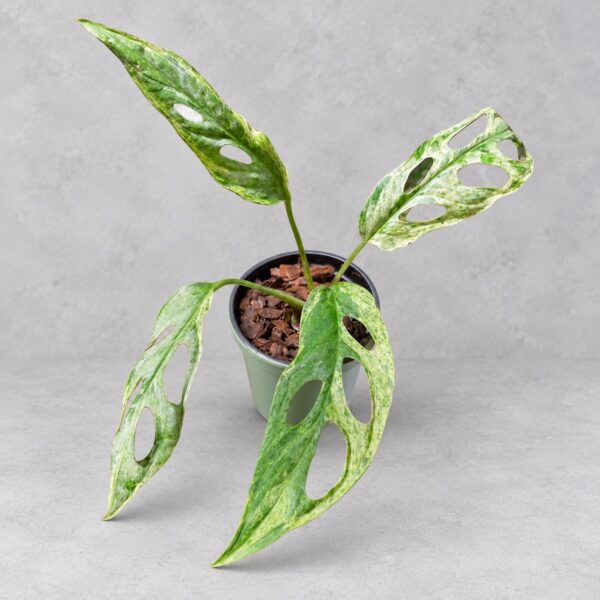
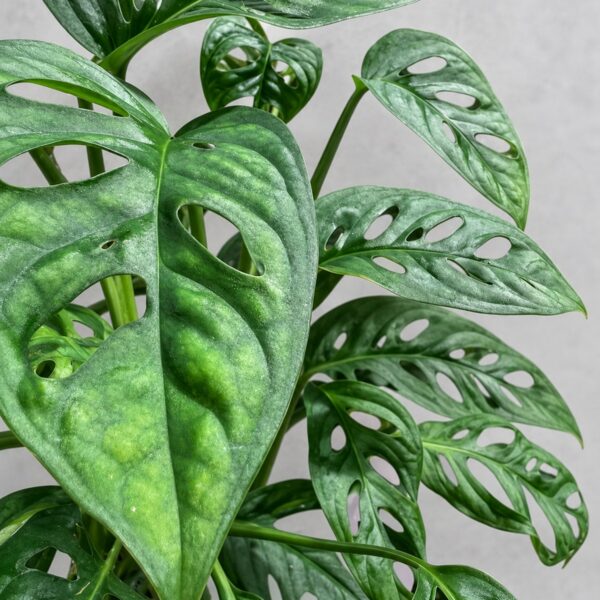
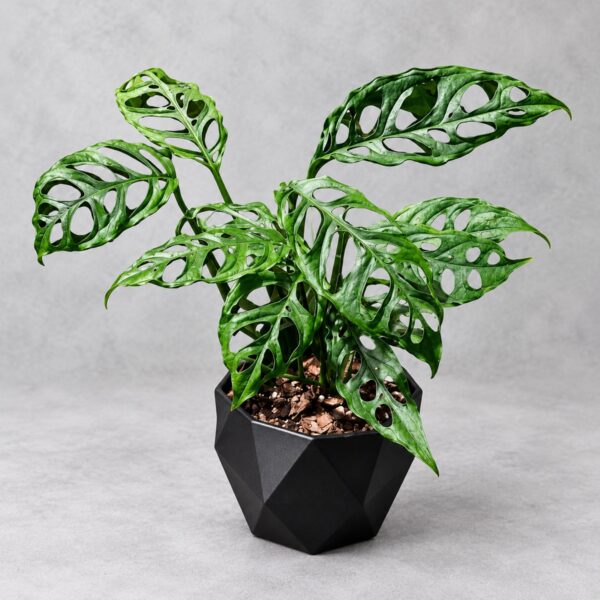
Monstera obliqua Peru
Original price was: HK$480.00.HK$280.00Current price is: HK$280.00.
In stock · store pickup
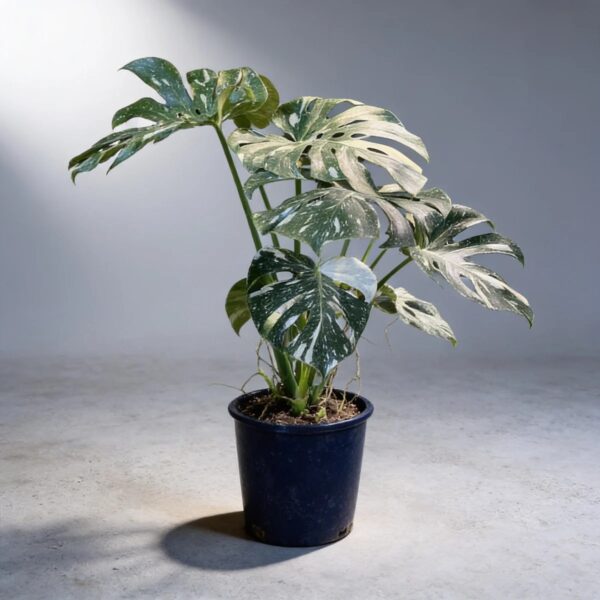
View plantMonstera 'Thai Constellation'
Monstera 'Thai Constellation'
from HK$280.00
In stock · store pickup
View plant
FREE PLANT ADVICE
Send us a photo before you change anything
WhatsApp a photo of the plant and your window light. Our Causeway Bay team will suggest care steps or plants that suit your space.
STORE · CAUSEWAY BAY
4/F, 39 Yiu Wa Street, Causeway Bay
Daily 12:30–8:00pm · ~3 min walk from Times Square
Map & directionsPlant Care