
How to Care for Caesalpinia Ferrea in Hong Kong | Plantjai

Hong Kong care guide for Caesalpinia Ferrea.
A trunk etched with striking natural bark patterns — a living work of art for large indoor pots.
Origin & characteristics
Leopard Tree, also known as Brazilian Ironwood, is native to Brazil and other tropical regions of South America. Its most iconic feature is a mottled, sculptural bark pattern of light and dark tones, as if naturally carved. A deciduous tree, it grows slowly but lives for a very long time, with delicate fern-like feathery foliage and small yellow flowers. Its wood is extremely hard, and in its native range it's a prized timber species.
Light
It thrives in ample direct light, ideally near a south- or west-facing window. It tolerates partial shade, but insufficient light affects both growth and the development of its distinctive bark pattern. When grown indoors, provide at least 4–6 hours of bright light daily, and it can adapt to full sun conditions.
Watering
Water once the soil has dried out fully, avoiding waterlogging and root rot. During the growing season (spring/summer) water every 7–10 days, reducing to every 2–3 weeks in winter. Insert a finger about 3–5 cm into the soil, and water once it feels dry. The pot must have drainage holes.
Soil & pot
Needs a loose, breathable, well-draining sandy soil. Suggested recipe: cactus soil mixed with perlite (roughly 7:3). Choose a terracotta or cement pot with drainage holes, avoiding an oversized pot — size up gradually as the root system develops.
Temperature & humidity
Optimal temperature is 20–30°C, with strong heat tolerance. It can withstand a minimum of about 10°C, with frost damage risk below 5°C. In Hong Kong winters, bring it indoors or place it in a sheltered spot. It's not fussy about humidity — typical indoor humidity is sufficient.
Common problems
| Issue | Likely cause | What to do |
|---|---|---|
| Leaf drop | Natural winter leaf shedding is normal, with regrowth in spring; heavy non-seasonal drop suggests over- or under-watering | Adjust watering to match the season |
| Yellowing leaves | Usually root rot from overly frequent watering | Reduce watering frequency |
| Growth stalling | Insufficient light or pot too small | Consider repotting or moving to a brighter spot |
| Leggy branches | Caused by insufficient light | Increase daily light exposure |
How to explain to customers
"What's most striking about this Leopard Tree is its trunk — the natural wood-grain pattern looks like a piece of art, and it makes a real statement in your living room!" "It's pretty tough — just remember to let the soil dry out before watering, and it won't need much fuss."
Fun facts
Leopard Tree's wood has an extraordinarily high density, earning it the nickname "Pau-ferro" (meaning "iron wood") in Brazil — so dense it can actually sink in water!
Keywords
Caesalpinia ferrea, Leopard Tree, Brazilian ironwood, large potted plant, indoor tree, drought-tolerant plant, deciduous tree, ornamental bark plant
In-depth care guide
One-line pitch
A hardwood tree from Brazil with fern-like leaves and leopard-patterned bark — one pot brings a genuine sense of rainforest grandeur to a Hong Kong home.
Origin & characteristics
Leopard Tree, also called Pau-ferro (Portuguese for "iron wood") or Jucá, is an evergreen tree in the family Fabaceae, genus Caesalpinia, native to the tropical dry forests (cerrado) and riparian woodlands of northeastern to central Brazil. The genus name Caesalpinia honours the 16th-century Italian botanist Andrea Caesalpini, celebrated as one of the fathers of modern botany, while the species name ferrea derives from the Latin for "iron," a direct reference to the extreme hardness of its wood.
In the wild, this tree can grow to 10–19 metres tall with a spreading, umbrella-like canopy. Its most iconic feature is its bark — grey-brown to reddish-brown, flaking in irregular patches to reveal patterns resembling leopard spots, hence its English name "Leopard tree." The leaves are bipinnate, with small paired leaflets creating an overall texture as delicate as mimosa foliage, a striking contrast to the rugged trunk. The flowers are yellow to orange-yellow, clustered at branch tips, and while not especially showy, they attract bees and butterflies. The fruit is a flat pod that splits open to release seeds upon maturity.
Leopard Tree's wood has a density of 860–870 kg/m³, classifying it as an extremely heavy hardwood, used locally in Brazil for construction, furniture, musical instruments, and carving. Its heartwood is a deep brown to purple-black with beautiful striping, taking a brilliant polish. Notably, this tree also has nitrogen-fixing capability — its roots form a symbiotic relationship with Bacillaceae bacteria, converting atmospheric nitrogen into a form usable by the plant, while also forming mycorrhizal associations with arbuscular fungi (Glomus intraradices) that boost mineral uptake efficiency. These traits allow it to thrive even in nutrient-poor tropical soils.
In Hong Kong, Leopard Tree is relatively uncommon in general nurseries, but has recently been gaining traction among gardening enthusiasts as a potted ornamental tree or bonsai material. It grows at a moderate pace, with flexible branches suited to shaping, and stays evergreen year-round, making it well suited to sunny balconies or windowsills.
Light / Watering / Soil & pot / Temperature & humidity
Light
Leopard Tree is a classic sun-loving species, growing in full sun conditions in its native habitat. For Hong Kong homes, give it as much direct sunlight as possible — a south- or west-facing windowsill or balcony is ideal. It needs at least 6–8 hours of direct light daily to maintain a compact leaf form and healthy growth rhythm. Left in a shady spot for extended periods, the branches will become leggy (etiolated), with widening gaps between leaflets and an overall sparse, unattractive appearance.
While the tree can theoretically handle the intense midday sun of summer, potted specimens have restricted root systems and the soil heats up quickly, so providing some shade during the hottest part of the day, or using an insulating pot mat to protect the roots, is advisable. An east-facing window also works, though growth will be somewhat slower.
Watering
Leopard Tree is native to regions with distinct wet and dry seasons, giving it considerable drought tolerance, though it needs a steady water supply during the active growing season (spring through autumn). In Hong Kong's hot summers, potted soil dries quickly, so it's recommended to insert a finger about two to three centimetres into the soil, and water once it feels fully dry — generally about 1–2 times weekly. In winter, growth slows and watering can be extended to every 10–14 days, or even letting the soil stay slightly dry for longer.
An important principle: it's better to run a bit dry than to stay constantly wet. Leopard Tree has decent resistance to root rot, but prolonged waterlogging in a pot can still cause problems. Water thoroughly each time until it flows from the pot's base, and empty the saucer after half an hour. If using a terracotta pot, water evaporates faster, requiring more frequent monitoring.
Soil & pot
Leopard Tree isn't particularly demanding about soil type, but drainage must be excellent. A sandy loam base mix is recommended:
- 40% quality potting soil
- 30% coarse river sand or perlite
- 20% coco coir or peat moss (increases water retention)
- 10% well-rotted compost or worm castings (provides baseline nutrients)
A pH range of 6.0–8.0 (slightly acidic to slightly alkaline) is acceptable. Since its root system develops fairly deep, a deep pot 15–20 cm in diameter can initially be used to let the taproot develop downward. As the plant grows, repot every 2–3 years, gradually moving into larger containers. The pot base must have drainage holes, ideally with a layer of clay pebbles or gravel as a drainage layer.
Worth noting: as a legume, Leopard Tree can fix its own nitrogen, so its nitrogen fertiliser needs are relatively low, though adding a little organic fertiliser during repotting is still beneficial.
Temperature & humidity
Leopard Tree's optimal growing temperature is 18–28°C, tolerating a brief minimum down to -2°C, though prolonged exposure below 10°C will nearly halt growth. Hong Kong winters generally pose no issues, but if a balcony is particularly exposed and windy, consider moving the plant indoors or to a sheltered spot.
In terms of humidity, it can adapt to a relative humidity of 40–70%, and Hong Kong's high summer humidity presents no problem at all. In winter, if the air becomes too dry from heating or air-conditioning dehumidification, the leaves may curl slightly — misting the foliage or using a moist pebble tray can help raise local humidity. Overall, though, Leopard Tree is far more tolerant of humidity variation than most tropical foliage plants.
Common problems
| Issue | Symptoms | Cause | Solution |
|---|---|---|---|
| Yellowing, dropping leaves | Lower leaves yellow first, spreading upward | Overwatering causing root oxygen deprivation, or poor drainage | Check pot drainage, reduce watering frequency, replace waterlogged soil if necessary |
| Leggy branches | Elongated internodes, sparse and small leaves, faded colour | Severe light deficiency | Move immediately to full sun, prune leggy branches to encourage new growth |
| Scorched leaf edges | Browning, dry leaf tips or edges | Overly dry air, salt buildup, or cold wind exposure | Increase surrounding humidity, switch to rainwater for watering, avoid AC vents |
| Growth stalling | No new leaves for an extended period, dry branch tips | Winter dormancy from low temperature, or root-bound pot | Recovers naturally once spring warms up; if root-bound, repot and trim old roots |
| Spider mites | Fine red dots or webbing on leaf undersides, pinprick-like yellow spots on leaf surface | Hot, dry conditions triggering infestation | Wipe leaf undersides with a damp cloth, apply neem oil, use insecticidal soap for severe cases |
How to explain to customers
"Leopard Tree is a hardwood species from Brazil, with delicate mimosa-like leaves — it does best on a sunny balcony or windowsill. The most important things are plenty of sun and avoiding waterlogged roots; let the soil dry before watering, and it's genuinely low-maintenance. It grows fast in summer, so a light monthly feed helps, while winter is its resting period with less watering. If you want to shape it, prune regularly — its branches are flexible and easy to train, and with good care it can be enjoyed for many years."
Fun facts
- Wood harder than iron: Leopard Tree's wood has a density as high as 0.86–0.87 g/cm³, dense enough to nearly sink in water. In Brazil, it's traditionally used for bow rods on stringed instruments, furniture carving, and structural beams. Its local name "Pau-ferro" translates directly to "iron wood," a testament to its remarkable hardness.
- A traditional medicine treasure trove: multiple ethnobotanical studies note that traditional communities in northeastern Brazil brew the bark into tea to treat malaria, colds, nephritis, and rheumatism, while the fruit and seeds are used for diarrhoea, wound healing, and inflammation. Modern pharmacological research has confirmed its extracts are rich in flavonoids, polyphenols, and terpenoids, with antioxidant, antibacterial, and anti-inflammatory activity (de Sousa et al., 2020; Asif et al., 2017).
- Leopard-patterned bark: mature Leopard Tree bark flakes irregularly, revealing layers of varying depths that form a mottled pattern resembling leopard spots — hence the name "Leopard tree." In some parts of Brazil, this tree is believed to ward off evil spirits.
- A nitrogen-fixing pioneer species: as a legume, Leopard Tree can fix nitrogen through symbiosis with root-nodule bacteria, improving fertility in poor soil, making it valued as a pioneer species for ecological restoration in tropical regions.
Keywords
Caesalpinia ferrea, Leopard Tree, Pau-ferro, Fabaceae, hardwood potted plant, full-sun plant, nitrogen-fixing plant, bonsai material, tropical ornamental tree, Brazilian native plant, Plantjai
參考資料(想知來源可展開)
References
- de Sousa, M.V., et al. (2020). "Caesalpinia ferrea C. Mart. (Fabaceae) Phytochemistry, Ethnobotany and Biological Activities: A Systematic Review." Molecules, 25(17), 3786. https://doi.org/10.3390/molecules25173786
- Asif, M., et al. (2017). "Ethnobotanical and Phytopharmacological attributes of Mesua ferrea L.: A review." Journal of Applied Pharmaceutical Science, 7(04), 242–251.
- North Carolina Extension Gardener Plant Toolbox. "Caesalpinia ferrea." https://plants.ces.ncsu.edu/plants/caesalpinia-ferrea/
- rozendale.com. "Caesalpinia ferrea – Leopard tree." https://rozendale.com/rad/Caesalpinia_ferrea.html
- earthone.io. "How To Grow Libidibia ferrea (syn. Caesalpinia ferrea)." https://earthone.io/plant/libidibia%20ferrea
⚠️ Toxicity note: current literature has no reports of Leopard Tree being significantly toxic to pets or humans, but the seeds contain tannic acid, which may cause gastrointestinal upset if consumed in large amounts. Prevent pets from chewing on the stems and leaves, and place the plant out of children's reach.
For Hong Kong homes and offices. Stock and pricing follow the product page.
IN STORE NOW
Plants for this guide
Related plants in stock now — live prices, delivery or Causeway Bay pickup.
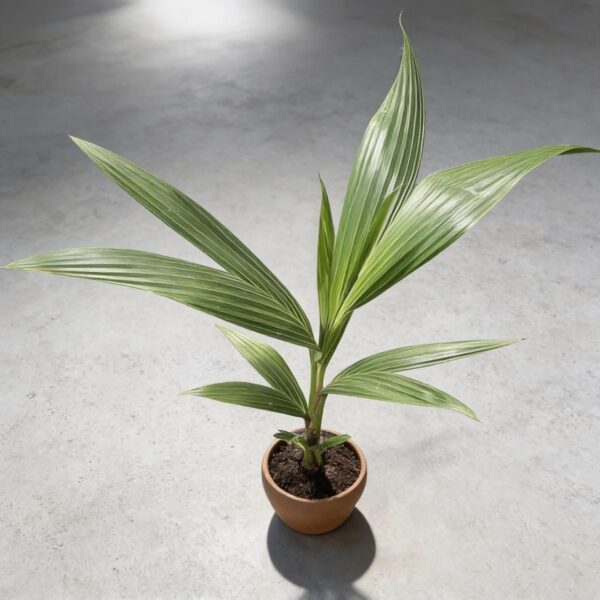
Cocos nucifera
Cocos nucifera
Original price was: HK$398.00.HK$298.00Current price is: HK$298.00.
In stock · store pickup
View plant
FREE PLANT ADVICE
Send us a photo before you change anything
WhatsApp a photo of the plant and your window light. Our Causeway Bay team will suggest care steps or plants that suit your space.
STORE · CAUSEWAY BAY
4/F, 39 Yiu Wa Street, Causeway Bay
Daily 12:30–8:00pm · ~3 min walk from Times Square
Map & directionsPlant Care