
How to Care for Begonia Little Miss Mummey in Hong Kong | Plantjai


Plantjai 植仔 · Care Encyclopedia
Begonia Little Miss Mummey
Begonia 'Little Miss Mummey' 夢魅小姐秋海棠
Hong Kong care guide — useful before you buy and after it arrives.
Shop this plantDreamy pink-purple gradient leaves — a collector-grade foliage treasure.
Origin & characteristics
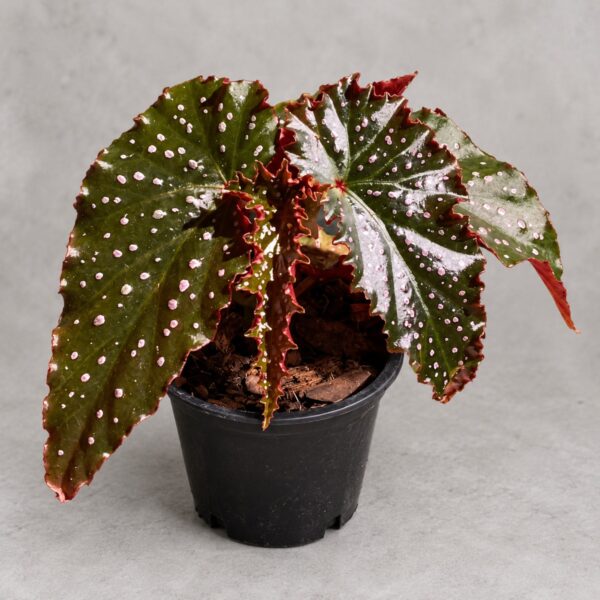
Little Miss Mummey belongs to the Rex begonia hybrid group, bred through repeated crossing of various tropical begonia species. Its leaves display a dreamlike gradient of pink-purple, rose-red, and silver-grey, with a velvety texture and asymmetrical shape, resembling a hand-painted work of art. The compact growth habit suits tabletop display, making it a favourite among begonia collectors. The whole plant contains calcium oxalate crystals and is toxic if ingested.
Light
- Prefers bright, diffused light — an east- or north-facing windowsill is ideal
- Tolerates supplemental artificial light (LED or fluorescent tubes)
- Avoid direct sun, or the velvety leaf surface will scorch and colours will fade
- Insufficient light causes leaf colour to dull and the plant to stretch, losing its layered depth
- Rotate the pot a quarter turn weekly for even light exposure on all sides
Watering
- Water once the topsoil is dry about 2–3 cm down, roughly every 5–7 days
- Water moderately, keeping the soil lightly moist but never waterlogged
- Reduce watering frequency in winter when growth slows, to avoid rhizome rot
- Use room-temperature water; avoid cold water, which shocks the roots
- Water directly onto the soil, avoiding the leaves, to prevent fungal infection
- Empty any standing water from the saucer within 15 minutes
Soil & pot
- Choose a loose, well-draining substrate
- Recommended recipe: peat-free potting mix + perlite + orchid bark (roughly 1:1:1)
- Or use African violet potting mix directly
- Choose a wide, shallow pot, since the rhizome grows horizontally — a deep pot invites waterlogging and rot
- Must have drainage holes; terracotta is preferable to plastic for better airflow
- When repotting, let the rhizome sit slightly proud of the soil surface — never bury it too deep, or it will rot
Temperature & humidity
| Factor | Ideal range | Notes |
|---|---|---|
| Temperature | 18–24°C | Below 15°C risks cold damage; avoid cold drafts |
| Humidity | 50–70% | Above 80% can trigger powdery mildew |
- Keep away from AC vents, heaters, and drafty doors/windows
- A pebble tray beneath the pot can help increase localised humidity
- Avoid misting the leaves directly, as damp leaves invite mould
- Grouping with other foliage plants can naturally create a more humid microclimate
Common problems
| Issue | Likely cause | What to do |
|---|---|---|
| Leaf edges browning and drying | Humidity too low or water too hard | Increase surrounding humidity; switch to distilled water or rainwater |
| Leaf colour fading, dulling | Insufficient light | Move to a brighter spot, avoiding direct sun |
| Powdery mildew (white powder on leaves) | Poor air circulation, humidity too high | Trim affected leaves, improve ventilation, spray with diluted baking soda solution if needed |
| Rhizome rot | Overwatering or rhizome buried too deep | Reduce watering, check rhizome depth, repot if necessary |
| Winter leaf drop | Natural dormancy | Reduce watering, stop fertilising; new growth returns in spring |
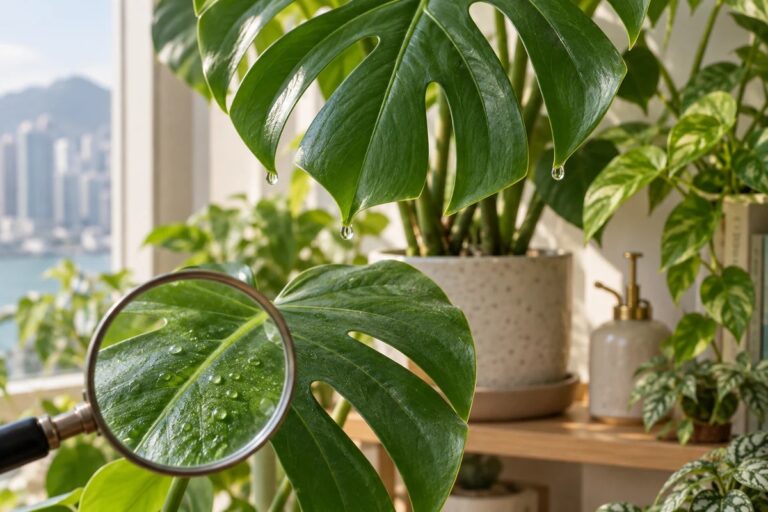
| Water-marked spots on leaves | Water splashed onto leaves during watering | Water along the pot's edge instead, keeping the leaf surface dry |
How to explain to customers
"Think of Little Miss Mummey as a bit of a pampered guest — don't let direct sun hit her, and check whether the soil's dry before watering. Most importantly, don't let the pot sit in water, or the rhizome rots very easily. Her leaf colour is gorgeous though, that dreamy pink-purple really does look like something out of a dream — perfect on a desk or windowsill to soften up the whole room. Just remember to rotate the pot occasionally so she doesn't only face one direction."
Fun facts
The "Rex" in Rex begonia comes from the Latin for "king," describing its regally patterned leaves; the romantic name 'Little Miss Mummey' is said to come from the breeder's poetic association with the plant's dreamlike, hazy leaf colouring.
Keywords
Little Miss Mummey Begonia, Begonia Little Miss Mummey, Rex begonia, foliage plant, pink-purple leaves, silver-grey gradient, collector-grade begonia, tabletop plant, toxic plant, high-humidity plant, diffused light, rhizome propagation, leaf cutting propagation
參考資料(想知來源可展開)
References
- American Begonia Society. Rex Begonias. https://www.begonias.org/
- RHS. Begonias as Houseplants. https://www.rhs.org.uk/plants/begonias/houseplants
- ASPCA. Begonia – Toxic and Non-Toxic Plants. https://www.aspca.org/pet-care/animal-poison-control/toxic-and-non-toxic-plants/begonia
⚠️ Toxicity warning: Little Miss Mummey contains calcium oxalate crystals and is toxic to pets and children if ingested, potentially causing oral irritation, vomiting, and drooling. Keep out of reach and wash hands after handling.
In-depth care guide
Introduction
Little Miss Mummey belongs to the vast and varied Rex begonia (Begonia rex-cultorum) hybrid group, a lineage produced through generations of crossing among tropical Asian begonia species originally native to regions such as northeastern India and Assam. What distinguishes this particular cultivar is its extraordinary leaf colouring — a soft, painterly gradient running through dusty pink, rose, and silver-grey, with an asymmetrical leaf shape that looks almost hand-painted. The velvety texture of the foliage adds a further tactile dimension that photographs beautifully but can also be a clue to its care needs, since velvety leaves are especially prone to fungal issues if kept wet.
As with all Rex begonia cultivars, Little Miss Mummey is a rhizomatous begonia — it grows from a thick, creeping rhizome that sits along or just beneath the soil surface, rather than a true upright stem. This rhizome stores water and nutrients, giving the plant some resilience to short dry spells, but it is also the plant's Achilles' heel: prolonged wet conditions cause it to rot quickly, often before any warning signs appear above the soil line.
Light requirements
Little Miss Mummey performs best in bright, indirect light. An east-facing windowsill, offering gentle morning sun, or a north-facing spot with consistent bright light throughout the day, both work well. The plant can also thrive under supplemental grow lights (LED or fluorescent), which is a useful option for offices or interior rooms lacking natural light.
Direct sun is the biggest threat to this cultivar — the velvety leaf surface scorches easily, and the delicate pink and purple tones bleach out rapidly under harsh light. Conversely, insufficient light causes the leaf colours to dull toward a flatter green, and the plant stretches awkwardly as it reaches for more light, losing its otherwise compact, layered rosette form. Rotating the pot a quarter turn each week helps ensure even growth on all sides, since begonias tend to lean and grow more vigorously toward their light source.
Watering
Water once the topsoil has dried out to a depth of about 2–3 cm, which typically works out to roughly every 5–7 days depending on your home's conditions. Water moderately rather than heavily — the goal is soil that stays lightly moist without ever becoming waterlogged. Reduce watering further in winter when growth naturally slows, since the rhizome is especially vulnerable to rot during cooler, less active periods.
Always water directly onto the soil rather than over the leaves; because the leaves are velvety, water sitting on the surface doesn't evaporate quickly and creates ideal conditions for fungal infection. Use room-temperature water to avoid shocking the roots, and if any water collects in the saucer beneath the pot, empty it within about 15 minutes — letting the pot sit in standing water is one of the fastest routes to rhizome rot.
Soil and pot
This begonia needs a loose, well-draining substrate. A useful home recipe is peat-free potting mix combined with perlite and orchid bark in roughly equal parts (1:1:1), which balances moisture retention with the fast drainage the rhizome needs. African violet potting mix, which is formulated along similar principles, also works well and is widely available.
Because the rhizome spreads horizontally rather than growing deep roots, a wide, shallow pot suits this plant far better than a deep one — a deep pot holds excess moisture around a rhizome that isn't using that depth, inviting rot. The pot must have drainage holes, and terracotta is generally preferable to plastic for the extra airflow it provides. When repotting, position the rhizome so it sits slightly proud of the soil surface rather than buried — this exposure to air is actually protective, helping prevent the rot that comes from constant soil contact.
Temperature and humidity
Little Miss Mummey grows best between 18°C and 24°C. Below 15°C the plant becomes vulnerable to cold damage, so keep it away from cold drafts, particularly near windows and doors in winter. Humidity should sit between 50% and 70% — notably, humidity above 80% actually increases the risk of powdery mildew, so more isn't always better here.
Keep the plant away from AC vents, heaters, and drafty gaps around doors and windows, all of which cause the kind of temperature and humidity swings this begonia dislikes. A pebble tray beneath the pot is a simple way to raise local humidity without wetting the leaves, and grouping several plants together creates a naturally more humid shared microclimate. Avoid misting the leaves directly — the velvety texture holds moisture for a long time, creating exactly the damp conditions that invite fungal problems.
Common problems in detail
Browning, drying leaf edges most often point to humidity that's too low or water that's too hard (high in dissolved minerals) — increase ambient humidity and consider switching to distilled water or rainwater if your tap water is notably hard.
Fading, dulling leaf colour signals insufficient light — move the plant to a brighter position while still avoiding direct sun.
Powdery mildew, appearing as a white powdery coating on the leaves, results from poor air circulation combined with excess humidity — trim off badly affected leaves, improve airflow around the plant, and treat with a diluted baking soda spray if the problem persists.
Rhizome rot usually follows overwatering or burying the rhizome too deep — reduce watering immediately, check whether the rhizome is planted too low, and repot if necessary, trimming away any soft or discoloured sections.
Winter leaf drop is typically a natural dormancy response rather than a problem — reduce watering, stop fertilising, and new growth should return once temperatures warm in spring.
Water-marked spots on the leaves come from water splashing onto the foliage during watering — switch to watering along the pot's rim instead, keeping the leaf surface consistently dry.
Toxicity information
Little Miss Mummey contains calcium oxalate crystals throughout the plant, making it toxic to pets and children if chewed or ingested. Symptoms typically include oral irritation, excessive drooling, and vomiting. Keep the plant well out of reach of curious pets and small children, and wash your hands after handling or pruning it.
References
- American Begonia Society. Rex Begonias. https://www.begonias.org/
- RHS. Begonias as Houseplants. https://www.rhs.org.uk/plants/begonias/houseplants
- ASPCA. Begonia – Toxic and Non-Toxic Plants. https://www.aspca.org/pet-care/animal-poison-control/toxic-and-non-toxic-plants/begonia
- Missouri Botanical Garden. Begonia rex-cultorum Group. Plant Finder. http://www.missouribotanicalgarden.org/PlantFinder/
Plantjai shop · In stock online
Begonia 'Little Miss Mummey'
Begonia 'Little Miss Mummey'
HK$268.00
Hong Kong delivery · Causeway Bay pickup
For Hong Kong homes and offices. Stock and pricing follow the product page.
IN STORE NOW
Plants for this guide
Related plants in stock now — live prices, delivery or Causeway Bay pickup.
FREE PLANT ADVICE
Send us a photo before you change anything
WhatsApp a photo of the plant and your window light. Our Causeway Bay team will suggest care steps or plants that suit your space.
STORE · CAUSEWAY BAY
4/F, 39 Yiu Wa Street, Causeway Bay
Daily 12:30–8:00pm · ~3 min walk from Times Square
Map & directionsPlant Care