
How to Care for Begonia Green Gold in Hong Kong | Plantjai

Plantjai 植仔 · Care Encyclopedia
Begonia Green Gold
Hong Kong care guide — useful before you buy and after it arrives.
Shop this plantSilver-green spiral leaves with a red edge — a gorgeous, eye-catching foliage plant that won an RHS Award of Garden Merit.
Origin & characteristics
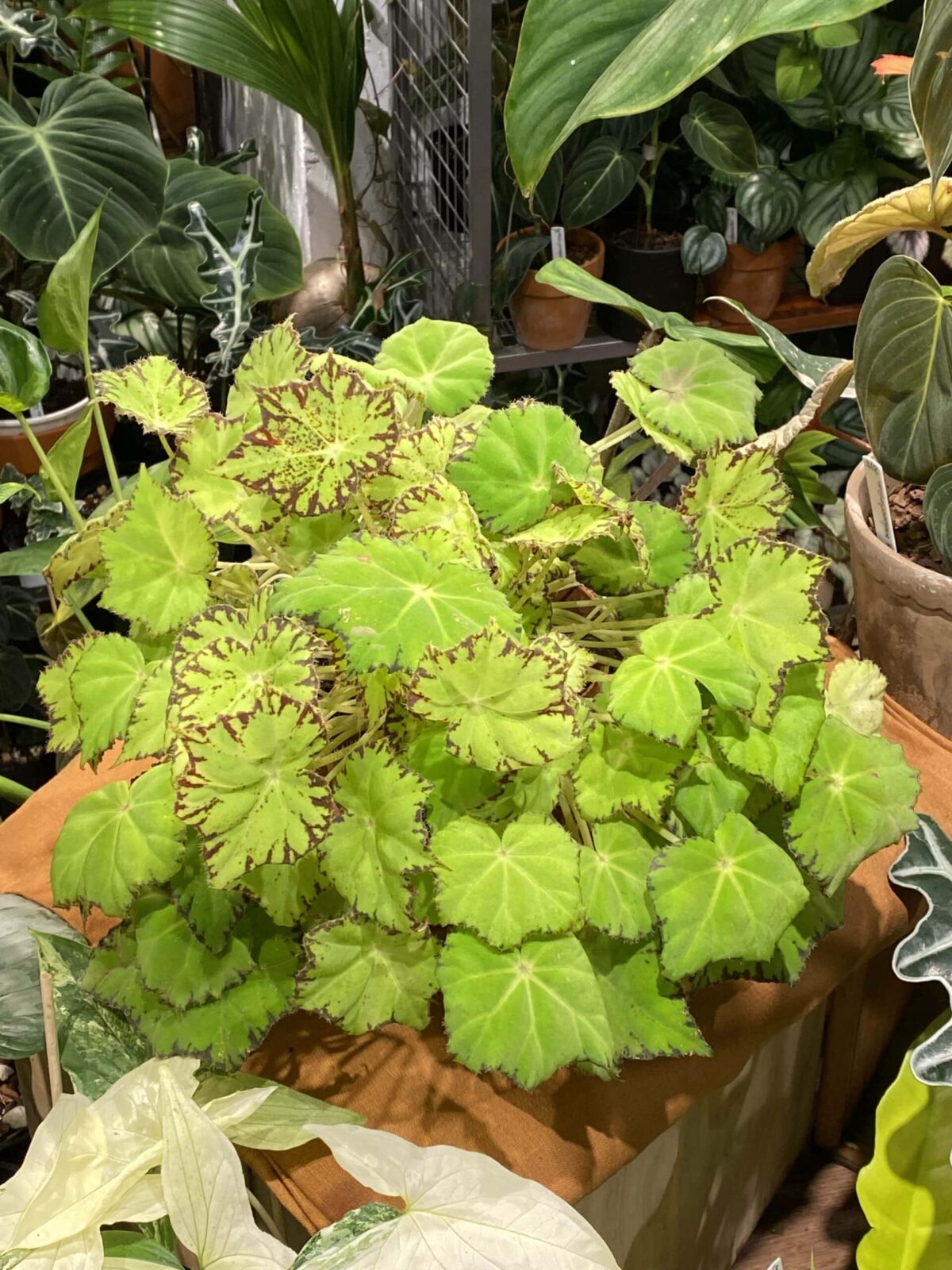
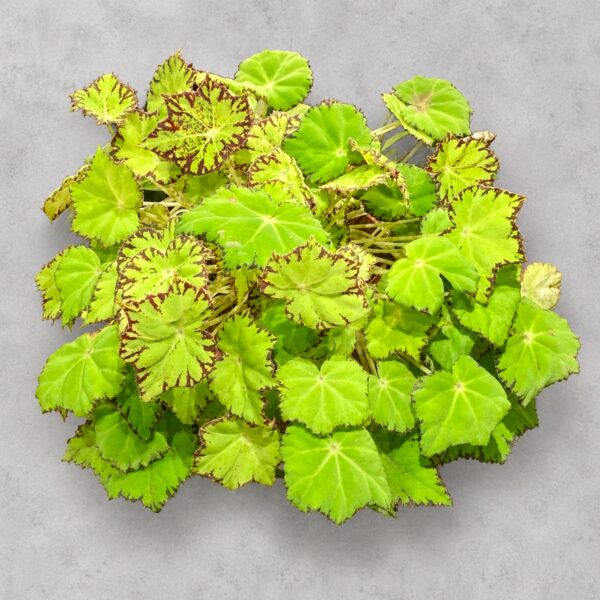
Green Gold belongs to the Rex Begonia group, a garden hybrid bred from Begonia rex and other species, with parentage tracing back to India. The plant is rhizomatous, with leaves growing in a distinctive spiral, a silver-green base colour set against deep green and red veining, new leaves carrying a golden sheen, and leaf margins trimmed in red. Mature plants reach roughly 30 cm tall, grown primarily for their stunning foliage, with small, pale pink flowers as a secondary charm. This cultivar has received the Royal Horticultural Society's Award of Garden Merit (AGM).
Light
- Ideal placement: bright, diffused light, such as an east- or north-facing window
- Acceptable range: partial shade to filtered light
- Notes:
- Avoid harsh direct sun, especially midday sun, which easily scorches and fades the leaves
- Light too strong causes the silver patterning to turn white or develop scorched edges
- Light too weak causes the leaf colour to dull, the pattern to blur, and the plant to become loose and leggy
- A grow light can be used indoors to supplement natural light
Watering
- Principle: water once the top 2–3 cm of soil has dried
- Frequency: roughly every 5–7 days in summer, every 7–10 days in winter, adjusting for ambient humidity
- Method:
- Water along the pot's edge, avoiding wetting the leaves or the crown, to prevent rot
- After watering thoroughly, let excess water drain from the pot's bottom, never let it stand
- Placing pebbles in the saucer and setting the pot on top can help raise humidity
- Winter adjustment: reduce watering frequency, letting the topsoil dry out fully before watering
Soil & pot
- Soil recipe: primarily well-draining and airy
- Recommended: peat-free potting soil mixed with perlite (roughly 3:1 ratio)
- Or: African violet potting mix with a little coarse sand added
- pH: slightly acidic to neutral (5.5–6.5)
- Pot selection:
- A shallow, wide pot is preferred, since the rhizome grows horizontally
- Must have drainage holes
- Terracotta or breathable plastic pots work best
- Repotting: roughly once every 1–2 years in spring, when the rhizome has grown to the pot's edge
Temperature & humidity
| Factor | Ideal range | Minimum tolerance |
|---|---|---|
| Temperature | 18–24°C | 13°C |
| Humidity | 50–70% | 40% |
- Temperature notes:
- Keep above 13°C in winter; cold damage risk below 10°C
- Avoid placing near AC vents or drafty doors and windows
- Humidity boosting methods:
- Group with other plants to create a shared microclimate
- Use a humidifier
- Place on a pebble-lined tray (pot base not touching the water)
- Avoid misting directly onto the leaves
Common problems
| Issue | Likely cause | What to do |
|---|---|---|
| Leaves turning white, fading | Sunburn from too much light | Move to a more shaded position |
| Dull colour, unclear patterning | Insufficient light | Move closer to a window or supplement with a grow light |
| Dry, brittle leaf edges | Humidity too low or insufficient watering | Increase surrounding humidity, check watering frequency |
| Leaves yellowing, going soft | Overwatering or waterlogging | Reduce watering, check drainage, repot if needed |
| White powder on leaves | Powdery mildew | Remove affected leaves, improve ventilation, use a fungicide |
| Grey-brown mould spots on leaves | Botrytis (grey mould) | Remove affected leaves, reduce humidity, use a copper-based fungicide |
| Leaf drop, dormancy | Winter dormancy or temperature too low | Reduce watering, keep lightly moist, wait for spring warmth |
| Pests (mealybugs, aphids) | Poor ventilation or introduced with new plants | Wipe with alcohol swabs or spray with neem oil |
⚠️ Toxicity warning
Begonias contain soluble calcium oxalate throughout the plant, toxic to both humans and pets.
- To humans: ingestion may cause oral burning, drooling, vomiting, and diarrhoea; sensitive individuals may experience skin allergic reactions from contact with the sap
- To cats and dogs: toxic; ingestion causes drooling, difficulty swallowing, vomiting, and diarrhoea, with severe cases potentially causing breathing difficulties
- Recommendation: keep out of reach of children and pets; wash your hands after handling
How to explain to customers
"This Green Gold Begonia is gorgeous — silver-green leaves with a red edge, an instant style upgrade for any home! Remember, no direct sun — a spot near a window with diffused light is perfect. For watering, let the soil dry out a bit before watering again, and don't let the roots sit in water."
Fun facts
The Rex Begonia group traces back to Begonia rex, originally from 1850s India — over more than a century of hybridising, it has produced thousands of unique cultivars, each potentially a one-of-a-kind "living work of art."
Keywords
Green Gold Begonia, Rex Begonia, foliage plant, silver-green leaves, red-edged leaf, rhizomatous begonia, indoor plant, partial-shade plant, high-humidity plant, toxic plant, calcium oxalate, Plantjai, garden hybrid
參考資料(想知來源可展開)
References
- RHS. Begonia 'Green Gold' AGM. https://www.rhs.org.uk/plants/begonias/houseplants
- Missouri Botanical Garden. Begonia rex – Rex Begonia. Plant Finder. http://www.missouribotanicalgarden.org/PlantFinder/
- ASPCA. Begonia – Toxic and Non-Toxic Plants. https://www.aspca.org/pet-care/animal-poison-control/toxic-and-non-toxic-plants/begonia
In-depth care guide
Introduction
Green Gold Begonia is a cultivar within the Rex Begonia group that has earned the Royal Horticultural Society's Award of Garden Merit (AGM), a recognition given only to plants judged to have outstanding garden and ornamental value. Its leaves grow in a distinctive spiral pattern, showing a silver-green base colour accented with deep green and red veining, with a golden sheen visible on newer leaves and a fine red trim along the margins — the overall effect is genuinely luxurious, making it a standout even within the already showy Rex Begonia family.
Like other Rex begonias, Green Gold grows from a rhizome that spreads horizontally along the soil surface, forming a compact plant that reaches roughly 30 cm at maturity. While it does produce small, pale pink flowers, these are a secondary charm — the plant is grown first and foremost for its extraordinary foliage.
Light requirements
Green Gold does best in bright, diffused light, such as that provided by an east- or north-facing window, though it can also tolerate partial shade or filtered light conditions. Harsh direct sun, particularly around midday, should always be avoided, since it easily scorches and fades the leaves. Too much light causes the silver patterning to turn an unattractive white or develop scorched edges, while too little light causes the leaf colour to dull, the patterning to blur, and the plant to become loose and leggy rather than maintaining its compact spiral form. A grow light can supplement natural light indoors if your space doesn't receive enough brightness on its own.
Watering technique
Water Green Gold once the top 2–3 cm of soil has dried, which typically works out to roughly every 5–7 days in summer and every 7–10 days in winter, adjusting for your home's ambient humidity. Always water along the pot's edge, avoiding wetting the leaves or the crown of the rhizome, since moisture pooling there easily leads to rot. After a thorough soak, let excess water drain completely from the pot's bottom and never let it sit in the saucer. Placing pebbles in the saucer and setting the pot on top of them (without the base touching the water) is a useful way to boost surrounding humidity without risking waterlogged roots. In winter, reduce watering frequency further, letting the topsoil dry out fully before watering again.
Soil and potting
A well-draining, airy soil mix works best — peat-free potting soil mixed with perlite in roughly a 3:1 ratio, or a commercial African violet potting mix with a little coarse sand added, maintaining a pH between 5.5 and 6.5. A shallow, wide pot is preferred over a deep one, since the rhizome grows horizontally rather than sending roots downward. Drainage holes are essential, and terracotta or breathable plastic pots both work well. Repot roughly once every one to two years in spring, whenever the rhizome has grown to reach the pot's edge.
Temperature and humidity
Green Gold grows comfortably between 18°C and 24°C, with a minimum tolerance of 13°C — keep it above this threshold in winter, since cold damage risk increases noticeably below 10°C. Humidity should ideally sit between 50% and 70%, with a minimum tolerance around 40%. Avoid placing the plant near AC vents or drafty doors and windows, since sudden temperature changes and cold drafts stress this variety considerably. Useful humidity-boosting methods include grouping the plant with others to create a shared microclimate, running a humidifier, or using a pebble-lined tray — always avoiding direct misting onto the leaves, which can encourage fungal issues given the leaves' textured surface.
Common problems in detail
Leaves turning white or fading points to sunburn from excessive light exposure — move the plant to a more shaded position immediately.
Dull colour with unclear patterning signals insufficient light — move the plant closer to a window or supplement with a grow light to restore vivid new growth.
Dry, brittle leaf edges typically result from humidity too low or inconsistent watering — increase surrounding humidity and review your watering schedule.
Yellowing, softening leaves indicate overwatering or waterlogging — reduce watering immediately, check that the pot drains properly, and repot if root damage has occurred.
White powdery coating on leaves signals powdery mildew — remove affected leaves, improve ventilation, and apply a fungicide if the infection persists.
Grey-brown mould spots on leaves indicate botrytis (grey mould) — remove affected leaves, reduce ambient humidity slightly, and treat with a copper-based fungicide if needed.
Leaf drop and apparent dormancy during winter is often simply the plant's natural response to shorter days and cooler temperatures — reduce watering, keep the soil lightly moist, and wait for the plant to resume active growth as spring warms up.
Pests such as mealybugs or aphids usually arrive via poor ventilation or newly introduced plants — wipe them away with alcohol-dipped cotton swabs or treat with a neem oil spray.
Toxicity information
Begonias contain soluble calcium oxalate throughout the plant, toxic to both humans and pets. In humans, ingestion may cause oral burning, drooling, vomiting, and diarrhoea, while sensitive individuals may experience skin allergic reactions from contact with the sap. In cats and dogs, ingestion causes drooling, difficulty swallowing, vomiting, and diarrhoea, with severe cases potentially causing breathing difficulties. Keep the plant out of reach of children and pets, and wash your hands thoroughly after handling, pruning, or repotting.
References
- RHS. Begonias as Houseplants. https://www.rhs.org.uk/plants/begonias/houseplants
- Missouri Botanical Garden. Begonia rex – Rex Begonia. Plant Finder. http://www.missouribotanicalgarden.org/PlantFinder/
- ASPCA. Begonia – Toxic and Non-Toxic Plants. https://www.aspca.org/pet-care/animal-poison-control/toxic-and-non-toxic-plants/begonia
- Logee's. Rex Begonia Propagation & Care Guide – Easy Methods. https://www.logees.com/blogs/growing-tips/grow-rex-begonias
Plantjai shop · In stock online
Begonia 'Green Gold'
Begonia 'Green Gold'
HK$188.00
Hong Kong delivery · Causeway Bay pickup
For Hong Kong homes and offices. Stock and pricing follow the product page.
IN STORE NOW
Plants for this guide
Related plants in stock now — live prices, delivery or Causeway Bay pickup.
FREE PLANT ADVICE
Send us a photo before you change anything
WhatsApp a photo of the plant and your window light. Our Causeway Bay team will suggest care steps or plants that suit your space.
STORE · CAUSEWAY BAY
4/F, 39 Yiu Wa Street, Causeway Bay
Daily 12:30–8:00pm · ~3 min walk from Times Square
Map & directionsPlant Care