
How to Care for Begonia Cracklin Rosie in Hong Kong | Plantjai

Hong Kong care guide for Begonia Cracklin Rosie.
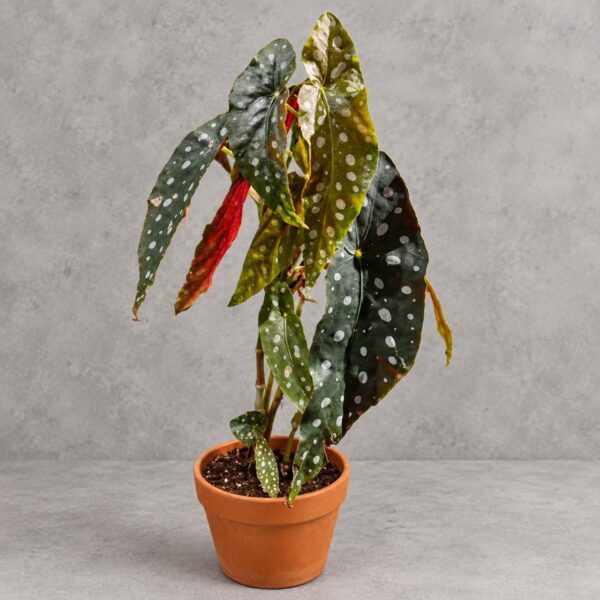
Silver-flecked leaves with a dazzling red underside — the rockstar of the begonia world.
Origin & characteristics
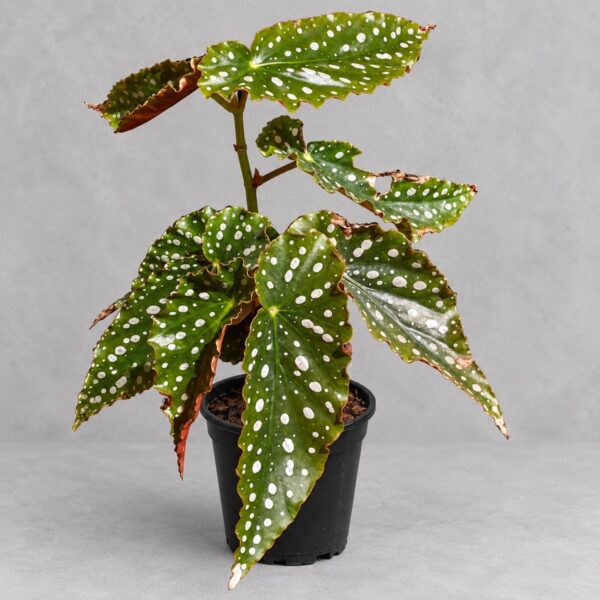
Named by American breeder Walter Dworkin after the classic Neil Diamond song, Cracklin' Rosie is a hybrid with 'Silvermist' as the mother plant and 'Salmon Rubra' as the father. It's a cane-type begonia, with leaves that emerge bronze when young before maturing into deep green covered in silver flecks, while the underside shows a striking red — the leaf margins curl naturally. The plant grows in an elegant, upright form, occasionally producing clusters of pink flowers, adding further ornamental value.
Light
- Ideal placement: east- or north-facing windowsill for gentle, diffused light; or roughly 1–2 metres from a south-facing window
- Light intensity: medium to bright indirect light
- Notes: avoid direct sun, especially harsh midday light, which will scorch the leaves; light that's too weak causes the leaf colour to fade and the silver flecking to diminish
Watering
- Frequency: water once the top 2–3 cm of soil has dried, roughly every 7–10 days (adjust for ambient humidity and season)
- Method: water along the pot's edge, avoiding wetting the leaves; use room-temperature filtered water or rainwater
- Notes: better slightly underwatered than overwatered — standing water easily causes root rot; reduce watering frequency further in winter as growth slows
Soil & pot
- Soil recipe: a light, well-draining mix — peat moss to perlite in a 2:1 ratio, or use commercial African violet potting mix directly
- Pot selection: must have drainage holes; a wide, shallow pot is ideal since begonia rhizomes spread horizontally
- Repotting timing: repot once every 1–2 years, choosing a pot just one size larger — too large a jump increases the risk of waterlogging
Temperature & humidity
- Ideal temperature: 18–26°C, not cold-hardy, prone to cold damage below 10°C
- Humidity requirement: 50–70% is ideal; Hong Kong's typical indoor humidity generally suits this plant well
- Humidification methods: place near a humidifier, group with other plants, or set on a shallow tray lined with pebbles and a little water (keeping the pot base above the waterline)
- Avoid: placing near AC vents, heaters, or drafty corridors
Common problems
| Issue | Likely cause | What to do |
|---|---|---|
| Yellowing, scorched leaf edges | Air too dry or watering issues | Increase surrounding humidity, check watering frequency |
| Fading leaf colour, flecking disappearing | Insufficient light | Move to a brighter spot |
| Brown spots on leaves | Prolonged leaf moisture or fungal infection | Avoid wetting leaves, improve ventilation |
| Leggy growth, weak stems | Light too weak | Increase diffused light intensity |
| Root rot | Overwatering or poor drainage | Reduce watering, check soil drainage |
How to explain to customers
"This Cracklin' Rosie has such a beautiful red underside — perfect by a window with natural light, just be sure it never gets direct sun, or the leaves will scorch! For watering, less is more — water once the topsoil is dry, and go even easier in winter. It likes a bit of humidity, so grouping it with other plants really helps."
Fun facts
'Cracklin' Rosie' takes its name from the classic Neil Diamond song, personally chosen by breeder Walter Dworkin, making it one of the rare begonia cultivars named after a pop song. As a cane-type begonia, its stems gradually become woody with age, developing the distinctive jointed, bamboo-like form characteristic of the group.
Keywords
Cracklin' Rosie Begonia, Begonia, foliage plant, Rex Begonia, cane-type begonia, silver-spotted leaves, red leaf underside, indoor plant, Hong Kong plant, diffused light, Plantjai
參考資料(想知來源可展開)
References
- American Begonia Society. Cane-like Begonias. https://www.begonias.org/
- RHS. Begonias as Houseplants. https://www.rhs.org.uk/plants/begonias/houseplants
- Missouri Botanical Garden. Begonia – Cane Begonia Group. Plant Finder. http://www.missouribotanicalgarden.org/PlantFinder/
⚠️ Toxicity warning: Begonias contain calcium oxalate crystals throughout. Ingestion may cause oral pain and vomiting — keep out of reach of infants and pets.
In-depth care guide
Introduction
Cracklin' Rosie Begonia is a cane-type begonia hybrid with a genuinely charming backstory — bred by American horticulturist Walter Dworkin, who named it after the classic 1970 Neil Diamond song of the same name, using 'Silvermist' as the mother plant and 'Salmon Rubra' as the father. The result is a strikingly beautiful cultivar: leaves emerge a soft bronze colour when young, gradually deepening to a rich, dark green densely dusted with silver flecks as they mature, while the leaf undersides display a vivid, eye-catching red that provides dramatic contrast whenever the leaves catch a breeze or are viewed from below. The naturally curling leaf margins add further textural interest to an already visually rich plant.
Growing in an upright, elegant form typical of cane-type begonias, Cracklin' Rosie occasionally rewards its grower with clusters of pink flowers, though the foliage remains the primary draw for most collectors. As the plant matures, its stems gradually develop the jointed, semi-woody structure characteristic of cane begonias, giving older specimens a more substantial, architectural presence than younger plants.
Light requirements
Cracklin' Rosie does best with medium to bright indirect light. An east- or north-facing windowsill provides gentle, consistent illumination that suits this variety well; if a south-facing window is your only option, position the plant roughly 1–2 metres back from the glass to avoid direct exposure. Direct sunlight, particularly the harsh midday sun common in Hong Kong, will scorch the delicate leaf surface and should always be avoided.
Conversely, light that's too weak causes the leaf colour to fade and the signature silver flecking to become less distinct over time — new growth in low light tends to be plainer and less visually striking than growth produced under proper conditions. Finding the right balance of bright but indirect light is key to keeping this cultivar looking its best.
Watering technique
Water Cracklin' Rosie once the top 2–3 cm of soil has dried out, which typically works out to roughly every 7–10 days depending on your home's ambient humidity and the season. Always water along the pot's edge rather than over the plant's centre, taking care to avoid wetting the leaves — moisture sitting on the foliage for extended periods increases the risk of fungal issues. Room-temperature filtered water or rainwater is preferable to untreated tap water, particularly for plants sensitive to mineral buildup.
As a general principle, it's better to err on the side of slightly underwatering than overwatering — standing water around the roots is one of the most common causes of decline in this variety, quickly leading to root rot. During the slower-growing winter months, reduce watering frequency further, allowing the soil to dry out more between waterings than you would during the active growing season.
Soil and potting
A light, well-draining soil mix works best: combine peat moss and perlite in roughly a 2:1 ratio, or simply use a commercial African violet potting mix, which is formulated with similar drainage and moisture-retention properties. Any pot with drainage holes will work, but a wide, shallow pot is particularly well suited to this variety, since begonia rhizomes spread horizontally along the soil surface rather than growing deep roots.
Repot once every one to two years, choosing a new pot only one size larger than the current one — jumping to an oversized pot increases the amount of soil retaining moisture beyond what the root system can use, raising the risk of waterlogging and rot.
Temperature and humidity
Cracklin' Rosie grows comfortably between 18°C and 26°C. It isn't cold-hardy and is prone to cold damage at temperatures below 10°C, so extra care is needed during Hong Kong's occasional winter cold snaps. Ideal humidity sits between 50% and 70%, a range that Hong Kong's naturally humid indoor environment generally provides without much additional effort.
To boost humidity when needed, consider placing the plant near a humidifier, grouping it with other houseplants to create a shared microclimate, or setting the pot on a shallow tray lined with pebbles and a little water — making sure the pot's base stays above the waterline rather than sitting directly in it. Keep the plant well away from air conditioning vents, heaters, and drafty hallways or doorways, since sudden temperature swings and cold drafts stress this variety considerably.
Common problems in detail
Yellowing, scorched leaf edges typically result from air that's too dry or inconsistent watering practices — increasing ambient humidity and reviewing your watering schedule usually resolves this.
Fading leaf colour with diminishing silver flecking points to insufficient light — moving the plant to a brighter (but still indirect) spot should restore more vivid colouring in subsequent new growth.
Brown spots on leaves usually indicate either prolonged leaf moisture or a fungal infection — avoid wetting the foliage when watering and improve air circulation around the plant.
Leggy growth with weak stems signals that light levels are too low — increasing the intensity of diffused light exposure will encourage more compact, sturdy growth.
Root rot results from overwatering or inadequate drainage — cut back on watering immediately and verify that the pot and soil mix are draining properly.
Toxicity information
Like all begonias, Cracklin' Rosie contains calcium oxalate crystals throughout its tissues. Ingestion may cause oral pain, drooling, and vomiting in both pets and children. Keep the plant out of reach of curious pets and small children at all times.
References
- American Begonia Society. Cane-like Begonias. https://www.begonias.org/
- RHS. Begonias as Houseplants. https://www.rhs.org.uk/plants/begonias/houseplants
- Missouri Botanical Garden. Begonia – Cane Begonia Group. Plant Finder. http://www.missouribotanicalgarden.org/PlantFinder/
- ASPCA. Begonia – Toxic and Non-Toxic Plants. https://www.aspca.org/pet-care/animal-poison-control/toxic-and-non-toxic-plants/begonia
For Hong Kong homes and offices. Stock and pricing follow the product page.
IN STORE NOW
Plants for this guide
Related plants in stock now — live prices, delivery or Causeway Bay pickup.
FREE PLANT ADVICE
Send us a photo before you change anything
WhatsApp a photo of the plant and your window light. Our Causeway Bay team will suggest care steps or plants that suit your space.
STORE · CAUSEWAY BAY
4/F, 39 Yiu Wa Street, Causeway Bay
Daily 12:30–8:00pm · ~3 min walk from Times Square
Map & directionsPlant Care