
How to Care for Anthurium Signatum in Hong Kong | Plantjai

Hong Kong care guide for Anthurium Signatum.
Large shield-shaped leaves with brilliant silver venation — an understated, luxurious collector's piece.
Origin & characteristics
Signatum-Affinis Anthurium is a near-relative of Anthurium signatum, native to Central and South American tropical rainforest. The "aff." notation is short for the Latin "affinis," meaning "close to" or "similar to" — indicating that this particular plant closely resembles the standard A. signatum in form, but may have some taxonomic uncertainty due to provenance or individual variation. Its leaves are shield-shaped, with a thick, glossy texture, deep green covered in striking silver-white or creamy-yellow venation, giving off an understated but refined luxury that has made it a highly sought-after specialty cultivar among advanced hobbyists.
Light
- Ideal placement: an east- or north-facing window, bright diffused light
- Light intensity: 10,000–18,000 lux (medium-to-bright diffused light)
- Note: avoid direct sunlight, which scorches the shield-shaped leaf easily; light too weak causes the venation to fade
- Tip: the contrast of the silver venation changes with light intensity — it needs enough light to really shine
Watering
- Frequency: water once the top 2–3 cm has dried — every 7–10 days in summer, every 10–14 days in winter
- Method: pour slowly along the pot's edge until water flows from the base, empty the saucer afterward
- Water quality: room-temperature plain water, rainwater, or distilled water is best
- Note: the roots of this shield-leaf Anthurium prefer moisture but strongly dislike waterlogging — running dry is always safer than too wet
Soil & pot
- Medium: a chunky, aerated aroid-specific mix — 2 parts orchid bark + 1 part perlite + 1 part coco coir + a little sphagnum moss
- pH: 5.5–6.5, slightly acidic
- Pot: a breathable ceramic pot is the top choice; a plastic pot needs extra attention to drainage
- Repotting: roughly every 1–2 years, ideally in spring, repotting once roots emerge from the drainage holes
Temperature & humidity
- Temperature: most comfortable at 18–26°C; growth stalls below 15°C; avoid cold drafts
- Humidity: 65–80% is ideal, with high humidity helping the leaves unfurl and keep their sheen
- Humidification methods: a humidifier works best; grouping plants together also helps
- Note: new leaves are most sensitive to humidity when unfurling — insufficient humidity easily causes malformed or "stuck" leaves
Common problems
| Issue | Likely cause | What to do |
|---|---|---|
| Faint, indistinct venation | Insufficient light | Move closer to a brighter spot |
| New leaves struggling to unfurl | Humidity too low | Immediately raise humidity above 75% |
| Yellowing leaves | Overwatering leading to root rot | Reduce watering, check roots |
| Scorched leaf edges | Insufficient humidity or water too hard | Increase humidity, switch to rainwater |
| Slow growth | Temperature too low or insufficient light | Check ambient temperature and light |
| Leaves losing their sheen | Dust accumulation or insufficient humidity | Wipe leaves regularly, increase humidity |
⚠️ Toxicity note: Anthuriums contain calcium oxalate crystals; ingestion can cause oral burning, drooling, and vomiting, and sap contact may irritate skin. Keep out of reach of children and pets; wearing gloves during pruning is recommended.
How to explain to customers
"This Signatum-Affinis Anthurium has such a distinctive leaf shape — a large shield-shaped leaf with silver-white venation, giving off real character. It's most beautiful right as a new leaf comes in, so remember to keep humidity high during that time — don't let it dry out, and you'll get the best-looking leaves."
Fun facts
"Aff." is a common botanical notation meaning this plant closely resembles the standard species but may have subtle differences — every Signatum-Affinis Anthurium may show its own unique variation in vein patterning.
Keywords
Signatum-Affinis Anthurium, shield-shaped Anthurium, silver-white venation, near-species, foliage plant, tropical plant, collector-grade, high humidity, aerated medium, advanced growing
In-depth care guide
Introduction
Signatum-Affinis Anthurium, Anthurium signatum aff., is a foliage plant within the Anthurium genus of the Araceae family, native to the tropical rainforests of Ecuador in South America. This cultivar is fairly rare and highly prized within the plant collecting world. "Aff." is short for "affinis," meaning "close to" — indicating that this plant's characteristics are very similar to true A. signatum, but may differ subtly due to growing environment or individual variation.
In its native habitat, Anthurium species typically grow epiphytically or semi-epiphytically, clinging to large tree trunks or rock faces, with roots exposed to the air, absorbing rainwater and nutrients from the surrounding air. This growth habit explains why they have such high requirements for ventilation and drainage when grown indoors.
Signatum-Affinis Anthurium's leaves typically have a distinctive texture and pattern, sometimes showing spots or a bumpy surface (so-called "pebbled leaf"), with an elegant leaf shape, making it a much-desired cultivar among rare Anthurium collectors. Because it's naturally scarce and artificial propagation is difficult, plants circulating in the market are not common.
Native environment
Anthurium signatum is native to the high-elevation tropical cloud forests of Ecuador, growing in an environment with high humidity and stable temperature. This region is perpetually shrouded in mist, with relative humidity often maintaining above 80%, and temperatures roughly between 18°C and 25°C. In terms of light, since it grows beneath a dense canopy, it only receives diffused light and dappled light, with no direct sunlight at all.
Understanding its native environment is essential to successful cultivation. The goal of indoor growing is to replicate these conditions as closely as possible — high humidity, a stable warm environment, good air circulation, and a loose, aerated growing medium.
Care essentials
Light
Signatum-Affinis Anthurium needs bright but indirect light. Avoid any direct sunlight, especially strong midday sun, which will scorch the leaves. The ideal placement is an east- or north-facing window, or a spot several feet from a south- or west-facing window. A sheer curtain can be used to filter the light. If light is too weak, the plant will become sparse with dull leaf colour; if too strong, yellow spots or scorched edges will appear on the leaves.
For rare Anthuriums, an LED grow light is a good option, providing a stable light intensity (roughly 1,500–2,500 lux) without generating excessive heat.
Temperature
The ideal temperature range is 18–26°C, never below 15°C. This cultivar is very sensitive to cold, and cold drafts or sudden temperature drops will cause leaves to yellow or even drop. In Hong Kong, in summer take care that AC vents don't blow directly onto the plant; in winter, avoid placing it near windows or doorways with cold drafts.
Humidity
Humidity is the key factor in the success or failure of growing Signatum-Affinis Anthurium. Ideal humidity should be maintained above 65%, ideally reaching 70–80%. A typical home environment's humidity (40–50%) is on the low side for this plant.
Effective ways to raise humidity include:
- Using a humidifier: the most reliable method, choose a model with a built-in hygrometer to automatically maintain ideal humidity.
- Pebble tray: place the pot on a shallow tray filled with pebbles and water, ensuring the pot's base doesn't touch the water directly.
- Grouping plants together: placing multiple tropical plants together creates a microclimate through their combined transpiration.
- Glass cabinet/greenhouse cabinet: popular options for growing rare Anthuriums.
Watering
Anthuriums are most averse to waterlogging. The watering principle is "let it dry, then water" — wait until the top 1–2 inches (roughly 2.5–5 cm) of soil has dried before watering, and water thoroughly until it flows from the pot's base, then empty any standing water from the saucer.
For water quality, Anthuriums are fairly sensitive to minerals. It's best to use rainwater, distilled water, or filtered water. If using tap water directly, let it stand overnight first to allow chlorine to dissipate, and ensure the water temperature is close to room temperature, avoiding cold water that shocks the roots.
Soil/growing medium
Signatum-Affinis Anthurium needs an extremely loose, aerated growing medium. Standard potting soil is too dense for this plant and easily leads to root rot. It's recommended to prepare your own mixed medium:
Recommended recipe:
- 1 part quality potting soil (provides basic nutrients)
- 1 part orchid bark (increases aeration, creates air pockets for roots to breathe)
- 1 part perlite (improves drainage, prevents medium compaction)
- Optionally add a small amount of sphagnum moss (retains moisture) and charcoal (absorbs impurities)
This recipe ensures the roots get enough oxygen while maintaining appropriate moisture. Remember to repot every 18 to 24 months, refreshing the medium.
Feeding
During the growing season (spring through summer), feed once every 4–6 weeks with a balanced liquid fertiliser diluted to half strength (such as 20-20-20 or 10-10-10). It's best to choose a fertiliser specifically designed for foliage plants or aroids, containing trace elements. Always feed when the soil is moist, avoiding feeding on dry soil which can burn the roots. Stop feeding in autumn and winter when the plant is dormant.
If you notice leaf tips turning yellow or edges browning, this may indicate salt accumulation, requiring a thorough flush of the soil with plenty of plain water.
Daily care
Pruning
Signatum-Affinis Anthurium doesn't need frequent pruning. Simply use clean scissors regularly to trim away yellowing or withered leaves, keeping the plant tidy. If the plant grows too tall, moderate pruning in spring can encourage branching. It's best to wear gloves when pruning, since Anthurium sap contains calcium oxalate crystals that may irritate skin.
Support
If Signatum-Affinis Anthurium grows a longer stem or larger leaves, a moss pole or bamboo stake can provide support. Use a soft plant tie to secure it, avoiding damage to the stem.
Repotting
Repot every 2–3 years, or when you notice roots circling the pot's base or drainage slowing. Choose a new pot 1–2 inches larger in diameter than the current one, using fresh, loose medium. After repotting, keep the plant in a shadier spot for 7–10 days to reduce transplant shock.
Propagation methods
Signatum-Affinis Anthurium's propagation mainly relies on the following methods:
Division
During repotting, if the plant has obvious side shoots or branches, they can be carefully separated, ensuring each division has a healthy root system, then planted separately. This is the simplest and most direct method, with the highest success rate.
Stem cuttings
Take a stem section with 2–3 leaves for cutting. Remove the lower leaves, insert into moist cutting medium or sphagnum moss, and maintain high humidity and warmth (roughly 21°C); roots should form within 4–8 weeks. Remember to use sterilised tools to avoid infection.
Seed propagation
Anthuriums can produce seeds through hand pollination. Use a fine brush to transfer pollen from one flower to another. After successful pollination, the flower spike develops into fruit, which matures within about 6–12 months. Seeds must be sown fresh and cannot be dried; sow onto moist sphagnum moss, maintain high humidity, and they should germinate within a few weeks.
Common problems
Yellowing leaves: the most common cause is overwatering leading to root rot. Check soil moisture and adjust watering frequency. Another possible cause is humidity too low or nutrient imbalance.
Browning leaf tips: usually caused by low humidity, insufficient watering, or fertiliser damage. Increase humidity, check watering frequency, and ensure fertiliser has been sufficiently diluted.
No new leaves for an extended period: may indicate insufficient light or a weak root system. Increase light exposure, check root health, and repot if necessary.
Poor leaf texture: if leaves lose their velvety quality or veins become dull, this may be genetic variation, but could also result from insufficient light or nutrient deficiency. Try increasing light slightly or supplementing trace elements.
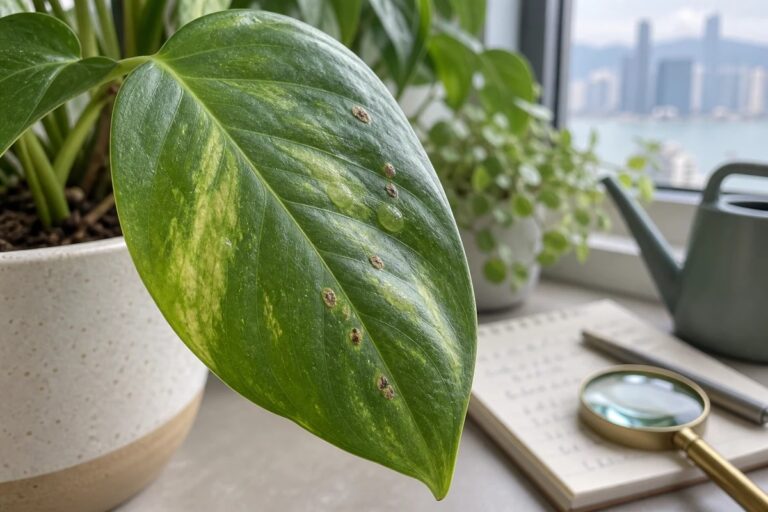
Pests: Anthuriums are occasionally troubled by aphids, mealybugs, spider mites, or whitefly. Regularly check the undersides of leaves, and if pests are found, spray with soapy water or wipe with alcohol-dipped cotton swabs. For severe infestations, use neem oil or insecticidal soap.
Safety precautions
Anthuriums contain calcium oxalate crystals, toxic to both humans and pets. Ingestion causes oral and throat pain and swelling, and in severe cases can lead to breathing difficulties. Wear gloves when handling the plant to avoid sap contact with skin or eyes. Keep the plant out of reach of children and pets.
Placement suggestions
Signatum-Affinis Anthurium is best displayed in a bright, well-ventilated spot without direct sunlight, such as a coffee table in the living room, a bookshelf in the study, or a dedicated plant cabinet. Its elegant leaf shape and distinctive texture can become a focal point in any indoor space. If your home has lower humidity, a glass cabinet or humidifier is strongly recommended. When growing in an office, ensure it's kept away from AC vents and heat sources.
參考資料(想知來源可展開)
References
- GBIF. Anthurium signatum K.Koch & L.Mathieu. https://www.gbif.org/species/2872853
- Exotica Esoterica. (2018). The Pebbled-leaf Anthuriums. https://www.exoticaesoterica.com/magazine/the-pebbled-leaf-anthuriums
- Plant and Stories. (2026). Anthurium Care Essential Tips Foliage. https://plantandstories.com/en/blogs/entretien-famille-plantes-guide-conseils/entretien-anthurium-conseils-essentiels-feuillage
- Patch Plants. (2026). Complete guide to anthurium care. https://www.patchplants.com/pages/plant-care/complete-guide-to-anthurium-care/
- Proven Winners. Caring for Anthurium Plants Indoors. https://www.provenwinners.com/learn/houseplants/anthurium
For Hong Kong homes and offices. Stock and pricing follow the product page.
IN STORE NOW
Plants for this guide
Related plants in stock now — live prices, delivery or Causeway Bay pickup.
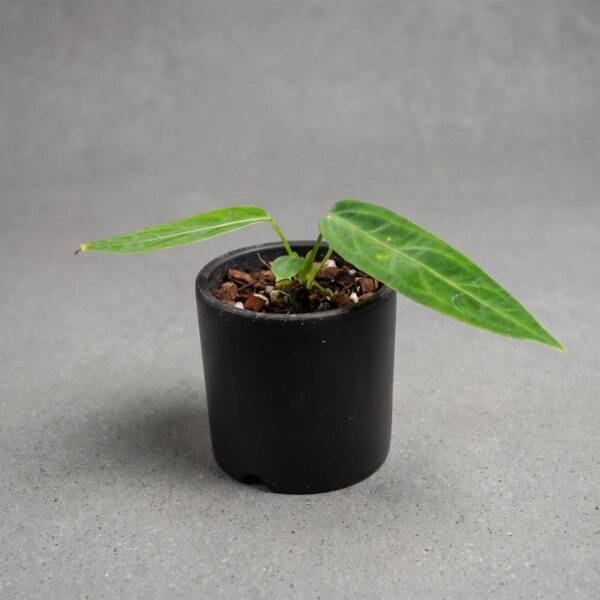
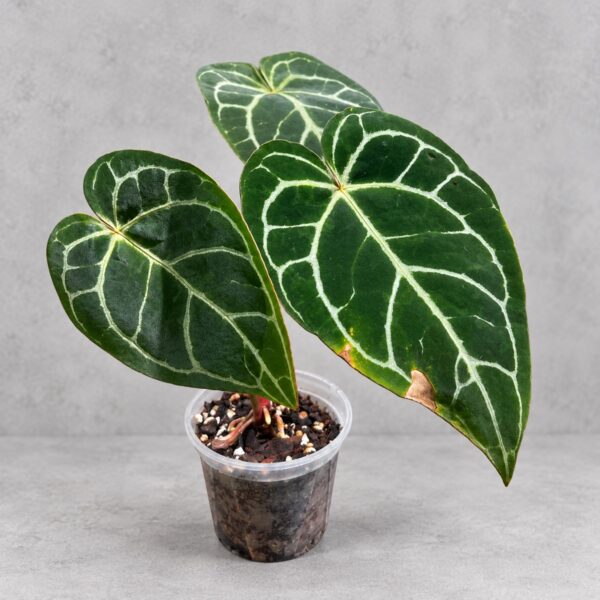
Anthurium chrystallinum Turtle
Original price was: HK$780.00.HK$138.00Current price is: HK$138.00.
In stock · store pickup
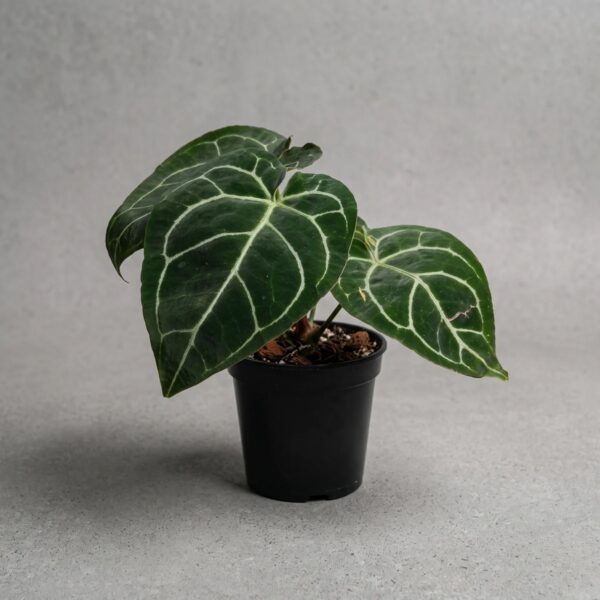
View plantAnthurium crystallinum
Anthurium crystallinum
Original price was: HK$780.00.HK$380.00Current price is: HK$380.00.
In stock · store pickup
View plant
FREE PLANT ADVICE
Send us a photo before you change anything
WhatsApp a photo of the plant and your window light. Our Causeway Bay team will suggest care steps or plants that suit your space.
STORE · CAUSEWAY BAY
4/F, 39 Yiu Wa Street, Causeway Bay
Daily 12:30–8:00pm · ~3 min walk from Times Square
Map & directionsPlant Care