

How to Care for Anthurium Magnificum Crystallinum in Hong Kong | Plantjai

Plantjai 植仔 · Care Encyclopedia
Anthurium Magnificum Crystallinum
Anthurium magnificum x crystallinum 華麗x水晶花燭
Hong Kong care guide — useful before you buy and after it arrives.
Shop this plantVelvety, broad leaves with silvery-white venation — a luxurious choice for indoor greenery.
Origin & characteristics
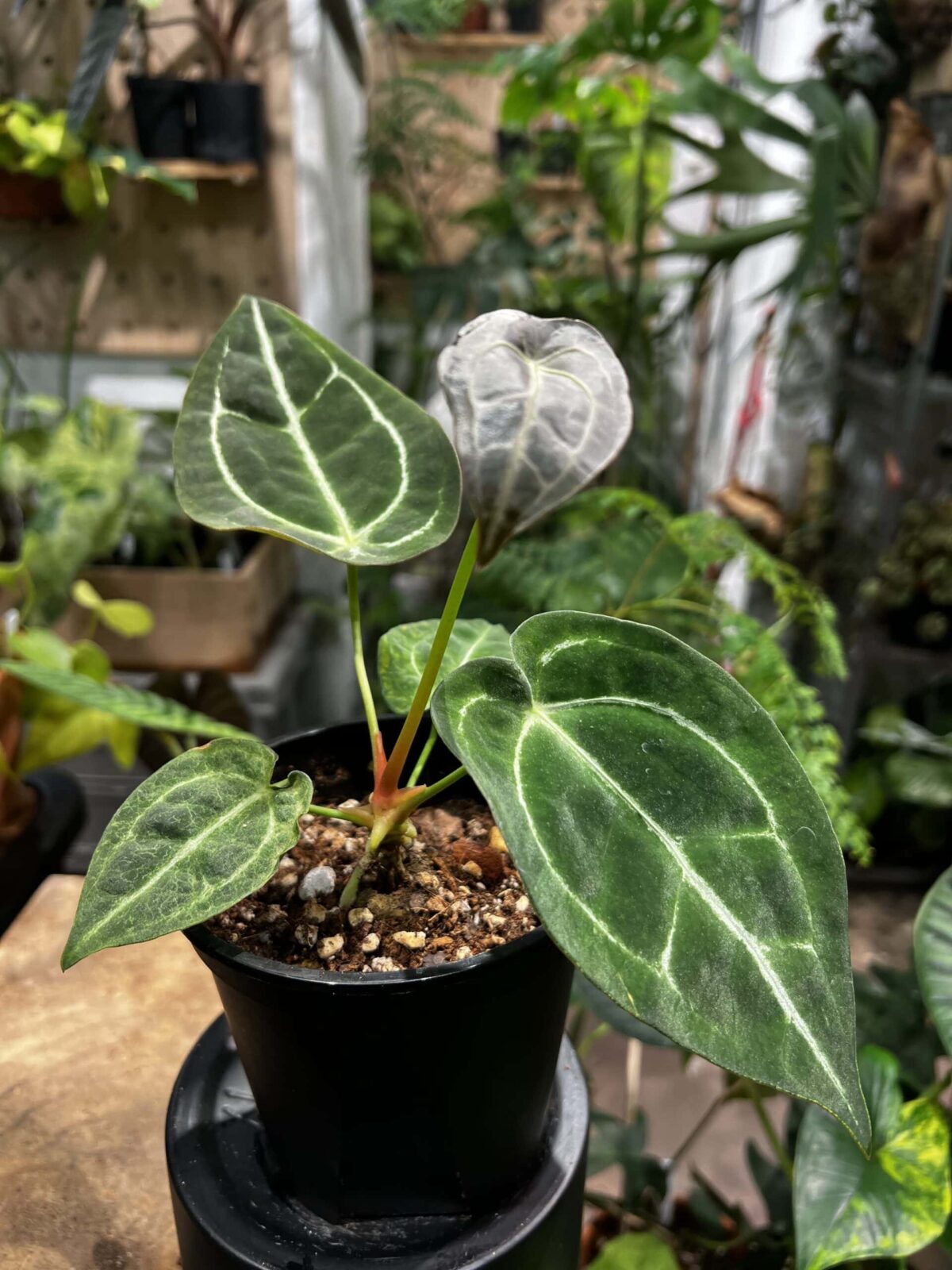
Magnificum x Crystal Anthurium is an artificial hybrid, with its two parents being Magnificum Anthurium (A. magnificum) and Crystal Anthurium (A. crystallinum), both native to Central and South American tropical rainforests. This hybrid inherits the sturdy build of Magnificum Anthurium along with the velvety texture of Crystal Anthurium, producing large, heart-shaped leaves with dramatic silver-white venation and exceptional ornamental value. As the leaves mature, the colour transforms from coppery-red to deep green velvet — every new leaf is a visual treat.
Light
- Ideal placement: an east- or north-facing windowsill, enjoying gentle morning light or filtered light
- Light intensity: 10,000–20,000 lux (bright, diffused light)
- Note: avoid direct sunlight, which easily scorches the velvety leaf with brown edges; light too weak causes the leaves to become thin with indistinct venation
- Tip: test with your hand near the plant's position — if the shadow is blurry, the light level is about right
Watering
- Frequency: water once the top 2–3 cm of soil has dried — roughly once a week in summer, extending to every 10–14 days in winter
- Method: water thoroughly until it flows from the pot's base, then empty the saucer
- Water quality: room-temperature plain water is fine; rainwater or distilled water is even better; avoid cold water
- Note: better to underwater than overwater — waterlogging leading to root rot is the biggest killer
Soil & pot
- Medium: a well-draining, aerated aroid-specific mix, such as — 2 parts coco coir/peat + 1 part perlite + 1 part orchid bark/bark
- pH: 5.5–6.5, slightly acidic
- Pot: a ceramic or breathable pot is ideal; if using a plastic pot, be more careful about controlling watering
- Repotting: roughly every 2 years, or once roots emerge from the pot's base; spring/summer is the best time
Temperature & humidity
- Temperature: most comfortable at 18–26°C; below 15°C risks cold damage; avoid cold drafts
- Humidity: 70–80% is ideal; below 60%, leaf edges tend to scorch
- Humidification methods: humidifier, grouping plants together, pebble tray
- Note: high humidity must be paired with good air circulation — stuffy conditions easily trigger fungal disease
Common problems
| Issue | Likely cause | What to do |
|---|---|---|
| Leaf yellowing (from centre outward) | Overwatering / medium not aerated enough | Reduce watering frequency, check roots, repot if necessary |
| Scorched leaf tips | Humidity too low / water too hard | Increase humidity, switch to rainwater or distilled water |
| Small new leaves, indistinct venation | Insufficient light | Move to a brighter spot |
| Leaves lacking velvety quality | Insufficient humidity or light | Check environmental humidity, adjust placement |
| Stalled growth | Root damage / temperature too low | Check root health, keep the plant warm |
⚠️ Toxicity note: Anthuriums contain calcium oxalate crystals; ingestion can cause oral burning, drooling, and vomiting, and sap contact may irritate skin. Keep out of reach of children and pets; wearing gloves during pruning is recommended.
How to explain to customers
"This hybrid Anthurium is genuinely gorgeous — the velvety leaves paired with silvery-white veins instantly elevate any living room. Just remember not to water too frequently — let the topsoil dry out first, since it really hates root rot."
Fun facts
Magnificum x Crystal Anthurium's new leaves typically emerge coppery-red before gradually transforming into deep green velvet — every new leaf's colour transformation is a genuinely unique visual performance.
Keywords
Anthurium hybrid, velvet leaf, silver-white venation, foliage plant, tropical plant, indoor greenery, high-humidity plant, aerated medium, root rot caution
In-depth care guide
Introduction
Magnificum x Crystal Anthurium (Anthurium magnificum x crystallinum) is a garden hybrid highly sought after by tropical plant collectors, produced by crossing Magnificum Anthurium (Anthurium magnificum) with Crystal Anthurium (Anthurium crystallinum). This hybrid combination perfectly combines the strengths of both parent species — inheriting the signature velvety-textured, broad leaf and silver-white contrasting venation of Crystal Anthurium, while also gaining the sturdy, upright growth habit and more symmetrical leaf shape of Magnificum Anthurium.
Mature plants have deep green velvet leaves with a heart-shaped base and pointed tip, each leaf displaying a silvery-white network of veins radiating from the central rib, with the vein pattern becoming even more expansive and spectacular as the leaf grows larger. New leaves typically emerge with a reddish-brown or bronze tone, gradually turning deep green as the leaf hardens and matures — this colour transformation is itself a visual delight.
Grown indoors, this hybrid typically reaches around 60 cm in height with a similar spread, making it a medium-sized, upright, clumping herbaceous plant. Given its moderate growth rate and stronger adaptability, it's considerably easier to care for than many pure-species Crystal Anthuriums, making it a dream plant for many advanced hobbyists and collectors.
Parent species background
Magnificum Anthurium (Anthurium magnificum): native to Colombia's Andean region, famous for its huge, thick, strongly upright leaves. The leaf surface has a rough but glossy texture, with bold, prominent silver-white venation. Its sturdy constitution and upright growth habit provide the structural foundation for this hybrid.
Crystal Anthurium (Anthurium crystallinum): also native to Central and South American tropical rainforest, one of the most representative species in the Anthurium genus. It's famous for its silky, soft velvet leaf surface, shimmering silver-white veins, and relatively compact growth form, but it has higher requirements for environmental humidity and soil aeration.
This hybrid combines the best qualities of both — the leaf texture leans toward Crystal Anthurium's velvety quality, but the overall plant form is more upright and symmetrical, with steadier growth, making it an extremely popular rare cultivar on the market.
Light requirements
Magnificum x Crystal Anthurium needs bright, indirect light, with an ideal intensity at the leaf surface of roughly 10,000–20,000 lux. In their native environment, both parent species grow in the rainforest understorey, accustomed to diffused light filtered through the canopy above.
Ideal placement:
- An east- or west-facing windowsill, roughly 3–5 feet (90–150 cm) from the glass
- A south-facing windowsill with a sheer curtain or shade netting to filter direct light
- An indoor environment with adequate artificial lighting (such as an office or commercial space)
Points to note:
- Avoid direct sunlight, especially strong midday sun, which can scorch the velvety leaf surface within just a few days, causing permanent damage.
- If light is too weak, new leaves become progressively smaller, vein contrast decreases, and the plant becomes "leggy" (elongated internodes) with stalled growth.
- Rotate the pot roughly 90 degrees every two weeks to ensure even light exposure on all sides, preventing the plant from leaning to one side.
For indoor environments with insufficient light, a full-spectrum LED grow light can help, run for 12–14 hours daily, positioned roughly 30–45 cm from the leaf surface.
Watering method
Magnificum x Crystal Anthurium prefers consistently moist but never waterlogged soil. As a descendant of epiphytic plants, its roots are adapted in the wild to environments that drain quickly after heavy rain, so it's genuinely averse to "wet feet."
Watering principles:
- Water once the soil surface is roughly 30–50% dry. Test by inserting a finger about 2–3 cm into the soil, or use a soil moisture meter for more precise monitoring.
- Water thoroughly — slowly pour until water flows freely from the pot's base, then immediately empty the saucer.
- Use room-temperature rainwater, distilled water, or filtered water. Minerals in tap water accumulate in the soil over time, causing leaf tips to brown.
Seasonal adjustments:
- Spring/summer growing season: roughly every 7–10 days, depending on ambient temperature and humidity. Warm, dry weather may require more frequent watering.
- Autumn/winter slower growth: extend to every 10–14 days. Soil dries out more slowly, so be careful of overwatering.
Overwatering warning signs: lower leaves yellowing, stem base turning soft and black (root rot), fungus gnats appearing in the soil.
Underwatering warning signs: leaf tips/edges browning and curling, leaves drooping with a papery, thin texture.
If using slow-release fertiliser, you can place a few granules on the soil surface at the start of the growing season (such as Osmocote 14-14-14), supplementing with liquid fertiliser as needed afterward.
Soil and potting
Magnificum x Crystal Anthurium needs a loose, aerated medium that drains extremely quickly while retaining slight moisture. Standard potting soil is far too heavy for this plant.
Recommended soil recipe (orchid-mix style):
- 30% orchid bark (medium-coarse grade, for aeration and drainage)
- 25% perlite or pumice (improves drainage and prevents soil compaction)
- 25% coco coir or peat moss (retains moisture and provides organic matter)
- 10% charcoal (natural antibacterial properties, improves soil structure)
- 10% worm castings or slow-release organic fertiliser (provides baseline nutrients)
This recipe ensures the roots get plenty of oxygen flow while retaining enough moisture to support healthy growth. If you'd rather not mix your own soil, ready-made mixes specifically designed for Anthurium/aroid plants are also available commercially.
Pot selection:
- Must have drainage holes.
- Terracotta pots or breathable plastic pots both work; terracotta helps the soil dry out faster.
- When repotting, choose a pot roughly 1–2 inches (2.5–5 cm) larger in diameter than the current one — don't skip sizes to an oversized pot.
- This species has a relatively shallow root system, so a very deep pot isn't necessary.
Repotting timing: repot once every 1–2 years in spring, or once you see roots circling the pot's base or emerging from drainage holes. When repotting, gently loosen the outer roots and trim away any rotten or damaged sections.
Humidity and temperature
Humidity: Magnificum x Crystal Anthurium prefers 60–80% relative humidity. High humidity helps new leaves unfurl properly (otherwise they may become malformed or "stuck"), while also reducing leaf-edge scorching.
- Using a humidifier is the most direct and effective method, especially when heating is running in winter.
- Place the plant in a naturally more humid space like a bathroom or kitchen (but ensure adequate light).
- Avoid misting directly onto the leaves — water sitting on the velvety leaf surface can easily lead to bacterial leaf spot.
Temperature: the ideal range is 18–27°C, avoiding anything below 15°C.
- Sustained temperatures below 15°C stall growth, and leaves may develop cold-damage spots.
- Avoid placing the plant near AC vents, heaters, or doors/windows, where temperature fluctuates more.
- In high summer temperatures (above 30°C), pay special attention to increasing humidity, otherwise spider mites become more likely to appear.
Feeding guidelines
Magnificum x Crystal Anthurium needs regular, light feeding during the growing season (spring and summer), but it's absolutely not a "heavy feeder."
Feeding recommendations:
- Use a balanced water-soluble fertiliser (such as 20-20-20), diluted to ½ or ¼ strength.
- Feed every 4–6 weeks, only when the soil is already moist.
- Choose a formula containing trace elements (iron, magnesium, calcium, etc.), which is particularly important for healthy leaf colour.
- Stop feeding completely from autumn through winter.
Points to note:
- Overfeeding causes salt accumulation, showing up as leaf-tip burn or white crystalline deposits on the soil surface. If this happens, flush the soil thoroughly with plain water.
- If new leaves are pale but the veins remain green, this may indicate trace element deficiency or improper pH — try a foliar fertiliser containing iron.
- Don't feed for at least 3 months after flowering or repotting, allowing the plant to adjust to its new environment.
Pruning and maintenance
Pruning for Magnificum x Crystal Anthurium is relatively simple:
- Regularly remove yellowing, browning, or damaged leaves, cutting at the base of the petiole with clean, sharp scissors.
- Clear away fallen leaves and spent flowers, keeping the base of the plant well-ventilated.
- Gently wipe dust from the leaf surface with a soft, slightly damp cloth (following the direction of the veins), supporting effective photosynthesis. Leaf shine products aren't recommended.
- Watch for pest signs on the leaf undersides, especially spider mites and mealybugs.
If the plant grows tall or its leaves become densely arranged, consider supporting it with a moss pole or bamboo stake to maintain an elegant upright form. Generally speaking, though, a healthy plant can maintain its own upright rosette shape.
Propagation methods
Magnificum x Crystal Anthurium can be propagated in the following ways:
Division (most recommended):
When repotting, gently separate the mother plant's root system, ensuring each division has healthy roots and at least one growth point. Plant divisions into fresh soil, maintaining high humidity and warmth until new roots establish.
Rhizome cutting:
During the growing season, sections of rhizome exposed above the soil surface can be cut for propagation, with each section needing at least one growth bud. Let the cut surface air-dry for a day before planting into moist, aerated medium.
Seed propagation (advanced level):
Anthuriums can produce seed through hand pollination, though the process is fairly complex. Pollen needs to be collected with a clean brush when the inflorescence blooms, stored in the refrigerator until another inflorescence enters its female receptive phase. After successful pollination, the berries take 6–12 months to mature. Seeds must be sown fresh, as they quickly lose viability once dried.
Common problems
Yellowing leaves: the most common cause is overwatering causing root stress. Check soil moisture — if it's wet, pause watering. Low humidity or nutrient imbalance can also cause yellowing leaves.
Browning leaf tips or edges: usually caused by underwatering, low humidity, or fertiliser burn. Check soil moisture and humidity levels, adjusting as needed.
New leaves stalled for a long time: may indicate insufficient light or a weak root system. Increase light intensity, check root health; if the roots have been exhausted, consider fresh soil.
Leaves losing their velvety quality or veins lacking definition: could be genetic variation, but strong light usually helps highlight vein contrast. Ensure the plant gets adequate light, supplementing trace elements if necessary.
Spider mites: the most common pest in dry conditions. Regularly check leaf undersides for fine webbing or spots. Once spotted, treat immediately with soapy water or a dedicated insecticide, while increasing environmental humidity.
Toxicity information
Like all Anthurium species, Magnificum x Crystal Anthurium contains calcium oxalate crystals, toxic to both pets and humans. Ingestion causes irritation and swelling of the mouth and throat, and may cause vomiting and difficulty swallowing. Keep the plant out of reach of pets and children. Wearing gloves when handling the plant is recommended.
參考資料(想知來源可展開)
References
- Foliage Factory. (2026). Anthurium magnificum x crystallinum – Product & Care Guide. https://foliage-factory.com/products/anthurium-magnificum-x-crystallinum
- Rasmussen Gardens. (2025). Anthurium Crystallinum × Magnificum Plant Care. https://rasmussengardens.co.nz/products/anthurium-crystallinum-magnificum-plant-in-12-cm-pot
- Jomo Studio. Anthurium Crystal Hope x Magnificum – Plant Story & Care. https://jomostudio.com/products/anthurium-crystal-hope-x-magnificum
- Brittany Goldwyn. (2026). Anthurium Magnificum Care. https://www.bybrittanygoldwyn.com/anthurium-magnificum/
- Epic Gardening. (2022). How to Plant, Grow, and Care For Anthurium Crystallinum. https://www.epicgardening.com/anthurium-crystallinum/

Plantjai shop · In stock online
Anthurium magnificum x crystallinum
HK$368.00
Hong Kong delivery · Causeway Bay pickup
For Hong Kong homes and offices. Stock and pricing follow the product page.
IN STORE NOW
Plants for this guide
Related plants in stock now — live prices, delivery or Causeway Bay pickup.
Anthurium crystallinum
Anthurium crystallinum
Original price was: HK$780.00.HK$380.00Current price is: HK$380.00.
In stock · store pickup
View plant


FREE PLANT ADVICE
Send us a photo before you change anything
WhatsApp a photo of the plant and your window light. Our Causeway Bay team will suggest care steps or plants that suit your space.
STORE · CAUSEWAY BAY
4/F, 39 Yiu Wa Street, Causeway Bay
Daily 12:30–8:00pm · ~3 min walk from Times Square
Map & directionsPlant Care


