
How to Care for Anthurium Forgetii in Hong Kong | Plantjai

Plantjai 植仔 · Care Encyclopedia
Anthurium Forgetii
Hong Kong care guide — useful before you buy and after it arrives.
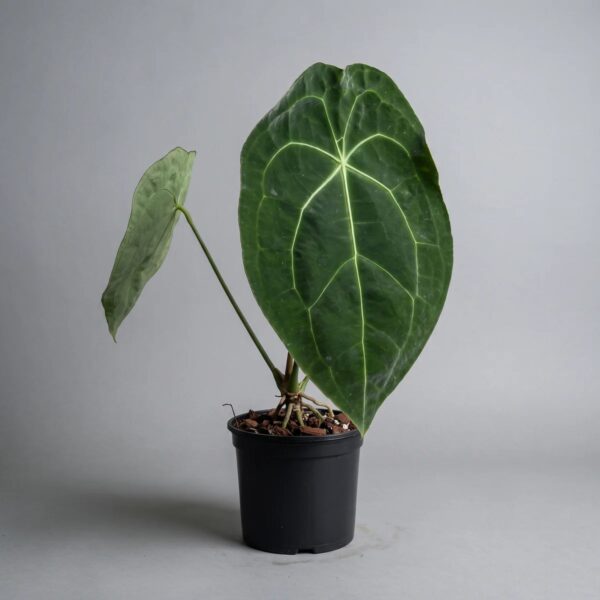
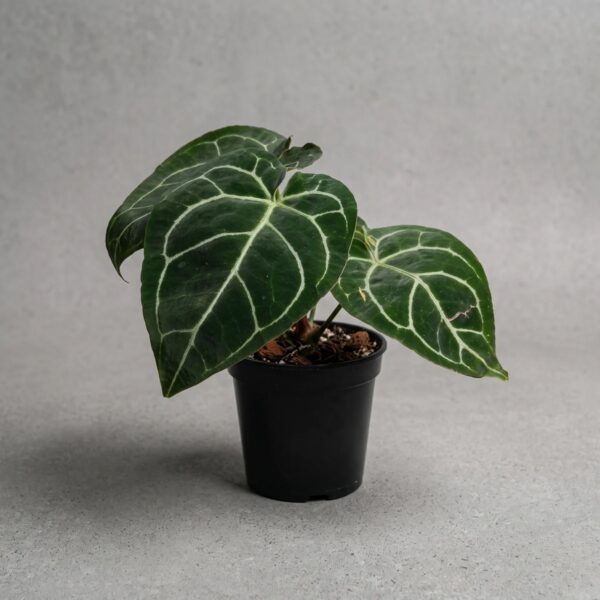
Shop this plantRound, shield-shaped velvet green leaves with silvery lightning-bolt veins — an elegant, distinctive Anthurium species without lobed lower lobes.
Origin & characteristics
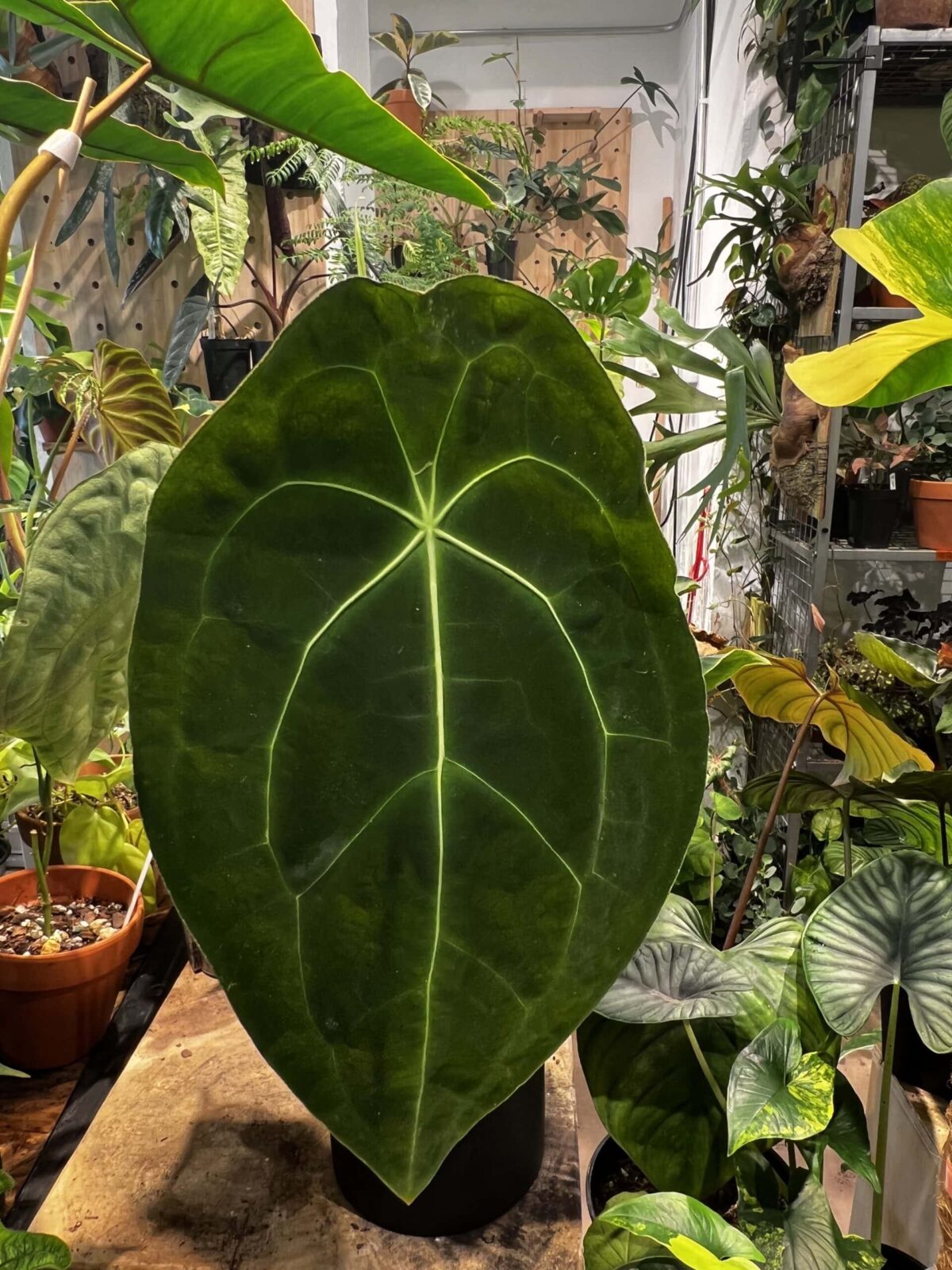
Shield Anthurium is native to the lowland tropical rainforests of Colombia, and stands as one of the most representative species within the Anthurium genus. Its most striking feature is a perfectly rounded, shield-shaped leaf with no basal lobes at all (the leaf base doesn't indent or split). The leaf surface is covered in dense velvet, with silvery-white radiating veins concentrated at the centre, giving it exceptional ornamental value. Mature leaves reach 30–40 cm, giving the plant real presence — a favourite among more advanced foliage plant enthusiasts.
Light
- Ideal light: bright, diffused light, roughly 12,000–20,000 lux
- Placement: near an east- or north-facing windowsill; a south-facing spot filtered by a sheer curtain also works
- Avoid: direct midday sun, which easily scorches the velvety leaf surface
- Tip: under good light, new leaves emerge coppery-red before gradually darkening to green — this colour change is completely normal
Watering
- Frequency: water once the top 2–3 cm of soil has dried, roughly every 7–10 days
- Method: pour slowly along the pot's edge, letting water drain from the base, and empty the saucer after 30 minutes
- Water quality: room-temperature settled water is best, avoid cold water straight from the tap
- Seasonal adjustment: keep the medium lightly moist during spring/summer growth, let it dry out a bit more in autumn/winter
- Note: the roots hate standing water — overwatering easily leads to root rot
Soil & pot
- Medium recipe: primarily a highly aerated orchid mix — pine bark (medium-to-large grade) + perlite + sphagnum moss, roughly 6:2:2
- pH: 5.5–6.5, slightly acidic
- Pot recommendation: ceramic or breathable plastic pot, must have drainage holes
- Repotting: check roots each spring, and size up once the pot is root-bound
Temperature & humidity
- Ideal temperature: 18–27°C
- Minimum temperature: don't let it drop below 15°C — prolonged cold stalls growth
- Humidity: 60%–80% is ideal
- Humidification methods: a pebble tray, humidifier, or grouping plants together all help raise humidity
- Note: high humidity must be paired with good ventilation to prevent fungal issues
Common problems
| Issue | Likely cause | What to do |
|---|---|---|
| Yellowing, wilting leaf tips | Overwatering / humidity too low | Adjust watering frequency, raise surrounding humidity |
| Small new leaves with no visible veining | Insufficient light / nutrient deficiency | Move closer to light and feed appropriately |
| Yellow spots on leaves | Sunburn | Move away from direct light |
| Roots turning black and mushy | Waterlogging leading to root rot | Stop watering, check roots, trim rot and repot into fresh medium |
| Slow growth | Temperature too low / roots have filled the pot | Check ambient temperature and pot size |
How to explain to customers
"What's great about this Shield Anthurium is that its leaf is perfectly round with no notches — it looks so complete and lovely! Put it somewhere in your living room with some diffused light, and just remember never to let direct sun hit it — its leaves will reward you quickly."
Fun facts
The round, shield-shaped leaf of the Shield Anthurium actually serves as a "water-collecting design" in nature — rainwater flows along the velvety leaf surface toward the base of the petiole and down into the root zone, helping the plant efficiently absorb water in its rainforest habitat.
Keywords
Shield Anthurium, Anthurium species, no basal lobes, round shield leaf, silver venation, velvet leaf, foliage plant, tropical rainforest plant, indoor plant, Anthurium forgetii
參考資料(想知來源可展開)
References
- Anthurium Care — Anthurium forgetii Care: Why This Shield-Leaf Anthurium Is More Rewarding Than It Looks. https://anthuriumcare.com/varieties/anthurium-forgetii-care/
- Anthurios — Anthurium Forgetii: Complete Profile & Care Guide. https://anthurios.ca/blogs/anthurium-journal/anthurium-forgetii
- MyPlantIn — Anthurium Forgetii Care. https://myplantin.com/plant/5848
⚠️ Pet / toxicity note: Anthuriums contain calcium oxalate crystals, toxic to pets and children. Ingestion may cause oral pain, drooling, and vomiting. Keep out of reach of pets and small children. If accidental ingestion occurs, rinse the mouth immediately and seek medical advice.
In-depth care guide
Introduction
Shield Anthurium, scientifically Anthurium forgetii, is a hugely popular foliage plant within the Anthurium genus of the Araceae family. Its defining feature is a nearly perfect shield-shaped leaf — oval-shaped with a slightly pointed tip and a heart-shaped base, and most importantly, it has no petiole at all, or an extremely short one — the leaf attaches almost directly to the stem, making the whole leaf look like a shield, hence its common name.
A. forgetii's leaves have a thick texture with a dark velvet surface, ranging from deep green to dark forest green, developing a beautiful sheen under light. It's closely related to A. magnificum and A. crystallinum, but Shield Anthurium lacks the long petiole, giving it a more compact, space-saving overall form that's very well suited to indoor growing.
Shield Anthurium is considered a relatively easy-to-care-for Anthurium species, with moderate growth speed and better environmental adaptability than many rare Anthuriums, making it a top choice for many entry-level Anthurium enthusiasts.
Native environment
Shield Anthurium is native to the Andean region of Colombia, growing in higher-elevation tropical rainforests. In the wild, it typically grows on the forest floor, or clinging to tree trunks and slopes, in an environment with high humidity, gentle light, and good ventilation.
Its native habitat stays warm and humid year-round, with relative humidity typically between 70–85% and temperatures maintained around 18–26°C. These environmental conditions directly shape its various needs when grown indoors.
Light requirements
Ideal light intensity
Shield Anthurium suits low-to-medium diffused light conditions. Although its dark velvety leaves theoretically absorb light well, it grows natively beneath a dense canopy, so light that's too strong actually makes it uncomfortable.
If you're measuring with a light meter, the ideal range is roughly 150–300 foot-candles. In a home setting, this usually means a spot a few metres back from a bright south- or east-facing window, or under a grow light at lower intensity.
Light too strong
Direct sunlight (especially strong midday sun) will scorch the velvety leaves, causing white or brown spots, and in severe cases ruining the whole leaf. If you place it near a south-facing window, always use a sheer curtain or shade netting to filter the light.
Light too weak
While Shield Anthurium can survive in lower light, growth will slow noticeably, new leaves will get progressively smaller, and the leaf colour will darken but lose its sheen, leaving the plant looking sparse and unattractive overall.
Supplemental lighting suggestions
- Barrina T5 LED tube: economical, position 30–45 cm from the leaf surface
- SolTech Aspect grow light: stylish design, position 30–60 cm away
- GE plant bulb: suited to a single potted plant, position 15–30 cm away
Humidity management
Humidity requirements
Shield Anthurium's ideal humidity is 60–85%. While it can adapt to humidity as low as 40%, for long-term healthy growth it's best kept above 60%.
Signs of low humidity
When humidity stays below 60% for extended periods, you'll notice:
- Dry, browning leaf edges
- New leaves struggling to unfurl, coming in smaller or malformed
- Leaves losing their velvety sheen
- Noticeably slower growth
Ways to raise humidity
A humidifier is the most reliable choice, especially during winter when heaters are running. A glass cabinet/plant cabinet is also an excellent option, able to steadily maintain 70–90% high humidity. A pebble water tray and grouping plants together can both serve as supplementary methods.
Note that misting only briefly raises humidity for a few minutes — it's not a long-term solution. If indoor humidity is very low, misting alone won't be enough.
Watering technique
Watering principles
Shield Anthurium's roots are thick and succulent, accustomed to water flowing quickly past the roots in their native environment. So it needs a balance between being aerated yet retaining some moisture — the soil can't stay soggy long-term, but also can't dry out completely.
Ideal rhythm
Watch for when the soil surface starts to dry — that's your cue to water. Exact frequency depends on temperature, pot size, and ventilation:
- Summer, high temperature, good ventilation: every 2–5 days
- Winter, low temperature, poor ventilation: every 7+ days
Water quality requirements
Use rainwater, filtered water, or tap water left to stand. Water temperature should be close to room temperature — avoid cold water especially in winter.
Water thoroughly
Each time you water, water until it flows from the pot's base, ensuring the entire root system gets moisture, then empty any standing water from the saucer.
Edema
If you notice translucent, water-soaked spots on the leaves that gradually enlarge, this could be edema — where leaf cells absorb too much water and burst. This is usually caused by soil that's too wet, or humidity that's high combined with poor ventilation. The solution is to reduce watering frequency and check soil aeration.
Dry rot
On the other hand, if the soil is left completely dry for too long, Shield Anthurium's roots can develop dry rot — the roots shrivel and die while the exterior may look normal. So don't withhold water entirely just out of fear of root rot.
Soil recipe
Soil requirements
The single most important aspect of caring for Shield Anthurium is soil. It needs a super aerated, fast-draining aroid mix — standard potting soil is far too heavy and will suffocate and rot the roots.
Recommended recipe
- Orchid bark/pine bark (chunky): 35%
- Coarse perlite: 25%
- Coco coir/coconut husk fibre: 20%
- Sphagnum moss: 10%
- Activated charcoal: 5%
- Peat moss: 5%
This chunky recipe drains excess water quickly after watering while still retaining some moisture.
Drainage layer
Line the bottom of the pot with a layer of clay pebbles or lava rock (roughly 2–3 cm thick) to ensure the roots at the base never sit in standing water.
Pot selection
- Clear plastic pot: convenient for observing root and soil moisture, recommended by many Anthurium enthusiasts
- Ceramic pot: good aeration, speeds up soil drying
- Drainage holes: absolutely essential — never use a pot without them
Repotting
Shield Anthurium grows at a moderate pace, needing repotting roughly every 1–2 years. Its roots grow vigorously and will quickly fill the pot. Seeing roots emerge from the drainage holes is your signal to repot. Just go up 1–2 inches each time — don't jump to a much larger pot.
Temperature requirements
Ideal temperature
Shield Anthurium's ideal temperature is 18–26°C (64–79°F). As a tropical plant, it likes warm, stable conditions.
Minimum temperature
13°C (55°F) is the absolute floor — below this, the plant will suffer damage. Pay special attention in winter, keeping it away from cold window drafts and AC vents.
High temperature caution
Above 30°C (86°F), increase humidity and watering frequency, since the soil will dry out faster.
Stability matters
Temperature stability matters more than the absolute value. Frequent temperature fluctuations significantly stress the plant, making various problems more likely.
Feeding method
Feeding schedule
Feed regularly during the growing season (spring through autumn), and stop feeding in winter.
Fertiliser choices
- Superthrive Foliage-Pro 9-3-6: contains calcium, magnesium, and other trace elements, very balanced
- Balanced liquid fertiliser 20-20-20: commonly available
Feeding frequency
- At the concentration recommended on the packaging, apply every 2–3 weeks
- Or use ¼ to ½ strength with every watering
Salt flushing
Once a month, water with plain water only to flush out salts accumulated in the soil, preventing root damage.
Pruning and care
Pruning
Shield Anthurium doesn't need much pruning. Simply use clean, sharp scissors to trim away yellowing or withered old leaves, cutting at the base of the petiole.
Leaf cleaning
Regularly wipe the leaf surface with a soft, slightly damp cloth to remove dust. Clean leaves photosynthesise more effectively. Don't use leaf shine products.
New leaf care
New leaves are fragile when first unfurling — never touch them or try to force them open. High humidity helps new leaves unfurl smoothly.
Propagation methods
Stem cuttings
- Choose a healthy stem with at least one node and one leaf
- Cut below the node with sterilised scissors
- You can propagate in water or soil:
- Water propagation: submerge the node in water, changing it regularly; roots form in roughly 2–4 weeks
- Soil propagation: insert into moist, aerated soil, maintaining high humidity
- Transplant into a normal pot once rooted
Division
If you spot side shoots during repotting, they can be carefully separated and planted individually.
Common problems
Yellow spots on leaves
This is usually fungal or bacterial infection. Anthurium's velvety leaves are prone to infection, especially when soil is too dense and ventilation is poor. Isolate the plant immediately, remove diseased leaves, and treat the soil with a copper-based fungicide.
Dry, brittle leaf edges
This is a classic sign of humidity too low or insufficient watering. Increase humidity and check soil moisture.
Root rot
Caused by poor soil drainage or overwatering. Signs include a wilting plant with yellowing leaves while the soil is still wet. Remove from the pot immediately for inspection, trim away rotten roots, and repot into fresh aerated soil.
Spider mites
Especially prone to infection when placed near Alocasias (which are spider mite magnets). Signs include fine yellow dots and webbing on the leaf surface. Treatment involves increasing humidity, rinsing leaf undersides with water, and using systemic insecticide for severe cases.
Small new leaves
Could be caused by insufficient light, inadequate nutrients, or root problems. Check light intensity, feeding frequency, and root health.
Toxicity information
Shield Anthurium contains calcium oxalate crystals, toxic to both humans and pets. Ingestion causes burning pain in the mouth, drooling, and swelling. Families with children and pets should place it carefully out of reach.
References
- Anthurium Care. Anthurium forgetii Care: Why This Shield-Leaf Anthurium Is More Rewarding Than It Looks. https://anthuriumcare.com/varieties/anthurium-forgetii-care/
- Anthurios. Anthurium Forgetii: Complete Profile & Care Guide. https://anthurios.ca/blogs/anthurium-journal/anthurium-forgetii
- Growli. Forget's Anthurium Temperature & Humidity Needs. https://www.getgrowli.app/temperature/anthurium-forgetii
- Living House. How to Care for Anthurium 'Forgetii'. https://www.livinghouse.ca/news/title/how-to-care-for-anthurium-forgetii/
- PlantGirlBoss. Anthurium Forgetii Care, Propagation, and the Coolest Hybrids. https://plantgirlboss.com/anthurium-forgetii-propagation-through-stem-cutting/
- MyPlantIn. Anthurium Forgetii Care. https://myplantin.com/plant/5848
Plantjai shop · In stock online
Anthurium forgetii
Anthurium forgetii
Original price was: HK$1,080.00.HK$380.00Current price is: HK$380.00.
Hong Kong delivery · Causeway Bay pickup
For Hong Kong homes and offices. Stock and pricing follow the product page.
IN STORE NOW
Plants for this guide
Related plants in stock now — live prices, delivery or Causeway Bay pickup.
Anthurium chrystallinum Turtle
Original price was: HK$780.00.HK$138.00Current price is: HK$138.00.
In stock · store pickup
View plantAnthurium crystallinum
Anthurium crystallinum
Original price was: HK$780.00.HK$380.00Current price is: HK$380.00.
In stock · store pickup
View plant
FREE PLANT ADVICE
Send us a photo before you change anything
WhatsApp a photo of the plant and your window light. Our Causeway Bay team will suggest care steps or plants that suit your space.
STORE · CAUSEWAY BAY
4/F, 39 Yiu Wa Street, Causeway Bay
Daily 12:30–8:00pm · ~3 min walk from Times Square
Map & directionsPlant Care