

How to Care for Anthurium Crystallinum in Hong Kong | Plantjai

Plantjai 植仔 · Care Encyclopedia
Anthurium Crystallinum
Hong Kong care guide — useful before you buy and after it arrives.
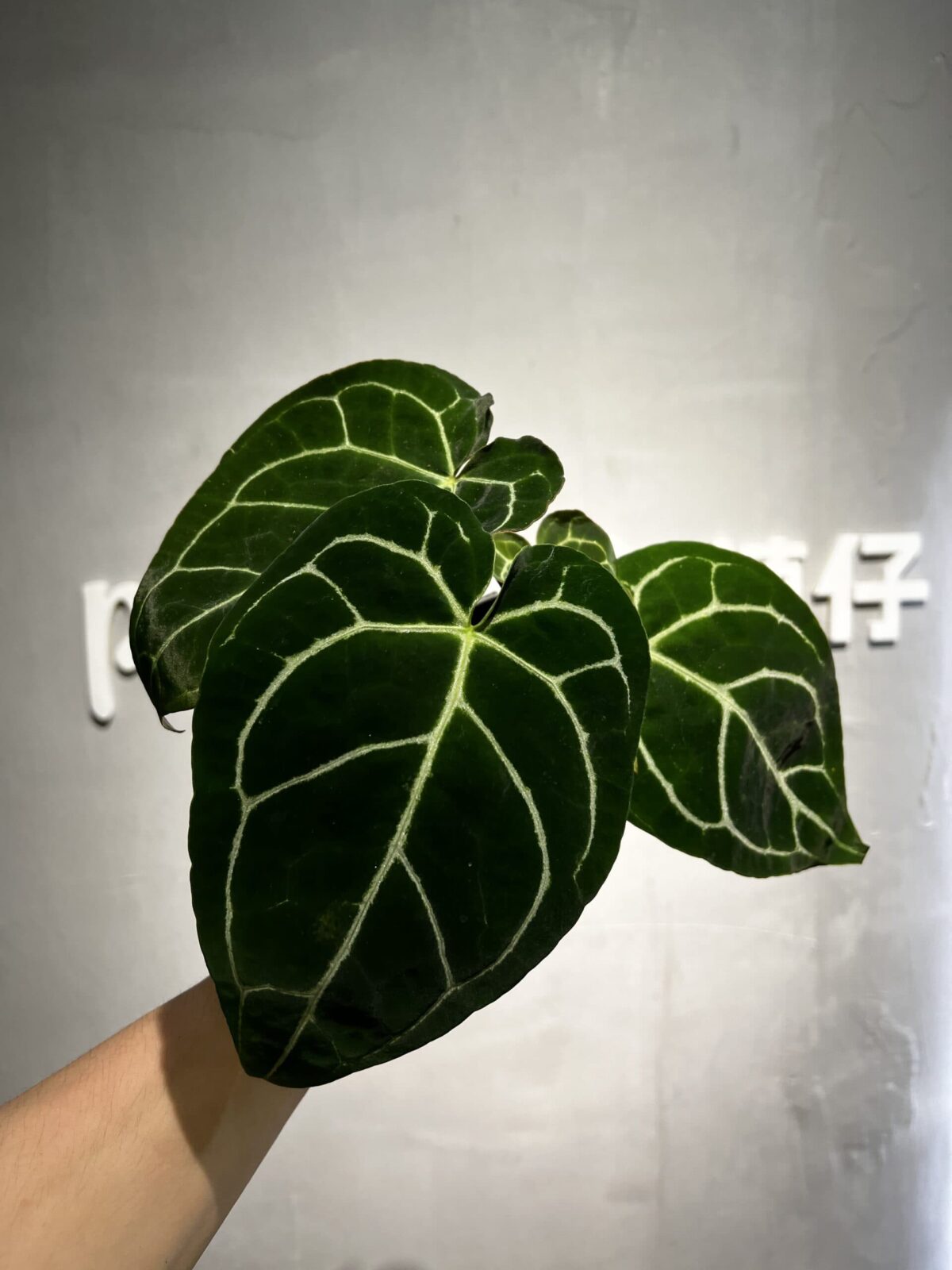
Shop this plantSilver-white crystal veining glinting across velvet green leaves — an enduring legend in the world of Anthuriums.
Origin & characteristics
Crystal Anthurium is native to the rainforests of Panama, Colombia, and Peru, growing in the humid, shaded understorey. It's the most iconic velvet-leaved Anthurium species, with heart-shaped, deep green velvety leaves crossed by dazzling silver-white veins that catch the light like crystal. Mature plants can reach 40–60 cm in leaf length, an impressive sight. It's more demanding than most, making it a genuine intermediate-to-advanced challenge for growers.
Light
Needs bright but gentle diffused light, with east-facing windows ideal and south-facing windows requiring a sheer curtain. The velvety leaves are extremely prone to sunburn — even brief direct sun leaves irreversible white scorch marks. Too little light dulls the silver veining and shrinks new leaves. Aim for 6–8 hours of stable daily light, with a grow light kept 30–45 cm away as a helpful supplement. Remember: Crystal Anthurium needs light, but it must be gentle light.
Watering
Water once the soil has dried 2–3 cm below the surface — roughly every 7 days in spring/summer, extending to 10–14 days in autumn/winter. Use room-temperature filtered or settled water; Crystal Anthurium is fairly sensitive to water quality, and mineral buildup from tap water accumulates over time. Water slowly around the pot edge until it drains from the base, then empty the saucer. Keep watering strict in winter as growth slows — better a little dry than wet-rotten. If the leaves start drooping slightly, it may be time to water.
Soil & pot
Needs an extremely well-draining, coarse-grained mix: pine bark 35% + perlite 25% + coconut husk fibre 20% + sphagnum moss 15% + bamboo charcoal 5%. Maintain pH 5.5–6.5. A clear orchid pot is best, letting you check root health directly. Avoid an oversized pot — Crystal Anthurium likes a snug root zone. Repot every 1–2 years in spring, sizing up by just one pot size.
Temperature & humidity
Ideal temperature 20–26°C; growth stops below 15°C, and above 32°C needs stronger ventilation and cooling. Humidity must be at least 65%, ideally 75–85% — low humidity causes the silver veining's edges to yellow and dry out. A humidifier, glass cabinet, or grouping with other tropical plants all help. Good airflow matters just as much — stuffy conditions easily lead to disease, so a small fan providing gentle circulation helps prevent problems.
Common problems
| Issue | Likely cause | What to do |
|---|---|---|
| Yellow, scorched silver-vein edges | Mostly humidity too low or fertiliser salt buildup | Raise humidity first, then flush the soil with plain water |
| Small, underdeveloped new leaves | Insufficient light or root problems | Check the environment and pot size |
| Soft, rotting leaves | Overwatering leading to root rot | Stop watering immediately, check roots, repot with trimmed roots if needed |
| Spider mites or mealybugs | Common in dry, stuffy conditions | Raise humidity and check leaf undersides regularly; use soapy water spray if needed |
Pet and child safety
⚠️ Anthuriums contain calcium oxalate crystals and are toxic! Ingestion causes severe burning of the mouth and throat, heavy drooling, vomiting, and possibly difficulty breathing. Keep well out of reach of pets and children; wear gloves when pruning or repotting, wash hands thoroughly afterward, and avoid touching your face. Seek medical attention immediately if ingestion occurs.
How to explain to customers
"Crystal Anthurium is a real classic in the Anthurium world — those silver veins genuinely sparkle under light, and anyone who knows plants recognises quality when they see it. It is a bit more demanding though — keeping humidity high, either with a glass cabinet or a humidifier, really helps it thrive."
Fun facts
The species name "crystallinum" comes from the crystal-like sparkle of its silver-white leaf veins, and it caused a sensation among European botanists when first discovered in the 19th century. Its velvety leaf surface is actually a clever waterproofing design, letting rain run off quickly while still capturing moisture from the air.
Keywords
Crystal Anthurium, Anthurium crystallinum, silver-veined Anthurium, velvet Anthurium, classic Anthurium, crystal venation, tropical rainforest plant, Panama native species, high-humidity foliage, indoor rainforest plant, beginner-to-advanced Anthurium, Plantjai
參考資料(想知來源可展開)
References
- Soltech Solutions — Anthurium Crystallinum Plant Care. https://soltech.com
- Labijo — Easy Anthurium Crystallinum Care & Propagation Guide. https://labijo.id/anthurium-crystallinum-care-guide/
- Anthurium Care — Anthurium crystallinum Care Guide. https://anthuriumcare.com
- Plants of the World Online (Kew) — Anthurium crystallinum. https://powo.science.kew.org
In-depth care guide
Introduction
Crystal Anthurium, scientifically named Anthurium crystallinum, is a classic foliage plant within the genus Anthurium in the Araceae family, native to the rainforests of Panama and Peru. Its most iconic feature is its heart-shaped velvet leaf, with a deep green surface crossed by dazzling silver-white veins that flash with a crystal-like sparkle under light — a look that gave rise to its name, "Crystal Anthurium."
This species has a soft, velvety leaf texture with a fine, almost fabric-like feel to the touch. Compared to the closely related round-leaf Anthurium (A. clarinervium), Crystal Anthurium's leaves tend to be thinner and more elongated, with a noticeably more pronounced sparkle. Mature specimens can develop remarkably large leaves — under ideal conditions, potentially reaching several tens of centimetres — making it a genuine collector's centrepiece among tropical plant enthusiasts.
Native ecological environment
Crystal Anthurium is native to Central and South America's tropical rainforests, primarily distributed across the lower mountain regions of Panama and Peru. In the wild, it's a hemi-epiphyte, typically growing on the forest floor or attached to tree trunks, accustomed to living beneath a dense canopy that receives diffused, filtered light and high humidity. These native conditions directly shape its various requirements when grown indoors.
Light requirements
Ideal light intensity
Crystal Anthurium needs bright, indirect light — plenty of light, but never direct sun exposure. In its native environment, it lives beneath a dense canopy, receiving light that's been filtered through layers of foliage. The best indoor placement is near a north- or east-facing window, which provides stable, gentle light.
Signs of insufficient light
If light is too weak, you'll notice slower new leaf growth, thinner leaves, and darker overall leaf colour but with fading silver-white venation, giving the whole plant a somewhat "scattered" appearance. Prolonged low-light conditions weaken the plant's resistance, making it more prone to root rot and pest problems.
Damage from excessive light
Crystal Anthurium's velvety leaves are extremely intolerant of direct sunlight, particularly strong midday sun. Too much exposure causes yellowing, scorched edges, and even permanent sunburn marks — in severe cases, entire leaves may wither. If you need to place it near a south- or west-facing window, always use a sheer curtain or shading net to filter direct light first.
Supplemental lighting recommendations
If your home doesn't get enough natural light, consider a plant grow light. Provide 12–14 hours of daily illumination, with an LED grow light positioned 30–50 cm from the leaves. The benefit of a grow light is that both intensity and duration can be reliably controlled, which is especially useful during winter's shorter days.
Humidity management
Humidity requirements
Humidity is the key to growing Crystal Anthurium well. Its native environment has relative humidity as high as 80–90%, so indoor growing should ideally maintain 60–80%. A typical home environment often has only 30–40% humidity, which isn't enough for Crystal Anthurium.
Signs of insufficient humidity
When humidity is too low, you'll see new leaves struggling to unfurl properly, appearing malformed, curled, or even torn; leaf edges become dry and brittle; and the leaf surface loses its velvety sheen, becoming dull. These are all warning signs of air that's too dry.
Methods to increase humidity
1. Humidifier (most recommended)
Placing an ultrasonic humidifier near the plant is the most direct and effective method, reliably maintaining humidity above 60%. Use distilled or filtered water to avoid mineral buildup. Position the humidifier about 1 m from the plant, avoiding direct airflow onto the leaves.
2. Plant cabinet / grow tent
Many tropical plant enthusiasts use glass cabinets or modified furniture (such as IKEA's RUDSTA or FABRIKÖR) to grow Crystal Anthurium. These create a high-humidity microenvironment, reaching 70–90% humidity, which suits this species very well.
3. Pebble tray
Place a layer of moist perlite or pebbles in the saucer beneath the pot, keeping water in the tray but ensuring the pot's base doesn't directly touch the water surface, using evaporation to raise local humidity. This method has limited effect, raising humidity by only about 5–10%, but it's free and convenient.
4. Plant grouping
Clustering multiple high-humidity-demanding plants together uses their combined transpiration to mutually raise surrounding humidity, offering a modest additional boost.
5. Morning and evening misting (supplementary)
You can mist the leaf surface with a fine spray in the morning or evening, but avoid misting at night, to prevent water sitting on the leaves overnight and encouraging bacterial growth. Note that misting only briefly raises humidity and isn't a long-lasting solution.
Watering technique
Watering frequency and principles
Crystal Anthurium prefers a consistently lightly moist soil condition, but absolutely cannot tolerate waterlogging. Generally, water once the top 1–2 inches (roughly 3–5 cm) of soil has dried. In summer's peak growing season, this might mean watering every 3–5 days; in winter's slower growth, it could extend to every 7–10 days.
Checking soil moisture
The most reliable method is inserting a finger about 3–5 cm into the soil — water only once it feels dry. You can also use a soil moisture meter, or lift the pot to gauge weight — a noticeably lighter pot suggests most of the water has evaporated.
Water quality requirements
Crystal Anthurium is fairly sensitive to water quality; use one of the following:
- Rainwater (ideal)
- Filtered/distilled water
- Rested tap water (left standing for 24+ hours to allow chlorine to evaporate)
Using cold water directly can shock the roots, so water temperature should be close to room temperature. Take extra care in winter to avoid using icy-cold water.
Watering method
Each watering should be thorough — meaning water until it runs from the pot's base, ensuring the entire root system gets moisture. But remember to promptly empty any standing water in the saucer, avoiding prolonged "wet feet," which easily leads to root rot.
Signs of overwatering and underwatering
Overwatering (root rot): leaves suddenly turn yellow and drop, especially older lower leaves; soil stays persistently soggy; the whole plant looks wilted despite moist soil; there may be a foul smell. If you spot root rot, address it immediately — trim away rotten roots and repot into fresh soil.
Underwatering: drooping, dull leaves; leaf edges beginning to dry out; stalled new leaf growth. Mild underwatering usually recovers once watered again, but severe drought stress can cause permanent leaf damage.
Soil and repotting
Ideal soil recipe
Crystal Anthurium has thick, fleshy aerial roots that need plenty of airflow, so the soil must be loose and well-draining. Avoid ordinary garden soil or heavy potting mixes, which will suffocate the roots.
Recommended recipe (aroid mix):
- Orchid bark / pine bark (chunky bark): 40%
- Perlite: 20%
- Coco coir / coconut husk fibre: 20%
- Sphagnum moss: 10%
- Horticultural charcoal: 10%
This recipe has excellent porosity, allowing water to drain quickly while still retaining some moisture, so the roots can breathe. You can also buy a ready-made Araceae specialty mix from a garden centre, or adjust an orchid mix yourself.
Pot selection
We recommend a clear plastic pot or a pot with drainage holes. A clear pot lets you observe root health and soil moisture directly; a ceramic pot offers good breathability and helps the soil dry faster. Avoid ceramic pots without drainage holes unless you're already very experienced with controlling watering.
Repotting timing
Generally repot every 1–2 years, ideally in spring. When you see roots emerging from the drainage holes, or the soil drying unusually fast after watering, that's a sign it's time to size up. Each repotting should increase the pot diameter by about 1–2 inches — don't go too much larger, since overly wet soil that never fully dries increases root rot risk.
Repotting steps
- Water the soil the day before to make it easier to remove the plant
- Gently tap around the pot and slowly lift out the plant with its root ball intact
- Check the roots, trimming away any black, mushy, rotten sections
- Line the base of the new pot with a drainage layer (such as leca)
- Add fresh soil, position the plant centrally, and fill in around it without packing too tightly
- Water thoroughly, then place in a shaded, well-ventilated spot to recover for about a week
Note: Crystal Anthurium's roots are relatively delicate — always handle gently during repotting, without yanking or pulling forcefully.
Temperature requirements
Ideal temperature range
Crystal Anthurium likes a warm and stable environment, with an ideal temperature of 18–27°C. It's fairly sensitive to temperature changes, so avoid placing it near AC vents, heaters, or doors and windows where temperatures fluctuate widely.
Cold tolerance
Crystal Anthurium isn't cold-hardy — below 15°C growth begins to slow, and below 10°C it may suffer frost damage, showing black water-soaked spots on the leaves. In winter, take particular care to keep nighttime temperatures above 18°C.
High-temperature considerations
Although it likes warmth, if temperatures persist above 30°C combined with low humidity, leaves can suffer heat stress. In summer heat, ensure adequate humidity and good ventilation.
Feeding
Feeding timing
Crystal Anthurium grows most vigorously in spring and summer (roughly March to September), and this is when it needs regular feeding. In autumn and winter's slower or dormant period, feeding should stop.
Fertiliser choice
Use a balanced liquid fertiliser, with an NPK ratio such as 20-20-20 or 10-10-10. Araceae plants also need considerable trace elements, so choose a formula containing magnesium, calcium, iron, and other micronutrients.
Feeding concentration and frequency
- Regular feeding: every 2–4 weeks, diluted to a quarter or half the package's recommended strength
- Light, frequent feeding: add an extremely diluted fertiliser (1/8 strength) at every watering, naturally pausing during autumn/winter's reduced watering
Overfeeding causes salt buildup, potentially leading to brown leaf edges or fertiliser burn. Every 1–2 months, flush the soil thoroughly with plain water to wash out any excess salts.
Pruning and leaf care
Pruning
Crystal Anthurium grows at a moderate pace and doesn't need heavy pruning — just remove leaves that have fully yellowed or withered, keeping the plant tidy. Use clean, sharp scissors, cutting at the base of the petiole. Never tear leaves off by hand, which can damage the plant.
Leaf cleaning
Velvety leaves easily accumulate dust, affecting both photosynthesis and appearance. Once a month, use a soft, slightly damp microfibre cloth (like a glasses-cleaning cloth) to gently wipe the leaf surface. Avoid leaf-shine products or chemical cleaners, which can clog the velvety texture.
New leaf care
New leaves are especially fragile when first unfurling — never touch them or try to "help" them open; let them unfurl naturally. A high-humidity environment helps new leaves unfurl smoothly, reducing the chance of malformation or tearing.
Propagation methods
Rhizome division (most reliable)
Once mature, Crystal Anthurium develops a sturdy rhizome. At repotting, you can carefully divide the rhizome, ensuring each section has at least one growth point and some healthy roots.
Steps:
- Remove the plant from its pot and gently shake off excess soil
- Rinse the roots with clean water to clearly see the rhizome structure
- Use a sterilised, sharp knife to cut the rhizome into sections
- Dust the cut surfaces with cinnamon powder or a fungicide to prevent infection
- Pot each division into fresh soil, keeping it lightly moist and humid
- Place in a warm, bright spot; new leaf growth should appear within 2–4 weeks
Seed propagation
Crystal Anthurium can flower and fruit, but requires hand pollination. Once pollinated successfully, fruit takes several months to mature, followed by a long germination process — not especially suitable for most home growers.
Common problems and solutions
Water-soaked spots on leaves
This is usually bacterial leaf spot, caused by overwatering or prolonged water sitting on the leaf surface. Isolate the affected plant immediately, remove infected leaves, improve ventilation, and use a copper-based fungicide spray if needed.
Yellowing, dropping leaves
If lower, older leaves gradually yellow, that may just be natural ageing and nothing to worry about. But if multiple leaves yellow and drop simultaneously, check for root rot, overwatering, or temperatures that are too low.
Malformed or torn new leaves
This is almost always caused by insufficient humidity. Increasing humidity is the only real solution — especially while new leaves are developing, aim for above 70% humidity.
Mealybugs
Velvety leaves sometimes attract mealybugs, particularly in poorly ventilated environments. Once spotted, use a cotton swab dipped in isopropyl alcohol to wipe the pests directly off, or spray with neem oil. For severe infestations, apply insecticidal soap weekly for 3–4 consecutive weeks.
Spider mites
Common in dry air, showing as fine yellow speckling and webbing on the leaf surface. Increasing humidity is the best prevention; rinse the leaf undersides with water when spotted, or use a dedicated miticide for severe cases.
Toxicity information
Crystal Anthurium's leaves and sap contain calcium oxalate crystals, toxic to both humans and pets. Ingestion causes oral burning, drooling, swelling, and difficulty swallowing. While not usually life-threatening, it causes significant discomfort. Households with pets or children should keep the plant well out of reach.
References
- Soltech Solutions — Anthurium Crystallinum Plant Care. https://soltech.com
- Labijo — Easy Anthurium Crystallinum Care & Propagation Guide. https://labijo.id/anthurium-crystallinum-care-guide/
- Anthurium Care — Anthurium crystallinum Care Guide. https://anthuriumcare.com
- Serres Lavoie — Anthurium care – Humidity and Temperature. https://serreslavoie.com
- Anthura — Humidity in the cultivation of Anthurium. https://anthura.nl
- Plants of the World Online (Kew) — Anthurium crystallinum. https://powo.science.kew.org

Plantjai shop · In stock online
Anthurium crystallinum
Anthurium crystallinum
Original price was: HK$780.00.HK$380.00Current price is: HK$380.00.
Hong Kong delivery · Causeway Bay pickup
For Hong Kong homes and offices. Stock and pricing follow the product page.
IN STORE NOW
Plants for this guide
Related plants in stock now — live prices, delivery or Causeway Bay pickup.
Anthurium chrystallinum Turtle
Original price was: HK$780.00.HK$138.00Current price is: HK$138.00.
In stock · store pickup
View plantAnthurium crystallinum
Anthurium crystallinum
Original price was: HK$780.00.HK$380.00Current price is: HK$380.00.
In stock · store pickup
View plant


FREE PLANT ADVICE
Send us a photo before you change anything
WhatsApp a photo of the plant and your window light. Our Causeway Bay team will suggest care steps or plants that suit your space.
STORE · CAUSEWAY BAY
4/F, 39 Yiu Wa Street, Causeway Bay
Daily 12:30–8:00pm · ~3 min walk from Times Square
Map & directionsPlant Care


