How to Care for Anthurium Crystallinum Diamond in Hong Kong | Plantjai

Hong Kong care guide for Anthurium Crystallinum Diamond.
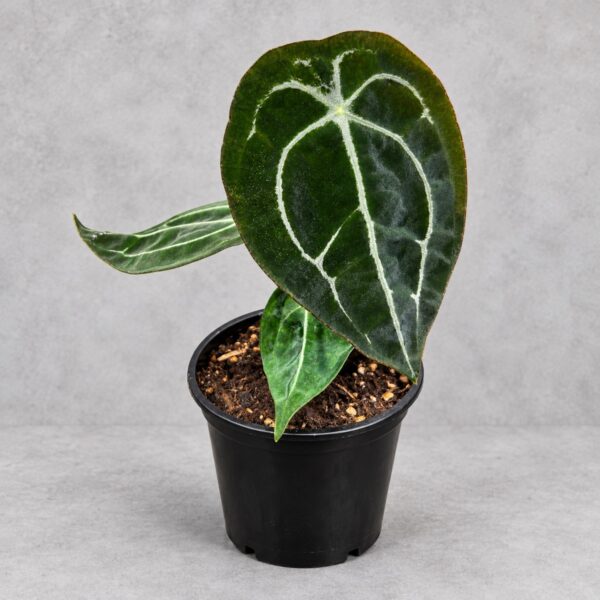
A miniature version of Crystal Anthurium, with veining cut like a diamond that catches the light beautifully.
Origin & characteristics
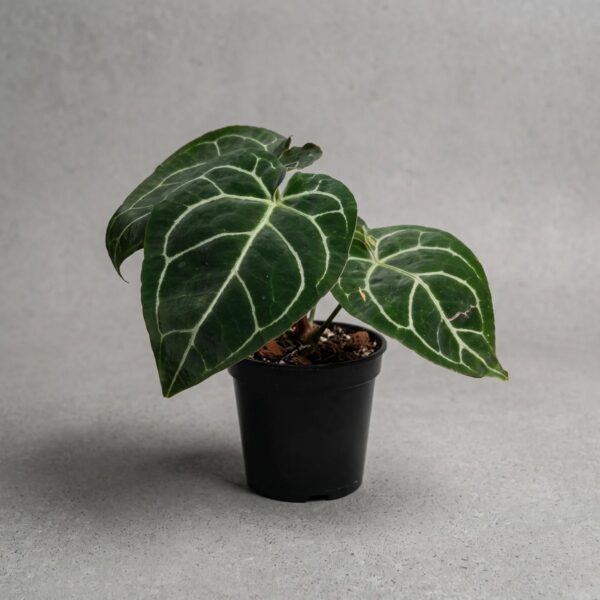
Diamond Crystal Anthurium is a dwarf cultivar of Anthurium crystallinum, developed through selective breeding. Compared to the standard Crystal Anthurium, 'Diamond' is noticeably more compact, with mature leaves around 10–15 cm — perfectly suited to Hong Kong's smaller living spaces. It retains the signature velvety texture and silver-white crystal veining of Crystal Anthurium, which sparkles like a diamond under light, giving it a refined, delicate presence — an excellent choice for tabletop display.
Light
Likes bright, diffused light, but is even more sensitive to strong direct sun than the standard Crystal Anthurium. An east-facing window or a spot 1–2 m from a window works best. Since its leaves are smaller, its water storage capacity is relatively weaker, making it more prone to dehydration and scorched edges under strong light. If using a grow light, keep it 30–50 cm away, running roughly 8 hours daily. Rotate the pot regularly to ensure even light exposure on all sides, preventing the plant from leaning to one side.
Watering
Water once the top 2 cm of soil has dried — slightly more frequently than larger cultivars, given its finer root system. Roughly every 4–6 days in summer, extending to 7–10 days in winter. Because its roots are finer, it's more sensitive to waterlogging — a smaller pot with a moderate amount of water works best. Use filtered water or rainwater to avoid hard-water minerals leaving white marks on the velvety leaves. Below 50% humidity, consider a humidifier or a nearby tray of moist sphagnum moss.
Soil & pot
Needs an extremely well-draining, aerated medium: peat 20% + perlite 30% + pine bark 30% + charcoal 10% + sphagnum moss 10%. The higher proportion of coarse particles helps prevent fine roots from rotting. Choose a terracotta pot 10–15 cm in diameter — don't jump straight to a large pot, or the soil will stay wet too long and cause root rot. Repot roughly every 12 months depending on root growth, usually sizing up by just one pot size.
Temperature & humidity
Ideal temperature 20–28°C; don't let it drop below 18°C — it's more cold-sensitive than the larger cultivar. Humidity should be maintained at 65%–85%, and it's more sensitive to dry air than the standard form. Pay particular attention in Hong Kong when running heaters in winter or air conditioning heavily in summer — a bathroom with a window, or a small humidifier, both work well. Avoid placing it near AC vents or doorways with strong drafts and temperature swings.
Common problems
| Issue | Likely cause | What to do |
|---|---|---|
| Yellowing, dropping leaves | Overwatering or temperature too low; 'Diamond' is especially sensitive to both | Check soil and ambient temperature |
| Stalled growth | Normal winter dormancy; if it persists into spring, check for nutrient deficiency or root problems | — |
| Fading, dull venation | Insufficient light | Move to a brighter spot, avoiding direct sun |
| Water-stained spots on leaves | Hard water or misting residue | Switch to filtered water and gently wipe the leaf surface dry with a cloth |
| Root collar rot | Poor ventilation after watering, or planted too deep | Ensure adequate airflow around the roots |
How to explain to customers
"Diamond is the mini version of Crystal Anthurium — it's a lovely fit for a Hong Kong home, and it works well on a desk or bedside table without taking up much room. Its silver veins do sparkle like a diamond, and while it's small, it still stands out — just remember to keep the humidity up."
Fun facts
Under strong light, Diamond Crystal Anthurium's veining catches the light with a diamond-like faceted sparkle — exactly where its name comes from.
Keywords
Diamond Crystal Anthurium, Anthurium crystallinum Diamond, Crystal Anthurium, mini Anthurium, dwarf Crystal Anthurium, tropical foliage plant, silver-veined Anthurium, tabletop plant, indoor small plant, Anthurium genus, toxic to pets
參考資料(想知來源可展開)
References
- Grow Tropicals — Foliage Anthurium Care Guide. https://growtropicals.com/blogs/houseplant-care-a-z/foliage-anthurium-care-guide
- The Spruce — How to Grow and Care for Crystal Anthurium. https://www.thespruce.com/anthurium-crystallinum-care-guide-7106284
- Proven Winners — Caring for Anthurium Plants Indoors. https://www.provenwinners.com/learn/houseplants/anthurium
⚠️ Pet / toxicity note: Anthuriums contain calcium oxalate crystals, toxic to pets and children. Ingestion may cause oral pain, drooling, and vomiting. Keep out of reach of pets and small children. If accidental ingestion occurs, rinse the mouth immediately and seek medical attention.
In-depth care guide
Introduction
Diamond Crystal Anthurium is a selected cultivar named 'Diamond', bred from Anthurium crystallinum, and belongs to the perennial evergreen foliage plants in the Araceae genus Anthurium. It's native to the tropical rainforests of Central and South America, primarily distributed across regions including Colombia and Ecuador. The defining feature of this cultivar is its heart-shaped velvety leaf, marked with dazzling silver-white veining that resembles the facets of a cut diamond — a genuinely apt name.
Compared to standard Crystal Anthurium, 'Diamond' typically has smaller leaves and a noticeably more compact growth habit, making it well suited to indoor cultivation. Mature leaves are deep green to reddish-purple, with a thick velvety surface texture and a clearly visible network of veins that gleam silvery-white under light, creating a strikingly dramatic visual effect.
According to Grow Tropicals, Anthurium crystallinum is often used as a stepping-stone species for beginners venturing into velvet-leaved Anthuriums, since it's relatively more adaptable to indoor conditions than many rarer Anthuriums and has less strict environmental requirements (Grow Tropicals, 2026).
Light requirements
Diamond Crystal Anthurium's favourite condition is bright, diffused light. In its native habitat, it grows in the lower canopy of the rainforest, accustomed to dappled sunlight filtering through gaps in the leaves above. So when growing it indoors, we need to replicate that natural environment.
The ideal placement is near an east- or north-facing window, which provides gentle morning light or steady diffused light throughout the day. If you only have a south- or west-facing window, remember to move the plant several feet away from the window, or use a sheer curtain to filter the strong light, avoiding direct midday sun hitting the leaves — otherwise the leaf surface easily gets sunburned, developing brown scorch marks.
The Spruce's gardening experts point out that Crystal Anthurium is very sensitive to light — light that's too strong damages its striking venation, while insufficient light causes leaves to become thinner, petioles to elongate, and growth to slow considerably (The Spruce, 2023). Generally speaking, if you notice new leaves getting progressively smaller, or petioles getting progressively longer, that's a signal of insufficient light, and you should adjust the plant's position.
Temperature and humidity
As a tropical rainforest plant, Diamond Crystal Anthurium has certain requirements for both temperature and humidity. The ideal growing temperature is between 18 and 28°C, and it shouldn't drop below 16°C. It's genuinely afraid of cold, especially cold draughts — a window that's perfectly comfortable in summer might cause serious harm to the plant come winter.
For humidity, Rooted Hues recommends maintaining it above 50%, with the healthiest, most beautiful leaves generally grown in environments with 70% or higher humidity (Rooted Hues, 2020). If your home runs the AC or heater for extended periods, the air becomes quite dry, and a humidifier is worth using to raise humidity. Another good method is grouping multiple plants together, forming a small, humid microclimate, or placing a tray filled with pebbles and water beneath the pot's saucer — just remember the pot's base shouldn't directly touch the water surface, to avoid root rot.
It's worth noting that while it likes high humidity, air circulation matters just as much. A stuffy, humid, windless environment can easily breed bacteria and fungi, leading to diseased leaves.
Watering method
Watering is one of the most critical aspects of caring for Diamond Crystal Anthurium. The principle is "water when dry, water thoroughly" — wait until the top 2 to 3 cm of soil has dried before watering again, then water thoroughly until it drains from the pot's base, and empty any standing water in the saucer.
The Spruce's experts suggest testing soil moisture by inserting a finger about 2 inches into the soil — water only once it feels dry, and never rely on appearance or a fixed schedule to decide (The Spruce, 2023). Overwatering is the most common cause of death for Crystal Anthurium, leading to root rot that's very difficult to save once it takes hold. Conversely, prolonged underwatering causes brown leaf tips or spots, and new leaves also struggle to unfurl normally.
In summer's peak growing season, you can water once a week; in winter, as plant growth slows, reduce watering frequency, perhaps once every two to three weeks. Remember to use room-temperature water — cold water can shock the roots. Also try to avoid splashing water onto the leaves, since wet leaf surfaces are prone to fungal disease and pest problems.
Soil recipe
Diamond Crystal Anthurium needs loose, well-aerated, well-draining soil. Being native to trees or rock crevices, its roots are accustomed to an environment filled with air, so ordinary garden soil is too heavy and clay-like and isn't suitable.
The recommended potting mix ratio is:
- 2 parts quality potting soil or peat moss
- 1 part perlite (increases aeration and drainage)
- 1 part coco coir or sphagnum moss (retains moisture)
- A small amount of bark chips or charcoal (adds structure and antibacterial properties)
Quality orchid soil with a bit of extra perlite mixed in is also a convenient option available at garden centres. According to Grow Tropicals' experience, they recommend using a Premium Potting Mix designed specifically for Anthurium, whose main ingredients include bark, charcoal, coconut husk, and pumice, plus worm castings for natural nutrients — this combination provides long-term stable structure and drainage (Grow Tropicals, 2026).
For pots, choose a clay or ceramic pot with drainage holes, since these materials offer better breathability, helping the soil dry out faster and reducing root rot risk.
Feeding method
Diamond Crystal Anthurium isn't a heavy feeder, and light feeding is sufficient. During the peak growing season of spring and summer, you can apply a diluted balanced liquid fertiliser (such as an NPK ratio of 20-20-20) every two to three weeks, diluted to half the recommended package strength. Overfeeding causes fertiliser burn, resulting in scorched leaf tips and salt buildup in the soil.
Rooted Hues recommends using an organic slow-release fertiliser in spring, and if you want to encourage flowering, you can choose a fertiliser with a higher phosphorus content (Rooted Hues, 2020). Stop feeding entirely once autumn arrives, letting the plant rest through winter. Once or twice a year, flush the soil with plain water to help wash out accumulated fertiliser salts.
Propagation methods
Diamond Crystal Anthurium has two main propagation methods: division and stem cutting.
Division
The simplest and safest method is to divide the plant during repotting. Carefully remove the plant from its pot, gently shake off loose soil, rinse the roots with clean water, then use your hands or a sterilised pair of scissors to separate offsets that have their own roots and leaves. Each division should have at least one to two leaves and a healthy root system. After separating, replant into fresh potting soil, water thoroughly, then place in a shaded, well-ventilated spot to recover.
Stem cutting
Choose a stem section roughly 6 inches long, with at least two healthy leaves and one to two nodes, and use sterilised, sharp scissors to cut just below a node. You can let the cut end air-dry for a day or two to callous over, then insert it into fresh, loose potting soil, keeping the soil lightly moist and the environment humid. Roots typically develop within one to two months. The Spruce points out that if you gently tug the plant and feel resistance, it's a sign that roots have already formed (The Spruce, 2023).
Repotting timing
Diamond Crystal Anthurium has a moderate growth rate, and repotting once every 2 years is usually sufficient. The best time to repot is spring or summer, when the plant is in active growth. When you notice roots emerging heavily from the pot's base, or the soil draining more slowly, that's a signal to repot.
The new pot should be 1 to 2 sizes larger than the current one — please don't jump to a much larger pot at once, or it will easily lead to waterlogging and root rot. When repotting, replace the potting soil entirely, since the old soil has likely lost most of its nutrients. Hold off on watering for the first few days after repotting, giving the plant time to adjust to its new environment.
Common problems and solutions
Yellowing leaves
Usually caused by overwatering or poor drainage leading to root rot. Check whether there's standing water at the pot's base, and whether the soil is too wet. If so, reduce watering frequency and ensure good drainage.
Brown leaf tips
The most common cause is low humidity or fertiliser salt buildup, especially in winter when running a heater dries out the air significantly. You can use a humidifier or pebble tray to raise humidity, and periodically flush the soil with plain water.
Curling or drooping leaves
Mostly caused by improper watering — both overwatering and underwatering can lead to drooping leaves. Check soil moisture and adjust your watering frequency accordingly. Additionally, cold draughts can also cause leaves to curl.
Fading velvety texture or scorched leaf spots
This indicates the light is too strong and the leaves have been sunburned. Move the plant to a shadier spot immediately, avoiding direct sun exposure.
Small new leaves, elongated petioles
A clear sign of insufficient light. You need to move the plant to a brighter spot, or consider using a plant grow light for supplemental lighting.
Toxicity reminder
Like all Anthurium species, Diamond Crystal Anthurium contains calcium oxalate crystals, toxic to both humans and pets. Ingestion may cause oral burning, swelling, drooling, and digestive discomfort. When handling the plant, it's recommended to wear gloves to avoid direct skin contact with the sap. If you have children or pets at home, remember to place the plant somewhere they cannot reach.
References
- Grow Tropicals. (2026). "Foliage Anthurium Care Guide." https://growtropicals.com/blogs/houseplant-care-a-z/foliage-anthurium-care-guide
- The Spruce. (2023). "How to Grow and Care for Crystal Anthurium." https://www.thespruce.com/anthurium-crystallinum-care-guide-7106284
- Rooted Hues. (2020). "Anthurium Crystallinum Care Guide – Tips for Optimal Growth." https://rootedhues.com/blogs/plant-care/anthurium-crystallinum-care-guide
- Proven Winners. "Caring for Anthurium Plants Indoors." https://www.provenwinners.com/learn/houseplants/anthurium
- Love The Garden. "How To Grow And Care For Anthurium Plants In 5 Easy Steps." https://www.lovethegarden.com/au-en/growing-guide/how-grow-care-anthurium
For Hong Kong homes and offices. Stock and pricing follow the product page.
IN STORE NOW
Plants for this guide
Related plants in stock now — live prices, delivery or Causeway Bay pickup.
Anthurium crystallinum
Anthurium crystallinum
Original price was: HK$780.00.HK$380.00Current price is: HK$380.00.
In stock · store pickup
View plant
FREE PLANT ADVICE
Send us a photo before you change anything
WhatsApp a photo of the plant and your window light. Our Causeway Bay team will suggest care steps or plants that suit your space.
STORE · CAUSEWAY BAY
4/F, 39 Yiu Wa Street, Causeway Bay
Daily 12:30–8:00pm · ~3 min walk from Times Square
Map & directionsPlant Care