
How to Care for Anthurium Chrystallinum Turtle in Hong Kong | Plantjai

Plantjai 植仔 · Care Encyclopedia
Anthurium Chrystallinum Turtle
Anthurium chrystallinum Turtle 龜甲花燭
Hong Kong care guide — useful before you buy and after it arrives.
Shop this plantTortoiseshell-patterned leaves, no two alike — an unforgettable sight for anyone who knows their Anthuriums.
Botanical note: "chrystallinum" may be an alternate spelling or horticultural variant of "crystallinum"; 'Turtle' is the cultivar name, with formal identification still to be confirmed.
Origin & characteristics
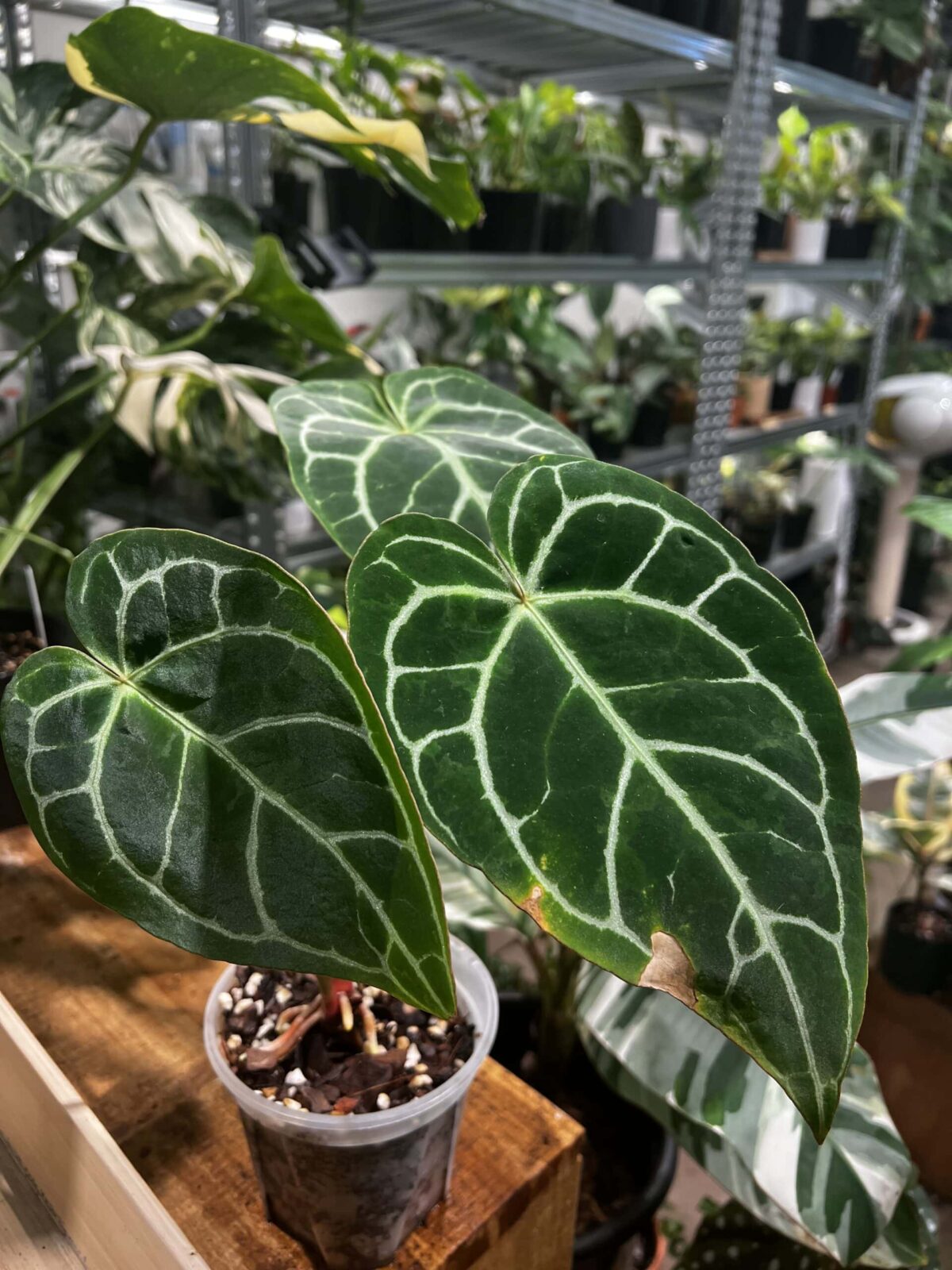
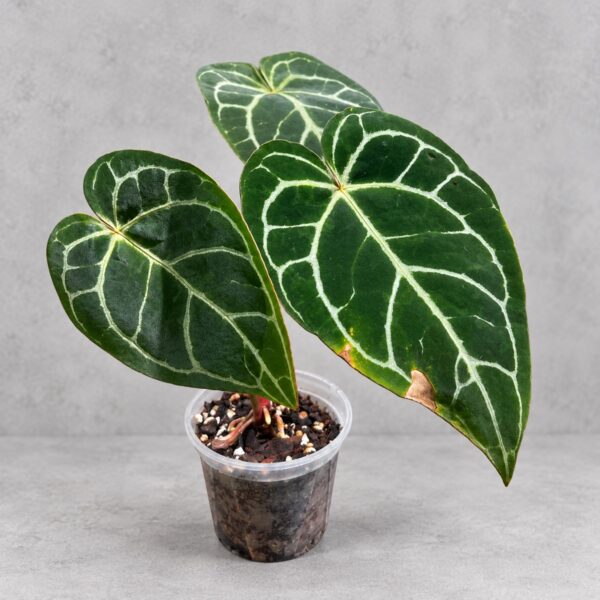
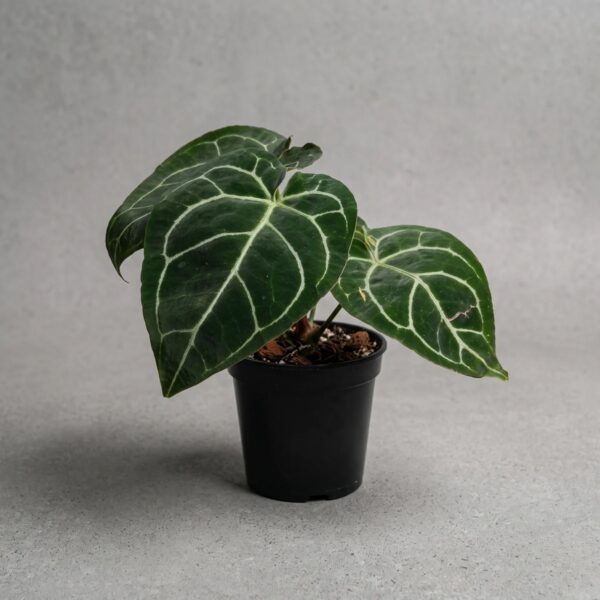
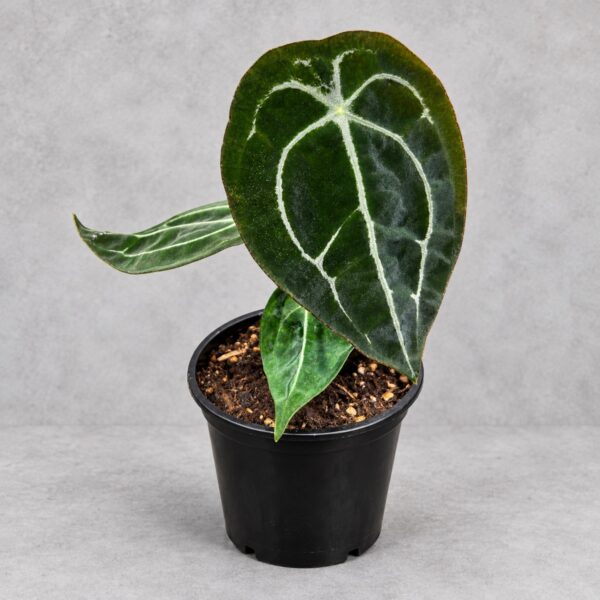
Turtle Anthurium is a cultivar of Crystal Anthurium, with the original species native to the rainforests of Central and South America. Its standout feature is a distinctive tortoiseshell-like textured leaf surface, with silver-white veins woven across a deep-green velvet background — an exceptionally elegant look. Leaves are thick and glossy, with a fabric-like touch. Growth is slow, but each new leaf is a genuinely one-of-a-kind piece of natural art, making it a favourite among serious collectors.
Light
Needs bright but gentle diffused light, with east- or north-facing windows ideal. The turtle-shell texture tends to trap light, so direct sun can cause localised overheating and burns. If the shell pattern fades or internodes stretch, that's a sign of insufficient light; yellow-brown scorch marks mean the light is too strong. Aim for 8–10 hours of stable daily light, with a grow light as a helpful supplement.
Watering
Water once the soil has dried 2–3 cm below the surface, roughly every 7–10 days depending on the season. Use room-temperature filtered or settled water, watering slowly around the pot edge and avoiding water pooling in the leaf crown. Reduce watering to roughly every 14 days in winter as growth slows. Always empty the saucer — Turtle Anthurium's roots are especially prone to rot from standing water.
Soil & pot
Needs an extremely well-draining, coarse-grained mix: pine bark 40% + coconut husk 25% + perlite 20% + sphagnum moss 10% + bamboo charcoal 5%. Maintain pH 5.5–6.5. A clear orchid pot makes it easiest to monitor root health — avoid an oversized pot. Repot every 1–2 years, sizing up by just one pot size each time.
Temperature & humidity
Ideal temperature 18–26°C; growth stops below 15°C, and ventilation should increase above 32°C. Humidity must stay above 65%, ideally 75–85% — low humidity causes the shell pattern's edges to dry out. A humidifier, glass cabinet, or grouping with other tropical plants all help build a stable microclimate. Good airflow matters just as much as humidity — stuffy conditions invite fungal issues.
Common problems
| Issue | Likely cause | What to do |
|---|---|---|
| Dry, curling leaf edges | Humidity too low is the main cause | Raise humidity and check ventilation immediately |
| Fading or disappearing shell pattern | Insufficient light or poor feeding | Adjust position and use a diluted liquid fertiliser |
| Small, underdeveloped new leaves | Possible root problems | Check for root rot or an undersized pot |
| Water-stained spots on leaves | Water splashed on the leaf then exposed to sun | Switch to bottom watering or avoid wetting the leaf surface |
Pet and child safety
⚠️ Anthuriums contain calcium oxalate crystals and are toxic! Ingestion causes burning of the mouth, drooling, vomiting, and in severe cases breathing difficulty. Keep out of reach of pets and children, wear gloves when pruning or repotting, and wash your hands thoroughly afterward.
How to explain to customers
"Turtle is genuinely one-of-a-kind — every single leaf has its own unique pattern, and it's an instant style upgrade for any room. It is a bit more delicate though, so keeping humidity high with a humidifier really does help it thrive."
Fun facts
The bumpy texture on Turtle Anthurium's leaf surface actually mimics the look of rainforest tree bark — an evolutionary trick to convince insects the leaf isn't worth eating. Every leaf's shell pattern is unique, just like a human fingerprint, meaning no two Turtle leaves in the plant world are ever exactly alike.
Keywords
Turtle Anthurium, Anthurium chrystallinum Turtle, Crystal Anthurium variant, tortoiseshell Anthurium, velvet foliage, silver-veined Anthurium, rare cultivar, high-humidity plant, indoor rainforest plant, Plantjai
參考資料(想知來源可展開)
References
- Plantalure — Anthurium Crystallinum Turtle. https://plantalure.com/products/anthurium-crystallinum-turtle
- JOMO Studio — Anthurium Crystallinum Turtle Care Guide. https://jomostudio.com/products/anthurium-crystallinum-turtle
- Royal Horticultural Society (RHS) — How to grow anthuriums. https://www.rhs.org.uk/plants/anthuriums/how-to-grow-anthuriums
- Proven Winners — Caring for Anthurium Plants Indoors. https://www.provenwinners.com/learn/houseplants/anthurium
In-depth care guide
Introduction
Turtle Anthurium, formally Anthurium chrystallinum 'Turtle', is a distinctive cultivar within the Crystal Anthurium group. Its most iconic feature is the network of silver-white veins that criss-cross the leaf surface, deep and shallow, dense and sparse, forming a texture that genuinely resembles a tortoise shell — hence the name "Turtle." Compared to a typical Crystal Anthurium, Turtle's leaves tend to be larger, with a more pronounced heart-shaped outline and more complex, three-dimensional venation, giving it a richer, more layered look overall.
Its leaves carry that same velvety texture common to this group, with a deep green base offset by the silver-white veining, shifting subtly in sheen depending on the light angle. According to JOMO Studio, a mature specimen can develop into a truly impressive focal point plant, with each new leaf larger and more clearly patterned than the last. Turtle Anthurium grows in a clustered rosette habit, with new leaves emerging from the centre and expanding outward; older leaves naturally age and die back over time, making way for larger, more striking new growth. This cultivar is a hybrid, combining desirable traits from multiple Crystal Anthurium lines, and has become one of the most sought-after plants among foliage collectors in recent years.
Native background
The genus Anthurium is native to the Neotropics, spanning from Central America through South America's tropical rainforests. Crystal Anthurium types largely originate from the lowland to mid-elevation rainforests of Panama, Colombia, and Ecuador. In the wild, they typically grow as epiphytes or hemi-epiphytes on tree trunks, relying on atmospheric moisture and decomposing organic matter for nutrition. This growth habit dictates their need for high humidity, good airflow, and a well-draining growing medium indoors.
Light requirements
Turtle Anthurium prefers bright to medium-intensity indirect light. Position it 1–2 m from an east- or west-facing window, allowing it to enjoy soft, diffused light. North-facing windows also work, though you may need supplemental lighting in winter when natural light is weaker.
Avoid direct sunlight, especially at midday, since the velvety leaves burn easily, developing brown scorch marks or fading in colour. If you notice the leaf colour fading or the silver-white pattern becoming less distinct, that's likely a sign of insufficient light, and the plant should be moved closer to a light source. Rotating the pot regularly ensures even growth on all sides, preventing lopsided development.
Watering method
For watering, wait until the top layer of soil (roughly the top two to three inches) has dried before watering again. Generally, this works out to about once a week in a typical home environment, though the actual frequency varies with season, room temperature, and light conditions. In summer, with strong light and higher temperatures, you might water every five to seven days; in winter, with cooler weather and slower evaporation, this can extend to every ten to fourteen days.
The most reliable way to judge whether watering is needed is the knuckle test: insert a finger about two to three inches into the soil, and water if it feels dry. Water thoroughly in one go, letting water run completely from the pot's base — don't just lightly sprinkle a few times, since that only encourages roots to grow upward seeking moisture, preventing a healthy, deep root system from developing. Remember to empty the saucer after watering, avoiding prolonged root submersion.
For water quality, filtered water, rainwater, or tap water rested overnight are all preferable, reducing mineral and chlorine damage to the root system.
Humidity requirements
Like other Anthurium varieties, Turtle Anthurium is a high-humidity plant. Ideal humidity should be maintained above 60%. If home humidity stays persistently below 40%, you're likely to see dry leaf margins and difficulty with new leaves unfurling properly.
Several practical methods can raise indoor humidity: an ultrasonic humidifier is the most direct and effective approach; grouping several plants together creates a shared microclimate; placing a pebble tray filled with water beneath the pot (keeping the water level below the pot's base) also helps; or placing the plant in a bathroom or kitchen where humidity tends to run higher. Note that while it needs high humidity, it also needs good air circulation — a stuffy, windless, humid environment can actually encourage fungal disease and pest problems.
Temperature control
Turtle Anthurium's ideal growing temperature range is 18–27°C. It's fairly sensitive to temperature fluctuations and can't tolerate cold environments, showing frost-damage symptoms below 15°C. Avoid direct AC exposure in summer, and keep it away from cold window draughts and heater vents in winter. Sudden temperature changes, such as a cold breeze at night, can cause "cold damage" — water-soaked spots on the leaf surface that gradually turn into brown, necrotic patches.
If you live somewhere winter temperatures can drop below 10°C, take appropriate protective measures during cold snaps, such as covering the plant with an insulating wrap or moving it to the warmest room in the house.
Growing medium
Turtle Anthurium needs a well-draining, highly aerated growing medium. A recommended mixed formula is: 40% quality potting soil + 30% perlite + 20% orchid bark + 10% sphagnum moss (Plantalure, 2025). This combination provides plenty of airflow to the roots while retaining an appropriate amount of moisture. Perlite and bark increase the medium's porosity, preventing waterlogging; sphagnum moss provides a little moisture retention, preventing the medium from drying out too quickly.
Choose a pot with drainage holes — both plastic and ceramic pots work, though ceramic offers better breathability and helps reduce root rot risk. Avoid overpotting small plants into large pots, since excess wet medium increases the chance of root rot. Generally, when repotting, a new pot only about 2–3 cm larger in diameter than the old one is sufficient.
Feeding recommendations
During the growing season (spring through autumn), you can apply a diluted balanced liquid fertiliser (such as NPK 10-10-10 or 20-20-20) once a month, diluted to half strength. According to Plantalure, feeding during the peak growing season promotes healthier, larger leaf growth (Plantalure, 2025). Make sure the soil is already moist before feeding — never feed directly onto dry soil, which can easily cause "fertiliser burn," where roots are damaged by an overly concentrated fertiliser solution.
Reduce or pause feeding in late autumn and winter as the plant's growth slows. If you notice slow new leaf growth with pale colouring, that could signal a lack of nutrients; conversely, if leaf tips turn scorched, or a white salt crust appears on the soil surface, that indicates overfeeding, and you should flush the medium with plain water.
Repotting timing
Turtle Anthurium typically needs repotting every one to two years, ideally timed just before spring new growth begins. Gently lift the plant to check its roots — if you see roots circling tightly around the root ball, it's time to repot.
Choose a new pot roughly 2–3 cm larger in diameter — there's no need to jump to a much larger size at once. After adding fresh medium, gently firm it down and water thoroughly, then place the plant in bright, indirect light to recover for a few days. Avoid fertilising for the first two weeks after repotting, giving the roots time to adjust to their new environment.
Pruning and maintenance
Turtle Anthurium doesn't require particular pruning — mainly just removing yellowed, damaged, or aged leaves, which encourages new growth and keeps the plant looking tidy. Use clean, sharp scissors and cut at the base of the petiole, avoiding tearing, which can create unnecessary wounds. Remember to wear gloves, since Anthurium sap contains irritant compounds.
You can regularly wipe the leaf surface with a soft, damp cloth to remove dust, which also aids photosynthesis. Clean gently to avoid rough rubbing that could damage the velvety leaf surface.
Propagation methods
Turtle Anthurium can be propagated through division or cuttings. Division is the simplest method — if you notice multiple growth points on the plant during repotting, you can carefully separate the root clusters, ensuring each division retains healthy roots and leaves, then pot them individually.
For cuttings, take stem sections with two to three nodes, remove the lower leaves, and insert them into sphagnum moss or perlite, keeping the environment warm and humid. Rooting typically begins within three to four weeks; once roots reach about 2–3 cm long, they can be transplanted into pots. Maintain high humidity and avoid direct sunlight during the propagation period.
Common problems
Brown spots on leaves: the most common cause is sunburn from direct sunlight, or fungal infection from water sitting on the leaf surface for extended periods. Adjust placement away from strong light, and try to avoid getting the leaf surface wet when watering.
Dry, brittle leaf margins: usually caused by low humidity or irregular watering. Check indoor humidity levels, consider using a humidifier, and ensure consistent watering frequency.
Difficulty with new leaves unfurling: high humidity is critical for new leaves to unfurl smoothly. If a new leaf gets "stuck" and won't open, it could be a sudden drop in humidity or root damage — check both humidity and root health.
Stalled growth, thinner leaves: could result from insufficient light, lack of nutrients, or root problems. Check light intensity and feeding frequency, and repot to check roots if necessary.
Dull leaf colour: if the deep green leaf surface looks dull and the silver-white veins are indistinct, this usually indicates light is too weak — move the plant closer to a window or add supplemental lighting.
Toxicity information
Like all Anthurium species, Turtle Anthurium contains calcium oxalate crystals, toxic to both humans and pets. Ingestion may cause burning of the mouth, tongue, and throat, excessive drooling, vomiting, and difficulty swallowing. Wear gloves when handling to avoid sap contact with skin. If you have children or pets at home, place the plant somewhere they can't reach (JOMO Studio, n.d.).
References
- Plantalure. (2025). Anthurium Crystallinum Turtle. https://plantalure.com/products/anthurium-crystallinum-turtle
- JOMO Studio. (n.d.). Anthurium Crystallinum Turtle Care Guide. https://jomostudio.com/products/anthurium-crystallinum-turtle
- Royal Horticultural Society (RHS). (2026). How to grow anthuriums. https://www.rhs.org.uk/plants/anthuriums/how-to-grow-anthuriums
- Chalet Boutique. (2023). Anthurium Plant Care Guide. https://chaletboutique.com/blogs/plant-care/anthurium-plant-care-guide
- Proven Winners. (n.d.). Caring for Anthurium Plants Indoors. https://www.provenwinners.com/learn/houseplants/anthurium
Plantjai shop · In stock online
Anthurium chrystallinum Turtle
Original price was: HK$780.00.HK$138.00Current price is: HK$138.00.
Hong Kong delivery · Causeway Bay pickup
For Hong Kong homes and offices. Stock and pricing follow the product page.
IN STORE NOW
Plants for this guide
Related plants in stock now — live prices, delivery or Causeway Bay pickup.
Anthurium crystallinum
Anthurium crystallinum
Original price was: HK$780.00.HK$380.00Current price is: HK$380.00.
In stock · store pickup
View plant
FREE PLANT ADVICE
Send us a photo before you change anything
WhatsApp a photo of the plant and your window light. Our Causeway Bay team will suggest care steps or plants that suit your space.
STORE · CAUSEWAY BAY
4/F, 39 Yiu Wa Street, Causeway Bay
Daily 12:30–8:00pm · ~3 min walk from Times Square
Map & directionsPlant Care