
How to Care for Anoectochilus Formosanus in Hong Kong | Plantjai

Plantjai 植仔 · Care Encyclopedia
Anoectochilus Formosanus
Anoectochilus formosanus 台灣金線蓮
Hong Kong care guide — useful before you buy and after it arrives.
Shop this plantGold-veined leaves that shimmer like jewellery — a genuine "king of herbs" among terrarium orchids.
Origin & characteristics
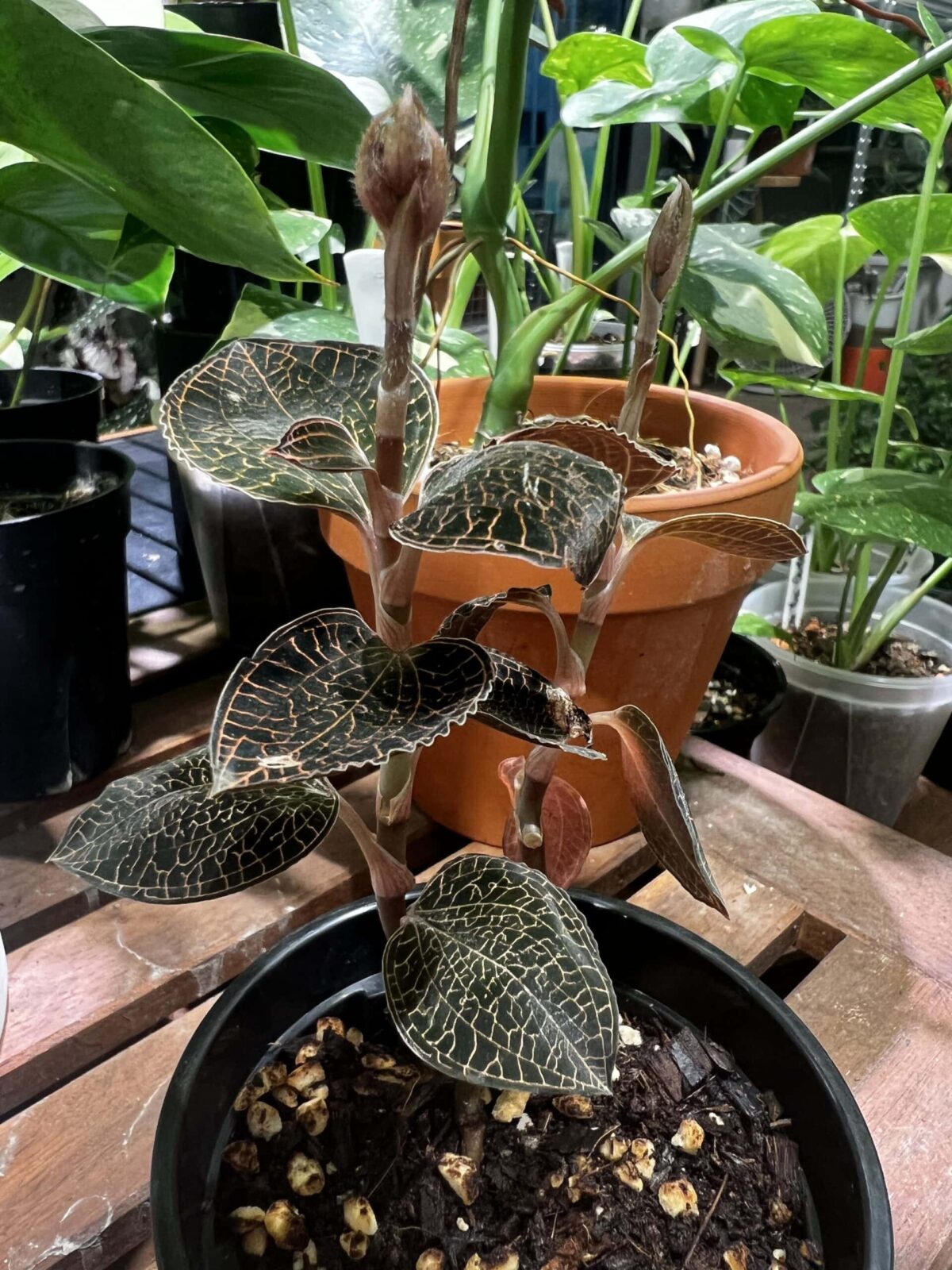
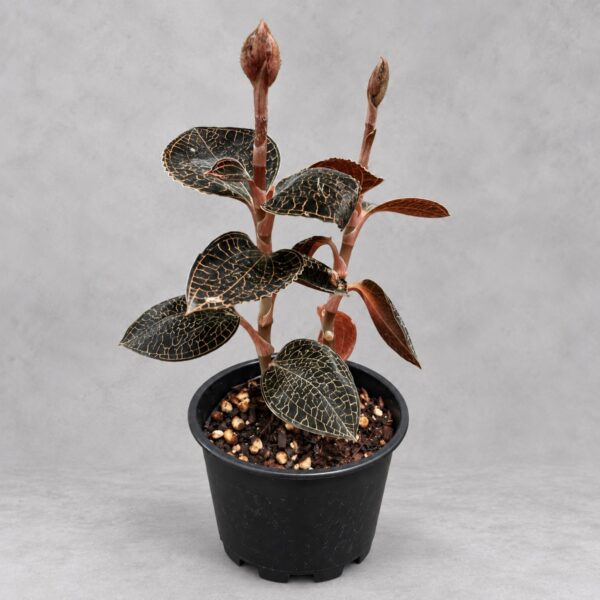
A perennial herbaceous orchid in the Orchidaceae family, native to humid low- and mid-elevation forest floors in Taiwan, and also found in southeastern China and southern Japan. Leaves are oval, with a deep green to near-black base colour overlaid by striking golden-yellow to orange-red veining, creating a jewel-like, high-contrast appearance — hence the common name "gold-thread orchid." The plant stays compact, usually under 20 cm tall, making it well suited to tabletop or glass terrarium display. It has a long history of use in traditional Taiwanese herbal medicine, earning it the folk title "king of herbs."
Light
- Ideal light: low to medium diffused light — avoid direct sun entirely.
- Placement: a north-facing windowsill, a well-lit interior spot, or 2–3 m from a south-facing window.
- How it responds: appropriate light brings out the most vivid gold veining; too much light causes the leaf colour to fade, the veining to blur, and even sunburn.
- Avoid: direct sunlight entirely — even brief exposure can cause irreversible leaf damage.
- Artificial lighting: a plant grow light at an appropriate distance, running 8–10 hours daily.
Watering
- Frequency: water every 3–5 days, keeping the medium lightly moist but never waterlogged.
- Principle: this orchid likes a consistently moist environment, but root rot from standing water is the real risk — balance is key.
- How to judge: water once the surface just starts to feel slightly dry — don't wait until it's fully dried out.
- Water quality: filtered water, rainwater, or settled water — avoid chlorinated or high-mineral tap water.
- Method: water gently around the pot edge, avoiding water pooling in the leaf crown, which can cause rot.
- Note: a bottom-watering tray can maintain stable moisture, but keep the water level below the pot base.
Soil & pot
- Medium requirements: extremely well-draining and aerated, rich in organic matter, mimicking a forest-floor leaf-litter environment.
- Recommended recipe:
- Sphagnum moss + bark + perlite + coco chips, in a 4:3:2:1 ratio
- Or orchid specialty mix (mainly fine bark) + 20% sphagnum moss
- pH: 5.0–6.0 (acidic).
- Pot choice: a breathable ceramic pot or orchid mesh pot with drainage holes.
- Growing environment: can be grown in a glass terrarium or bioactive vivarium, which better replicates its high-humidity native habitat.
- Repotting: once every 1–2 years in spring; orchid roots are sensitive, so handle with care to avoid damage.
Temperature & humidity
- Ideal temperature: 18–25°C.
- Acceptable range: 15–28°C.
- Maximum: sustained temperatures above 30°C suppress growth and require stronger ventilation.
- Minimum: not below 12°C, or growth will stall.
- Ideal humidity: 75–90%, a genuinely very high-humidity-demanding plant.
- Raising humidity:
- Strongly recommended: grow in a glass terrarium or bioactive vivarium
- Use an ultrasonic humidifier
- Place on a tray of moist pebbles
- Group with other plants to raise local humidity
- Ventilation: high humidity must be paired with good airflow, or root rot and fungal infections can develop.
Common problems
| Issue | Likely cause | What to do |
|---|---|---|
| Fading gold veining | Light too strong or humidity too low | Move to a shadier, more humid spot |
| Soft, yellowing leaves | Overwatering leading to root rot, or poor drainage | Check root colour (healthy roots are white or pale green) |
| Dry, crispy leaf tips | Air too dry | Raise humidity immediately |
| Stalled growth | Temperature too high or too low, or root problems | — |
| Pests | Occasional aphids or scale insects | Maintain ventilation and check regularly |
| Fungal infection | Round black spots on leaves | Improve ventilation, reduce leaf-surface moisture, use fungicide if needed |
| Small new leaves | Possible nutrient deficiency | Feed with diluted orchid fertiliser monthly during the growing season |
How to explain to customers
"Taiwan Jewel Orchid is a genuine orchid — the gold veining on the leaves really does shimmer, and it looks lovely on a tabletop!"
"It likes things damp and shaded — just keep it somewhere indoors with gentle light, no direct sun needed."
"This plant is actually called the 'king of herbs' in Taiwan — it's genuinely precious! Just keep the environment humid and it'll grow beautifully for you."
Fun facts
Taiwan Jewel Orchid holds a "king of herbs" reputation in Taiwanese folk medicine, traditionally believed to clear heat, detoxify, and support liver health. Wild populations have become scarce due to overharvesting, which is exactly why cultivating it at home matters both for protecting wild stock and meeting demand for it as an ornamental and traditional herb.
Keywords
Taiwan Jewel Orchid, Anoectochilus formosanus, Orchidaceae, jewel orchid, gold veining, medicinal plant, high humidity, shade-loving plant, terrarium plant, bioactive vivarium, king of herbs, precious herb, ornamental orchid
參考資料(想知來源可展開)
References
- Plants of the World Online (Kew) — Anoectochilus formosanus. https://powo.science.kew.org
- RHS — Growing orchids. https://www.rhs.org.uk/plants/orchids
- American Orchid Society — Jewel Orchid Care. https://www.aos.org
⚠️ Pet / toxicity note: While traditionally used as a medicinal herb, it's best to prevent pets or children from ingesting it in quantity, as large amounts may cause digestive upset. Consult a doctor or vet if accidental ingestion occurs.
In-depth care guide
Introduction
Taiwan Jewel Orchid (Anoectochilus formosanus) is a perennial herbaceous orchid in the genus Anoectochilus, native to humid low- to mid-elevation forest floors in Taiwan, with additional populations in southeastern China and southern Japan. Unlike showy flowering orchids, this species is grown primarily for its foliage — deep green to near-black leaves overlaid by a network of shimmering gold to orange-red veins that genuinely resemble threads of precious metal woven into the leaf surface. This striking appearance has earned it the common name "gold-thread orchid" in English and a reputation as one of the more jewel-like small plants available for terrarium culture.
Beyond its ornamental appeal, this species carries significant cultural weight in Taiwan, where it has a long history of traditional herbal use and is popularly known as the "king of herbs," believed to support liver health and general wellbeing. This dual identity — precious ornamental and traditional medicinal herb — has driven both cultivation interest and, historically, concerning levels of wild harvesting, making home cultivation genuinely meaningful for conservation as well as enjoyment.
Growth habit
Taiwan Jewel Orchid is a compact terrestrial orchid, typically staying under 20 cm tall, spreading gently along the ground via a creeping rhizome rather than growing upright like many other orchids. This low, spreading habit reflects its native forest-floor environment, where it grows in the deep shade beneath a closed canopy, protected from direct sun and benefiting from consistently high humidity and rich, decomposing leaf litter.
Its small size and ground-hugging growth make it exceptionally well suited to glass terrariums, bioactive vivariums, or simple tabletop displays under a glass cloche — settings that can far more easily replicate the stable, humid microclimate this plant craves than an open room ever could.
Light requirements
Taiwan Jewel Orchid needs low to medium diffused light, and should never be exposed to direct sunlight — even brief exposure can cause irreversible damage to its delicate leaves. A north-facing windowsill, a well-lit interior spot away from windows, or a position 2–3 m from a south-facing window are all suitable.
Appropriate light brings out the plant's signature gold veining at its most vivid; light that's too strong causes the leaf colour to fade, the veining to blur, and can even scorch the leaf surface. If natural light is insufficient, a plant grow light positioned at an appropriate distance, run for 8–10 hours daily, works well as a supplement — this is often the more reliable option for a plant this sensitive to direct sun.
Watering technique
Water Taiwan Jewel Orchid every 3–5 days, aiming to keep the growing medium consistently lightly moist without ever becoming waterlogged. This is a plant that genuinely likes damp conditions, but root rot from standing water remains the primary risk, so striking the right balance matters more than following a rigid schedule.
Water once the surface just starts to feel slightly dry to the touch — don't wait for the medium to dry out fully, since this species doesn't tolerate drought well. Use filtered water, rainwater, or settled water, avoiding chlorinated or high-mineral tap water, which this delicate plant is sensitive to.
Water gently around the edge of the pot, taking care to avoid water pooling in the central leaf crown, which can quickly lead to crown rot. A bottom-watering tray can help maintain stable moisture levels, but make sure the water level stays below the base of the pot rather than allowing the roots to sit directly in water.
Soil and potting
Taiwan Jewel Orchid needs an extremely well-draining, well-aerated medium rich in organic matter — essentially mimicking the loose, decomposing leaf litter of its native forest floor.
Recommended recipes:
- Sphagnum moss + bark + perlite + coco chips, in a 4:3:2:1 ratio
- Or an orchid specialty mix (primarily fine bark) with an added 20% sphagnum moss
Maintain an acidic pH of 5.0–6.0. Choose a breathable ceramic pot or orchid mesh pot with drainage holes. Given its high humidity requirements, growing this species in a glass terrarium or bioactive vivarium is strongly recommended, as it far more effectively replicates the stable, humid conditions of its native habitat than open-air growing.
Repot once every 1–2 years in spring. Orchid roots are notably sensitive, so handle the plant gently during repotting to avoid unnecessary root damage.
Temperature and humidity
Taiwan Jewel Orchid's ideal temperature range is 18–25°C, with an acceptable range of 15–28°C. Sustained temperatures above 30°C will suppress growth and require considerably stronger ventilation to compensate; temperatures below 12°C will stall growth altogether.
Humidity requirements are genuinely demanding, with an ideal range of 75–90%. This is one of the clearest cases among common houseplants where growing in a glass terrarium or bioactive vivarium is strongly advised rather than merely helpful — it's very difficult to sustain 75%+ humidity in open room air over the long term. An ultrasonic humidifier, a tray of moist pebbles, and grouping with other plants can all help outside of a terrarium setup, but a terrarium remains the most reliable solution. As always, good ventilation must accompany high humidity to prevent root rot and fungal infection.
Feeding
Feed sparingly with a diluted orchid-specific liquid fertiliser roughly once a month during the active growing season. This species doesn't need heavy feeding, and its fine root system is easily damaged by fertiliser that's too concentrated — always err toward a weaker dilution than the package suggests.
Common problems in detail
Fading gold veining: most often caused by light that's too strong or humidity that's too low. Move the plant to a shadier, more humid spot, ideally reconsidering whether a terrarium setup would help.
Soft, yellowing leaves: typically a sign of overwatering leading to root rot, or medium that isn't draining well enough. Check root colour directly — healthy roots should appear white or pale green, while rotten roots turn brown or black and feel mushy.
Dry, crispy leaf tips: a clear sign that the air is too dry. Raise humidity immediately, and consider whether a terrarium or bioactive vivarium setup would be a more sustainable long-term solution.
Stalled growth: check first whether temperature has drifted too high or too low, then examine the root system for any underlying problems.
Fungal infection: round black spots on the leaves point to fungal disease. Improve ventilation, reduce how much water sits on the leaf surface, and apply an appropriate fungicide if the problem persists.
A note on use and safety
Taiwan Jewel Orchid has a long history of traditional herbal use in Taiwan, where it's popularly regarded as the "king of herbs" and traditionally used to clear heat, detoxify, and support liver health. That said, self-medicating with this or any plant isn't recommended without professional guidance, and it's best to prevent pets or children from ingesting it in quantity, since large amounts may cause digestive upset. If accidental ingestion occurs, consult a doctor or veterinarian.
References
- Plants of the World Online (Kew) — Anoectochilus formosanus. https://powo.science.kew.org
- RHS — Growing orchids. https://www.rhs.org.uk/plants/orchids
- American Orchid Society — Jewel Orchid Care. https://www.aos.org
- Missouri Botanical Garden — Plant Finder. https://www.missouribotanicalgarden.org/PlantFinder/PlantFinderDetails.aspx
Plantjai shop · In stock online
Anoectochilus formosanus
Anoectochilus formosanus
HK$108.00
Hong Kong delivery · Causeway Bay pickup
For Hong Kong homes and offices. Stock and pricing follow the product page.
IN STORE NOW
Plants for this guide
Related plants in stock now — live prices, delivery or Causeway Bay pickup.
FREE PLANT ADVICE
Send us a photo before you change anything
WhatsApp a photo of the plant and your window light. Our Causeway Bay team will suggest care steps or plants that suit your space.
STORE · CAUSEWAY BAY
4/F, 39 Yiu Wa Street, Causeway Bay
Daily 12:30–8:00pm · ~3 min walk from Times Square
Map & directionsPlant Care