
How to Care for Amydrium Spider in Hong Kong | Plantjai

Hong Kong care guide for Amydrium Spider.
Vein patterns crisscrossing like a spider's web — mature, split leaves bring real dimension and artistry to a space.
Origin & characteristics
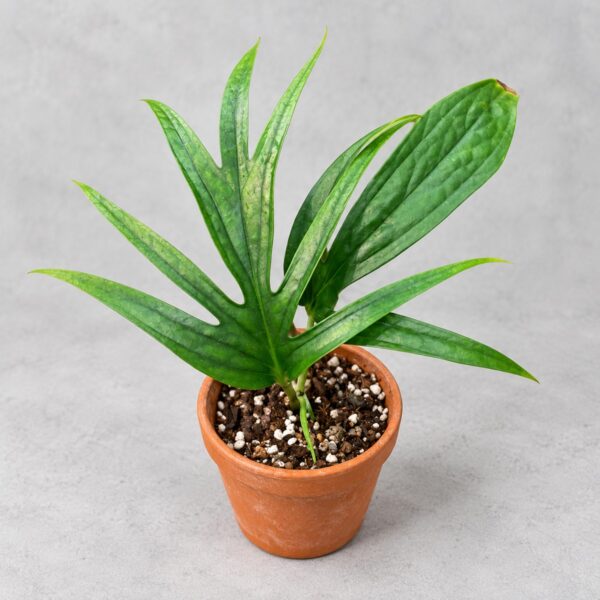
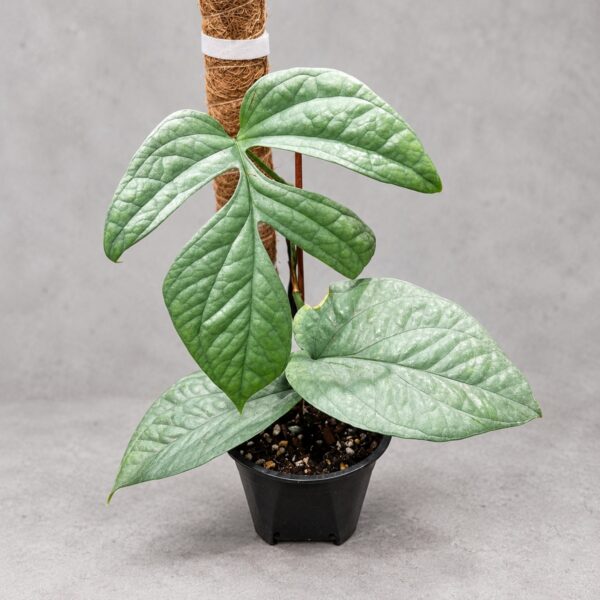
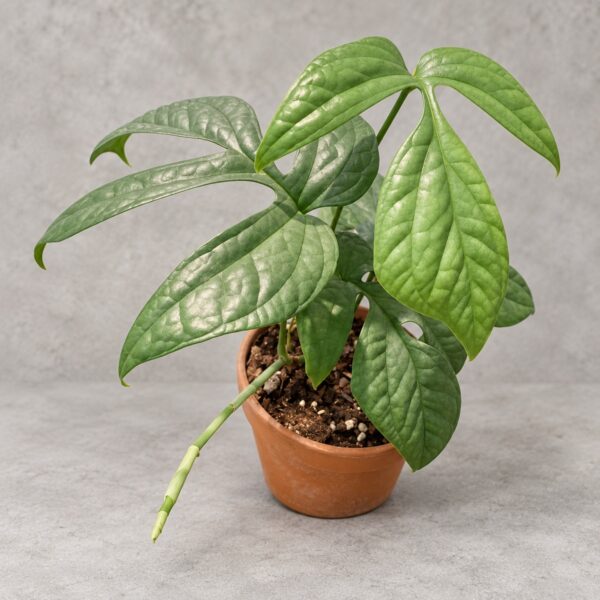
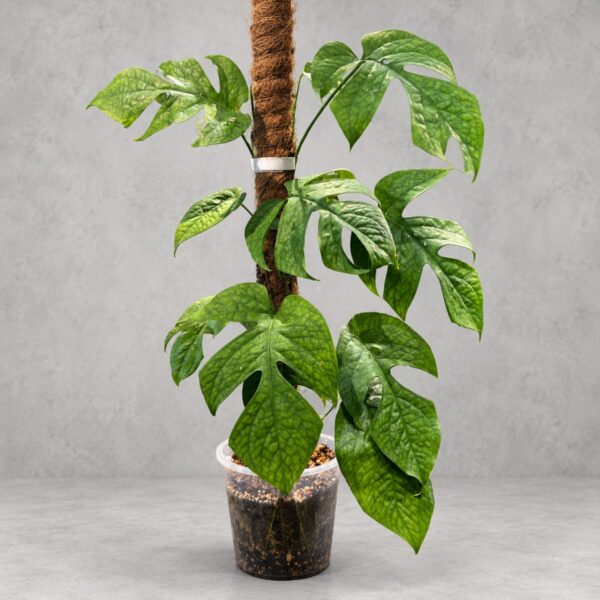
A perennial climbing member of the Araceae family and a cultivar of Amydrium medium, with the original species distributed across Southeast Asian rainforests. 'Spider' has been selectively bred to accentuate its net-like venation, giving it its name. Juvenile leaves start whole and heart-shaped, gradually developing deeply pinnate lobes as the plant matures, with raised, silvery-white venation forming a grid pattern across the entire leaf surface — a genuinely distinctive, decorative texture. Aerial roots are well developed with strong climbing ability, making it well suited to vertical greenery displays.
Light
- Ideal light: bright, indirect light; an east- or northeast-facing windowsill is best.
- How it responds: with enough light, the silvery-white venation becomes more pronounced and eye-catching, giving better overall display value; too little light makes the venation appear blurred.
- Avoid: direct midday sun — prolonged exposure causes leaves to yellow or develop scorched edges.
- Signs of insufficient light: smaller new leaves, elongated internodes, faded venation.
Watering
- Frequency: every 5–7 days during the growing season (spring through autumn), every 10–14 days in winter.
- Principle: insert a finger about 2–3 cm into the soil, and only water thoroughly once it feels dry.
- Method: water slowly around the rim of the pot until it drains from the base, ensuring the whole root system gets moistened.
- Water quality: room-temperature settled water, filtered water, or rainwater are all fine.
- Important: better to water too little than too much — standing water leading to root rot is the most common cause of death.
Soil & pot
- Medium recipe: prioritise drainage and aeration, with recipes such as:
- Sphagnum moss + perlite + bark chunks, in a 5:2:3 ratio
- Or a quality Araceae specialty mix + 20% perlite
- pH: slightly acidic to neutral, 5.5–6.5.
- Pot choice: a ceramic or plastic pot with drainage holes; avoid an oversized pot that causes waterlogging.
- Climbing support: essential — a moss pole, coir pole, or trellis for the aerial roots to attach to, helping promote mature leaf development.
- Repotting: in spring, once every 1–2 years, depending on root growth.
Temperature & humidity
- Ideal temperature: 20–28°C, the range where growth is most vigorous.
- Minimum tolerance: briefly down to 15°C; sustained cold below this triggers dormancy.
- Humidity: 60–80% is ideal.
- Signs of low humidity: dry, scorched leaf tips or edges, new leaves struggling to unfurl.
- Raising humidity: use a humidifier, a tray of moist pebbles, or group with other plants to raise local humidity.
- Ventilation: high humidity needs good airflow to prevent mould growth.
Common problems
| Issue | Likely cause | What to do |
|---|---|---|
| Faded, indistinct venation | Usually insufficient light | Move to a brighter spot, but avoid direct sun |
| Leaves failing to split | Plant not yet mature or lacking climbing support | Set up a moss pole — mature leaves will naturally split |
| Yellowing, dropping leaves | Overwatering leading to root rot, or temperature too low | Check pot drainage and ambient temperature |
| Slow growth | Normal during winter cold; if slow in the growing season, check for nutrient deficiency or a root-bound pot | — |
| Pests | Spider mites (common in dry conditions), scale insects | Check regularly and treat promptly |
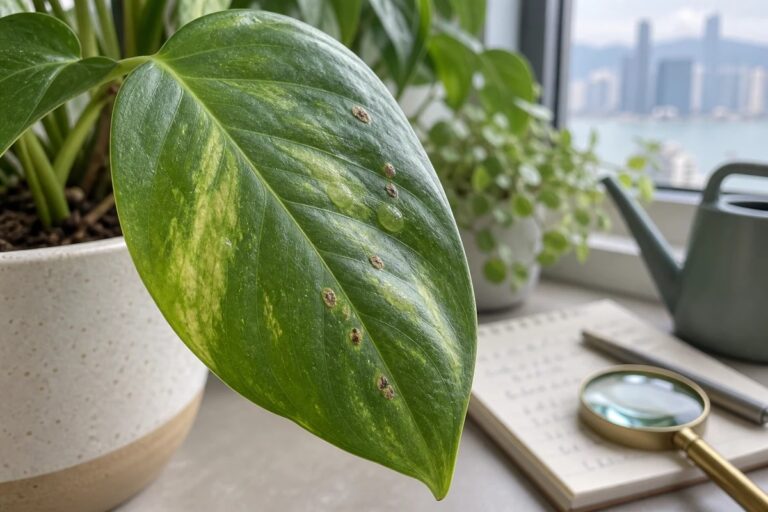
| Fungal infection | Round brown spots on leaves | Improve ventilation and reduce water on the leaf surface |
How to explain to customers
"What's great about Spider is the vein pattern on the leaves — all those silvery-white lines really stand out, giving it a lot of dimension! It does need something to climb to look its best, so get a moss pole and once it takes hold, the big split leaves are genuinely spectacular."
"No need to overthink it — just check the soil once a week and water once it's dry, keep it near a window with some diffused light, and it'll do just fine."
Fun facts
The netted venation on Spider Amydrium's mature leaves is known botanically as a "secondary vein network" — beyond just looking good, this structure also reinforces the leaf's mechanical strength, helping large leaves resist tearing in strong rainforest winds.
Keywords
Spider Amydrium, Spider, Amydrium medium, Araceae, netted venation, climbing plant, moss pole, aerial roots, fenestrated leaf, foliage plant, silvery-white venation, vertical greenery
參考資料(想知來源可展開)
References
- Plants of the World Online (Kew) — Amydrium medium. https://powo.science.kew.org
- Foliage Factory — Amydrium Plants | Shingling Aroid Vines. https://foliage-factory.com/collections/amydrium
- PLNTS.com — How to Care for Amydrium: Expert Tips for Thriving Plants. https://plnts.com/en/care/houseplants-family/amydrium
⚠️ Pet / toxicity note: Like other Araceae members, contains calcium oxalate crystals; ingestion can cause oral and digestive irritation. Keep away from pets and small children.
In-depth care guide
Introduction
Spider Amydrium is a selectively bred cultivar of Amydrium medium within the Araceae family, developed specifically to accentuate the plant's naturally net-like venation — an already-attractive trait in the species pushed to its most decorative extreme. The plant's original range spans tropical rainforests across Southeast Asia, and like its close relatives (including the well-known Cebu Blue), it's a hemi-epiphytic climbing vine that transforms dramatically as it matures.
Juvenile Spider leaves are whole and heart-shaped, offering little hint of what's to come. As the plant ages and, crucially, gains access to a vertical support to climb, its leaves gradually develop deep pinnate lobes, and the raised, silvery-white venation becomes far more pronounced, forming an intricate, almost architectural grid pattern across the leaf surface — genuinely striking once the plant reaches full maturity.
Growth habit
Like other Amydrium cultivars, Spider is a hemi-epiphyte: it germinates and roots in the forest floor, then climbs upward using well-developed aerial roots that grip onto tree trunks and other vertical surfaces. This growth pattern is directly linked to its leaf transformation — juvenile leaves stay small and simple while the plant is still low to the ground, and only develop their full split, veined form once the plant is climbing and receiving more light higher up.
This means providing a climbing support indoors isn't a cosmetic choice but a genuine requirement for seeing the plant's most impressive mature growth. Without one, Spider will stay in a trailing, juvenile form indefinitely, with smaller, unsplit leaves and less pronounced venation.
Light requirements
Spider needs bright, indirect light to display its signature venation at its most vivid. An east- or northeast-facing windowsill is ideal, offering gentle, consistent light throughout the day.
With adequate light, the silvery-white venation becomes noticeably sharper and more eye-catching — this is really the plant's whole appeal, so getting the light right matters more for this cultivar than for many other foliage plants. Insufficient light causes the venation to look blurred and less defined, alongside smaller new leaves and stretched internodes as the plant reaches for more light.
Avoid direct midday sun, particularly in summer — prolonged exposure will cause leaves to yellow or develop scorched, crispy edges that won't recover.
Watering technique
Spider's watering principle is straightforward: insert a finger about 2–3 cm into the soil, and water thoroughly only once it feels dry. This typically works out to every 5–7 days during the active growing season (spring through autumn), extending to every 10–14 days in winter as growth slows.
Water slowly around the rim of the pot until it runs freely from the drainage holes, ensuring the entire root system is moistened rather than just the surface layer. Room-temperature settled water, filtered water, or rainwater are all suitable choices.
It bears repeating: it's far better to err on the side of watering too little than too much. Standing water in the pot leading to root rot remains the single most common cause of death for this plant, and once rot sets in, recovery is difficult.
Soil and potting
Spider needs a growing medium that prioritises drainage and aeration above heavy moisture retention.
Recommended recipes:
- Sphagnum moss + perlite + bark chunks, in a 5:2:3 ratio
- Or a quality Araceae specialty mix with an added 20% perlite
Maintain a slightly acidic to neutral pH of 5.5–6.5. Choose a ceramic or plastic pot with drainage holes, and avoid an oversized pot, which holds excess moisture and increases waterlogging risk.
A climbing support — a moss pole, coir pole, or trellis — is essential for the aerial roots to attach to, which in turn helps promote the plant's more mature, deeply lobed leaf form. Repot once every 1–2 years in spring, depending on how quickly the roots have filled the current pot.
Temperature and humidity
Spider's ideal growing temperature is 20–28°C, the range in which growth is most vigorous. It can briefly tolerate temperatures down to 15°C, but sustained cold below this threshold will push the plant into dormancy.
Humidity should be maintained at 60–80%. Signs of insufficient humidity include dry, scorched leaf tips or edges and new leaves that struggle to unfurl properly. Raising humidity with a humidifier, a tray of moist pebbles, or by grouping the plant with other humidity-loving specimens all help. As with other Araceae climbers, high humidity needs to be paired with good ventilation to prevent mould and fungal growth from taking hold.
Feeding
Feed during the active growing season with a diluted balanced liquid fertiliser, roughly once a month, to support healthy leaf development. Reduce or stop feeding entirely as growth slows in winter. If growth stalls during the growing season despite otherwise good care, a light monthly feed can help — but avoid overfeeding, which risks salt buildup and root damage.
Common problems in detail
Faded, indistinct venation: almost always caused by insufficient light. Move the plant to a brighter spot, but continue to avoid direct sun exposure.
Leaves failing to split despite the plant being reasonably mature: most often the result of not having a climbing support. Set up a moss pole or similar structure — once the aerial roots grip it, new leaves should begin to show the plant's characteristic mature form.
Yellowing, dropping leaves: check for overwatering leading to root rot first, then check whether the ambient temperature has dropped too low. Both are common culprits and require different fixes — adjust drainage and watering for the former, and relocate the plant somewhere warmer for the latter.
Slow growth: entirely normal during winter's cold spell. If growth is slow during the active growing season, check whether the plant is lacking nutrients or has become root-bound in its pot.
Pests: spider mites are the most common issue, particularly in dry conditions, alongside occasional scale insects. Check the plant regularly, especially leaf undersides, and treat promptly if pests are found.
Fungal infection: round brown spots on the leaf surface typically indicate a fungal issue. Improve ventilation around the plant and reduce the amount of water that ends up on the leaf surface during watering.
Toxicity information
Like other members of the Araceae family, Spider Amydrium contains calcium oxalate crystals throughout the plant, which can cause oral and digestive irritation if ingested. Keep it out of reach of pets and small children, and wash your hands after handling the plant.
References
- Plants of the World Online (Kew) — Amydrium medium. https://powo.science.kew.org
- Foliage Factory — Amydrium Plants | Shingling Aroid Vines. https://foliage-factory.com/collections/amydrium
- PLNTS.com — How to Care for Amydrium: Expert Tips for Thriving Plants. https://plnts.com/en/care/houseplants-family/amydrium
- Folia Collective — Plant Know-How: Amydrium medium 'Silver'. https://foliacollective.com/blogs/plant-care/plant-know-how-amydrium-medium-silver/
For Hong Kong homes and offices. Stock and pricing follow the product page.
IN STORE NOW
Plants for this guide
Related plants in stock now — live prices, delivery or Causeway Bay pickup.
Amydrium medium 'Spider'
Amydrium medium 'Spider'
Original price was: HK$4,880.00.HK$880.00Current price is: HK$880.00.
In stock · store pickup
View plant
FREE PLANT ADVICE
Send us a photo before you change anything
WhatsApp a photo of the plant and your window light. Our Causeway Bay team will suggest care steps or plants that suit your space.
STORE · CAUSEWAY BAY
4/F, 39 Yiu Wa Street, Causeway Bay
Daily 12:30–8:00pm · ~3 min walk from Times Square
Map & directionsPlant Care