
How to Care for Alocasia Azlanii in Hong Kong | Plantjai

Plantjai 植仔 · Care Encyclopedia
Alocasia Azlanii
Hong Kong care guide — useful before you buy and after it arrives.
Shop this plantMetallic bronze-green leaves threaded with pink-purple veins that shift colour as you move around it — a dream piece from the jewel Alocasia family.
Origin & characteristics
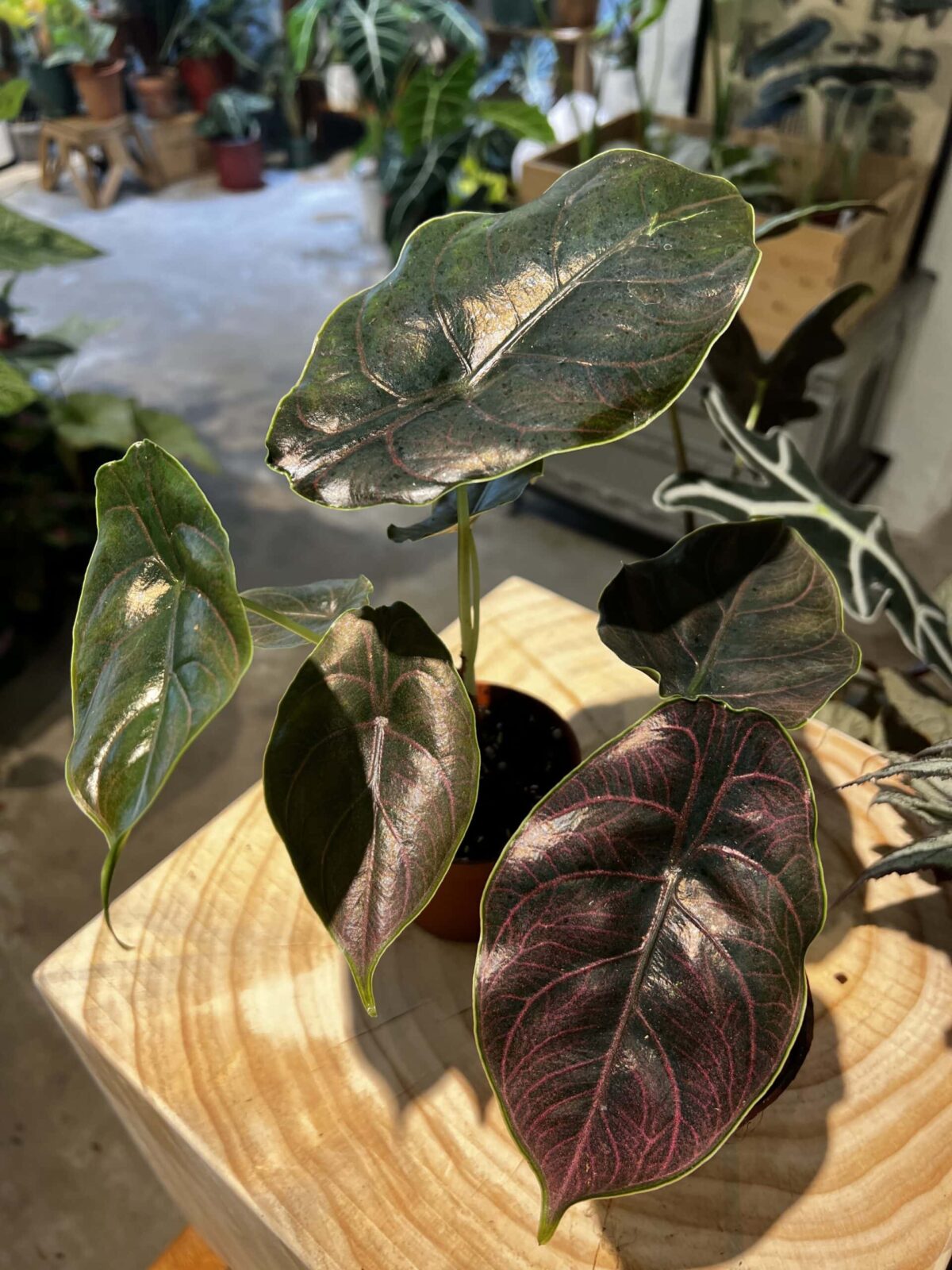
Alocasia azlanii was formally described in 2017, named after Brunei botanist Azlan Pandai. It's native to the mixed dipterocarp rainforest floor of the Tutong district in Brunei, on the island of Borneo, growing in cool, shaded, and consistently moist conditions. The leaves are deep green to bronze with a metallic sheen, threaded with pink to purplish-red veins, shifting between green, bronze, and magenta depending on the angle of light. Plants stay compact indoors, usually 40–60 cm, and it's one of the most sought-after members of the "jewel Alocasia" group.
Light
Needs bright, indirect light, roughly 10,000–20,000 lux. An east-facing window, or a spot 1–2 m from a south-facing one, works well. Avoid direct sun, which causes scorching or fading. Too little light dulls the metallic sheen and vein colour, and can also slow new growth. Rotating the pot occasionally encourages even growth.
Watering
Water once the top 1–2 cm of soil starts to dry; the centre of the root ball should stay lightly moist but never waterlogged. This species has fine roots that are unusually sensitive to overwatering and rot easily. Cut back further in winter. Filtered water or tap water rested overnight helps avoid mineral buildup.
Soil & pot
Use a fine-to-medium chunky aroid mix: orchid bark, perlite, coco coir, plus a little organic matter. It should drain well without drying out too fast — overly coarse mixes dry too quickly for this species. Choose a pot only slightly larger than the root ball, and don't rush to size up. Ensure drainage holes are present, and always empty the saucer after watering.
Temperature & humidity
Ideal range is 20–28°C; below 15°C the plant may go dormant or suffer root damage, so keep it warm through winter. Humidity of 60–80% is ideal — typical Hong Kong indoor air can run drier than this, so a humidifier or a plant cabinet is worth considering. Below 50% humidity, leaf tips dry out and new leaves struggle to unfurl properly. Avoid AC vents and drafty doors/windows.
Common problems
| Issue | Likely cause | What to do |
|---|---|---|
| Metallic sheen fading | Low light, low humidity, or general stress | Move to a brighter spot and stabilise warmth/humidity |
| Curling leaves | Low humidity or dry soil | Check soil moisture first, then raise humidity if needed |
| Yellowing after watering | Waterlogged soil, poor drainage, or dense mix | Check roots and consider repotting into a chunkier mix |
| Small new leaves | Root system still developing, cool temps, or low nutrients | Give it time, adjust temperature, feed lightly |
| Stalled growth | Naturally slow grower — one or two nice leaves a year is normal | Only worry if no new growth appears after 8+ weeks |
How to explain to customers
"Red Mambo is one of the most in-demand jewel Alocasias out there — the metallic sheen and pink-purple veins genuinely shift colour depending on the light. It has fine roots though, so go easy on watering, and keep the humidity up for the best leaf quality."
Fun facts
Alocasia azlanii grows naturally in sandy clay on the floor of dipterocarp forests, close to sea level. Its species name honours Brunei botanist Azlan Pandai, while its trade name "Red Mambo" nods to the way its reddish-purple veining seems to dance across the leaf.
Keywords
Red Mambo Alocasia, Alocasia azlanii, jewel Alocasia, pink-purple veins, metallic leaf, compact aroid, rare plant, toxic plant, high humidity, Borneo
參考資料(想知來源可展開)
References
- Plants of the World Online (Kew) — Alocasia azlanii. https://powo.science.kew.org
- The Spruce — How to Grow and Care for Alocasia Azlanii. https://www.thespruce.com/alocasia-azlanii-care-guide-8557457
- RHS — Alocasia care. https://www.rhs.org.uk/plants/alocasia
⚠️ Pet / toxicity note: Contains calcium oxalate crystals; toxic if chewed or ingested, causing oral pain, drooling and swelling. Keep away from pets and small children.
In-depth care guide
Introduction
Alocasia azlanii is a small, exceptionally striking member of the Araceae family, part of the informal "jewel Alocasia" group prized by collectors for compact size and jewel-like leaf colouring. It's a genuine wild species from Borneo, only entering the international houseplant trade after 2016 — making it one of the more recently introduced jewel Alocasias. Quickly nicknamed "Red Mambo" for the way its pink-red veins seem to move across the leaf as light shifts, it honours Prince Azlan of Brunei in its species name, a nod to its Bruneian origin. Its small stature makes it perfect for a desk, windowsill, or plant cabinet in even the most space-constrained Hong Kong home.
Morphology
The standout feature is the deep green, metallic-sheened foliage. Leaves are long-oval to elliptical, thick, and glossy with a slightly waxy finish that produces genuine metallic reflections ranging from deep green to near-black. New leaves emerge with vivid pink, red, or deep purple veining that darkens somewhat with maturity but stays visible under good light. Leaf undersides are typically reddish-purple, contrasting handsomely with the dark upper surface. The whole plant stays compact — around 25–35 cm tall and 20–30 cm wide — a true tabletop specimen. A short, thick stem sits atop a rhizome that stores energy; a healthy plant typically carries three to five mature leaves at once, following a steady "one out, one in" growth rhythm.
Light requirements
Alocasia azlanii needs bright but gentle, filtered light. In its native habitat it grows beneath a tall forest canopy, receiving only dappled light filtered through leaves above — direct tropical sun would damage it. The best indoor placement is an east- or north-facing window, roughly 1–2 m back, giving a light intensity in the region of 10,000–30,000 lux. Too little light causes pale colouring, loss of metallic sheen, progressively smaller new leaves, and leggy growth. Direct sun, especially the strong midday sun of summer, causes rapid scorching — white or yellow-brown patches, and curled or crisping new leaves. If you supplement with grow lights, choose a full-spectrum LED at 3,500–4,500K, run for 10–12 hours daily, positioned 25–35 cm above the foliage. Watch leaf colour and sheen as your best feedback signal for adjusting light.
Temperature requirements
This is a rainforest floor species with limited cold tolerance. The ideal range is 22–27°C, with day-night swings kept within 3–5°C. It can tolerate a minimum around 15°C, but growth slows noticeably below 18°C; below 15°C the plant enters semi-dormancy and leaves begin yellowing; below 10°C there's a real risk of serious cold damage or death. In summer, avoid sustained temperatures above 32°C without boosting humidity and airflow. Hong Kong's spring, summer and autumn temperatures generally suit this plant well, but bring it into a warm interior space whenever winter temperatures are forecast below 15°C, and always keep it away from cold drafts. Jewel Alocasias in general are notably sensitive to temperature swings — stability matters as much as the actual number.
Humidity management
High humidity is essential. In the wild, relative humidity stays between 75–95% year-round, so indoors you should aim for at least 60%, ideally 70–80%. Below 60%, leaf edges begin drying and browning, new leaves struggle to unfurl properly, and spider mites become more active. An ultrasonic humidifier placed about a metre from the plant is highly effective. Growing the plant inside a glass cabinet or enclosed shelf is another excellent option, especially for jewel Alocasias, since it lets you control humidity, temperature and light together — line the cabinet with damp sphagnum moss, add a small dish of water, and include a small fan for gentle air movement. Misting gives only a brief humidity boost and, without good airflow, can encourage bacterial or fungal issues on the foliage — a good digital hygrometer placed near the plant is a worthwhile investment.
Watering technique
The watering principle is "consistently moist, never soggy, never bone dry." During the growing season (spring through autumn), water once the top 1.5–2 cm of soil has dried. Always water thoroughly until it runs from the drainage holes, then empty the saucer. The rhizome does store some water, but during active growth the plant still needs a steady moisture supply — excessive dryness causes drooping and crisping edges, while overwatering quickly rots the rhizome. This is a genuinely tricky balance to strike. In winter, as growth slows with cooler temperatures, reduce watering frequency and let the soil dry a little further between waterings. Use room-temperature filtered water, rainwater, or tap water rested overnight, since this species is sensitive to chlorine and high mineral content. The most reliable check is inserting a finger 1–2 knuckles deep into the soil.
Soil recipe
Alocasia azlanii needs a loose, airy, well-draining medium that still holds a moderate amount of moisture. A dedicated jewel Alocasia mix works well:
- 40% medium orchid bark (6–10 mm) for structural air channels
- 30% low-salt, buffered coco coir for moisture and organic content
- 20% horticultural perlite to prevent compaction and improve drainage
- 10% rinsed horticultural charcoal to absorb impurities and inhibit fungal growth
This blend ensures the roots get plenty of oxygen without drying out too quickly. If the soil dries out in under two or three days after watering, increase the coir ratio; if it stays wet for a full week, add more perlite and bark. A roughly 2 cm layer of leca at the pot base improves drainage further. When planting, keep the top of the rhizome just barely exposed above the soil surface — burying it too deep invites rot.
Feeding
This species is a light feeder, reflecting the nutrient-poor soils of its native habitat — less is genuinely more here. During the growing season (roughly March–September), apply a diluted balanced liquid fertiliser every three weeks, at around a quarter of the label-recommended strength. A urea-free formula is preferable, since Alocasias tend to prefer nitrate-based nitrogen. A slow-release fertiliser like Osmocote can be applied every four to six months as a top dressing. Taper off from October and stop completely through winter. Always water the plant normally before fertilising to avoid burning dry roots, and flush the soil thoroughly with plain water about once a month to prevent salt buildup. Overfeeding shows up as leaf distortion, dull colouring, or root damage.
Repotting
Because it grows slowly, Alocasia azlanii typically needs repotting only every 24–36 months. Younger plants (under a year old) may need it sooner, around 18 months; mature specimens (3+ years) can go up to four years between repots. Early spring (March–April) is the best time, just as new growth is about to begin. Signs it's time include roots emerging from the drainage holes, water draining unusually slowly, or visible crowding. Size up by only 2–3 cm in diameter — jewel Alocasias generally prefer a slightly snug pot, since an oversized one holds excess moisture and raises rot risk. When repotting, gently loosen the old root ball, trim away any black or mushy roots, dust cut surfaces with cinnamon powder, then plant in fresh mix and water thoroughly. Keep the plant in a shaded, well-ventilated spot for about a week afterward to recover before resuming normal care.
Propagation
Alocasia azlanii cannot be propagated from leaf or stem cuttings, since it lacks the ability to form adventitious buds on separated tissue. The only reliable method is rhizome division, ideally done during spring repotting. Remove the plant from its pot, rinse the roots clean, and locate natural branch points along the rhizome. Each division needs at least two visible growth points ("eyes") and a healthy set of roots. Cut with a sterilised blade, dust the wound with cinnamon powder, and let it air-dry for about two hours before potting into a 10 cm pot using the same mix as the parent plant. Keep warm (around 24°C) and humid (80%+); new shoots typically appear within about three weeks. Alternatively, small offsets that form at the base of the plant can be separated once they reach about 8 cm tall with their own root system — success rates for both methods are typically above 90% with patience.
Common problems and solutions
Dry, browning leaf edges most often mean humidity is too low (under 60%) or the water is too hard (mineral buildup). Raise humidity immediately, switch to filtered water, and flush the soil thoroughly to clear accumulated salts. Cold drafts can cause the same symptom.
Yellowing, dropping leaves: if it's isolated to a single old leaf, that's likely natural ageing; if multiple leaves yellow together, suspect overwatering and rhizome rot, cold below 15°C, or insufficient light. Check soil moisture and root condition, and repot if needed.
Small new leaves or stalled growth may point to insufficient light, a root-bound pot, or cold temperatures — work through each possibility in turn.
Rhizome rot shows as sudden wilting and collapse. Unpot immediately; if the rot is limited, cut away the affected tissue, treat with cinnamon powder, and replant the healthy portion. Extensive rot is harder to save.
Spider mites are the most common pest in dry conditions — look for fine red specks and webbing on leaf undersides. Raise humidity immediately, wipe down leaf undersides, and use a miticide if the infestation is severe.
Loss of metallic sheen is usually a light or humidity issue; correcting the environment allows the plant to gradually regain its lustre.
References
- Plants of the World Online (Kew) — Alocasia azlanii. https://powo.science.kew.org
- The Spruce — How to Grow and Care for Alocasia Azlanii. https://www.thespruce.com/alocasia-azlanii-care-guide-8557457
- RHS — Alocasia care. https://www.rhs.org.uk/plants/alocasia
- Proven Winners — How to Grow Alocasia Indoors and Outdoors. https://www.provenwinners.com/learn/houseplants/alocasia
Plantjai shop · In stock online
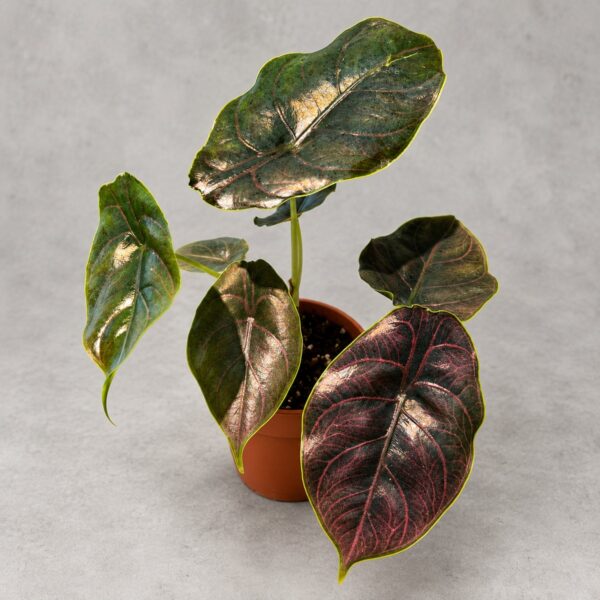
Alocasia azlanii
Alocasia azlanii
HK$168.00
Hong Kong delivery · Causeway Bay pickup
For Hong Kong homes and offices. Stock and pricing follow the product page.
IN STORE NOW
Plants for this guide
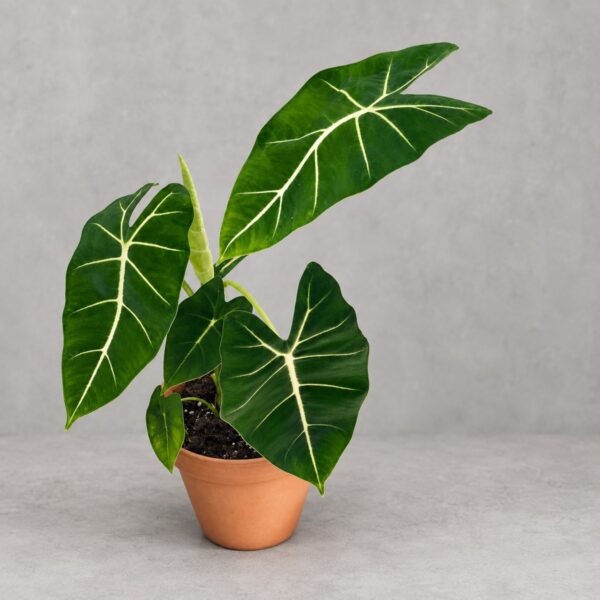
Related plants in stock now — live prices, delivery or Causeway Bay pickup.
FREE PLANT ADVICE
Send us a photo before you change anything
WhatsApp a photo of the plant and your window light. Our Causeway Bay team will suggest care steps or plants that suit your space.
STORE · CAUSEWAY BAY
4/F, 39 Yiu Wa Street, Causeway Bay
Daily 12:30–8:00pm · ~3 min walk from Times Square
Map & directionsPlant Care