
How to Care for Syngonium Red Spot Tricolor in Hong Kong | Plantjai

Plantjai 植仔 · Care Encyclopedia
Syngonium Red Spot Tricolor
Syngonium podophyllum 'Red Spot Tricolor' 紅點三色合果芋
Hong Kong care guide — useful before you buy and after it arrives.
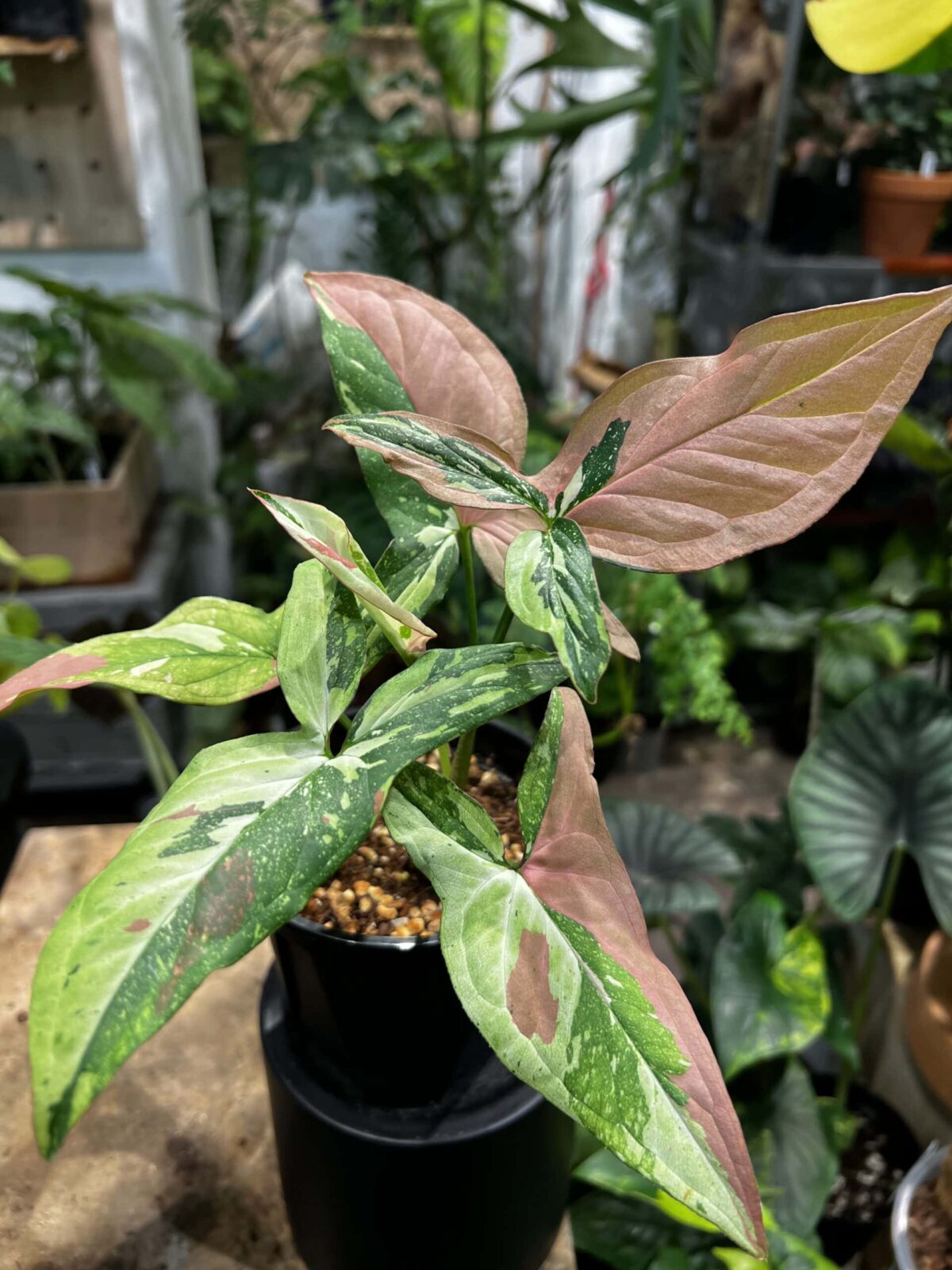
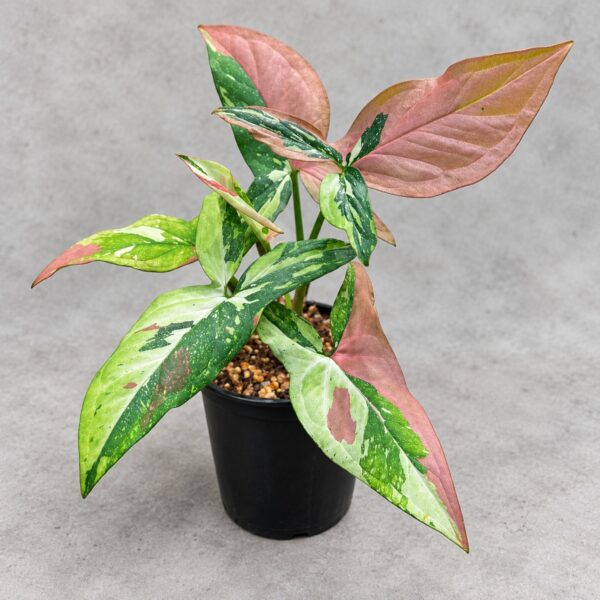
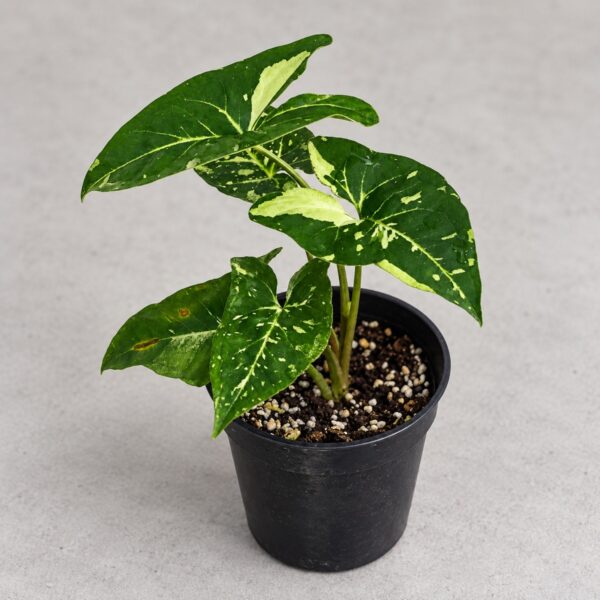
Shop this plantA single leaf blending pink, cream, and green all at once, as though nature had painted it freehand with watercolours — the dreamiest collector's gem in the whole Syngonium family.
Origin & characteristics
Red Spot Tricolor Syngonium is native to the tropical rainforests of Central America, a horticultural variant selectively bred from the common Syngonium. It's a perennial climbing herb in the family Araceae, genus Syngonium, prized by foliage plant collectors for its distinctive three-colour variegation. Leaves are arrowhead- to heart-shaped; young leaves have paler colouring, and as they mature they gradually reveal a pink base colour patterned with cream and deep green patches — every leaf's pattern is unique. It's a fast-growing, climbing plant that can be trained up a support to grow upward, or grown as a trailing plant. Mature height can reach 1-2 metres. The entire plant contains calcium oxalate crystals and is toxic.
⚠️ Toxicity warning: Red Spot Tricolor Syngonium is toxic throughout; ingestion may cause mouth pain, swelling, and nausea. Wash your hands thoroughly after handling, and keep away from pets and young children.
Light
- Ideal light: bright indirect light, 4-6 hours of soft light daily brings out the most vivid variegation colours
- Placement: 1-2 metres from an east- or north-facing window is best; a well-lit indoor spot also works
- Avoid: intense direct sun will scorch the leaves, with the paler variegated areas especially prone to sunburn; prolonged insufficient light causes leggy growth, greener leaves, and fading variegation
- Tip: if a leaf's green proportion clearly increases, it indicates insufficient light; if the variegated areas develop crisp edges, the light is too strong
Watering
- Frequency: water thoroughly once the top 2-3 cm of soil dries out, roughly every 5-7 days, adjusted seasonally
- Seasonal adjustment:
- Spring/summer growing season: keep the soil lightly moist, roughly every 5 days
- Autumn/winter dormancy: reduce watering to roughly every 10-14 days, keeping the soil slightly dry
- Method: water slowly around the rim until it drains from the base, emptying tray runoff after 30 minutes
- Water quality: room-temperature tap water is fine — not fussy about water quality, though filtered water or rainwater is even better
- Note: never let water pool at the base, as this easily causes root rot; avoid prolonged moisture on the leaves, which can trigger fungal issues
Soil & pot
- Soil recipe: a loose, breathable mixed medium, such as:
- Quality potting soil 40% + perlite 30% + coco coir 20% + bark chips 10%
- Or use a commercial Araceae-specific mix
- Drainage: drainage holes at the base are essential — a layer of LECA or lava rock can further improve drainage
- Repotting timing: every 1-2 years, ideally in spring; repot once roots start emerging from the drainage holes
- Pot choice: a breathable terracotta or plastic pot both work; if using a decorative outer pot, the inner pot must have drainage holes
- Feeding: apply a diluted liquid fertiliser (half strength) every 2 weeks during the growing season (spring/summer), reducing to monthly or stopping in autumn/winter
Temperature & humidity
- Ideal temperature: 18-28°C, growing most vigorously; no lower than 15°C
- Cold tolerance: fairly sensitive to cold — below 10°C may cause cold damage, with leaves turning black and mushy
- Humidity requirement: 50-70% is ideal
- Humidifying methods:
- Place on a pebble tray (keeping the pot base away from direct contact with the water)
- Mist the surrounding air periodically
- Group with other plants to raise local humidity
- Use a humidifier (especially when running AC or heating)
Common problems
| Issue | Cause | What to do |
|---|---|---|
| Leaves turning green, variegation fading | Insufficient light | Move to a brighter position, increase indirect light |
| Leaf tips scorching yellow | Air too dry or water too hard | Increase humidity, switch to filtered water or rainwater |
| Leaves drooping | Lack of water or root rot | Check soil moisture — if overly wet, inspect the roots |
| Leggy growth, elongated internodes | Severely insufficient light | Increase light immediately, prune if needed |
| Brown spots on leaves | Sunburn or fungal infection | Avoid direct sun, maintain good airflow |
| Yellow leaves dropping | Overwatering or temperature too low | Adjust watering frequency, move to a warmer spot |
| Growth stalled | Insufficient nutrients or roots have filled the pot | Fertilise appropriately or consider repotting |
How to explain to customers
"This Red Spot Tricolor is one of our most popular cultivars at Plantjai! What's so beautiful about it is that every leaf shows off three colours — pink, cream, and green — genuinely like a watercolour painting. Keep it somewhere bright at home, but avoid direct sun, since the variegated areas scorch easily. Water once the topsoil has dried out — don't let it sit soaked, since it's prone to root rot. Slightly higher humidity looks even better, so mist it occasionally. Remember it's toxic — wash your hands after handling, and keep it away from cats, dogs, and children. It grows quickly, so give it something to climb and you'll soon have a beautiful cascading display!"
Fun facts
- Syngonium leaf shape changes with age: young plants have simple heart-shaped leaves that gradually develop into deeply lobed arrowhead shapes, and even three- or five-lobed forms at maturity — almost like two different plants
- The pink colouring in 'Red Spot Tricolor' doesn't come from anthocyanins but from special variegated cell structures reflecting light, which is why the colour appears to shift subtly depending on the viewing angle
- Syngonium is one of NASA's certified air-purifying plants, effectively absorbing formaldehyde and other volatile organic compounds
Keywords
Red Spot Tricolor Syngonium, Syngonium Red Spot Tricolor, variegated plant, tricolour Syngonium, pink Syngonium, Araceae, foliage plant, climbing plant, indoor plant, air purification, easy-care plant, fast-growing, toxic to pets
參考資料(想知來源可展開)
References
- Missouri Botanical Garden — Plant Finder: Syngonium podophyllum, https://www.missouribotanicalgarden.org/PlantFinder/PlantFinderDetails.aspx
- ASPCA — Toxic and Non-Toxic Plant List, https://www.aspca.org/pet-care/animal-poison-control/toxic-and-non-toxic-plants
⚠️ Contains calcium oxalate crystals; toxic to humans and pets if ingested. Keep out of reach of children and pets.
Plantjai · Causeway Bay collector indoor plants · WhatsApp +852 66807550
Plantjai shop · In stock online
Syngonium podophyllum 'Red Spot Tricolor'
Syngonium podophyllum 'Red Spot Tricolor'
Original price was: HK$2,380.00.HK$168.00Current price is: HK$168.00.
Hong Kong delivery · Causeway Bay pickup
For Hong Kong homes and offices. Stock and pricing follow the product page.
IN STORE NOW
Plants for this guide
Related plants in stock now — live prices, delivery or Causeway Bay pickup.
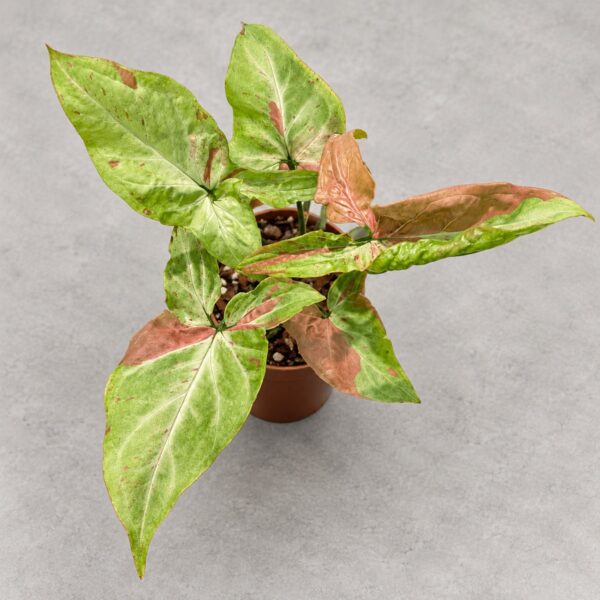
Syngonium podophyllum 'Milk Confetti'
Syngonium podophyllum 'Milk Confetti'
HK$168.00
In stock · store pickup
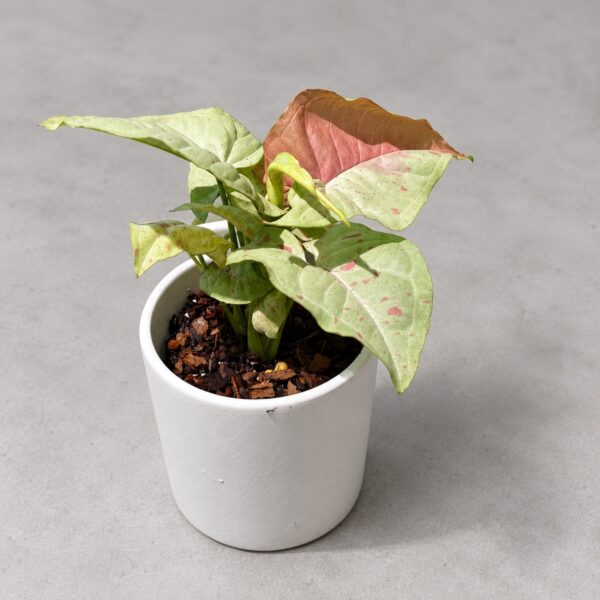
View plantSyngonium podophyllum 'Pink Salmon'
Syngonium podophyllum 'Pink Salmon'
HK$380.00
In stock · store pickup
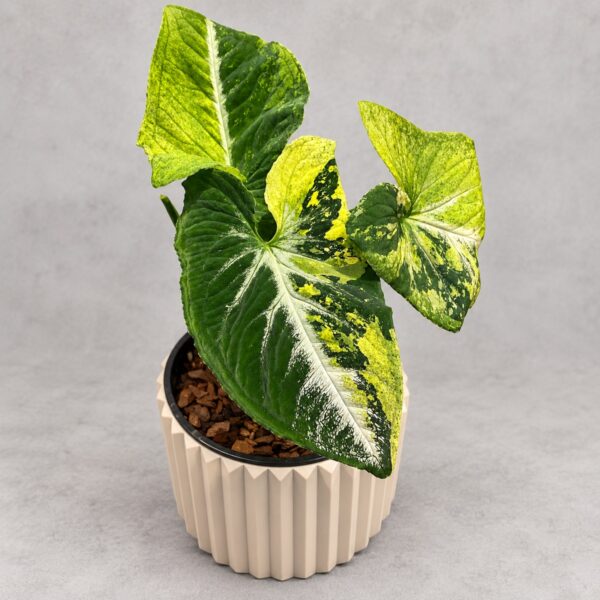
View plantSyngonium Wendlandii 'Scrambled Eggs'
Original price was: HK$1,280.00.HK$280.00Current price is: HK$280.00.
In stock · store pickup
View plantSyngonium podophyllum 'Panda'
Syngonium podophyllum 'Panda'
Original price was: HK$880.00.HK$180.00Current price is: HK$180.00.
In stock · store pickup
View plant
FREE PLANT ADVICE
Send us a photo before you change anything
WhatsApp a photo of the plant and your window light. Our Causeway Bay team will suggest care steps or plants that suit your space.
STORE · CAUSEWAY BAY
4/F, 39 Yiu Wa Street, Causeway Bay
Daily 12:30–8:00pm · ~3 min walk from Times Square
Map & directionsPlant Care