
How to Care for Syngonium Pink Salmon in Hong Kong | Plantjai

Hong Kong care guide for Syngonium Pink Salmon.
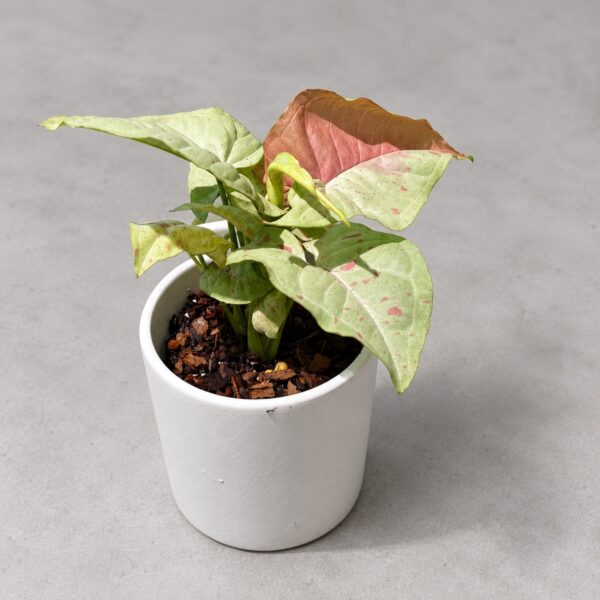
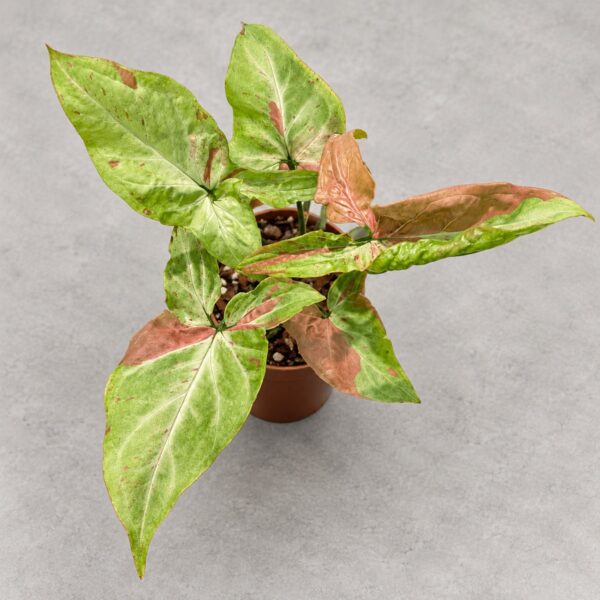
Soft salmon-orange new leaves as pretty as sliced sashimi, gradually mellowing into soft green with age — the girl-next-door of the indoor plant world.
Origin & characteristics
Pink Salmon Syngonium belongs to the family Araceae, genus Syngonium, native to the tropical rainforests of Central and South America. 'Pink Salmon' is one of the most popular pink-toned cultivars in the genus, distinguished by its charming salmon-orange to pink new leaves, which gradually fade to pale green as they mature while retaining a pink tint in the veins or leaf base.
Leaf shape changes with growth stage — young plants have heart- or arrowhead-shaped leaves, while mature plants develop three- or even five-lobed palmate leaves. It has a vining growth habit and can be trained to trail or climb a support. Growth is moderate to fast and highly adaptable, making it an excellent entry point for anyone wanting to start collecting pink-toned plants.
⚠️ Toxicity warning: Pink Salmon Syngonium contains calcium oxalate crystals and is a toxic plant. Ingestion may cause a burning sensation in the mouth, swelling, drooling, and vomiting, and in severe cases may affect swallowing and breathing. Skin contact with sap may cause an allergic reaction. Keep it somewhere out of reach of children and pets, and wear gloves when pruning or repotting.
Light
'Pink Salmon' needs bright indirect light to maintain its pretty pink colouring. Too little light causes the pink to fade, and leaves lean toward solid green.
- Ideal placement: near an east- or north-facing window, or 1.5-2 metres from a south-/west-facing window filtered with a sheer curtain
- Signs of adequate light: vivid salmon-orange new leaves, with mature leaves retaining a pink base colour or pink veining
- Signs of insufficient light: leaves turn fully green, losing 'Pink Salmon's characteristic pink tone
- Avoid: intense direct sun, especially harsh midday summer sun, which will scorch the delicate leaves
- Tip: a moderate amount of light helps the pink pigment settle in, so a slightly brighter environment brings out richer colour
Watering
Follow the principle of "water thoroughly once the topsoil is dry."
- How to check: insert a finger 2-3 cm into the soil — water once it feels dry
- Growing season (spring to autumn): roughly every 5-7 days, keeping the soil lightly moist
- Dormant season (winter): roughly every 10-14 days, as the soil takes longer to dry out
- Method: water slowly around the rim until it drains from the base
- Tray runoff: must be emptied within half an hour to prevent root rot
- Water quality: room-temperature tap water is fine; sensitive plants can be switched to filtered water or water left standing overnight
Soil & pot
Soil recipe
Needs a loose, breathable, well-draining, slightly acidic soil:
- Quality indoor plant potting soil 45%
- Perlite 25%
- Coco coir or peat soil 20%
- Pine bark chips or coconut husk 10%
Pot choice
- Red terracotta pot: most recommended, good breathability and drainage, reduces root rot risk
- Plastic pot: lightweight but retains more moisture — watch watering closely
- Cement pot: stylish appearance, moderate breathability
- Drainage holes: essential — a decorative pot without holes should only be used as an outer cachepot
- Repotting timing: repot once a year in spring, once roots emerge from the drainage holes or growth noticeably slows
Temperature & humidity
Temperature
- Ideal growing temperature: 20-28°C
- Minimum tolerance: 15°C
- Note: not cold-hardy — keep away from AC vents and drafty windows in winter
- Temperature effects: warm conditions bring out more vivid pink in new leaves; cold conditions dull the colour
Humidity
- Ideal humidity: 50-70%
- Humidifying methods:
- Mist the surrounding air (avoid spraying directly onto the leaves)
- Pebble tray method
- Group with other plants
- A small humidifier for air-conditioned rooms
- Hong Kong climate: usually sufficient in spring/summer; watch for dryness in autumn/winter with heating running
Common problems
| Issue | Likely cause | What to do |
|---|---|---|
| New leaves not pink, leaning green | Insufficient light | Move to a brighter spot, transition gradually |
| Leaf tips scorching yellow | Air too dry or improper watering | Increase humidity, check watering frequency |
| Leaves yellowing and dropping | Overwatering / root rot | Stop watering, check roots, trim rot and repot in fresh soil |
| Growth slow | Temperature too low or insufficient nutrients | Ensure temperature stays above 20°C, apply diluted liquid fertiliser during the growing season |
| Leaves drooping | Lack of water or root issues | Check soil moisture — if the soil is wet, this may indicate root rot |
| Elongated internodes | Severely insufficient light | Move to a brighter position immediately |
How to explain to customers
"This Pink Salmon Syngonium is a hugely popular pink-toned plant! Look at the new leaves — a salmon-orange colour, just like a slice of salmon sashimi, and as it grows it fades to soft green while keeping pink veining. It's genuinely easy to care for — no need to water every day, just water once the soil has dried out. Keep it somewhere indoors with good light, and the pink colour will stay looking its best. Remember it's toxic, so keep it up high if you have kids or pets. This one is a real showstopper for photos, and makes a lovely gift or treat for yourself!"
Fun facts
- 'Pink Salmon's pink colouring doesn't come from anthocyanins — it's the result of a special shift in the ratio of carotenoids to chlorophyll, so the colour actually changes with light intensity and temperature: more vivid pink under ample light, more green in dim conditions
- Syngonium species undergo "metamorphosis" as they mature — starting as a simple heart shape when young, and gradually developing lobed leaves as the plant climbs higher and light conditions change, a process that can take several years
- Pink new leaves are relatively rare in the plant world, which has made 'Pink Salmon' a social media favourite and a popular entry point for collectors of pink-toned plants
Keywords
Syngonium podophyllum Pink Salmon, Pink Salmon Syngonium, pink Syngonium, salmon-orange foliage plant, Araceae, indoor pink plant, girly aesthetic plant, pink-toned potted plant, easy-care indoor plant, Hong Kong plant shop, partial-shade plant, climbing plant, trailing plant, Plantjai
參考資料(想知來源可展開)
References
- Missouri Botanical Garden — Plant Finder: Syngonium podophyllum, https://www.missouribotanicalgarden.org/PlantFinder/PlantFinderDetails.aspx
- ASPCA — Toxic and Non-Toxic Plant List, https://www.aspca.org/pet-care/animal-poison-control/toxic-and-non-toxic-plants
⚠️ Contains calcium oxalate crystals; toxic to humans and pets if ingested. Keep out of reach of children and pets.
Plantjai · Causeway Bay collector indoor plants · WhatsApp +852 66807550
For Hong Kong homes and offices. Stock and pricing follow the product page.
IN STORE NOW
Plants for this guide
Related plants in stock now — live prices, delivery or Causeway Bay pickup.
Syngonium Wendlandii 'Scrambled Eggs'
Original price was: HK$1,280.00.HK$280.00Current price is: HK$280.00.
In stock · store pickup
View plantSyngonium podophyllum 'Milk Confetti'
Syngonium podophyllum 'Milk Confetti'
HK$168.00
In stock · store pickup
View plantSyngonium podophyllum 'Pink Salmon'
Syngonium podophyllum 'Pink Salmon'
HK$380.00
In stock · store pickup
View plantSyngonium podophyllum 'Batik'
Syngonium podophyllum 'Batik'
HK$138.00
In stock · store pickup
View plant
FREE PLANT ADVICE
Send us a photo before you change anything
WhatsApp a photo of the plant and your window light. Our Causeway Bay team will suggest care steps or plants that suit your space.
STORE · CAUSEWAY BAY
4/F, 39 Yiu Wa Street, Causeway Bay
Daily 12:30–8:00pm · ~3 min walk from Times Square
Map & directionsPlant Care