
How to Care for Syngonium Panda in Hong Kong | Plantjai

Plantjai 植仔 · Care Encyclopedia
Syngonium Panda
Syngonium podophyllum 'Panda' 貓熊合果芋
Hong Kong care guide — useful before you buy and after it arrives.
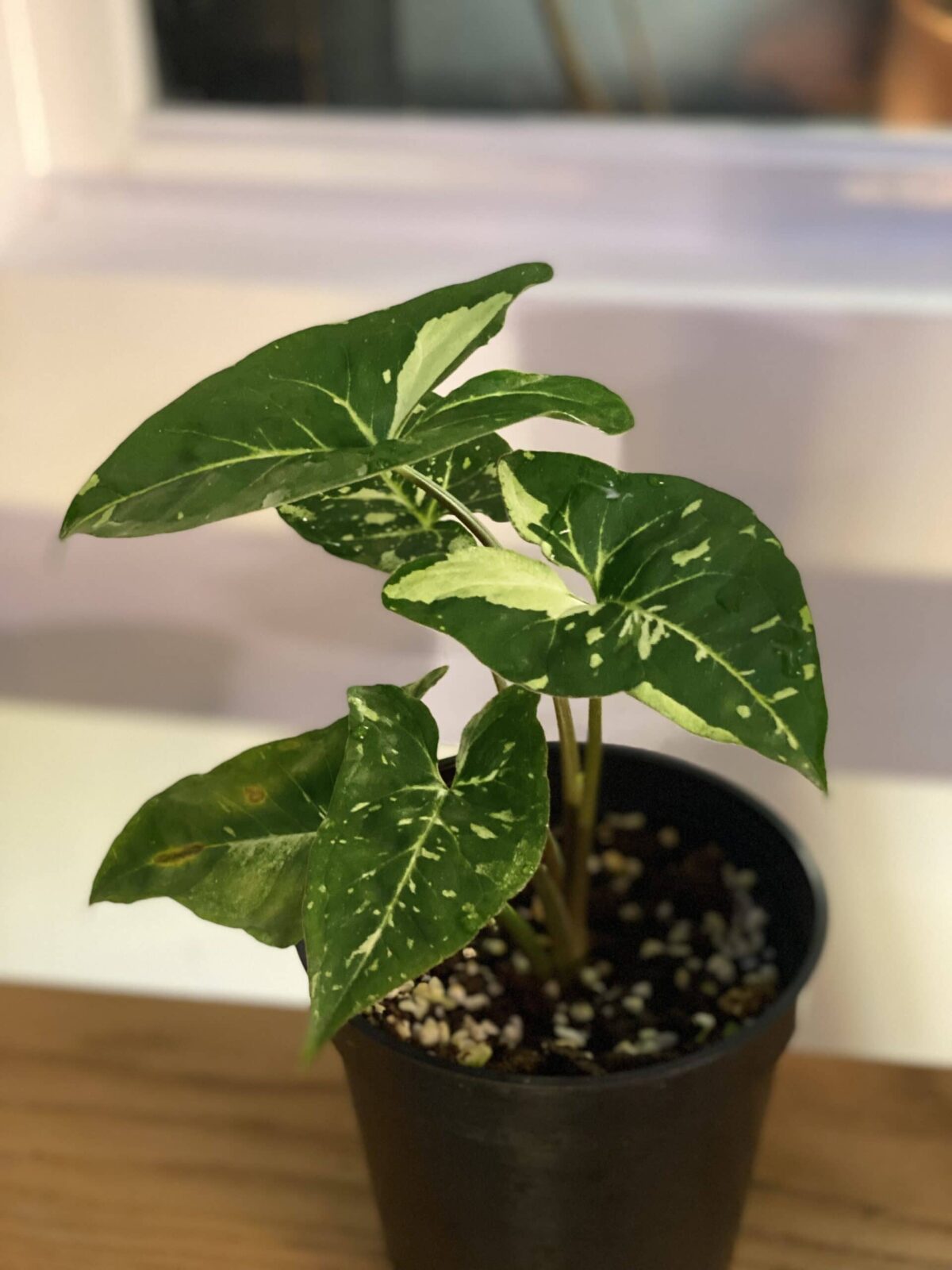
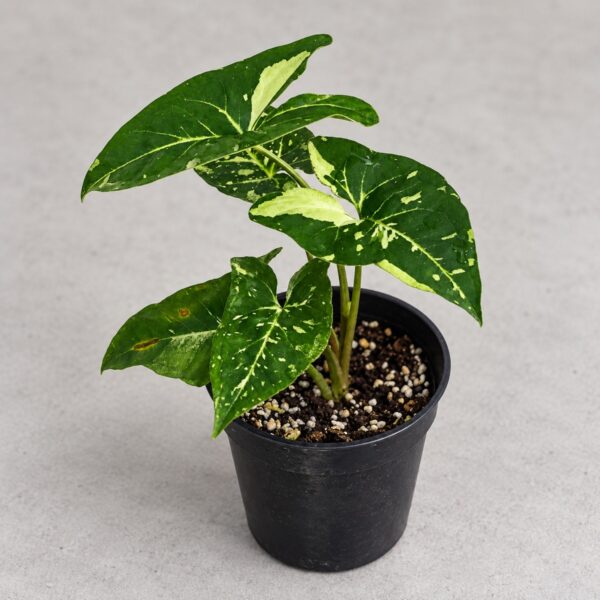
Shop this plantDeep ink-green interwoven with pure white in a classic panda-like colour scheme — every leaf looks like a hand-painted ink-wash artwork straight from nature.
Origin & characteristics
Panda Syngonium belongs to the family Araceae, genus Syngonium, native to the tropical rainforest regions of Central and South America. 'Panda' is a horticultural cultivar that has drawn considerable attention in recent years, known for its dramatic contrast between deep ink-green and pure white patches, with the striking black-and-white look evoking the beloved giant panda — hence the name.
Leaves have a thick, glossy texture, with young leaves heart-shaped to arrowhead-shaped, developing into three-lobed palmate leaves at maturity. 'Panda's white variegation appears as larger blocks (sectoral variegation), creating a very eye-catching visual effect. Growth is moderate, somewhat slower than fully green cultivars (since the white portions have weaker photosynthetic capacity), though it remains an easy plant to care for indoors.
⚠️ Toxicity warning: Panda Syngonium contains calcium oxalate crystals and is a toxic plant. Ingestion may cause mouth pain, drooling, and vomiting, and in severe cases throat swelling that affects breathing. Sap contact may cause redness or itching in sensitive skin. Please keep it somewhere children and pets cannot reach, wear gloves when handling, and wash your hands thoroughly afterward.
Light
'Panda' needs bright indirect light to maintain the crispness of its white variegation and support healthy growth. Because the white variegated portions lack chlorophyll, they need ample but gentle light to compensate for reduced photosynthetic capacity.
- Ideal placement: within 1 metre of an east- or north-facing window; a south-/west-facing window needs a sheer curtain or blinds to filter the light
- Recommended daily light exposure: at least 6 hours of bright indirect light
- Signs of adequate light: white areas stay clean and bright, green areas are deep and glossy, and new leaves unfurl healthily
- Signs of insufficient light: white areas turn green or dull, losing crisp contrast, and growth becomes sparse
- Note: the white variegated areas are especially prone to sunburn, and once yellow-brown scorch spots appear, they can't recover — direct, intense light must be avoided at all costs
Watering
Follow a strategy of "better dry than wet," since variegated cultivars tend to have relatively weaker root systems and are more prone to root rot from excess moisture.
- How to check: insert a finger 3-4 cm into the soil and feel for dryness before watering; alternatively, watch for the soil surface lightening in colour and feeling dry to the touch
- Spring/summer: roughly every 7-10 days, adjusted for ambient humidity
- Autumn/winter: roughly every 10-14 days, extending the interval further in cold weather
- Method: water slowly in a circular motion until it drips from the drainage holes
- Tray runoff: empty within half an hour — never let it sit in standing water for long
- Tip: variegated cultivars can run slightly drier than usual — plants with more white tissue transpire less and need somewhat less water overall
Soil & pot
Soil recipe
Needs an extremely loose, breathable, fast-draining medium to protect the relatively delicate root system of variegated cultivars:
- Peat soil or coco coir 35%
- Perlite or vermiculite 30% (for improved aeration)
- Pine bark or coconut husk chips 20%
- Pumice or coarse sand 10%
- Activated charcoal 5%
Goal: water should drain away quickly after watering rather than sitting in the soil for long.
Pot choice
- Red terracotta pot: most recommended, offering the best drainage and breathability, helping the soil dry out faster
- Cement pot: decent breathability with an attractive finish, though heavier
- Plastic pot: requires stricter watering control, better suited to more experienced growers
- Size recommendation: one plant per pot of roughly the same diameter is enough — an oversized pot causes the soil to stay wet for too long
- Drainage holes: essential, and a layer of gravel or LECA at the base further improves drainage
Temperature & humidity
Temperature
- Ideal growing temperature: 20-27°C
- Minimum tolerance: 15°C, with prolonged exposure below this stalling growth
- Ideal day-night difference: no more than 5-8°C is most favourable for growth
- Winter protection: avoid placing near drafty windows or AC vents, and reduce watering frequency in cold weather
Humidity
- Ideal range: 55-75%
- Misting tip: occasionally mist the surrounding air, but avoid spraying directly onto the leaves (especially the white areas, which are prone to water spots or brown patches from pooled moisture)
- Humidifying tricks: place the pot on a pebble tray, or group it close to other plants to create a humid microclimate
- Air-conditioned rooms: running the AC for extended periods dries the air — a humidifier or regular misting is recommended
Common problems
| Issue | Likely cause | What to do |
|---|---|---|
| White areas turning green | Insufficient light, plant "self-rescuing" by producing more chlorophyll | Move to a brighter spot, transition gradually |
| Brown spots on white areas | Sunburn or moisture pooling | Avoid direct light, keep water away from the leaf surface when misting |
| Whole leaves yellowing and dropping | Overwatering / root rot | Stop watering, check roots, repot with fresh, dry soil |
| Extremely slow growth, small leaves | Roots have filled the pot / insufficient nutrients | Repot in spring, apply diluted liquid fertiliser every two weeks during the growing season |
| New leaves entirely green, no white variegation | Genetic instability or environmental stress | Ensure ample indirect light; if several consecutive leaves come in fully green, consider pruning to stimulate new shoots |
| Curling, dry leaf edges | Air too dry or water too hard | Increase ambient humidity, switch to filtered water or rainwater |
How to explain to customers
"This Panda Syngonium is genuinely eye-catching — look at the deep green interwoven with white, just like a panda's black-and-white colouring, a real standout wherever you place it in your home. But it's a variegated cultivar, and the white parts can't make their own food through photosynthesis, so it needs somewhere with plenty of light — just not direct sun. For watering, better a little dry than too wet — water only once the soil has dried out. Remember it's toxic — if you have kids or pets at home, keep it up high where they can't reach it."
Fun facts
- 'Panda's white variegation is a type of "sectoral variegation" — large areas that completely lack chlorophyll, distinct from fine speckled variegation, and creating a much bolder, more dramatic visual effect
- Syngonium species show a trait called "juvenility" — even a mature plant, if it's cut back hard or placed under environmental stress, may put out new leaves that revert to the simple juvenile arrowhead shape rather than the mature lobed form
- In Syngonium's native range, indigenous peoples have traditionally used its tough aerial roots and vines to weave simple tools, though today it's grown almost exclusively as an ornamental plant worldwide
Keywords
Syngonium podophyllum Panda, Panda Syngonium, white variegated Syngonium, sectoral variegation, Araceae, indoor foliage plant, black-and-white colour scheme, variegated plant care, Hong Kong indoor potted plant, partial-shade plant, intermediate-level plant, Instagram plant, Plantjai
參考資料(想知來源可展開)
References
- Missouri Botanical Garden — Plant Finder: Syngonium podophyllum, https://www.missouribotanicalgarden.org/PlantFinder/PlantFinderDetails.aspx
- ASPCA — Toxic and Non-Toxic Plant List, https://www.aspca.org/pet-care/animal-poison-control/toxic-and-non-toxic-plants
⚠️ Contains calcium oxalate crystals; toxic to humans and pets if ingested. Keep out of reach of children and pets.
Plantjai · Causeway Bay collector indoor plants · WhatsApp +852 66807550
Plantjai shop · In stock online
Syngonium podophyllum 'Panda'
Syngonium podophyllum 'Panda'
Original price was: HK$880.00.HK$180.00Current price is: HK$180.00.
Hong Kong delivery · Causeway Bay pickup
For Hong Kong homes and offices. Stock and pricing follow the product page.
IN STORE NOW
Plants for this guide
Related plants in stock now — live prices, delivery or Causeway Bay pickup.
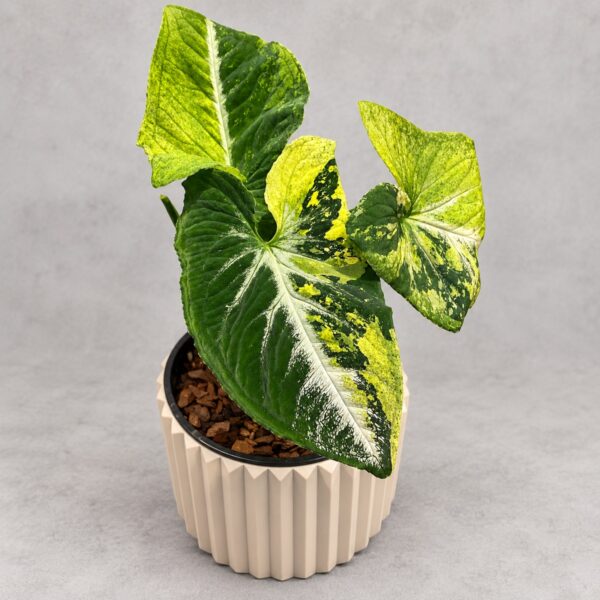
Syngonium Wendlandii 'Scrambled Eggs'
Original price was: HK$1,280.00.HK$280.00Current price is: HK$280.00.
In stock · store pickup
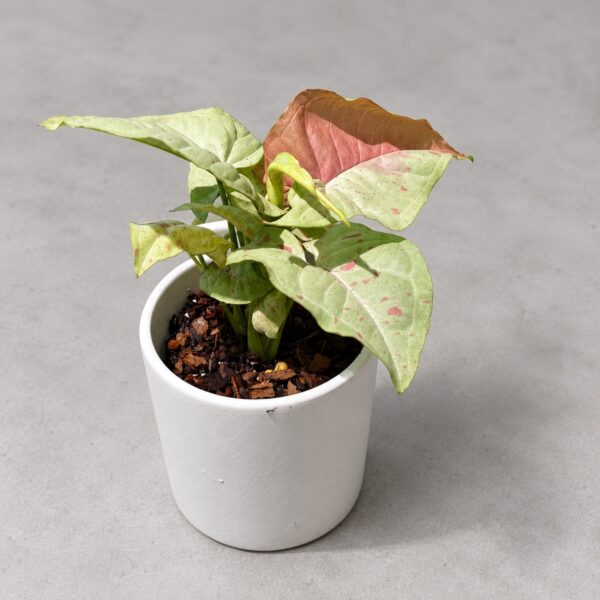
View plantSyngonium podophyllum 'Milk Confetti'
Syngonium podophyllum 'Milk Confetti'
HK$168.00
In stock · store pickup
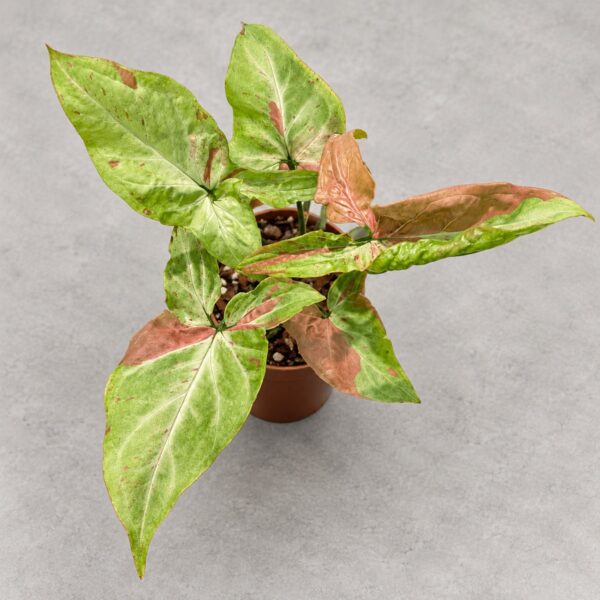
View plantSyngonium podophyllum 'Pink Salmon'
Syngonium podophyllum 'Pink Salmon'
HK$380.00
In stock · store pickup
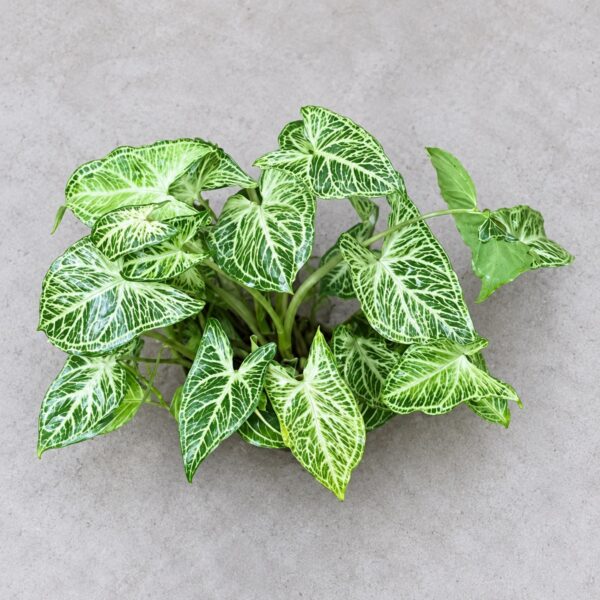
View plantSyngonium podophyllum 'Batik'
Syngonium podophyllum 'Batik'
HK$138.00
In stock · store pickup
View plant
FREE PLANT ADVICE
Send us a photo before you change anything
WhatsApp a photo of the plant and your window light. Our Causeway Bay team will suggest care steps or plants that suit your space.
STORE · CAUSEWAY BAY
4/F, 39 Yiu Wa Street, Causeway Bay
Daily 12:30–8:00pm · ~3 min walk from Times Square
Map & directionsPlant Care