
How to Care for Syngonium Mojito in Hong Kong | Plantjai

Plantjai 植仔 · Care Encyclopedia
Syngonium Mojito
Syngonium podophyllum 'Mojito'
Hong Kong care guide — useful before you buy and after it arrives.
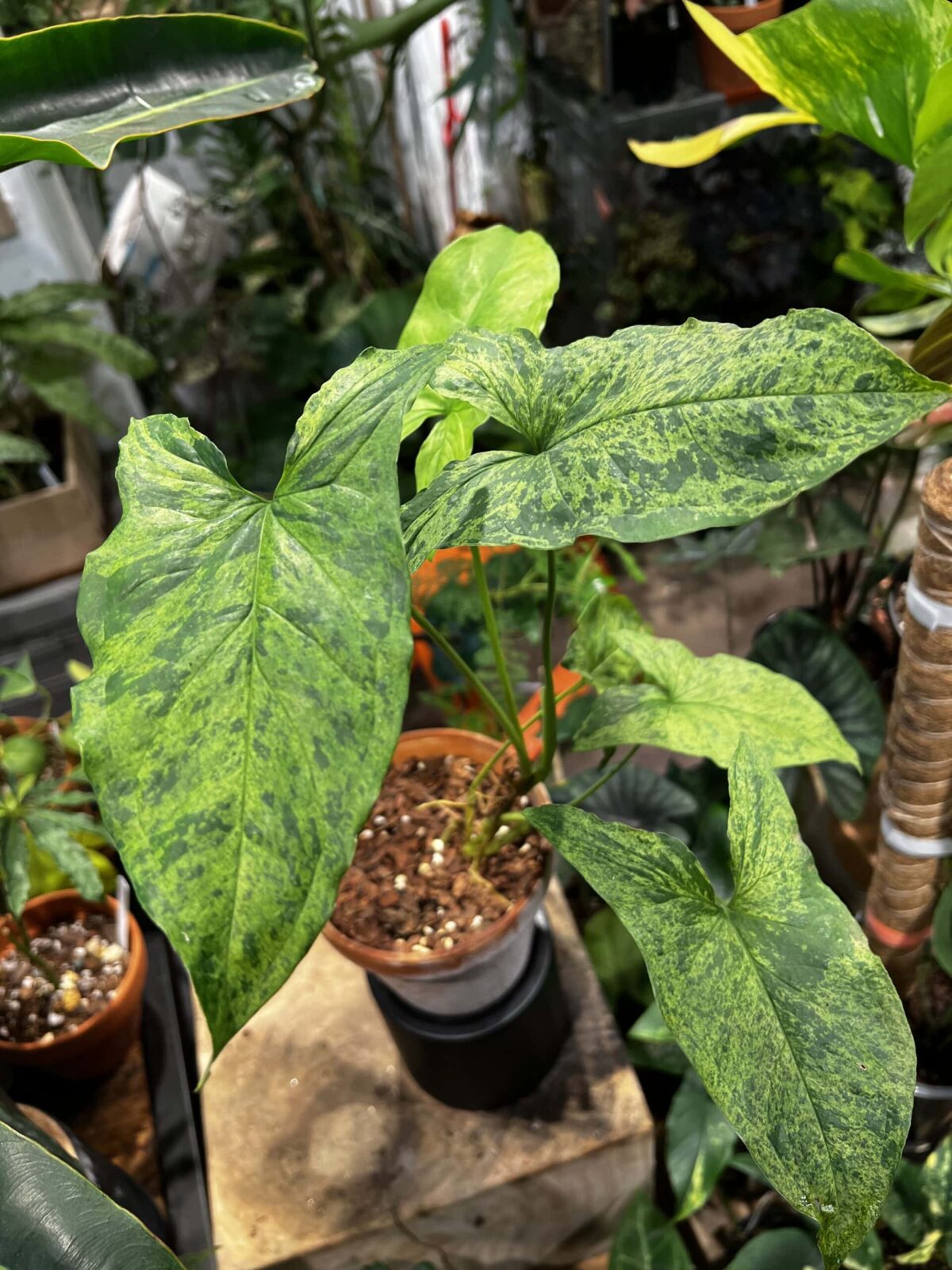
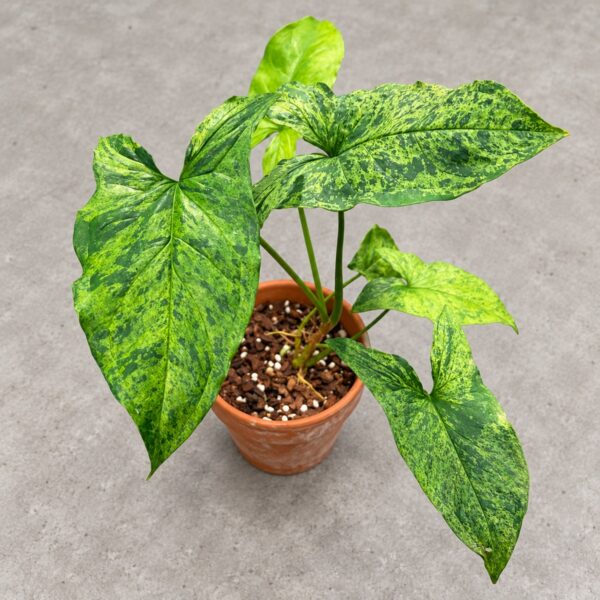
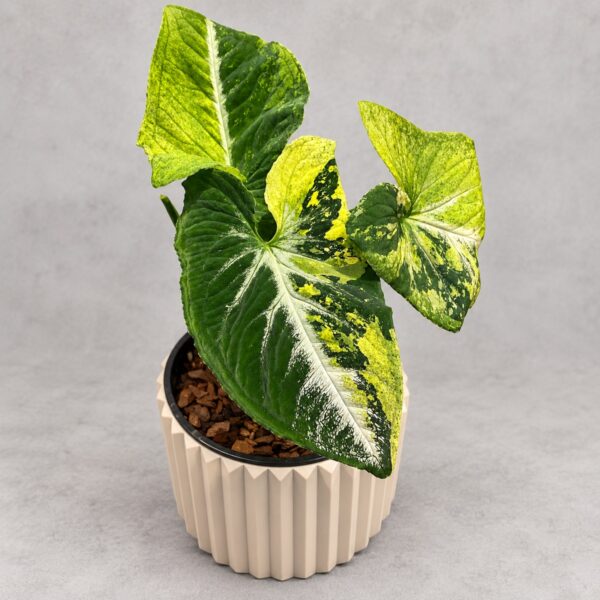
Shop this plantDeep and light green mottled together like a freshly mixed Mojito cocktail — a distinctive, characterful green-toned variegated cultivar.
Origin & characteristics
Mojito Syngonium also belongs to the family Araceae, genus Syngonium, native to the tropical rainforest regions of Central and South America. 'Mojito' is a popular horticultural cultivar of Syngonium podophyllum, and its defining feature is the irregular mottling of deep green and mint green (sometimes near yellow-green) across the leaves, creating a distinctive camouflage-like effect.
Young leaves have the classic arrowhead shape, gradually developing into three-lobed palmate leaves as the plant matures, with mature leaves reaching 20-30 cm across. 'Mojito's variegation is relatively stable, unlike some variegated cultivars that revert easily, making it a favourite among both collectors and beginners.
⚠️ Toxicity warning: Mojito Syngonium contains calcium oxalate crystals and is a toxic plant. Ingestion may cause a stinging, painful sensation in the mouth and throat with swelling, and in severe cases may cause breathing difficulty. Sap contact with skin may cause itching or redness. Keep away from children, cats, dogs, and other pets, and wear gloves when pruning or repotting.
Light
'Mojito' needs medium to bright indirect light to show off its best variegation. Too little light reduces the contrast in the mottling, making it look flat and dull overall.
- Ideal placement: within 1 metre of an east- or north-facing window, or a south-/west-facing window filtered with a sheer curtain
- Signs of adequate light: strong contrast between the deep and light green tones, quick new leaf unfurling, upright petioles
- Signs of insufficient light: leaves become more uniformly deep green, losing Mojito's characteristic mottled beauty, and internodes elongate
- Avoid: more than 2 hours of harsh midday direct sun, which scorches the paler areas and causes brown spots
Watering
Follow the principle of "water once the topsoil is dry." Syngonium species prefer being slightly too dry over prolonged waterlogging.
- Growing season (spring to autumn): check roughly every 6-8 days — water once the top 2-3 cm of soil is dry
- Dormant season (winter): roughly every 10-14 days, giving the soil enough time to dry out fully
- Watering technique: water slowly in a circular motion, allowing it to soak in evenly until water runs from the drainage holes
- Tray runoff: empty within half an hour to avoid the roots sitting in water for too long
- Checking dryness: insert a finger into the soil, or lift the pot to feel if it's lighter, both indicate it's time to water
Soil & pot
Recommended soil recipe
Mojito Syngonium likes a loose, breathable, well-draining, slightly acidic soil (pH 5.5-6.5):
- Peat soil or coco coir 40%
- Perlite 25%
- Pine bark or coconut husk chips 20%
- Perlite or pumice 10%
- A small amount of activated charcoal 5%
Pot choice
- Terracotta pot (first choice): good drainage and breathability, effectively reduces the risk of root rot
- Glazed/ceramic pot: attractive but less breathable, requiring stricter watering control
- Moss pole: if you want to grow large, mature lobed leaves, pair it with a moss pole so the aerial roots can attach and draw in more water and nutrients
- Drainage holes: absolutely essential — a decorative pot without drainage holes should only be used as an outer cachepot
Temperature & humidity
Temperature
- Ideal range: 20-28°C, growing most vigorously in warm conditions
- Minimum tolerance: 15°C — growth stalls below this, and leaves may yellow
- Note: avoid placing it directly in the path of an AC vent — large temperature swings can cause stress responses in the leaves
- Winter protection: if room temperature stays below 18°C for a prolonged period, reduce watering and avoid repotting
Humidity
- Ideal humidity: 50-70%
- Hong Kong environment: usually sufficient in spring and summer; can become drier in autumn/winter with heating or prolonged AC use
- Humidifying methods:
- Mist the foliage (do this in the morning so it can dry off by evening)
- Use the pebble tray method
- Group with other plants to create a humid microclimate
- A small humidifier (useful in air-conditioned rooms)
Common problems
| Issue | Likely cause | What to do |
|---|---|---|
| Mottling fading, becoming almost fully green | Light too dim | Move to a brighter spot, transition gradually to avoid shocking it with sudden strong light |
| Brown scorch spots on lighter areas | Sunburn | Move to indirect light — damaged leaves won't recover |
| Whole leaves yellowing and turning mushy | Overwatering / root rot | Stop watering, check roots, trim rot and repot in fresh soil |
| Leaves drooping and slightly wrinkled | Lack of water | Water thoroughly promptly — it usually recovers within a few hours |
| Small new leaves, slow growth | Insufficient nutrients / roots have filled the pot | Apply diluted liquid fertiliser during the growing season, or move to a larger pot |
| Fine webbing on leaf undersides | Spider mites (common in dry conditions) | Increase humidity, wipe leaf undersides with a damp cloth, use neem oil if severe |
How to explain to customers
"This cultivar is called Mojito, named after the cocktail! Look at the leaves — deep and light green mottled together, just like the mint leaves and lime in a Mojito, genuinely distinctive. Like other Syngonium, it's an easy-care choice — no need to water every day, just water once it's dried out. Keep it somewhere indoors with good light, and the mottling will stay looking its best. Just remember it's toxic, so if you have kids or pets at home, keep it up high where they can't reach it."
Fun facts
- 'Mojito's paler mottling isn't simply a lack of chlorophyll — it's a visual effect created by varying chlorophyll density, which is why it grows faster and hardier than fully white variegated cultivars, since the lighter areas can still photosynthesise
- Syngonium species climb tree trunks in the wild and have well-developed aerial roots, so pairing it with a moss pole indoors can encourage larger, more spectacular mature lobed leaves
- 'Mojito's mottling pattern changes with the seasons — the contrast is most pronounced during the peak spring/summer growing season, and may temporarily deepen toward green during the dimmer light of autumn/winter
Keywords
Syngonium podophyllum Mojito, Mojito Syngonium, Syngonium, green variegation, camouflage mottling, Araceae, indoor climbing plant, easy-care potted plant, Hong Kong indoor plant, green home decor, partial-shade plant, beginner plant recommendation, Plantjai
參考資料(想知來源可展開)
References
- Missouri Botanical Garden — Plant Finder: Syngonium podophyllum, https://www.missouribotanicalgarden.org/PlantFinder/PlantFinderDetails.aspx
- ASPCA — Toxic and Non-Toxic Plant List, https://www.aspca.org/pet-care/animal-poison-control/toxic-and-non-toxic-plants
⚠️ Contains calcium oxalate crystals; toxic to humans and pets if ingested. Keep out of reach of children and pets.
Plantjai · Causeway Bay collector indoor plants · WhatsApp +852 66807550
Plantjai shop · In stock online
Syngonium podophyllum 'Mojito'
Syngonium podophyllum 'Mojito'
Original price was: HK$468.00.HK$180.00Current price is: HK$180.00.
Hong Kong delivery · Causeway Bay pickup
For Hong Kong homes and offices. Stock and pricing follow the product page.
IN STORE NOW
Plants for this guide
Related plants in stock now — live prices, delivery or Causeway Bay pickup.
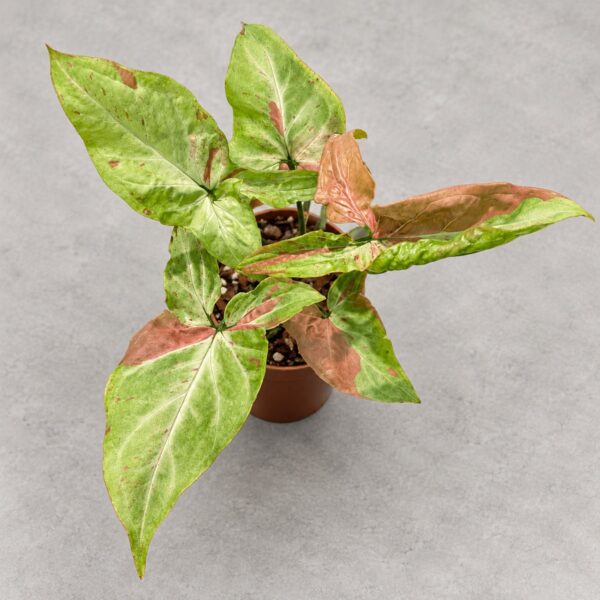
Syngonium Wendlandii 'Scrambled Eggs'
Original price was: HK$1,280.00.HK$280.00Current price is: HK$280.00.
In stock · store pickup
View plantSyngonium podophyllum 'Milk Confetti'
Syngonium podophyllum 'Milk Confetti'
HK$168.00
In stock · store pickup
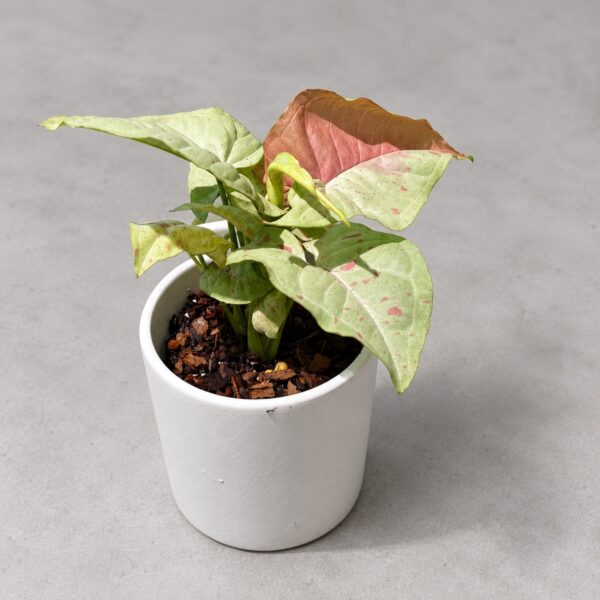
View plantSyngonium podophyllum 'Pink Salmon'
Syngonium podophyllum 'Pink Salmon'
HK$380.00
In stock · store pickup
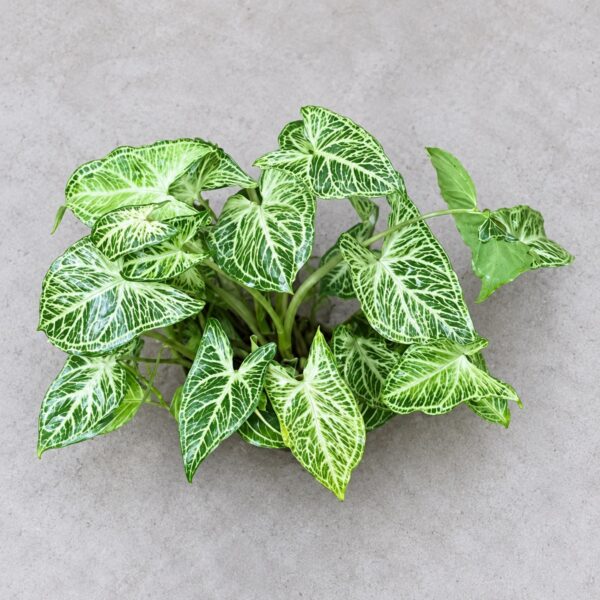
View plantSyngonium podophyllum 'Batik'
Syngonium podophyllum 'Batik'
HK$138.00
In stock · store pickup
View plant
FREE PLANT ADVICE
Send us a photo before you change anything
WhatsApp a photo of the plant and your window light. Our Causeway Bay team will suggest care steps or plants that suit your space.
STORE · CAUSEWAY BAY
4/F, 39 Yiu Wa Street, Causeway Bay
Daily 12:30–8:00pm · ~3 min walk from Times Square
Map & directionsPlant Care