

How to Care for Syngonium Batik in Hong Kong | Plantjai

Plantjai 植仔 · Care Encyclopedia
Syngonium Batik
Syngonium podophyllum 'Batik' 巴迪布紋合果芋
Hong Kong care guide — useful before you buy and after it arrives.
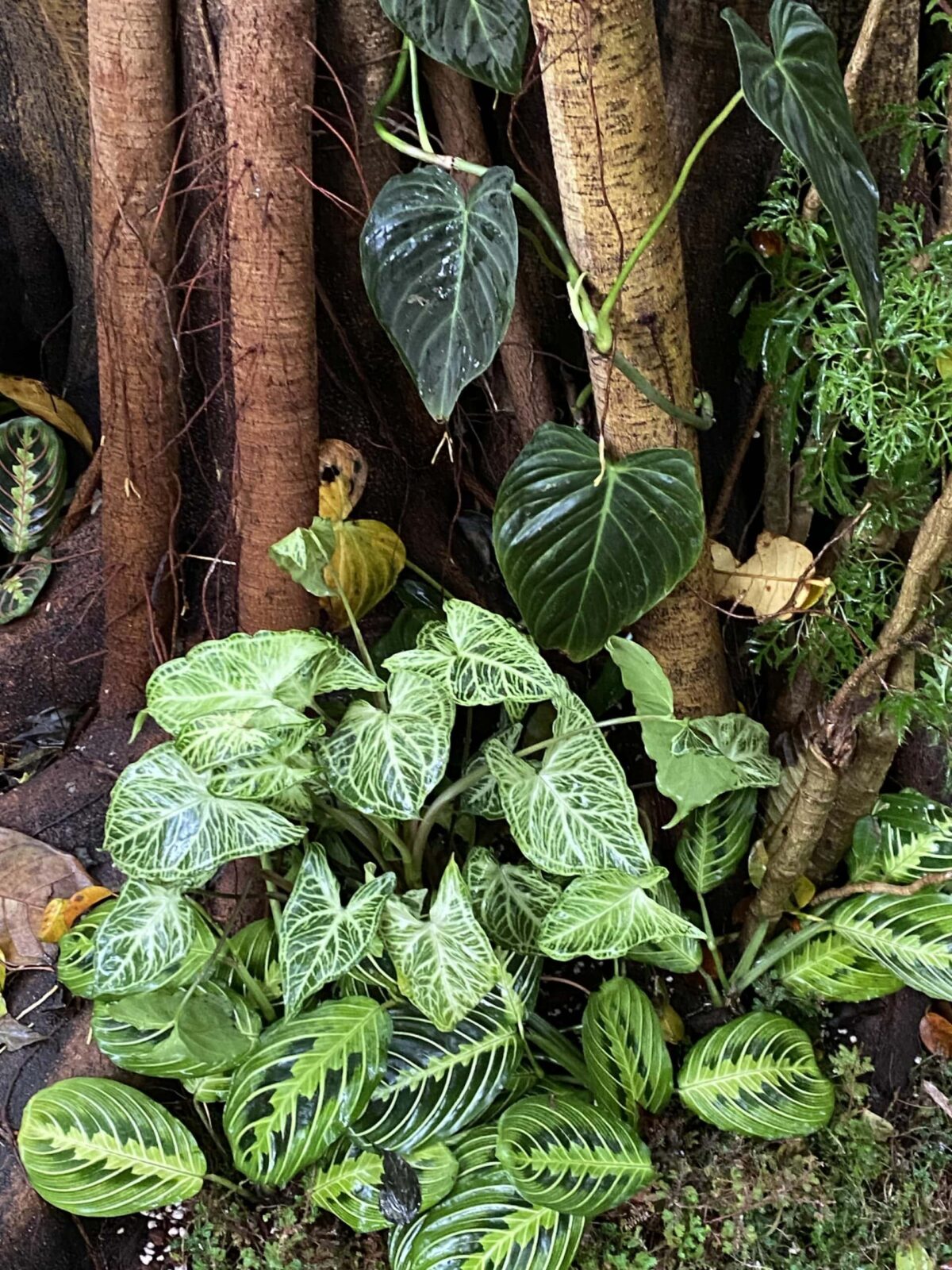
Shop this plantFine, intricate leaf veining that looks just like handmade Indonesian batik fabric — every leaf a unique work of art, understated yet luxurious.
⚠️ Toxicity warning: an Araceae family plant, containing calcium oxalate crystals throughout; ingestion causes mouth pain, a burning sensation, and swelling, and sap contact may irritate skin. Keep out of reach of children and pets, and wear gloves when pruning or repotting.
Origin & characteristics
'Batik' belongs to the family Araceae, genus Syngonium. The species Syngonium podophyllum is native across a huge range, from southern Mexico all the way to Brazil, making it the most common and adaptable species in the genus — nearly all Syngonium horticultural cultivars are derived from it.
'Batik' is a highly distinctive variegated cultivar, named after the traditional Indonesian wax-resist dyeing technique "Batik." Its leaves are covered in fine, intricate light green to milky-white veining that weaves into a net-like pattern over a deep green background, resembling a carefully crafted piece of batik fabric from a distance. Its patterning is notably stable and doesn't easily fade with changes in environment, which makes it especially popular among variegated plant lovers. Leaves have the typical Syngonium arrowhead shape, developing three- or five-lobed forms at maturity.
Growth is moderate, and the plant can climb or trail, highly adaptable — a classic choice among indoor foliage plants.
Light
- Mainly bright indirect light: an east- or north-facing windowsill, or 1.5-2 metres from a south-facing window
- Maintaining the pattern: ample indirect light helps keep the batik pattern crisp and detailed; prolonged insufficient light will blur the pattern and dull the leaf colour
- Avoid intense direct light: overly strong sun will scorch the paler patterned areas, causing brown scorch spots
- Grow light recommendation: indoors, a full-spectrum grow light can be used for 6-8 hours daily, positioned 30-50 cm from the plant
Watering
- Check before you water: water once the top 2 cm of soil feels dry
- Water thoroughly, then drain: each time you water, water until it drains from the base, and empty tray runoff after 15 minutes
- Water quality: filtered water, water left standing, or rainwater is recommended, reducing mineral buildup on the leaf surface that can affect its appearance
- Seasonal adjustment:
- Spring/summer growing season: keep the soil lightly moist, roughly once a week
- Autumn/winter: extend to every 10-14 days, letting the soil dry out a bit more
- Leaf cleaning: occasionally wipe the leaves with a damp cloth to remove dust and keep the pattern looking its sharpest
Soil & pot
- Soil recipe:
- Peat soil 35% + coco coir 25% + perlite 25% + bark chips 10% + charcoal 5%
- The focus is on drainage and breathability while remaining rich in organic matter
- pH: slightly acidic (pH 5.5-6.5) is ideal
- Pot choice:
- Plastic or terracotta pots both work, with drainage holes essential
- A small to medium pot (12-20 cm diameter) is sufficient
- A moss pole can be added for climbing support, or grow it as a trailing plant for added visual layering
Temperature & humidity
| Factor | Ideal range | Notes |
|---|---|---|
| Temperature | 18-27°C | No lower than 12°C; sustained cold causes leaf drop |
| Humidity | 50-75% | Moderate humidity is sufficient — no need for extremely high levels |
- Everyday care: typical Hong Kong indoor humidity is usually sufficient; mist occasionally when running AC or heating
- Seasonal changes: reduce watering frequency as autumn/winter temperatures drop, and avoid placing near AC vents or drafty windows
- Ideal placement: living rooms, studies, offices, and other softly-lit spaces all suit it well
Feeding
- Growing season (April-October): apply a diluted balanced liquid fertiliser (half strength) every 2-3 weeks, or a slow-release fertiliser once a month
- Off-season (November-March): an extremely diluted liquid fertiliser once a month, or stop feeding entirely
- Trace elements: occasionally supplement with an iron/magnesium foliar feed to help keep the pattern contrast crisp
- Remember: over-fertilising fades the pattern on new leaves — a "weak fertiliser, frequently applied" approach works best
Pruning and propagation
- Regular pruning: remove old, yellowing leaves to keep the plant looking tidy
- Shaping: pruning the growing tip encourages side-branching, creating a fuller plant
- Propagation by cuttings:
- Take a stem section with 2-3 leaves, keeping 1-2 aerial root nodes
- Insert into moist sphagnum moss, keeping humidity high (a clear bag helps)
- Roots typically form within 2-4 weeks, with a fairly high success rate
- Water propagation: stem sections with aerial roots can be rooted directly in water, then transferred to soil once rooted
Common problems
| Symptom | Likely cause | What to do |
|---|---|---|
| Batik pattern fading | Insufficient light or overfeeding | Move to a better-lit spot, reduce fertiliser concentration |
| New leaves plain green, no pattern | Severely insufficient light or genetic reversion | Increase light; persistent plain green may indicate reversion |
| Leaves turning yellow and mushy | Overwatering / root rot | Stop watering, check roots, trim rot and repot in fresh soil |
| Leaf tips drying and browning | Air too dry or fertiliser burn | Increase surrounding humidity, dilute fertiliser |
| Elongated stems, sparse leaves | Insufficient light | Move to a brighter spot or add a grow light |
| Scale insects/spider mites | Poor airflow or air too dry | Improve airflow, increase humidity, treat with appropriate methods |
How to explain to customers
"'Batik' is a genuinely textured plant — look at the fine veining on its leaves, as intricate as handmade Indonesian batik fabric, with no two leaves alike. It belongs to the Syngonium podophyllum family, so it's hardy and easy to care for, great for beginners. Keep it somewhere in the living room or study with soft light — no need for direct sun. Water using the 'check before you water' method, letting the topsoil dry out a little before watering. Most importantly, keep it away from children and pets, since it's toxic. If you want the pattern to really pop, wipe the leaves occasionally with a damp cloth — it removes dust and makes the pattern even crisper!"
Fun facts
- The art of Batik: Batik is a treasured traditional Indonesian craft, using melted wax to draw patterns on fabric before dyeing, creating intricate wax-resist designs. In 2016, Indonesian Batik was inscribed on UNESCO's Representative List of the Intangible Cultural Heritage of Humanity.
- How the pattern forms: 'Batik's leaf pattern arises from uneven chlorophyll distribution within the leaf tissue, with the paler areas containing less chlorophyll. This kind of variation is botanically known as a "chimera," resulting from differences in gene expression at the cellular level.
- The most popular Syngonium species: Syngonium podophyllum is the most widely grown Syngonium in the world, having given rise to over 30 horticultural cultivars with endlessly varied colours and patterns — a genuine chameleon family among indoor foliage plants.
Keywords
Syngonium Batik, Syngonium podophyllum, Batik, Syngonium, Araceae, batik pattern, variegated foliage, net-like veining, indoor foliage plant, indirect light, easy-care plant, beginner-friendly, toxic plant
參考資料(想知來源可展開)
References
- Missouri Botanical Garden — Plant Finder: Syngonium podophyllum, https://www.missouribotanicalgarden.org/PlantFinder/PlantFinderDetails.aspx
- ASPCA — Toxic and Non-Toxic Plant List, https://www.aspca.org/pet-care/animal-poison-control/toxic-and-non-toxic-plants
⚠️ Contains calcium oxalate crystals; toxic to humans and pets if ingested. Keep out of reach of children and pets.
Plantjai · Causeway Bay collector indoor plants · WhatsApp +852 66807550

Plantjai shop · In stock online
Syngonium podophyllum 'Batik'
Syngonium podophyllum 'Batik'
HK$138.00
Hong Kong delivery · Causeway Bay pickup
For Hong Kong homes and offices. Stock and pricing follow the product page.
IN STORE NOW
Plants for this guide
Related plants in stock now — live prices, delivery or Causeway Bay pickup.
Syngonium podophyllum 'Milk Confetti'
Syngonium podophyllum 'Milk Confetti'
HK$168.00
In stock · store pickup
View plantSyngonium podophyllum 'Pink Salmon'
Syngonium podophyllum 'Pink Salmon'
HK$380.00
In stock · store pickup
View plantSyngonium podophyllum 'Infrared'
Syngonium podophyllum 'Infrared'
HK$138.00
In stock · store pickup
View plant


FREE PLANT ADVICE
Send us a photo before you change anything
WhatsApp a photo of the plant and your window light. Our Causeway Bay team will suggest care steps or plants that suit your space.
STORE · CAUSEWAY BAY
4/F, 39 Yiu Wa Street, Causeway Bay
Daily 12:30–8:00pm · ~3 min walk from Times Square
Map & directionsPlant Care


