
How to Care for Schismatoglottis Wallichii in Hong Kong | Plantjai

Hong Kong care guide for Schismatoglottis Wallichii.
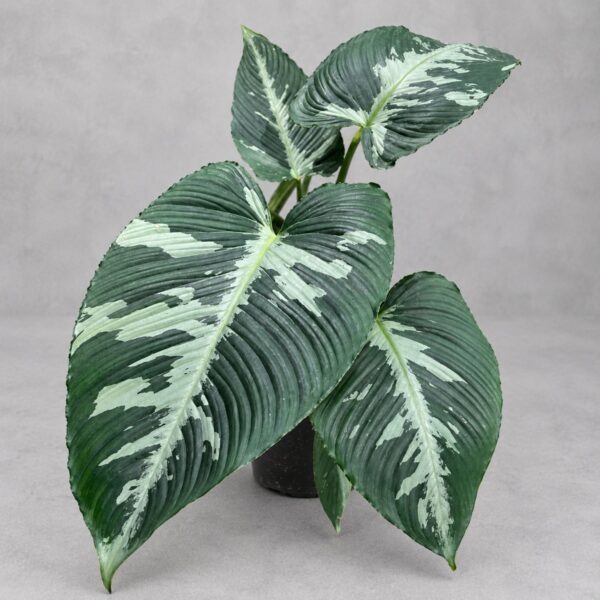
Silvery lightning-bolt patterns streak across a deep green backdrop, each leaf its own abstract work of natural art — an instant style upgrade for any indoor space.
Commonly known in the trade as "Electric Schismatoglottis"; the exact variety and botanical name are still pending further confirmation in the literature, with current trade names based mainly on leaf characteristics.
Origin & characteristics
The electric schismatoglottis is native to the tropical rainforests of Southeast Asia, mainly distributed across the Malay Peninsula, Borneo, Sumatra, and southern Thailand. It belongs to the family Araceae, genus Schismatoglottis, and is a close relative of the camo schismatoglottis but grows larger, reaching 30-50 cm tall at maturity. Its most distinctive feature is the silvery-white to pale green striping running along the main and side veins of its leaves, which resembles lightning striking across a night sky — hence its trade name "Electric."
The leaf texture has a slight leathery feel, long-oval to lance-shaped, with a fairly long petiole and a sheathed base. The plant grows upright in clusters, sending up new shoots from an underground rhizome that gradually form a tight colony. In its native habitat, it grows along streambanks and in damp forest understory, requiring fairly high humidity.
Light
- Bright indirect light is best: place near a window filtered with a sheer curtain, or 1-2 metres from a south-facing window
- Avoid direct sun: prolonged direct exposure fades the silver striping and causes scorched leaf edges
- Shade tolerance: it can maintain growth in soft indoor light, though the silver striping will dull and new leaves will space out further
- Recommendation: an east- or north-facing windowsill is the best spot; for a south-facing window, use a sheer curtain or frosted film to filter the light
Watering
- Keep the soil lightly moist: this species genuinely prefers moisture — water once the topsoil is about 1 cm dry, but ensure good drainage
- Bottom-soak method: occasionally soak the pot base for 10-15 minutes to help the roots absorb water evenly, then drain thoroughly before returning it to its saucer
- Water quality: filtered water, water left standing, or rainwater is recommended — chlorine and fluoride accumulation from tap water over time can affect leaf colour
- Winter adjustment: when temperatures drop below 18°C, extend the watering interval, waiting until the top 2-3 cm of soil is dry before watering
Soil & pot
- Ideal substrate:
- Peat soil 35% + perlite 25% + coco coir 20% + bark chips 15% + charcoal 5%
- The key is balancing moisture retention with breathability, mimicking the moist-but-not-waterlogged conditions of its native streamside habitat
- pH: 5.5-6.5 (slightly acidic) is ideal
- Pot recommendations:
- A breathable terracotta or plastic pot both work, with drainage holes essential
- Repot every 1-2 years as the plant grows, increasing pot diameter by 3-5 cm each time
- Roots are relatively shallow, so an overly deep pot isn't necessary
Temperature & humidity
| Factor | Ideal range | Notes |
|---|---|---|
| Temperature | 22-29°C | No lower than 16°C; sustained cold causes leaves to yellow and drop |
| Humidity | 65-85% | High humidity is the key to keeping the silver striping vivid |
- Signs of insufficient humidity: leaf tips browning, new leaves shrivelling, silver striping becoming blurred
- Humidifying tips:
- Place on a pebble tray
- Group with other high-humidity plants to create a microclimate
- Run a small humidifier in air-conditioned rooms
- Ventilation: high humidity must be paired with good airflow to avoid prolonged moisture sitting on the leaf surface
Feeding
- Peak growing season (April-September): apply a diluted balanced liquid fertiliser (half strength) every 2 weeks, or a slow-release fertiliser once a month
- Shoulder season (March, October): a liquid fertiliser once a month is sufficient
- Dormant season (November-February): stop feeding, or apply an extremely diluted liquid fertiliser once every 2 months
- Foliar feeding: a monthly foliar spray containing trace elements helps keep the silver striping more prominent
- Note: always ensure the soil is moist before fertilising — fertilising dry soil can burn the roots
Common problems
| Symptom | Likely cause | What to do |
|---|---|---|
| Silver striping fading | Insufficient light or humidity too low | Move to a better-lit spot, increase surrounding humidity |
| Leaf tips drying and browning | Air too dry or poor water quality | Increase humidity, switch to filtered water or rainwater |
| Whole leaves turning yellow | Overwatering / root rot | Stop watering, check roots, repot and trim roots if needed |
| Small new leaves, slow growth | Insufficient nutrients or roots have filled the pot | Consider repotting or increasing feeding frequency |
| Leaves drooping, lacking vigour | Temperature too low or lack of water | Check soil moisture, move away from cold drafts |
| Spider mites | Air too dry | Increase humidity, spray leaf undersides with soapy water, use a miticide if severe |
How to explain to customers
"What really catches the eye about electric schismatoglottis is the silver lightning-bolt striping across its leaves — striking from a distance, and even more beautiful up close! It's a bit larger than camo schismatoglottis, and looks great on a coffee table or side cabinet in the living room. Three things to remember when caring for it: first, don't let it get direct sun — indirect light is enough; second, it likes moisture, so mist it occasionally to keep the striping looking sharp; third, keep it warm in winter — it won't do well below 16°C. Watering doesn't need to be too frequent — just check before you water, keeping the soil lightly moist is fine."
Fun facts
- Who was Wallich? The species epithet "wallichii" in the botanical name honours Danish botanist Nathaniel Wallich (1786-1854), who worked for many years at the Calcutta Botanical Garden in India and laid important groundwork for the taxonomy of Southeast Asian plants.
- The purpose of the lightning stripes: the silver striping on the leaf surface is actually an optical reflection effect caused by air-pocket-like structures within the leaf tissue — in the dim forest understory, this helps the leaf capture more of the limited available light, functioning like a natural reflector.
- A big Araceae family: the genus Schismatoglottis is closely related to other popular foliage favourites like Caladium, Philodendron, and Anthurium — no wonder their care requirements are broadly similar.
Keywords
Electric Schismatoglottis, Schismatoglottis wallichii, Araceae, silver lightning pattern, variegated foliage, rainforest plant, high humidity, indirect light, medium foliage plant, living room plant, botanical name pending confirmation, Plantjai
參考資料(想知來源可展開)
References
- Missouri Botanical Garden — Plant Finder: Schismatoglottis, https://www.missouribotanicalgarden.org/PlantFinder/PlantFinderDetails.aspx
- Royal Botanic Gardens, Kew — Plants of the World Online: genus Schismatoglottis, https://powo.science.kew.org/
Plantjai · Causeway Bay collector indoor plants · WhatsApp +852 66807550
For Hong Kong homes and offices. Stock and pricing follow the product page.
IN STORE NOW
Plants for this guide
Related plants in stock now — live prices, delivery or Causeway Bay pickup.
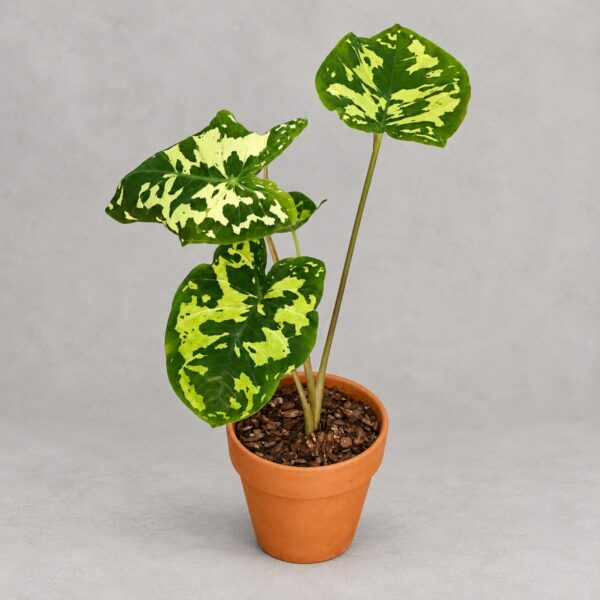
Caladium praetermissum 'Hilo Beauty'
Caladium praetermissum 'Hilo Beauty'
HK$188.00
In stock · store pickup
View plant
FREE PLANT ADVICE
Send us a photo before you change anything
WhatsApp a photo of the plant and your window light. Our Causeway Bay team will suggest care steps or plants that suit your space.
STORE · CAUSEWAY BAY
4/F, 39 Yiu Wa Street, Causeway Bay
Daily 12:30–8:00pm · ~3 min walk from Times Square
Map & directionsPlant Care