

How to Care for Rhaphidophora Tetrasperma Variegated in Hong Kong | Plantjai

Plantjai 植仔 · Care Encyclopedia
Rhaphidophora Tetrasperma Variegated
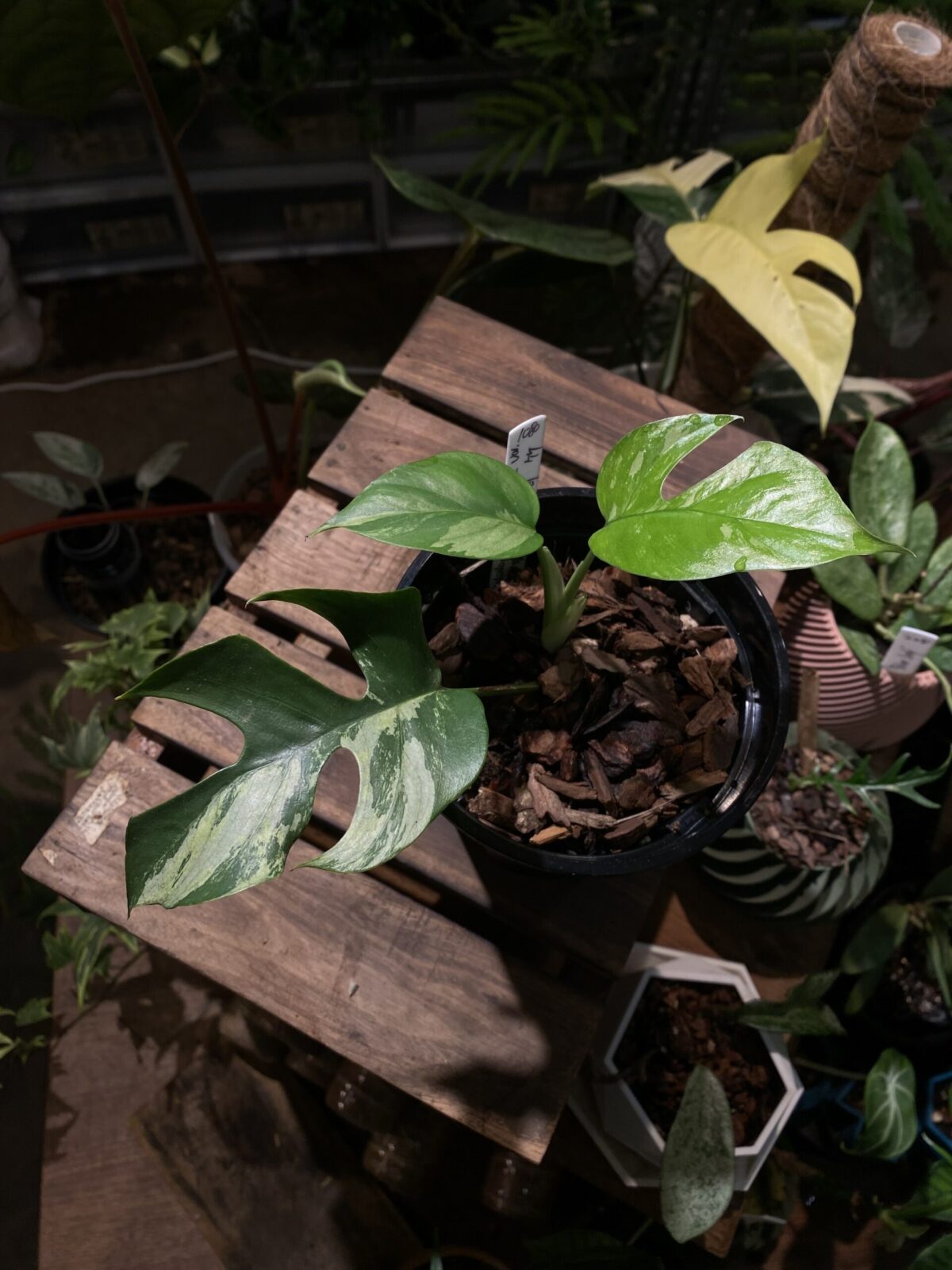
Rhaphidophora tetrasperma variegated 姬龜背錦
Hong Kong care guide — useful before you buy and after it arrives.
Shop this plantThe Mini Monstera meets dreamy variegation — small, delicate leaves woven with green and white carry an ethereal charm, making this one of the most sought-after variegated climbers in recent years.
Origin & characteristics
The species Rhaphidophora tetrasperma is native to the tropical rainforests of the Malay Peninsula and southern Thailand, a perennial evergreen climbing vine in the family Araceae, genus Rhaphidophora. Because its leaves resemble a scaled-down Monstera (Monstera deliciosa), it's nicknamed the "Mini Monstera." 'Variegata' is its variegated form, displaying random patches or streaks of cream, milky-white, or even golden-yellow across the leaves — no two leaves alike. Leaves are long-oval, developing natural splits at maturity, with a thick, glossy, leathery texture. As a climbing plant, it can attach to trees and grow several metres tall in the wild; indoors, a moss pole or trellis helps guide its climbing growth.
⚠️ Toxicity warning: Araceae family plants contain calcium oxalate crystals; ingestion causes mouth pain, drooling, and stomach upset. Sap contact may irritate skin — wash your hands thoroughly after pruning, and keep away from children and pets.
Light
- Bright indirect light: an east- or north-facing window is ideal, and it can tolerate soft morning sun
- Protecting the variegation: white variegated areas lack chlorophyll and scorch easily under direct sun
- Consequences of insufficient light: new leaves will come in fully green, losing variegation, and splits will become less frequent
- Artificial light: a full-spectrum grow light for 8-10 hours daily works well indoors
Watering
- Water once the topsoil is slightly dry: insert a finger 2 cm into the soil — water once it feels slightly dry
- Spring/summer growing season: roughly every 5-7 days, keeping the soil lightly moist
- Autumn/winter, reduce: roughly every 7-10 days, reducing further when temperatures drop below 18°C
- Water quality: filtered water or tap water left standing overnight is recommended
- Method: water thoroughly around the rim, avoiding standing water at the base
- As a tropical plant, it prefers a consistently moist but never waterlogged environment
Soil & pot
- Soil: a loose, breathable Araceae-specific mix, recommended ratio peat soil : perlite : coco coir : bark = 4:2:2:2
- pH: slightly acidic to neutral (pH 5.5-6.5)
- Pot: a well-draining terracotta pot with drainage holes is essential
- Climbing support: a moss pole or coco coir totem is recommended — a moist pole helps aerial roots attach more securely and grow larger leaves
- Repotting: once a year in spring, moving up one pot size
Temperature & humidity
- Ideal temperature: 20-28°C — as a tropical plant, it prefers warmth
- Minimum temperature: no lower than 15°C — cold causes stalled growth and yellowing leaves
- Ideal humidity: 60-80%, with growth strongest at high humidity
- Humidifying methods:
- A humidifier (most recommended)
- A pebble tray
- Daily misting of the surrounding air
- Grouping with other plants
- Ventilation: high-humidity environments must be paired with good airflow
Common problems
| Issue | Cause | What to do |
|---|---|---|
| Variegation fading to green, new leaves plain | Insufficient light | Move to a brighter position, but avoid intense direct sun |
| White variegated areas turning brown | Sunburn or humidity too low | Provide some shading, increase ambient humidity |
| Small new leaves with no splits | Insufficient light or no climbing support | Increase light, add a moss pole for support |
| Leaf tips browning | Humidity too low or water too hard | Switch to filtered water, increase humidity |
| Leaves yellowing and dropping | Overwatering / root rot, or low temperature | Check soil drainage, avoid cold environments |
| Aerial roots drying out | Humidity too low | Increase surrounding humidity, keep the moss pole moist |
How to explain to customers
"Variegated Mini Monstera has been hugely in demand in recent years — think of it as the variegated version of the Mini Monstera, with green-and-white leaves where no two are alike, genuinely collectible. It likes bright indirect light and higher humidity, so a spot in the living room with natural light suits it well. To get it growing its best, give it a moss pole to climb — the leaves get bigger and more beautiful as it goes up. The variegated parts are a bit more delicate, so avoid direct sun — indirect light is enough. Remember it's toxic, so keep it somewhere pets can't reach for safety."
Fun facts
The genus name Rhaphidophora comes from the ancient Greek "rhaphis" (needle) and "phoreus" (bearer), describing needle-like structures found in its fruit. "Tetrasperma" means "four-seeded." Mini Monstera suddenly went viral on social media around 2019, becoming a sought-after obsession among plant lovers in Europe and North America, at one point creating a genuine shortage where "a single leaf was hard to find" — and the variegated version commanded prices several to over ten times higher than the plain green form. Every variegated leaf has a unique pattern, almost like a piece of natural art, which is why some plant collectors specifically seek out different variegation patterns. In its natural habitat, Mini Monstera climbs up large trees, and the closer it gets to the canopy, the larger its leaves and the more pronounced its splits — a phenomenon known as "light-driven leaf change."
Keywords
Variegated Mini Monstera, Rhaphidophora tetrasperma Variegata, Araceae, climbing plant, variegated plant, mini split-leaf philodendron, foliage plant, moss pole, indirect light, high humidity, aerial roots, tropical plant, toxic plant, collector's plant, viral plant
參考資料(想知來源可展開)
References
- Missouri Botanical Garden — Plant Finder: Rhaphidophora tetrasperma, https://www.missouribotanicalgarden.org/PlantFinder/PlantFinderDetails.aspx
- ASPCA — Toxic and Non-Toxic Plant List, https://www.aspca.org/pet-care/animal-poison-control/toxic-and-non-toxic-plants
⚠️ Contains calcium oxalate crystals; toxic to humans and pets if ingested. Keep out of reach of children and pets.
Plantjai · Causeway Bay collector indoor plants · WhatsApp +852 66807550

Plantjai shop · In stock online
Rhaphidophora tetrasperma variegated
Original price was: HK$1,080.00.HK$880.00Current price is: HK$880.00.
Hong Kong delivery · Causeway Bay pickup
For Hong Kong homes and offices. Stock and pricing follow the product page.
IN STORE NOW
Plants for this guide
Related plants in stock now — live prices, delivery or Causeway Bay pickup.
Rhaphidophora tetrasperma variegated
Original price was: HK$1,080.00.HK$880.00Current price is: HK$880.00.
In stock · store pickup
View plant


FREE PLANT ADVICE
Send us a photo before you change anything
WhatsApp a photo of the plant and your window light. Our Causeway Bay team will suggest care steps or plants that suit your space.
STORE · CAUSEWAY BAY
4/F, 39 Yiu Wa Street, Causeway Bay
Daily 12:30–8:00pm · ~3 min walk from Times Square
Map & directionsPlant Care


