

How to Care for Rhaphidophora Tetrasperma in Hong Kong | Plantjai

Plantjai 植仔 · Care Encyclopedia
Rhaphidophora Tetrasperma
Hong Kong care guide — useful before you buy and after it arrives.
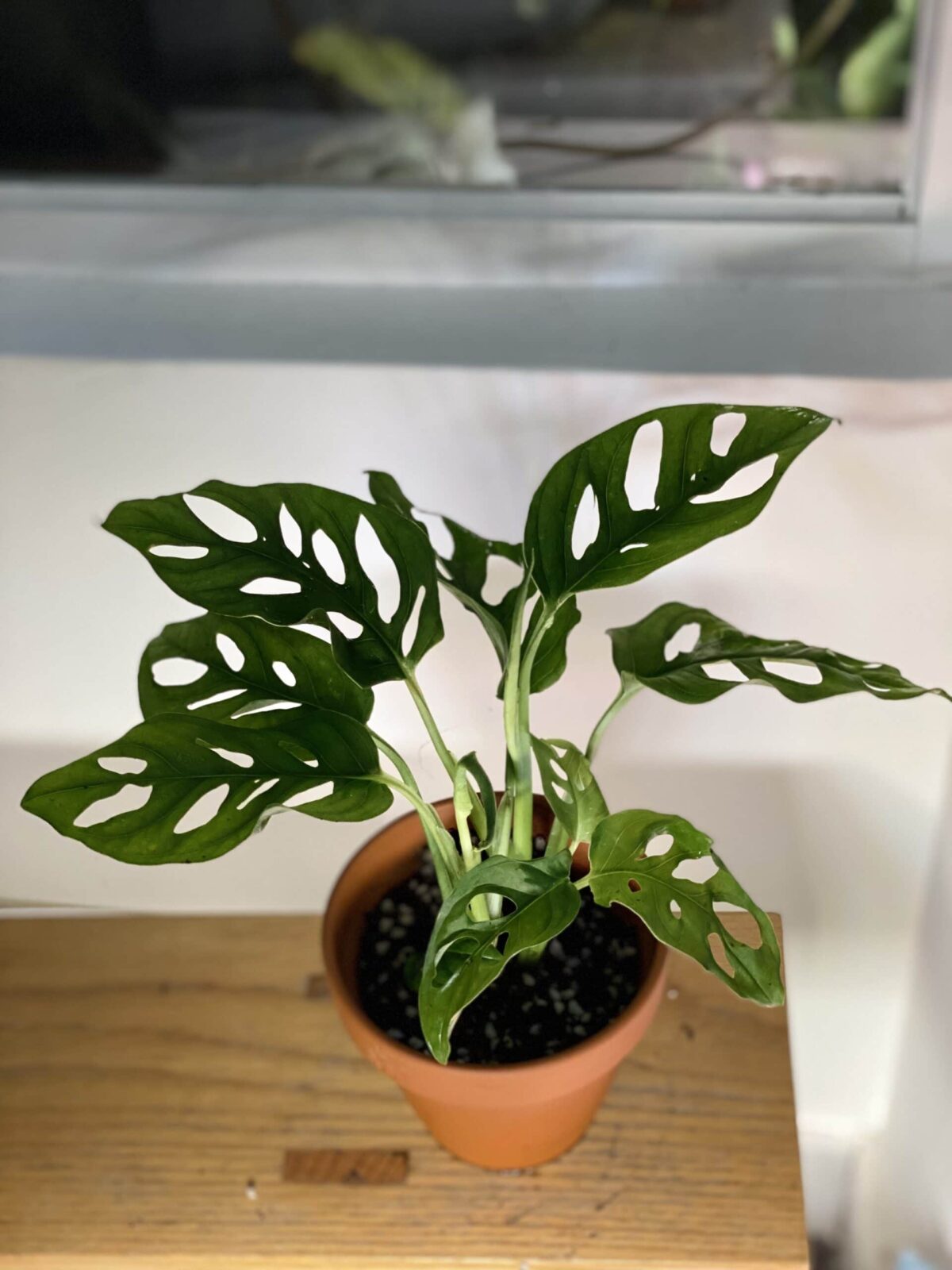
Shop this plantA miniature version of the Swiss Cheese Plant, with delicate, naturally split leaves, fast growth, and easy care — an excellent entry point into climbing foliage plants.
Origin & characteristics
Native to the tropical rainforests of the Malay Peninsula and southern Thailand, this is a perennial evergreen climbing vine in the family Araceae, genus Rhaphidophora. Because its leaves resemble those of the true Monstera (Monstera deliciosa) but on a much smaller scale, it's affectionately nicknamed the "Mini Monstera," "Ginny Philodendron," or simply "mini split-leaf." Leaves are long-oval, deep green, and glossy, with a leathery texture; mature leaves develop natural splits, giving them an elegant form. The stem is slender and jointed, producing aerial roots at each node; in the wild it climbs trees to grow upward, and indoors can reach 2-3 metres. It grows considerably faster than true Monstera, making it a hugely popular entry-level foliage plant.
⚠️ Toxicity warning: Araceae family plants contain calcium oxalate crystals; ingestion causes mouth pain, drooling, and stomach upset. Keep away from children and pets, and wash your hands thoroughly after contact with sap.
Light
- Bright indirect light: an east- or north-facing window, or 1-2 metres from a south-facing window, is ideal
- Tolerates partial shade: can survive in slightly lower light, though leaves will be smaller with fewer splits
- Avoid intense direct sun: midday sun scorches the leaves, especially in summer
- Light indicator: if new leaves consistently come in small without splits, it's a sign the plant needs more light
Watering
- Water once the topsoil is slightly dry: insert a finger 2-3 cm into the soil — water once it feels slightly dry
- Spring/summer growing season: roughly every 5-7 days, keeping the soil lightly moist
- Autumn/winter, reduce: roughly every 7-10 days, reducing further in cold weather
- Water quality: regular tap water is fine, though letting it stand overnight or using filtered water is better
- Drainage matters: water thoroughly, but never let water pool at the base of the pot
- Aerial roots can be misted regularly to keep them moist, which helps them absorb nutrients
Soil & pot
- Soil: a loose, breathable mix, recommended ratio peat soil : perlite : coco coir = 4:3:3
- pH: slightly acidic to neutral (pH 5.5-6.5)
- Pot: terracotta or plastic pots both work, with drainage holes essential
- Climbing support: a moss pole or coco coir totem is strongly recommended for the aerial roots to attach to — leaves grow noticeably larger and more attractive as a result
- Repotting: once a year in spring, moving up one pot size
- Propagation: cuttings with an aerial root root very easily in either water or soil
Temperature & humidity
- Ideal temperature: 18-28°C, growing most vigorously in warm conditions
- Minimum temperature: no lower than 12°C — cold stalls growth
- Humidity: 50-70% suits it well, in line with typical Hong Kong indoor humidity
- Humidifying methods: mist the leaves and surrounding air regularly, or place on a pebble tray
- Ventilation: maintain good air circulation to help prevent pests and disease
Common problems
| Issue | Cause | What to do |
|---|---|---|
| Small leaves, no splits | Insufficient light or no climbing support | Move to a brighter spot, add a moss pole |
| Leaf tips browning | Air too dry or water too hard | Switch to filtered water, increase surrounding humidity |
| Elongated internodes, sparse leaves | Severely insufficient light | Increase light immediately; leggy sections can be pruned and re-propagated |
| Leaves yellowing | Overwatering / root rot, or nitrogen deficiency | Check soil moisture, fertilise as needed |
| Leaf drop | Temperature too low or sudden environmental change | Keep the environment stable, avoid extreme temperature swings |
| Brown powdery residue on leaves | Scale insect infestation | Wipe with alcohol-soaked cotton or spray with neem oil |
How to explain to customers
"Mini Monstera is a hugely popular entry-level foliage plant — think of it as a scaled-down version of the classic split-leaf Monstera, with naturally splitting leaves and fast growth, quickly filling out a trellis or moss pole. It's genuinely simple to care for: place it somewhere with indirect light, and water once the topsoil is just slightly dry — it's very hard to kill. For an even better look, give it a moss pole to climb, and the leaves will get bigger and bigger as it grows up it. It's also really easy to propagate — just take a stem cutting and root it in water or soil, and you'll have a plant to share with friends. Just remember to keep it away from pets and children, since it's toxic if eaten."
Fun facts
Although Mini Monstera looks similar to true Monstera, it's actually a different genus entirely — it belongs to Rhaphidophora, not Monstera. Around 2019, it went viral on social media and was briefly traded at extraordinary prices, with single-leaf cuttings sometimes selling for hundreds of US dollars, earning it the nickname "the Bitcoin of the plant world." As propagation has scaled up, prices have become far more accessible. Its aerial roots are highly active and will keep extending in search of something to climb in high-humidity conditions — given enough humidity and climbing space, it can even reach a ceiling indoors! In its native Malaysian rainforest, it's a common understory vine, climbing along large trees up toward the canopy, with mature leaves reaching over 30 cm.
Keywords
Mini Monstera, Rhaphidophora tetrasperma, mini split-leaf philodendron, Araceae, climbing plant, foliage plant, aerial roots, moss pole, indirect light, easy-care plant, entry-level plant, fast-growing, easy propagation, toxic plant, stem cutting, rainforest plant
參考資料(想知來源可展開)
References
- Missouri Botanical Garden — Plant Finder: Rhaphidophora tetrasperma, https://www.missouribotanicalgarden.org/PlantFinder/PlantFinderDetails.aspx
- ASPCA — Toxic and Non-Toxic Plant List, https://www.aspca.org/pet-care/animal-poison-control/toxic-and-non-toxic-plants
⚠️ Contains calcium oxalate crystals; toxic to humans and pets if ingested. Keep out of reach of children and pets.
Plantjai · Causeway Bay collector indoor plants · WhatsApp +852 66807550

Plantjai shop · In stock online
Rhaphidophora tetrasperma
Rhaphidophora tetrasperma
HK$198.00
Hong Kong delivery · Causeway Bay pickup
For Hong Kong homes and offices. Stock and pricing follow the product page.
IN STORE NOW
Plants for this guide
Related plants in stock now — live prices, delivery or Causeway Bay pickup.
Rhaphidophora tetrasperma variegated
Original price was: HK$1,080.00.HK$880.00Current price is: HK$880.00.
In stock · store pickup
View plant


FREE PLANT ADVICE
Send us a photo before you change anything
WhatsApp a photo of the plant and your window light. Our Causeway Bay team will suggest care steps or plants that suit your space.
STORE · CAUSEWAY BAY
4/F, 39 Yiu Wa Street, Causeway Bay
Daily 12:30–8:00pm · ~3 min walk from Times Square
Map & directionsPlant Care


