
Soil Media Formulation Science: Crafting Custom “Nutrient Soil” for Different Plants

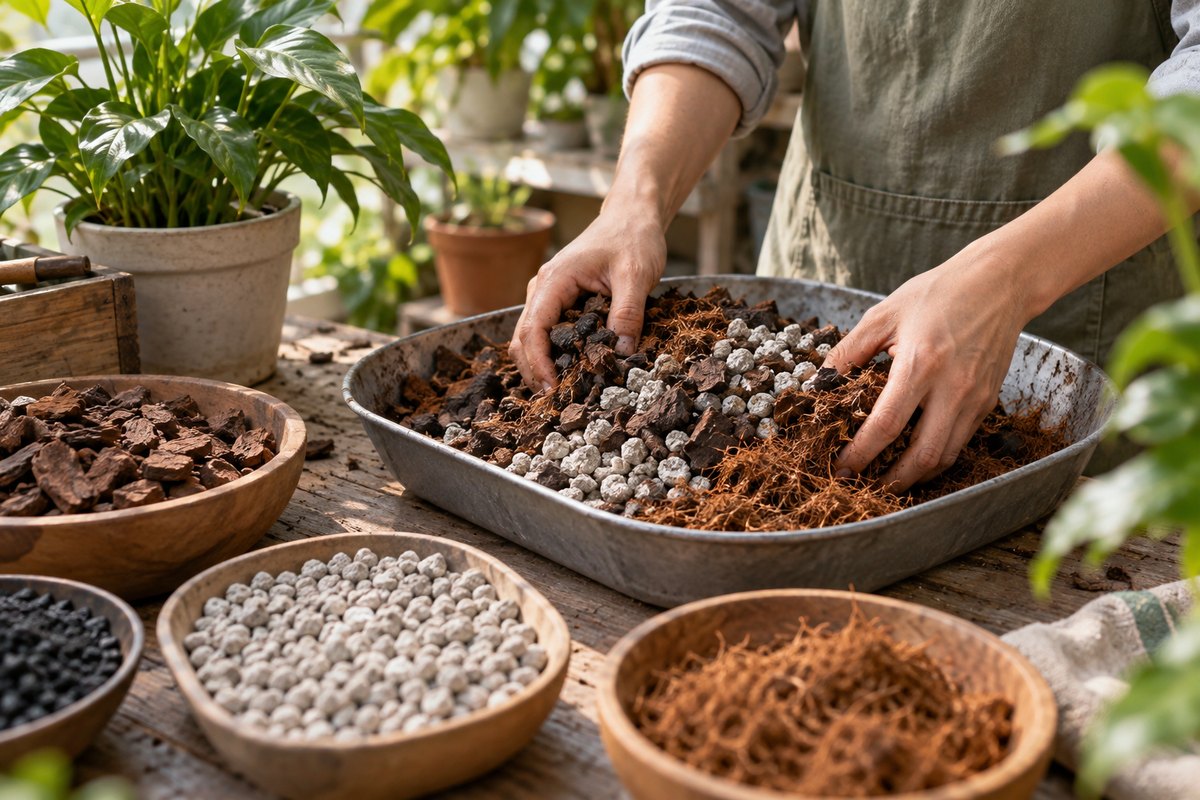
Understanding Common Growing Media: Every Soil Has Its Personality
Like ingredients in a kitchen, different plant substrates have distinct characteristics and uses. A good formulator (that’s you) needs to know each ingredient’s strengths and weaknesses.
Peat Moss: The Water Retention King
Peat moss comes from decomposed moss in marshlands — one of horticulture’s most classic media components. Its water and nutrient retention are exceptional, pH is acidic (around 3.5–4.5), and it’s lightweight. The downsides: drainage is slow and using it alone risks waterlogging; once fully dried it’s notoriously difficult to re-wet, often exhibiting “water-repellent” behaviour where water pools on top. Additionally, peat extraction impacts wetland ecosystems, driving many gardeners to seek alternatives.
Coco Coir: The Eco-Friendly Newcomer
Coco coir is processed coconut husk fibre, regarded as peat’s environmentally friendly substitute. Water retention approaches that of peat, but drainage is superior. pH is neutral (around 5.5–6.5), and unlike peat it doesn’t become water-repellent when dry. Coco coir’s drawback is near-zero nutrient content requiring supplemental fertilisation; lower-grade products may contain excessive salts — rinse thoroughly with clean water before use.
Perlite: The Aeration Champion
Perlite is volcanic glass expanded at high temperatures into lightweight white granules filled with air pockets. Its primary function is improving drainage and aeration while preventing soil compaction. Perlite contains virtually no nutrients and doesn’t absorb water — it plays the “structural regulation” role in mixes. Note: perlite dust is a respiratory irritant — wear a mask when handling.
Vermiculite: The Dual-Purpose Workhorse
Vermiculite is expanded mica mineral appearing as golden flakes. It offers both good water retention and nutrient-holding capacity (adsorbing mineral ions), commonly used for cuttings and seedling cultivation. However, vermiculite compacts over time reducing aeration, so it shouldn’t dominate your mix ratio.
Akadama: Japanese Precision
Akadama from Japan’s volcanic regions is the star material of bonsai culture — reddish-brown rounded granules. Its unique quality is that it “breathes” — internal micropores retain water while draining excess, and gradual breakdown over time automatically regulates media structure. Akadama is pricier, but for precious varieties like variegated plants, it’s a worthwhile investment.
Bark: The Rugged Aerator
Fermented pine or fir bark comes in coarse chunks beloved by orchids and climbing plants. Bark creates abundant gaps for root respiration while slowly decomposing to release trace organic matter. Its weakness is poor water retention, making it unsuitable as the sole medium for plants needing consistent moisture.
Sphagnum Moss: The Fern and Orchid Cradle
Fresh sphagnum moss offers exceptional water retention combined with good aeration — the native medium of many epiphytes like orchids and staghorn ferns. Sphagnum also harbours a hidden advantage: natural antimicrobial compounds that suppress certain pathogens. However, it decomposes relatively quickly and typically needs replacing every 1–2 years.
The Art of Balancing Drainage and Water Retention
All foliage plant soil formulation centres on finding equilibrium between drainage and water retention.
Media with excessive water retention (like pure peat) easily waterlog, starving roots of oxygen and causing rot. Media with excessive drainage (like pure bark) lose moisture too quickly, preventing stable root absorption and leaving plants in chronic mild dehydration.
A simple test for balanced formulation: after watering, water should begin draining from the bottom within seconds, not pooling on the surface. Simultaneously, media should transition from “fully wet” to “surface slightly dry” within 3–5 days — if it’s bone dry within a day, water retention is insufficient; if the bottom is still wet after a week, drainage is inadequate.
Universal Base Formula: Suitable for Most Foliage Plants
This is the Specimen Archive’s “universal base” — suitable for monsteras, pothos, philodendrons, syngoniums, and most common foliage plants:
Specimen Archive Universal Formula
| Component | Ratio | Function |
|———–|——-|———-|
| Peat moss or coco coir | 40% | Water and nutrient retention |
| Perlite | 25% | Drainage and aeration |
| Coco chips or fine bark | 20% | Structural integrity, long-term aeration |
| Vermiculite | 10% | Stable water and nutrient retention |
| Akadama (3–6mm) | 5% | Overall structure regulation |
This formula balances water retention with drainage while maintaining good aeration and near-neutral pH. You can微调 proportions based on available materials — the principle is “approximately half water-retentive media, half aeration media.”
Specialised Formulas: Tailored for Special Plants
High-Drainage Formula (Alocasias, Cacti, Succulents)
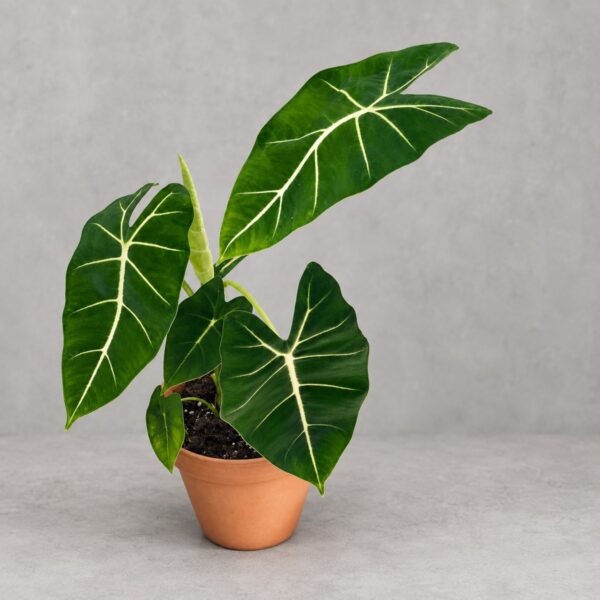
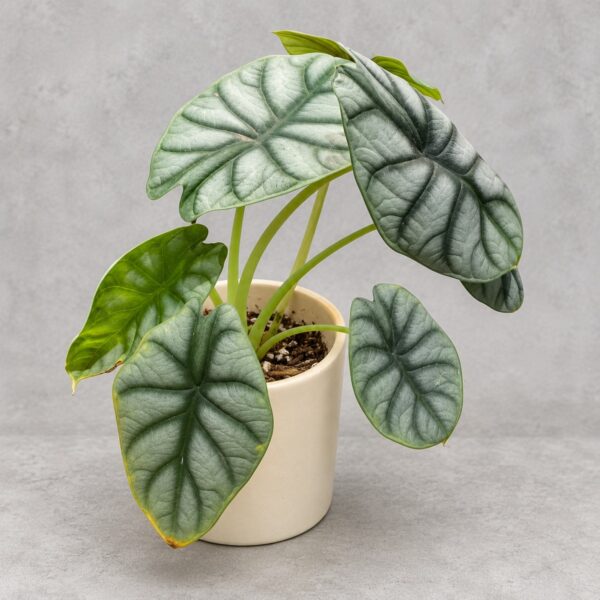
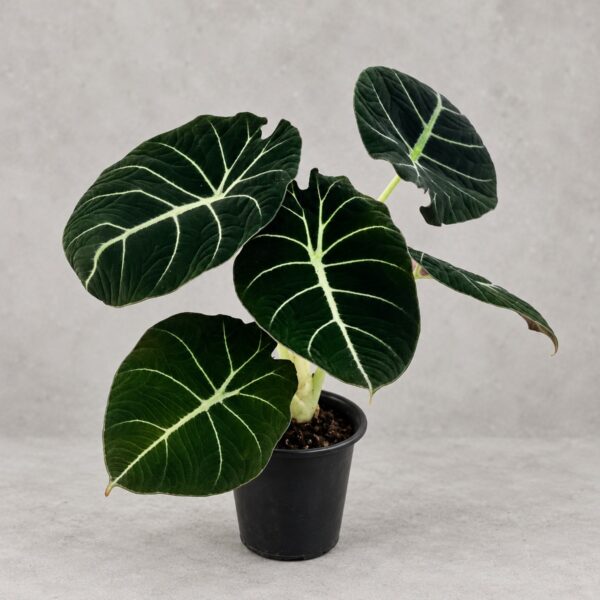
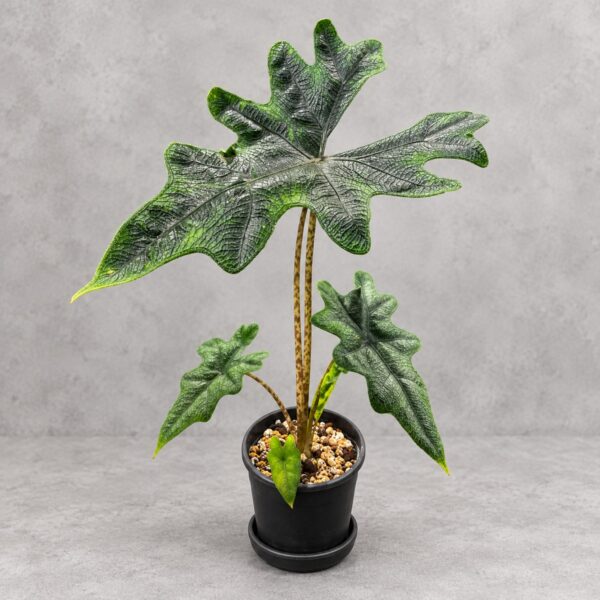
Alocasias (Alocasia, Colocasia) hail from the tropics but their roots are extremely waterlogging-sensitive. Variegated alocasias are “delicate among delicacies” — the slightest water accumulation triggers root rot.
| Component | Ratio | Function |
|———–|——-|———-|
| Coco coir | 30% | Base water retention |
| Perlite | 30% | Enhanced drainage |
| Medium bark | 20% | Large-pore aeration |
| Akadama (3–6mm) | 15% | Structural regulation |
| Charcoal granules | 5% | Antimicrobial, pH adjustment |
This formula drains approximately twice as fast as the universal mix, rapidly channelling away excess water while retaining adequate moisture for root uptake.
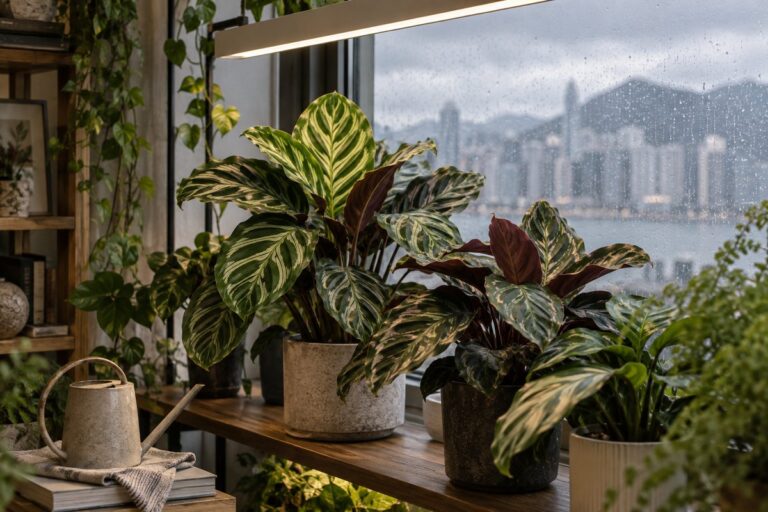
High-Retention Formula (Ferns, Calatheas)
Ferns and calatheas come from shady, humid understories and prefer consistently moist media.
| Component | Ratio | Function |
|———–|——-|———-|
| Peat moss | 45% | Strong water retention |
| Coco coir | 20% | Supplemental retention, eco-friendly |
| Perlite | 15% | Basic aeration |
| Sphagnum moss (shredded) | 10% | Moisture retention, antimicrobial |
| Vermiculite | 10% | Nutrient retention, humidity stabilisation |
This mix maintains moisture longer while preserving sufficient aeration pores to prevent complete waterlogging.
Climbing Plant Formula (Philodendrons, Epipremnums)
Climbing plants’ aerial roots love gripping rough surfaces, and their root systems demand abundant oxygen.
| Component | Ratio | Function |
|———–|——-|———-|
| Coco chips | 30% | Water retention, rough texture |
| Large bark chunks | 30% | Large pores, grip surface for aerial roots |
| Perlite | 20% | Aeration |
| Shredded sphagnum | 10% | Moisture retention |
| Akadama | 10% | Structural regulation |
DIY Mixing Steps: Hand-Crafting “Nutrient Soil” for Your Plants
1. Prepare tools and materials: Large plastic tub or bucket (for easy mixing), measuring cups, various media components, gloves, and a mask (for perlite dust protection).
2. Measure by ratio: Start with the largest proportion component (peat moss or coco coir) into your mixing container.
3. Add progressively: Add remaining ingredients one by one, mixing thoroughly after each addition. This achieves more even distribution than dumping everything in at once.
4. Pre-moisten: Dry peat moss and coco coir are difficult to wet evenly. Spray a small amount of water during mixing to bring media to “lightly moist” consistency — like a wrung-out sponge.
5. Test drainage: Fill a small pot with your mixed media and water it. Water should flow from the bottom within seconds, not pool on the surface.
6. Label and store: Package excess media in a sealed bag, labelled with the formula and date, stored in a cool, dry place.
When to Replace the Soil?
Even with a perfect potting soil formulation, replacement becomes necessary over time:
– Media decomposition: Peat moss and coco coir break down over time, particles become finer, and aeration declines. After 1–2 years, originally fluffy media becomes compacted.
– Salt accumulation: Long-term tap water watering and fertilising causes mineral salt buildup, potentially forming white crystalline deposits on the soil surface. Repotting is the best way to eliminate accumulated salts.
– Root congestion: As plants grow, roots fill the entire pot, squeezing out media. This calls for simultaneous repotting and soil replacement.
– Post-disease recovery: If a plant has suffered severe root rot or pest infestation, even after treatment old soil may harbour lingering pathogens — complete replacement with fresh media is recommended.
Conclusion
Growing medium isn’t something you can simply “buy one bag of universal mix and be done with.” Understanding each component’s characteristics and formulating bespoke recipes based on plants’ native environments and root requirements is the key step from “keeping them alive” to “helping them thrive.” Every plant at the Specimen Archive has its own dedicated media formulation, and this dedication is repaid with lush green leaves.
If you have questions about plant soil mix, or want to know what soil your variegated monstera needs, visit the PLANTJAI Specimen Archive in Causeway Bay. We don’t just sell premium pre-mixed media — we’ll personally guide you through crafting your own custom formulations.
Browse [plantjai.com](https://plantjai.com) for more scientific care knowledge, and let every plant live in the “soil home” best suited to its needs.
The Specimen Curator, writing from Causeway Bay
“Good soil is a plant’s second mother.”
IN STORE NOW
Plants for this guide
Related plants in stock now — live prices, delivery or Causeway Bay pickup.
FREE PLANT ADVICE
Send us a photo before you change anything
WhatsApp a photo of the plant and your window light. Our Causeway Bay team will suggest care steps or plants that suit your space.
STORE · CAUSEWAY BAY
4/F, 39 Yiu Wa Street, Causeway Bay
Daily 12:30–8:00pm · ~3 min walk from Times Square
Map & directionsPlant 101