
The Science of Humidity Management: Survival Rules for Plants in Hong Kong’s Damp Weather

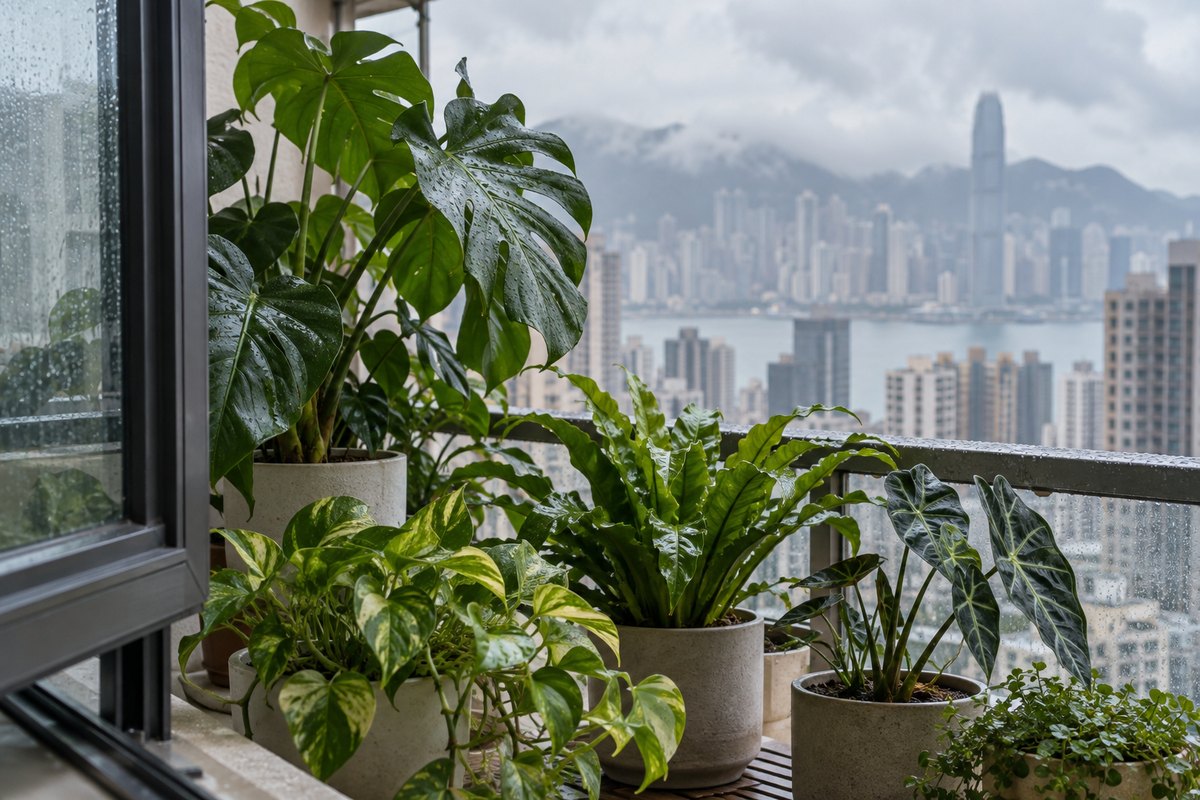
Hong Kong’s Climate: An Endless Humidity Tug-of-War

Hong Kong sits in the subtropical monsoon zone, where relative humidity regularly exceeds 70% year-round, climbing to 85–95% for much of summer. Sounds great for plants? Hold that thought.
Summer’s “False Moisture”
Sure, it’s humid outdoors in summer, but what about indoors? Hongkongers can’t live without air conditioning, and an AC unit is essentially a powerful dehumidifier. When it’s running, indoor relative humidity can plummet from 90% outdoors to below 40%. Your foliage plant sitting near the AC vent is experiencing an artificial drought, despite being in supposedly tropical surroundings.
Winter’s “Real Dryness”
In winter, Hong Kong occasionally comes under the influence of dry northeasterly monsoons, with relative humidity dropping to 30% or lower. Add heaters into the mix, and the air becomes so dry your lips crack. For tropical foliage plants, this feels like exile to the edge of a desert.
The Hidden Killer in Offices and Air-Conditioned Rooms
One of the most common SOS calls we get at the Specimen Archive goes like this: “My plant was fine at home, but when I moved it to the office, the leaves started browning.” The cause is almost always the same — constant AC, poor air circulation, and persistently low humidity. Many commercial buildings’ central air systems suppress indoor humidity to 35–45%, which pushes many tropical foliage plants into the danger zone.
Why Humidity Matters So Much to Plants
Plant leaves are covered in tiny openings called stomata — the channels for gas exchange and water transpiration. When air humidity is high, stomata open wide, plants breathe freely, transpiration proceeds smoothly, and nutrients flow efficiently from roots to leaves. When humidity drops, stomata partially close to conserve water — it’s like the plant is holding its breath, suppressing both respiration and growth.
The Ideal Humidity Range for Foliage Plants
Most tropical foliage plants are happiest at 60–80% relative humidity. This mimics their native understory environment — warm, moist, with gentle air movement but not dry. Some species from cloud forests or deep rainforest (certain peperomias, ferns, and alocasias) even prefer 70% and above.
Distress Signals from Low Humidity
When the air is too dry, plants communicate through their leaves:
– Leaf tip browning: The most common sign, especially in alocasias and philodendrons. Dry air accelerates water loss at leaf tips, killing cells and creating brown, crispy zones.
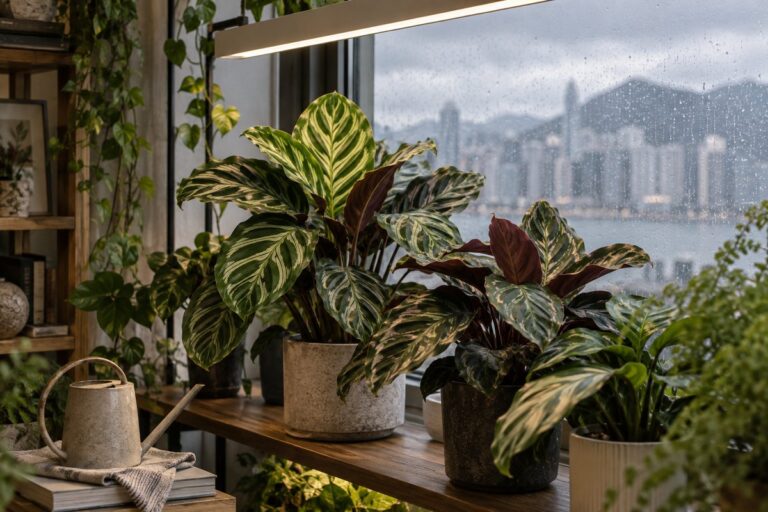
– Dry, curling leaf edges: Edges turn brittle and brown as if scorched by fire, common in ferns and calatheas.
– Incomplete new leaf unfurling: Insufficient humidity damages tender leaves during opening, causing deformities or tearing.
– Stunted growth: With stomata perpetually half-closed, photosynthetic efficiency drops and the plant enters a “dormant self-preservation” mode.
– Spider mite invasion: Dry environments are breeding grounds for spider mites. These tiny pests create yellow-white speckling on leaves, and in severe cases, visible webbing.
Practical Methods for Raising Humidity
Now that we know the problem, let’s fix it. Here’s our honest assessment of various humidifying methods:
Humidifiers: The Most Direct Solution
Electric humidifiers are the most reliable tool for boosting indoor humidity. Ultrasonic models are affordable and quiet — great for living rooms and bedrooms. Evaporative models are slightly noisier but don’t produce white dust (ultrasonic units using tap water disperse mineral deposits that leave white residue on leaves).
Specimen Archive recommendation: Position the humidifier centrally among your plant group, targeting 60–70% humidity. Avoid blasting directly at individual plants from close range — persistent leaf wetting invites bacterial infections.
Pebble Trays: Low-Cost, Steady Humidity
Find a shallow tray, fill it with pebbles or clay hydroballs, add water to about half the height of the pebbles, and place your pot on top (making sure the pot base doesn’t touch the water surface). Water naturally evaporates, creating a micro-humidity zone around the plant. Low cost, silent, gentle effect — perfect for clustering several humidity-loving plants together.
Grouping Plants: The Power of Mutual Support
Cluster multiple plants together with their leaves close to each other, and you create a localised “humidity jungle.” Water vapour released through transpiration accumulates between leaves, naturally raising surrounding humidity. This mimics the multi-layered structure of rainforests, where every vegetation layer maintains its own humidity microclimate.
Misting: A Beautiful Misunderstanding
Many gardening books and old-school plant parents will tell you to “mist more for humidity,” but the Specimen Archive must be honest with you — misting’s effect is extremely short-lived. Water droplets on leaf surfaces typically evaporate within minutes, contributing almost nothing to overall air humidity. Worse, in poorly ventilated spaces, persistently wet leaves invite fungal diseases and leaf spot infections.
The real value of misting isn’t humidifying — it’s cleaning dust from leaf surfaces and providing temporary cooling. If you enjoy the ritual of misting, do it in the morning so leaves have all day to dry.
Humidity Trays and Bathroom Planting
Bathrooms are an underrated plant space — shower steam keeps humidity regularly above 70%. Place shade-tolerant ferns, calatheas, or peperomias in a bathroom with a window, and they’ll usually flourish. Just ensure there’s enough natural light (or supplemental grow lights), and you’ve found a humidity shortcut.
The Risks of Excessive Humidity
Having covered low humidity dangers, let’s address the other extreme. Hong Kong summer outdoor humidity regularly exceeds 90%, and if indoor ventilation is poor while you’re over-humidifying, problems arise:
Mold and Fungal Infections
With air humidity persistently above 85% and poor ventilation, leaf surfaces and soil become breeding grounds for mold. Grey mold (Botrytis cinerea) and downy mildew are common humidity-driven diseases, producing grey or brown fuzzy spots on leaves that spread rapidly.
Root Suffocation and Rot
In high-humidity environments, soil evaporation slows and growing media stays wet for extended periods after watering. Roots immersed in oxygen-depleted conditions develop root rot. This is a frequently overlooked aspect of foliage plant humidity management — air humidity and soil moisture are two different things requiring separate management.
Pest Proliferation
Mealybugs and aphids reproduce faster in warm, humid conditions. While high humidity isn’t the direct cause, it makes pest problems harder to control.
The Balance: Maintain indoor humidity between 50–70% — the sweet spot for most foliage plants. Above 75%, increase ventilation; below 45%, intervene with humidification.
A Spectrum of Humidity Needs by Plant Type
Not all plants love moisture equally. Here’s how the Specimen Archive categorises them:
High Humidity Lovers (70%+)
– Ferns (Nephrolepis, Adiantum, Platycerium)
– Alocasias and colocasias (Alocasia, Colocasia)
– Prayer plants (Calathea, Goeppertia)
– Some peperomias (Peperomia select varieties)
These come from rainforest floors or streamside habitats, extremely sensitive to dry air. In Hong Kong’s air-conditioned rooms, they’re nearly impossible to keep healthy without a humidifier.
Medium Humidity Needs (50–70%)
– Swiss cheese plant (Monstera deliciosa)
– Philodendrons (Philodendron)
– Arrowhead plants (Syngonium)
– Golden pothos (Epipremnum aureum)
These adapt well to typical Hong Kong home environments, thriving with occasional humidification measures.
Dry-Tolerant Varieties (Fine below 50%)
– Snake plants (Sansevieria)
– ZZ plants (Zamioculcas zamiifolia)
– Cacti and succulents
– Rubber plants (Ficus elastica)
These have evolved water-loss reduction mechanisms — thick fleshy leaves in snake plants, CAM photosynthesis in succulents — letting them thrive in dry conditions.
Conclusion
Humidity is the most underestimated factor in Hong Kong plant humidity management. We carefully select beautiful pots, mix the perfect growing medium, and master watering rhythms, yet often overlook that invisible moisture in the air. Remember the Specimen Archive’s words: light determines whether a plant survives, watering determines how long it lives, and humidity determines how beautifully it thrives.
If your foliage plants constantly suffer from brown leaf tips and new leaves that won’t unfurl properly, buy a simple hygrometer and check your actual home humidity. And bring your questions to the PLANTJAI Specimen Archive in Causeway Bay — our team will recommend the best plant varieties and humidity management plan for your specific environment.
Browse [plantjai.com](https://plantjai.com) to discover more foliage plants suited to Hong Kong’s climate, and let’s create a comfortable home for your plants together.
The Specimen Curator, writing from Causeway Bay
“Humidity is an invisible embrace — but plants feel it.”
IN STORE NOW
Plants for this guide
Related plants in stock now — live prices, delivery or Causeway Bay pickup.
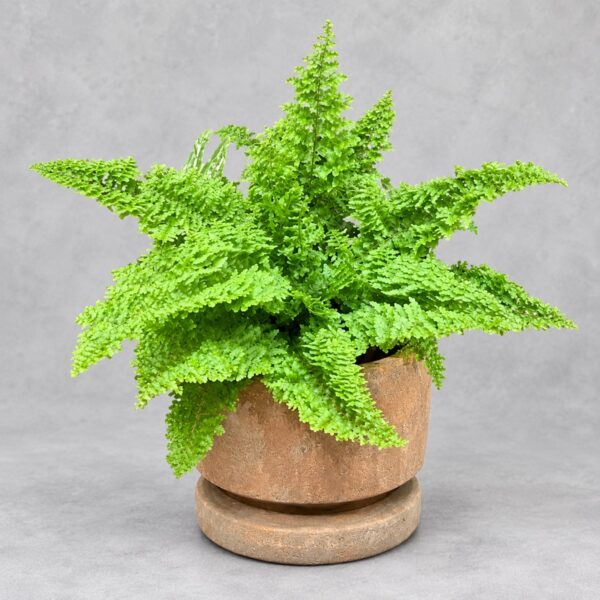
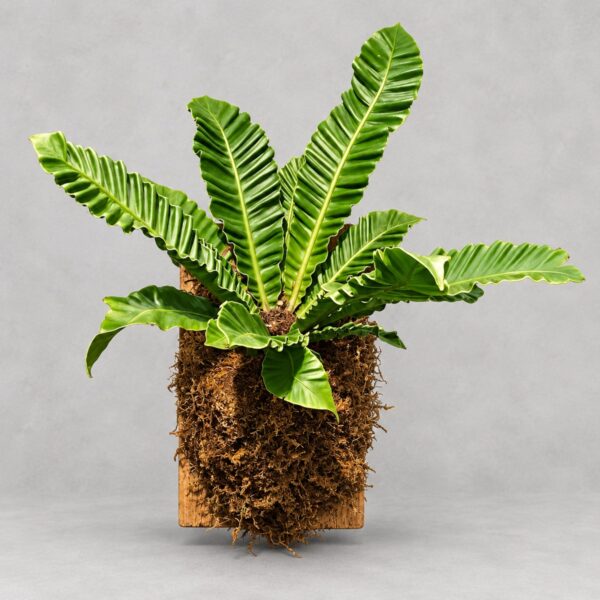
Asplenium nidus var plicatum
Original price was: HK$428.00.HK$180.00Current price is: HK$180.00.
In stock · store pickup
View plant
FREE PLANT ADVICE
Send us a photo before you change anything
WhatsApp a photo of the plant and your window light. Our Causeway Bay team will suggest care steps or plants that suit your space.
STORE · CAUSEWAY BAY
4/F, 39 Yiu Wa Street, Causeway Bay
Daily 12:30–8:00pm · ~3 min walk from Times Square
Map & directionsPlant 101