
Should You Repot a New Houseplant? The First 30 Days


In this guide (7)
- 01Arrival day: unpack and record before watering
- 02Sort the repotting decision into three situations
- 03Separate the newcomer without depriving it of light
- 04A first-month record: trends, not daily new leaves
- 05If repotting is necessary, avoid stacking disturbances
- 06Three questions that often lead to over-treatment
- 07Further reading and next steps
A new houseplant does not automatically need repotting, but “letting it acclimatise” is not a reason to ignore standing water or active decay. Check drainage, root-ball moisture, the stem base and pests before deciding to observe, plan a repot or address an immediate problem. One yellowing leaf and a progressively softening stem base are not equivalent situations.
This guide concerns common foliage plants growing in potting mix with drainage. Bare-root plants, unrooted cuttings, water-grown plants and species with particular dormancy requirements need different arrangements. Thirty days is a useful recording framework—not a rule requiring every plant to wait a month.
Arrival day: unpack and record before watering
Remove transport packaging while supporting the plant rather than pulling on petioles. Keep the identification label and the supplier’s care information. If there is an obvious arrival problem, photograph it and contact the seller before removing all the affected roots or leaves and losing evidence of the original condition.
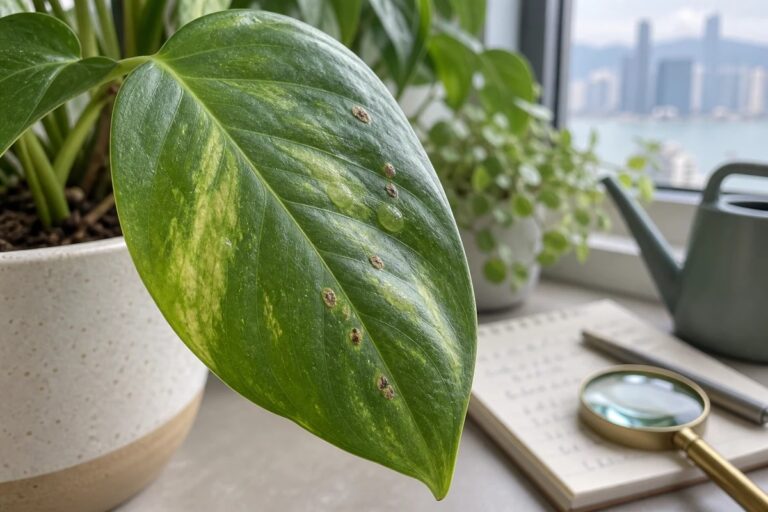
- Inspect leaf undersides and growing points: look for moving insects, sticky deposits, webbing and unusual spots. Photograph details; one white speck is not an identification.
- Separate the nursery pot from its cover pot: check that packaging is not blocking drainage and empty free-standing water.
- Compare surface and root-zone moisture: combine touch, pot weight and accessible mix. A dry surface does not prove that the centre is dry.
- Ask about previous conditions: was it grown in a closed propagation box, a humid greenhouse or an indoor room? Record unknown watering or repotting dates as unknown.
Remove “water it immediately” from the arrival ritual. Water only when the plant needs it, and allow the excess to drain.
Sort the repotting decision into three situations
| Situation | Reasonable next step | Avoid this assumption |
|---|---|---|
| Normal drainage, firm growth and no progressive decline | Keep the original pot and establish a care record | A plastic nursery pot is not automatically unsuitable |
| A tightly congested root ball and drying too rapidly for manageable care | Inspect the whole root ball and plan an appropriately sized pot | One escaping root does not determine the new pot size |
| Persistent waterlogging, a softening stem base or disintegrating roots | Stop the waterlogging, inspect roots and seek targeted help | Do not wait for an arbitrary acclimatisation period to end |
The University of Illinois repotting guide lists root congestion, frequent wilting between waterings and unusually small new leaves as useful clues. Consider them together. If the roots are functioning and the issue is simply appearance, a suitable cover pot with a removable draining inner pot may be enough.
Separate the newcomer without depriving it of light
The University of Illinois suggests separating new plants for roughly two to three weeks. This reduces the chance of introducing an unnoticed problem; day 21 is not a guarantee of pest freedom. Continue separation and investigate if suspicious signs appear.
Where space is limited, choose another position with suitable light, avoid leaf-to-leaf contact, and keep trays and handling tools separate. If a separate room is impossible, regard the arrangement as risk reduction rather than complete isolation. Do not consign the plant to a dark bathroom, and do not share a soaking container or circulate runoff between pots.
A first-month record: trends, not daily new leaves
| Stage | Record | Next question |
|---|---|---|
| Arrival | Whole plant, leaf undersides, stem base, pot and mix | Is anything urgent? |
| First week | Root-zone moisture and changes in light or air-conditioning | Is the plant stabilising or progressively declining? |
| Weeks two to three | Repeat pest checks; compare yellowing and growth | Can this pot, mix and position work with your care routine? |
| Around one month | Review watering intervals and photographs | Keep the setup or adjust one limiting factor? |
Record when you watered, why it was needed and whether excess water drained away. “The root ball was becoming dry and the pot was clearly lighter” is more useful than a date alone. These weeks are observation stages, not a watering timetable.
If repotting is necessary, avoid stacking disturbances
Match the new pot to the functioning root system, not to the canopy you hope to have next year. The University of Illinois warns that excessive mix volume can retain water too long, and that gravel at the bottom does not automatically improve drainage.
Prepare a draining pot and suitable mix. Preserve healthy roots where possible instead of routinely combining root washing, root pruning, division and heavy leaf removal. Actual rot requires a different assessment of viable tissue; “preserve everything” is not appropriate either. Seek informed help with clear photographs if that distinction is uncertain.
Do not use concentrated fertiliser as a recovery tonic. Check whether the new mix already contains fertiliser, and wait for stable root conditions and appropriate growth before feeding according to the plant’s needs and the product label. The goal is a sustainable environment, not the largest collection of treatments.
Three questions that often lead to over-treatment
Does one yellow leaf mean I should prune the roots?
No. Record which leaf is affected, whether more leaves follow and whether the root zone is abnormal. The spread and direction of change matter more than one photograph.
Is the supplier’s mix unsuitable because it differs from mine?
Not necessarily. Observe how it dries with your light, pot and watering method. An ingredient name does not guarantee success; the root zone’s balance of water and air matters.
Does a lack of new leaves mean the plant needs fertiliser?
No. Identity, growth stage, light and acclimatisation affect the pace. Investigate environmental limitations before feeding. Conversely, progressive decline, a softening stem base or extensive leaf loss should not be dismissed as something that simply needs more time.
Further reading and next steps
IN STORE NOW
Plants for this guide
Related plants in stock now — live prices, delivery or Causeway Bay pickup.
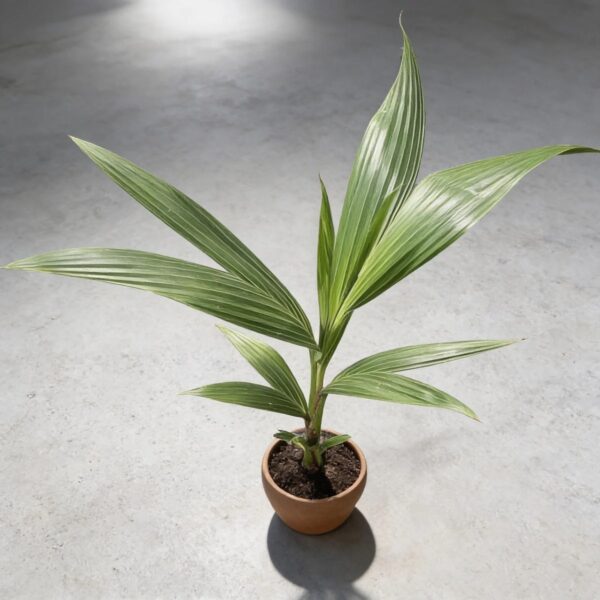
Cocos nucifera
Cocos nucifera
Original price was: HK$398.00.HK$298.00Current price is: HK$298.00.
In stock · store pickup
View plant
FREE PLANT ADVICE
Send us a photo before you change anything
WhatsApp a photo of the plant and your window light. Our Causeway Bay team will suggest care steps or plants that suit your space.
STORE · CAUSEWAY BAY
4/F, 39 Yiu Wa Street, Causeway Bay
Daily 12:30–8:00pm · ~3 min walk from Times Square
Map & directionsPlant Care