How to Care for Musa Ae Ae in Hong Kong | Plantjai

Plantjai 植仔 · Care Encyclopedia
Musa Ae Ae
Hong Kong care guide — useful before you buy and after it arrives.
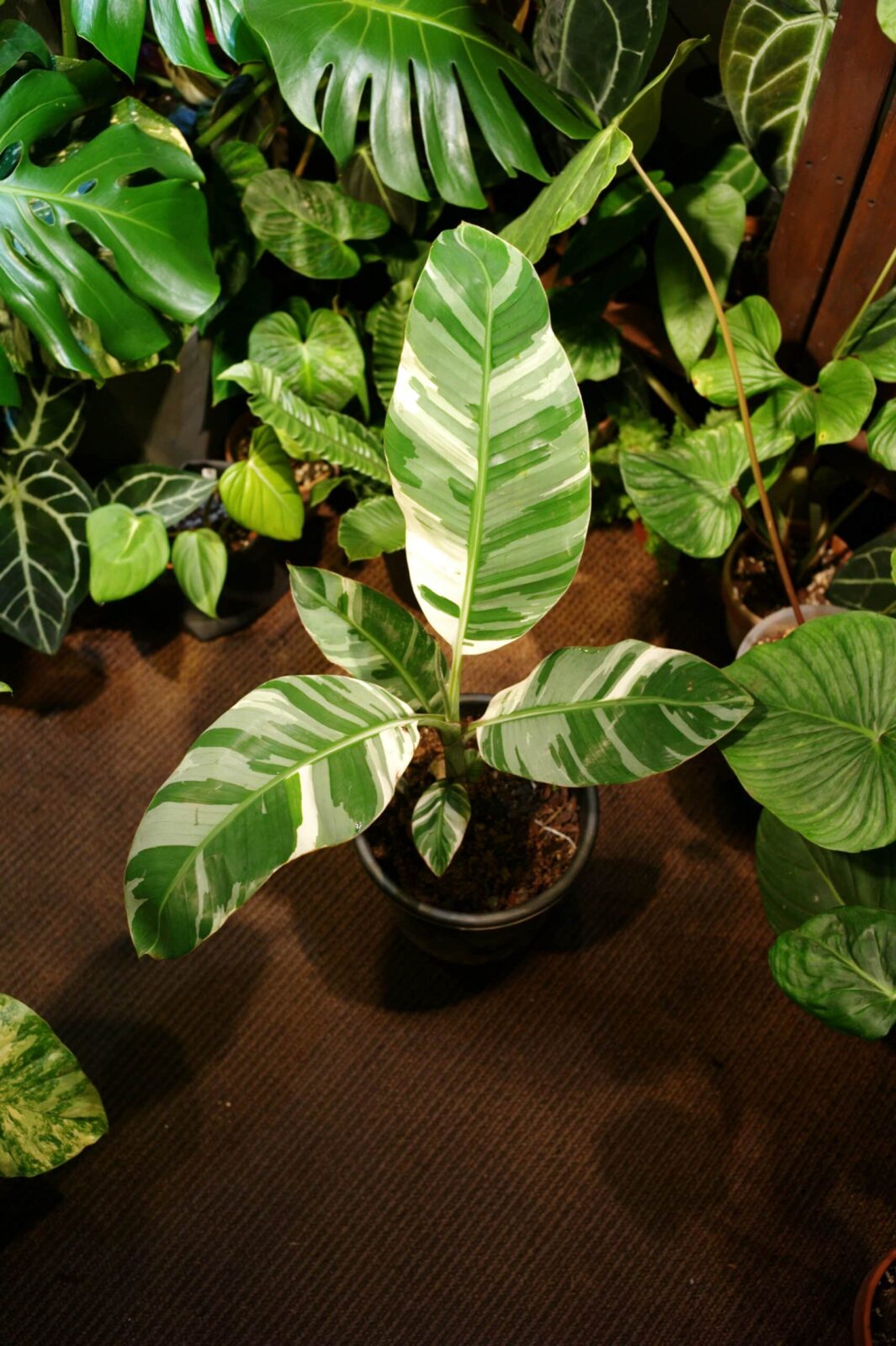
Shop this plantBoth leaves and fruit carry natural white-and-green variegated stripes — ancient Hawaiian law once reserved this legendary banana variety exclusively for royalty. Owning an Ae Ae means owning a living piece of royal h…
Origin & characteristics
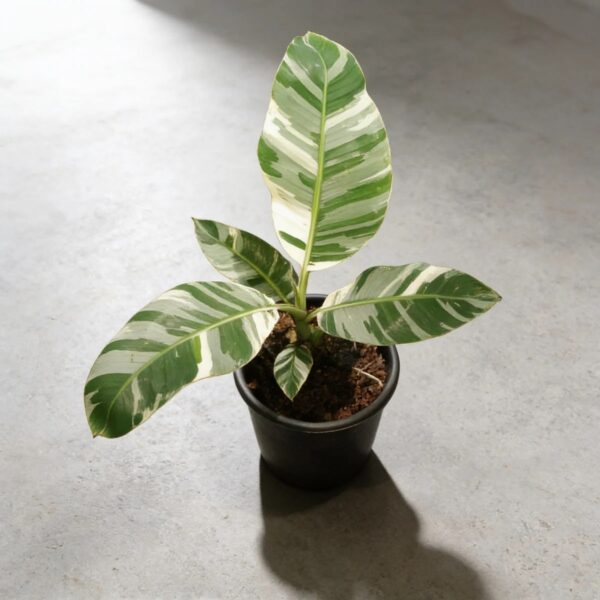
Musa 'Ae Ae' (pronounced "Ah-Eh Ah-Eh") is an extremely rare variegated banana cultivar originating from ancient Hawaii, belonging to the Musa × paradisiaca group. In ancient Hawaii, strict law dictated that only royalty (Aliʻi) were permitted to grow and eat Ae Ae bananas — commoners who grew it faced punishment, which is why it's also known as the "royal banana" or "forbidden fruit."
Its white-and-green variegation results from a natural genetic mutation rather than artificial induction or viral infection, and the variegation is stably expressed.
Key characteristics:
- A large herbaceous plant (banana plants aren't true trees — they're giant herbs)
- Extremely fast growing, capable of producing a new leaf every 10 days in ideal conditions
- Enormous leaves with natural white-and-green variegated patterning, each leaf resembling a camouflage pattern
- The fruit skin also carries variegated striping, giving it exceptional display value
- Extensive root system requiring ample growing space
- Indoor cultivation rarely produces fruit, but the leaves alone are highly ornamental
- Despite its large size, the leaves have a delicate texture and tear easily
⚠️ Note: while the plant itself is non-toxic, banana plants can occasionally cause mild skin irritation in sensitive individuals from sap contact. It's generally considered safe and pet-friendly.
Light
Ample indirect light to half-day direct sun, at least 6 hours of light daily.
- Best placement: near a south- or east-facing window with abundant bright light
- More direct light results in faster growth and larger leaves
- The variegated portions sunburn more easily — filter harsh summer midday sun with a sheer curtain
- Insufficient light causes slow growth, smaller new leaves, and a weak, leggy plant
- Flowering and fruiting (difficult indoors) requires full-day sun
- In winter, place it in the brightest available spot, or consider a grow light
Watering
Keep soil lightly moist during the growing season, absolutely avoiding standing water.
- Active spring/summer growth: water once the soil surface feels slightly dry, roughly 2-3 times a week (adjusted for conditions)
- Slower autumn/winter growth: substantially reduce watering, letting soil dry halfway before watering, roughly once a week
- Bananas have high water needs, especially during hot summer weather when transpiration is strong
- Water thoroughly until it drains from the base, and always empty any standing water afterward
- Reduce watering frequency in poorly ventilated or low-light conditions to prevent root rot
- Use room-temperature water, avoiding cold water that shocks the root system
Soil & pot
A deep, fertile, well-draining soil rich in organic matter.
Recommended recipe (by volume):
- Quality potting soil (rich in organic matter): 50%
- Perlite or coarse sand: 20% — enhances drainage
- Orchid bark or coco husk chips: 15% — improves aeration
- Well-rotted compost or worm castings: 15% — provides long-lasting nutrients
Soil pH preference is slightly acidic, around 5.5-6.5.
Pot choice:
- Drainage holes are essential; a larger, deeper pot is recommended
- Fast growth may require repotting 2-3 times in the first year
- Repot annually thereafter, gradually sizing up
- The new pot's diameter should be at least 20% larger than the previous one, allowing room for root growth
Temperature & humidity
| Condition | Ideal range | Notes |
|---|---|---|
| Temperature | 20-30°C (68-86°F) | Must never go below 10°C; growth stalls below 15°C |
| Humidity | 60% or above | Below 50%, leaf edges dry out easily and spider mites become a risk |
- Bananas are tropical plants with zero cold tolerance — pay special attention to warmth during Hong Kong winters
- Growth is fastest in high heat (27-35°C) combined with high humidity
- Good air circulation is needed to prevent powdery mildew from stuffy conditions
- Dry environments encourage spider mites — maintaining humidity above 60% is the best pest prevention
- Pay special attention to humidification when running heating in winter, keeping the plant away from heater vents
Common problems
Q1: Why are the leaf edges drying out and turning brown?
This is usually due to low humidity or irregular watering. Banana leaves are large and thin, making them sensitive to dry air. Raise humidity above 60% and avoid placing near AC or heater vents.
Q2: Why do the leaves tear or get damaged?
Banana leaves have a delicate texture, and even minor bumps or strong wind can cause tearing — this is completely normal. Move to a more sheltered spot and avoid moving the pot frequently.
Q3: Why are new leaves smaller or growth stalled?
Check three factors: 1) whether light is adequate; 2) whether temperature is too low (growth stalls below 15°C); 3) whether it needs repotting or fertilising. Apply balanced liquid fertiliser every 1-2 weeks during the growing season.
Q4: How do I prevent spider mites?
Dry, stuffy environments are the biggest risk factor. Maintaining humidity above 60% with good ventilation is the best prevention. If you notice fine webbing or spots on leaf undersides, rinse the leaf undersides with a shower head, then spray neem oil.
Q5: Will it flower and fruit?
Indoor cultivation generally doesn't produce fruit, since this requires extremely high light intensity and space. But as a foliage plant, Ae Ae's variegated leaves alone offer exceptional display value.
Q6: How do I care for it in winter?
Reduce watering frequency, stop fertilising, and place it in the warmest, brightest spot available. If temperatures drop below 15°C, consider wrapping the pot in insulating material or moving it to a heated room.
How to explain to customers
"Ae Ae is an extremely rare variegated banana — in ancient Hawaii, only royalty were allowed to grow it! Its leaves are large, with natural white-and-green variegation, each one looking like a distinctive camouflage pattern. Banana plants grow fast, and with proper care you can see a new leaf roughly every ten days — really satisfying to watch. Most importantly, remember it's a tropical plant that can't tolerate cold — keep it above 15°C at minimum, and definitely bring it indoors somewhere warm in winter. For watering, be diligent in spring/summer, keeping the soil lightly moist but never waterlogged, then reduce watering in autumn/winter. Humidity needs to be high too — above 60% for the best-looking leaves — so avoid placing it near an AC vent or heater. Even though it rarely fruits indoors, the foliage display alone is well worth it!"
Fun facts
- A forbidden fruit reserved for royalty: under the ancient Hawaiian Kapu system, the Ae Ae banana was considered sacred, and only the highest-ranking royalty (Aliʻi Nui) were permitted to grow and eat it — violators faced severe punishment
- How to pronounce Ae Ae: pronounced "Ah-Eh Ah-Eh," a Hawaiian word related to its mottled appearance
- Even the fruit is variegated: not just the leaves — Ae Ae's bananas also have white-and-green striped skin, and when cut open, the flesh is pink or orange (extremely rare), said to carry a vanilla-like fragrance
- Not all bananas are trees: strictly speaking, banana plants are giant herbaceous plants, not woody trees — their "trunk" is actually a pseudostem formed from tightly wrapped leaf sheaths
- Astonishing growth rate: in ideal conditions (high heat, high humidity, ample light), bananas can grow several centimetres a day, taking as little as 9-12 months from planting to flowering
- Each plant fruits only once: a banana plant flowers and fruits only once in its lifetime; afterward, the mother plant dies back, but the rhizome sends up new shoots (pups) to continue the lineage
Keywords
Plantjai, Hawaiian white variegated banana tree, Musa Ae Ae, Musa paradisiaca, royal banana, variegated banana, camouflage banana, banana tree, Musaceae, tropical plant, large foliage plant, indoor tree, rare cultivar, ancient Hawaii, royal plant, fast growing, high-humidity plant, non-toxic plant, pet safe
參考資料(想知來源可展開)
References
- Missouri Botanical Garden — Plant Finder: Musa species, https://www.missouribotanicalgarden.org/PlantFinder/PlantFinderDetails.aspx
- ASPCA — Toxic and Non-Toxic Plant List, https://www.aspca.org/pet-care/animal-poison-control/toxic-and-non-toxic-plants
⚠️ Non-toxic; generally considered safe for pets and children, though sap may cause mild skin irritation in sensitive individuals.
Plantjai · Causeway Bay collector indoor plants · WhatsApp +852 66807550
For Hong Kong homes and offices. Stock and pricing follow the product page.
IN STORE NOW
Plants for this guide
Related plants in stock now — live prices, delivery or Causeway Bay pickup.
Cocos nucifera
Cocos nucifera
Original price was: HK$398.00.HK$298.00Current price is: HK$298.00.
In stock · store pickup
View plant
FREE PLANT ADVICE
Send us a photo before you change anything
WhatsApp a photo of the plant and your window light. Our Causeway Bay team will suggest care steps or plants that suit your space.
STORE · CAUSEWAY BAY
4/F, 39 Yiu Wa Street, Causeway Bay
Daily 12:30–8:00pm · ~3 min walk from Times Square
Map & directionsPlant Care