
How to Care for Monstera Thai Constellation in Hong Kong | Plantjai


Plantjai 植仔 · Care Encyclopedia
Monstera Thai Constellation
Monstera 'Thai Constellation' 泰國灑金龜背竹
Hong Kong care guide — useful before you buy and after it arrives.
Shop this plantEvery leaf is a unique work of art, with cream-white splashes painted across a deep green canvas like ink flung onto silk — a dream cultivar in the world of indoor plants!
Origin & characteristics
Thai Constellation is a cultivated horticultural variety bred by Thai plant specialists through tissue culture, rather than a plant found in the wild. Based on the common Monstera deliciosa, it was developed as a stable variegated cultivar through induced cellular mutation, first mass-propagated by Thai plant nurseries in the late 2000s before entering the international market.
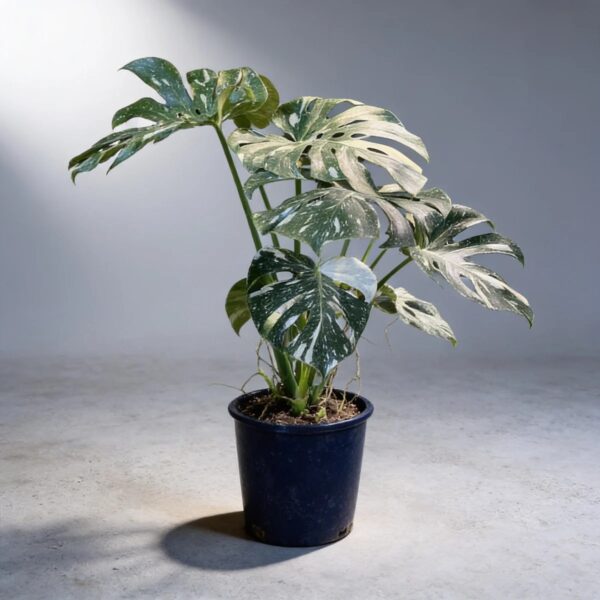
Its most iconic feature is the cream to milky-white splash variegation on its leaves, distributed randomly and naturally, scattered across the deep green leaf surface like a starry night sky — hence the name "Constellation." The white portions result from a lack of chlorophyll, and this is a stable genetic expression that won't easily "revert" the way ordinary variegated plants often do.
As leaves mature, they develop the classic Monstera splits and fenestrations, deep and elegant. Because the white portions lack chlorophyll, its growth rate is about 30-40% slower than a common Monstera, but its display value far exceeds it.
⚠️ Toxicity warning: the entire Thai Constellation plant contains calcium oxalate raphides, toxic to both humans and pets. Ingestion causes mouth burning, tongue swelling, drooling, and vomiting, and severe cases may affect swallowing. Place it out of reach of children and pets, and wash your hands after handling.
Light
| Item | Recommendation |
|---|---|
| Ideal light | Bright indirect light (15,000-25,000 lux) |
| Placement | Near an east- or north-facing windowsill, 0.5-1.5 metres from the window; or near a window with a sheer curtain filtering the light |
| Avoid | Harsh midday direct sun (the white variegation is especially prone to sunburn) |
| Supplement | Insufficient light causes white patterning to turn green to produce more chlorophyll, losing its display value |
⚠️ Special note: the white variegated portions of Thai Constellation have no chlorophyll protection, making them more sensitive to strong light. When sunburned, the white areas brown or yellow first, and won't recover — the damage is permanent.
💡 How to judge if light is adequate:
- New leaves show vivid white variegation → light is just right
- New leaves are almost entirely green, white fading → light is too weak
- Brown edges or scorch spots appear on white variegation → light is too strong
For artificial grow lights, use full-spectrum LED for 10-14 hours daily, positioned 30-50 cm from the plant.
Watering
| Item | Recommendation |
|---|---|
| Frequency | Every 4-6 days in spring/summer; every 7-10 days in autumn/winter |
| Principle | Water once the top 3-5 cm of soil dries out — better dry than wet |
| Water quality | Room-temperature tap water left standing, filtered water, or rainwater; avoid ice-cold water |
| Method | Water thoroughly until it drains from the base, discarding runoff after 15 minutes |
| Seasonal adjustment | Growth slows in winter — substantially reduce watering frequency |
Thai Constellation is more sensitive to standing water than common Monstera, because it grows more slowly with weaker transpiration, and prolonged root moisture easily leads to root rot.
⚠️ Standing water warning: leaves drooping and going soft + soil staying persistently wet = possible root rot — stop watering immediately and check the roots.
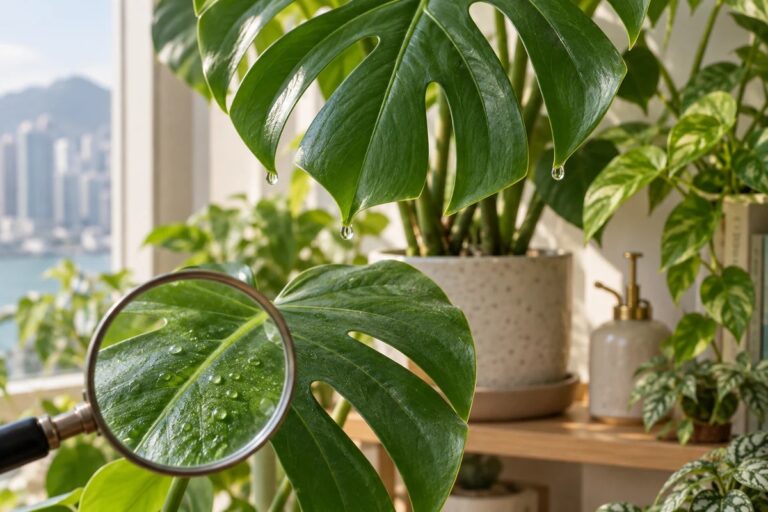
💡 Humidity supplement: while it isn't as demanding about humidity as some tropical plants, maintaining 50-70% humidity gives the leaves a glossier sheen. Occasional misting during dry autumn/winter heating season can help (avoid letting water pool on leaves).
Soil & pot
Recommended soil ratio
| Material | Ratio | Function |
|---|---|---|
| Quality potting soil | 35% | Base moisture and nutrient retention |
| Perlite | 25% | Aeration and drainage |
| Coco coir | 20% | Lightweight and breathable |
| Pine bark (medium grade) | 15% | Mimics tropical conditions, provides organic matter |
| Activated charcoal (optional) | 5% | Absorbs excess moisture, reduces fungal disease |
Pot choice
- First choice: terracotta pots (best breathability and drainage, reduces root rot risk)
- Usable: cement pots, plastic pots with drainage holes
- Drainage: drainage holes are essential; clay pellets or broken pottery shards can be layered at the base
- Size: increase pot diameter by 3-5 cm each repotting — an oversized pot easily leads to standing water
Repotting timing: once every 1-2 years, ideally in spring. Thai Constellation doesn't mind being slightly root-bound, and mild root-binding can actually help promote fenestration.
💡 Sphagnum pole recommendation: setting up a sphagnum or coco coir pole mimics its native climbing environment, helping aerial roots attach and accelerating leaf splitting and enlargement.
Temperature & humidity
| Item | Range |
|---|---|
| Optimal growing temperature | 18-27°C |
| Acceptable range | 15-30°C |
| Minimum tolerance | 10°C (briefly), risk of cold damage below 12°C for extended periods |
| Ideal air humidity | 50-75% |
| Acceptable humidity | 40%+ (growth slows below this) |
Hong Kong's climate is generally suitable year-round, with the following notes:
- Summer: above 32°C, improve ventilation to prevent stuffy conditions that encourage spider mites
- Winter: AC drying the air out — use a humid tray or occasional misting
- Cold weather warnings: move indoors immediately; below 10°C causes leaf damage
💡 Variegation-enhancing tip: a moderate day-night temperature difference (3-5°C) helps keep white patterning more vivid and stable.
Common problems
Q1: My new leaves don't have holes — is something wrong?
Completely normal! Monstera juvenile leaves are complete heart shapes, and as the plant matures (usually after 4-5 leaves), new leaves gradually develop splits and fenestrations. If a mature plant's new leaves still lack holes, it's usually due to insufficient light or lack of climbing support. Adding a sphagnum pole typically shows noticeable improvement.
Q2: The white patterning has turned green — what should I do?
This is a self-preservation mechanism — when light is insufficient, the plant produces chlorophyll in the white areas to boost photosynthesis. The solution is to gradually increase light (avoid sudden intense sun exposure); new leaves typically regain vivid patterning, but leaves that have already turned green won't reverse.
Q3: Why did the white portions turn brown?
Most likely sunburn or misting followed by strong light exposure. The white variegation lacks chlorophyll protection and is more sensitive to light and heat. Recommendations:
- Move away from strong light
- Avoid misting the leaf surface during the day (water droplets can focus sunlight and burn the leaf)
- Already-browned portions won't recover; wait for the next new leaf
Q4: How do I propagate Thai Constellation?
Thai Constellation can only be propagated asexually (cuttings or tissue culture), since it's a horticultural cultivar — seed propagation won't inherit the variegation trait.
Stem cutting method:
- Choose a healthy stem node with an aerial root
- Cut below the aerial root using a sterilised knife
- Apply cinnamon powder to the cut, or let it air-dry for 1 hour
- Choose water or soil propagation:
- Water: place in a clear container with the aerial root submerged, changing water weekly
- Soil: insert into pre-moistened perlite and coco coir mix
- Keep in bright indirect light; roots typically form in 2-4 weeks
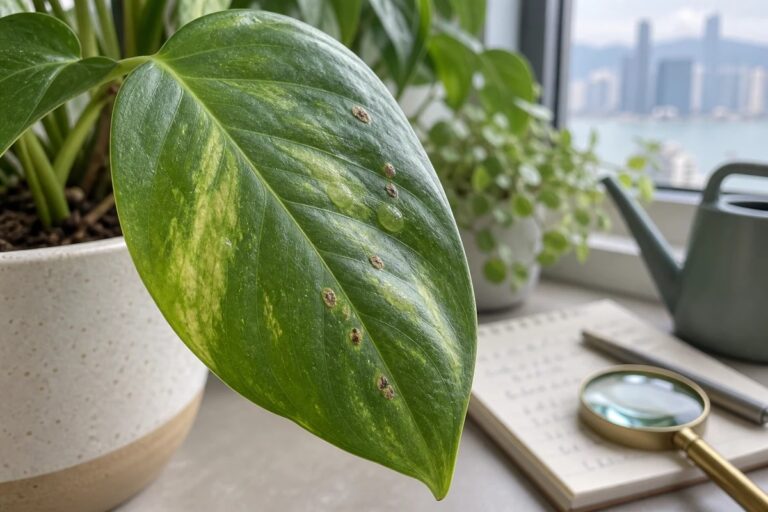
Q5: There are tiny brown dots on the leaf surface, with some webbing?
This is spider mites (leaf mites)! They favour dry environments. Treatment:
- Wipe off pests and webbing with a damp cloth
- Spray diluted neem oil (1:100), especially on leaf undersides
- Increase surrounding humidity (spider mites dislike moisture)
- For severe infestations, consider a miticide, following label instructions
Q6: Why are the leaves getting smaller?
Three possibilities: insufficient light (most common), lack of climbing support, or need for fertiliser. Checking the environment and adding a sphagnum pole plus balanced liquid fertiliser usually helps.
How to explain to customers
"This Thai Constellation Monstera is top-tier among indoor plants! The white patterning on every leaf is completely unique, like a splash-ink painting — placing it in your living room or office instantly elevates the space. It needs bright indirect light — avoid direct sun, especially since the white portions scorch very easily. For watering, remember 'better dry than wet,' watering only once the topsoil dries out. Most importantly, the whole plant is toxic, so please keep it up high, away from young children and pets who might chew on it. It does grow more slowly, but every new leaf is a delightful surprise, since you can never predict what pattern the next one will have — that sense of anticipation is something no other plant can offer!"
Fun facts
- Every leaf is truly one of a kind: because the white patterning results from random genetic expression, no two Thai Constellation leaves are ever alike — truly "every leaf is a work of art."
- Why the name "Thai Constellation"? "Thai" refers to its origin in Thai plant breeding, while "Constellation" describes how the patterning scatters like a starry sky. Enthusiasts jokingly call it "a mini universe you can grow at home."
- Extremely low reversion rate: compared to other variegated plants (like the Pink Princess Philodendron) that easily revert to solid green, Thai Constellation's patterning genetics are remarkably stable, making it one of the easiest variegated plants to maintain long-term display value.
- White portions can't photosynthesise: the white patterning on the leaves has no chlorophyll at all and relies entirely on the green portions to sustain the whole leaf, which is why it grows more slowly than a common Monstera.
- It can flower and fruit too: although it's a horticultural cultivar, mature Thai Constellation plants can flower and fruit just like the species, producing a pineapple-like fruit. However, flowering rarely occurs indoors, and the fruit contains oxalates and is toxic when unripe, so it isn't recommended for consumption.
- Once nearly impossible to find on the international market: during the 2020-2021 pandemic, a single-leaf cutting of Thai Constellation sold for over $100 USD in Western markets, earning it the nickname "the Bitcoin of the plant world."
Keywords
Thai Constellation, Monstera deliciosa Thai Constellation, Monstera, variegated Monstera, variegated foliage, rare plant, indoor foliage plant, climbing plant, aerial root plant, toxic plant, pet safety, Hong Kong growing, easy-care plant, beginner recommendation, Plantjai
參考資料(想知來源可展開)
References
- Royal Botanic Gardens, Kew — Plants of the World Online: genus Monstera, https://powo.science.kew.org/
- ASPCA — Toxic and Non-Toxic Plant List, https://www.aspca.org/pet-care/animal-poison-control/toxic-and-non-toxic-plants
⚠️ Contains calcium oxalate raphides; toxic to humans and pets if ingested. Keep out of reach of children and pets.
Plantjai · Causeway Bay collector indoor plants · WhatsApp +852 66807550
Plantjai shop · In stock online
Monstera 'Thai Constellation'
Monstera 'Thai Constellation'
from HK$280.00
Hong Kong delivery · Causeway Bay pickup
For Hong Kong homes and offices. Stock and pricing follow the product page.
IN STORE NOW
Plants for this guide
Related plants in stock now — live prices, delivery or Causeway Bay pickup.
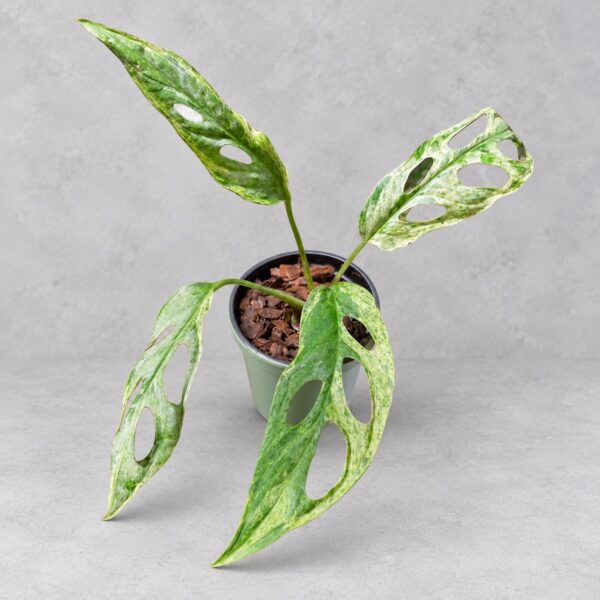
Monstera obliqua Peru
Original price was: HK$480.00.HK$280.00Current price is: HK$280.00.
In stock · store pickup
View plantMonstera 'Thai Constellation'
Monstera 'Thai Constellation'
from HK$280.00
In stock · store pickup
View plant
FREE PLANT ADVICE
Send us a photo before you change anything
WhatsApp a photo of the plant and your window light. Our Causeway Bay team will suggest care steps or plants that suit your space.
STORE · CAUSEWAY BAY
4/F, 39 Yiu Wa Street, Causeway Bay
Daily 12:30–8:00pm · ~3 min walk from Times Square
Map & directionsPlant Care