
How to Care for Monstera Adansonii Mint in Hong Kong | Plantjai

Hong Kong care guide for Monstera Adansonii Mint.
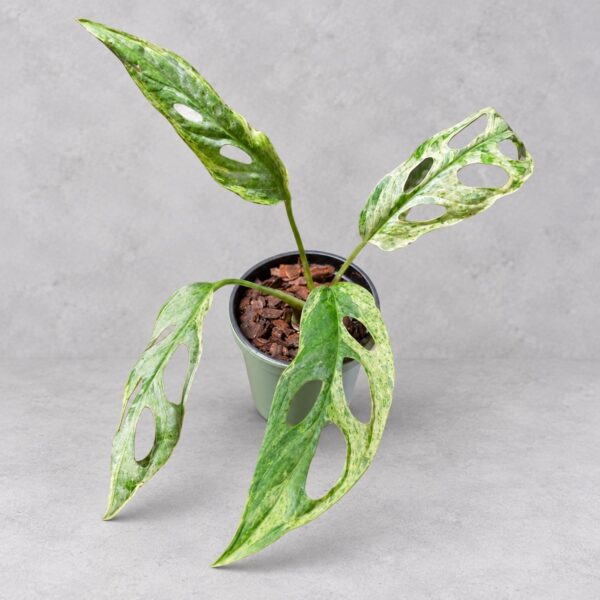
A dreamy mint-green variegation paired with the Swiss Cheese Plant's lively hole-riddled leaves — every leaf is a one-of-a-kind natural artwork, a collector-grade rare colour cultivar.
Origin & characteristics
Monstera adansonii is native to the tropical rainforest of Central America through to northern South America, distributed across southern Mexico, Panama, and Colombia, growing in the humid, shaded forest understory. 'Mint Variegated' is a rare colour-variegated cultivar developed through horticulture, with the leaf surface displaying mint-green to near-white patterning that forms a soft contrast against the plain deep-green leaf tissue.
Characteristics at a glance:
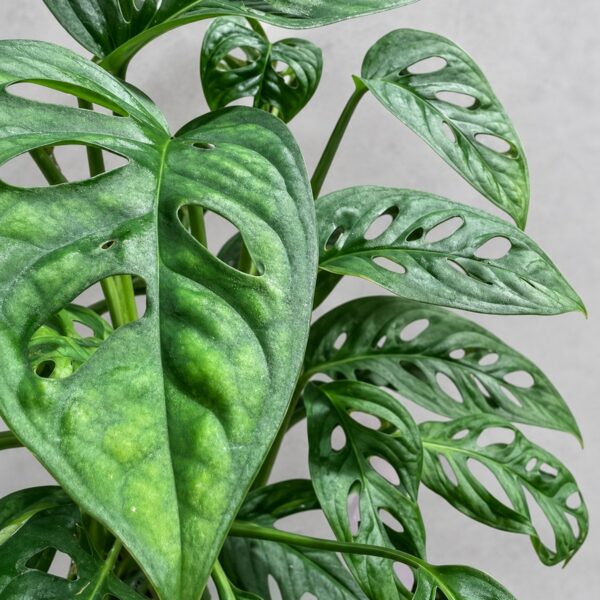
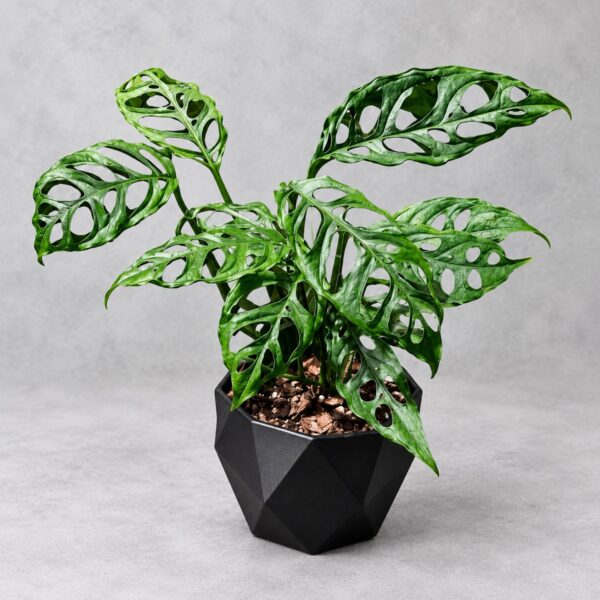
- Leaf shape: heart-shaped to oval, the surface covered with natural oval fenestrations (young leaves may not yet show holes)
- Growth habit: a climbing vine with well-developed aerial roots, able to climb a sphagnum pole
- Variegation characteristics: mint-green variegation is a "colour variegation" type, with random distribution — every new leaf differs
- Mature size: indoor leaves can reach 20-35 cm, potentially larger when climbing a support
- Growth rate: moderate to fairly fast; individuals with a high proportion of variegation grow slightly slower
⚠️ Toxicity warning: Monstera species contain calcium oxalate crystals; ingestion causes mouth burning, throat swelling, and diarrhoea. Please place it out of reach of children and pets, and wash your hands after handling.
Light
Mint variegation requires more light than the plain green species, since the variegated portions lack chlorophyll and need sufficient light to maintain plant health.
- Ideal light: bright indirect light, an east- or north-facing windowsill is most ideal
- Acceptable range: 1-2 metres from a south-facing window, or filtered through a sheer curtain
- Signs of insufficient light: new leaves become smaller, fewer holes form, variegation turns green (reversion), internodes stretch
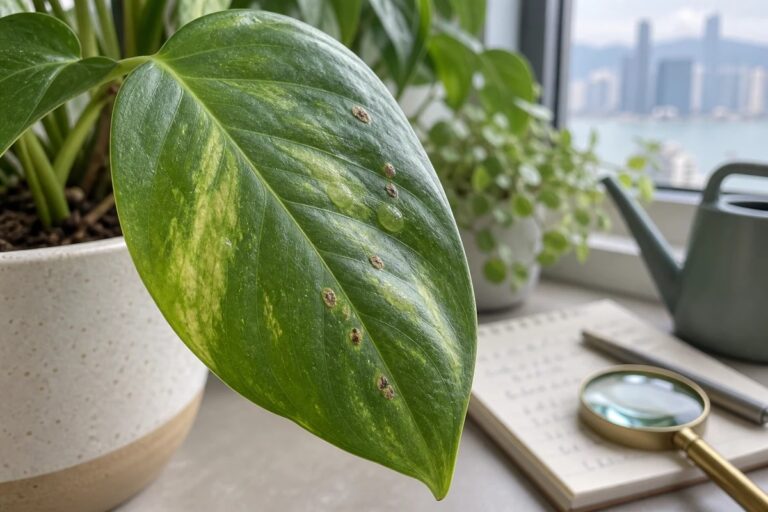
- Signs of excessive light: yellow-brown scorch marks appear on the leaf surface, variegated areas scorch and brown easily
- Tip: the mint variegation is especially prone to sunburn from direct light — always avoid direct midday summer sun
Watering
Native to a rainforest environment, this Swiss Cheese Plant prefers consistently moist but never waterlogged soil.
- Frequency: water once the top 2-3 cm of soil dries out in spring/summer, roughly every 5-7 days; roughly every 7-10 days in autumn/winter
- Water quality: room-temperature tap water left standing, filtered water, or rainwater all work fine — it isn't particularly fussy about water quality
- Method: water thoroughly until it drains from the base holes, discarding tray runoff after 30 minutes
- Signs of overwatering: leaves turn yellow (especially lower leaves), roots turn black and rot, soil remains persistently wet with a musty smell
- Signs of underwatering: leaf edges curl, leaves droop and go limp, growth stalls
- Tip: if using a sphagnum pole, keep it moist — aerial roots absorbing that moisture will help leaves grow bigger and better
Soil & pot
- Recommended soil ratio:
- Quality potting soil 40% + perlite 30% + bark/coco husk chips 20% + activated charcoal/sphagnum moss 10%
- Aim for a loose, breathable mix that drains quickly but still retains some moisture
- pH: slightly acidic to neutral (5.5-7.0)
- Pot choice:
- Terracotta pots: best breathability, ideal for beginners to manage moisture
- Plastic pots: retain moisture better, suitable for drier conditions
- Drainage holes are essential: a pot without drainage holes is strongly discouraged
- Repotting timing: when roots emerge from the drainage holes or growth noticeably slows, typically annually in spring
- Pot size: increase by only one size each time (e.g. from a 12cm pot to a 15cm pot) — oversized pots easily lead to standing water and root rot
Temperature & humidity
- Ideal temperature: 18-27°C
- Acceptable range: 15-32°C
- Minimum temperature warning: growth stalls below 10°C, risk of cold damage below 5°C
- Humidity requirement: 60% or above is most ideal
- Signs of insufficient humidity: leaf tips turn brown, new leaves struggle to unfurl smoothly, aerial roots dry out
- Ways to increase humidity:
- Place near a humidifier
- Group with other plants to create a microclimate
- Use a pebble tray underneath (ensure the pot base doesn't directly touch the water)
- Mist the leaf surface regularly (ensure good ventilation to avoid fungal issues from standing moisture)
- Tip: the variegated tissue on mint-variegated leaves is thinner, so leaf tips brown more easily in dry conditions
Common problems
| Symptom | Likely cause | What to do |
|---|---|---|
| New leaves emerging entirely plain green | Insufficient light or unstable variegation genetics | Move to a brighter spot; if several consecutive leaves revert, the plant may simply have weaker variegation genetics, which is normal |
| Brown rotten patches on the variegated areas | Usually sunburn, or leaf-surface moisture combined with strong light exposure | Avoid direct midday sun; mist in the morning so leaves are dry before intense sun hits |
| Leaves getting smaller with fewer holes | Insufficient light, no climbing support, or plant not yet mature | Provide a sphagnum pole to climb and increase indirect light; mature leaves will naturally develop more holes |
| Aerial roots growing messily everywhere | This is normal, not a problem | Don't cut them — guide them onto a sphagnum pole or into moist sphagnum moss instead |
Pests to watch for: spider mites (in dry conditions), aphids, and scale insects. Check the leaf undersides and new shoots regularly; treat with soapy water or neem oil spray if pests are found.
Propagation: stem cuttings are simplest. Cut just below a node, ensuring 1-2 aerial root points are included, then insert into sphagnum moss or loose soil, keeping it warm and moist. Roots typically form within 2-4 weeks. It also adapts well to water propagation — place a cutting with aerial roots in water or a semi-hydroponic setup, changing the water regularly and adding a little hydroponic nutrient solution.
How to explain to customers
"This Mint Variegated Monstera adansonii has become really popular recently — that soft mint-green variegation is absolutely dreamy, and it instantly elevates any room the moment you put it on display. It's a climbing plant, so it's best to give it a sphagnum pole to climb — it'll grow upward on its own, and the leaves will get bigger and more beautiful over time. Just remember the variegated areas are a bit delicate, so avoid placing it in direct harsh sun — bright indirect light suits it best. For watering, let the soil dry out first before watering again; it's better to underwater slightly than to drown the roots. And one more important note: Monstera species are toxic, so if you have young children or pets at home, please keep it up high where they can't reach or chew on it."
Fun facts
- In the wild, Monstera adansonii climbs steadily up large trees to reach the canopy; mature leaves develop larger holes, believed to help rainwater drain through and reduce wind resistance
- The mint-green colour of 'Mint Variegated' isn't your typical white or yellow variegation — it's a rarer tonal variation that sets it apart among variegated Monstera cultivars
- The Swiss Cheese Plant nickname is sometimes mistakenly applied — while both this species and Monstera deliciosa have hole-riddled leaves, they're often confused with one another, though they are distinct species
Keywords
Monstera adansonii Mint Variegated, mint variegated Monstera, Swiss Cheese Plant, colour variegated Monstera, rare cultivar, climbing foliage plant, sphagnum pole, rainforest plant, indoor plant, foliage plant, Hong Kong plant shop, Plantjai, Monstera care, variegated plant, calcium oxalate toxic, vining plant, aerial root plant
參考資料(想知來源可展開)
References
- Royal Botanic Gardens, Kew — Plants of the World Online: Monstera adansonii, https://powo.science.kew.org/
- ASPCA — Toxic and Non-Toxic Plant List, https://www.aspca.org/pet-care/animal-poison-control/toxic-and-non-toxic-plants
⚠️ Contains calcium oxalate crystals; toxic to humans and pets if ingested. Keep out of reach of children and pets.
Plantjai · Causeway Bay collector indoor plants · WhatsApp +852 66807550
For Hong Kong homes and offices. Stock and pricing follow the product page.
IN STORE NOW
Plants for this guide
Related plants in stock now — live prices, delivery or Causeway Bay pickup.
Monstera obliqua Peru
Original price was: HK$480.00.HK$280.00Current price is: HK$280.00.
In stock · store pickup
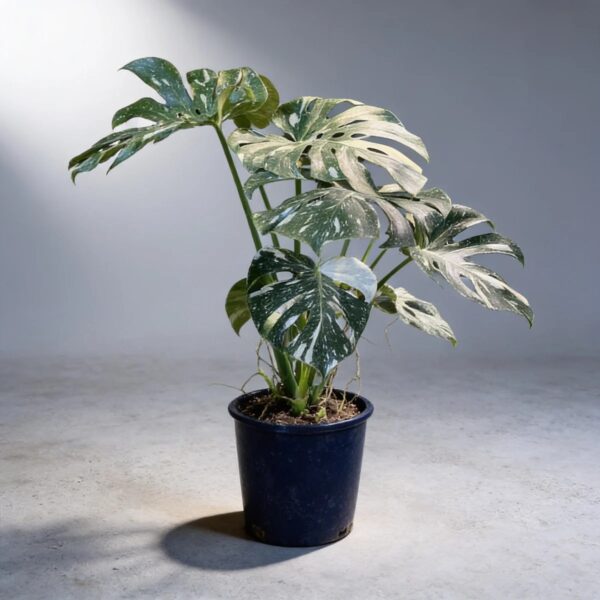
View plantMonstera 'Thai Constellation'
Monstera 'Thai Constellation'
from HK$280.00
In stock · store pickup
View plant
FREE PLANT ADVICE
Send us a photo before you change anything
WhatsApp a photo of the plant and your window light. Our Causeway Bay team will suggest care steps or plants that suit your space.
STORE · CAUSEWAY BAY
4/F, 39 Yiu Wa Street, Causeway Bay
Daily 12:30–8:00pm · ~3 min walk from Times Square
Map & directionsPlant Care