
How to Care for Hoya Spartiodes in Hong Kong | Plantjai

Plantjai 植仔 · Care Encyclopedia
Hoya Spartiodes
Hong Kong care guide — useful before you buy and after it arrives.
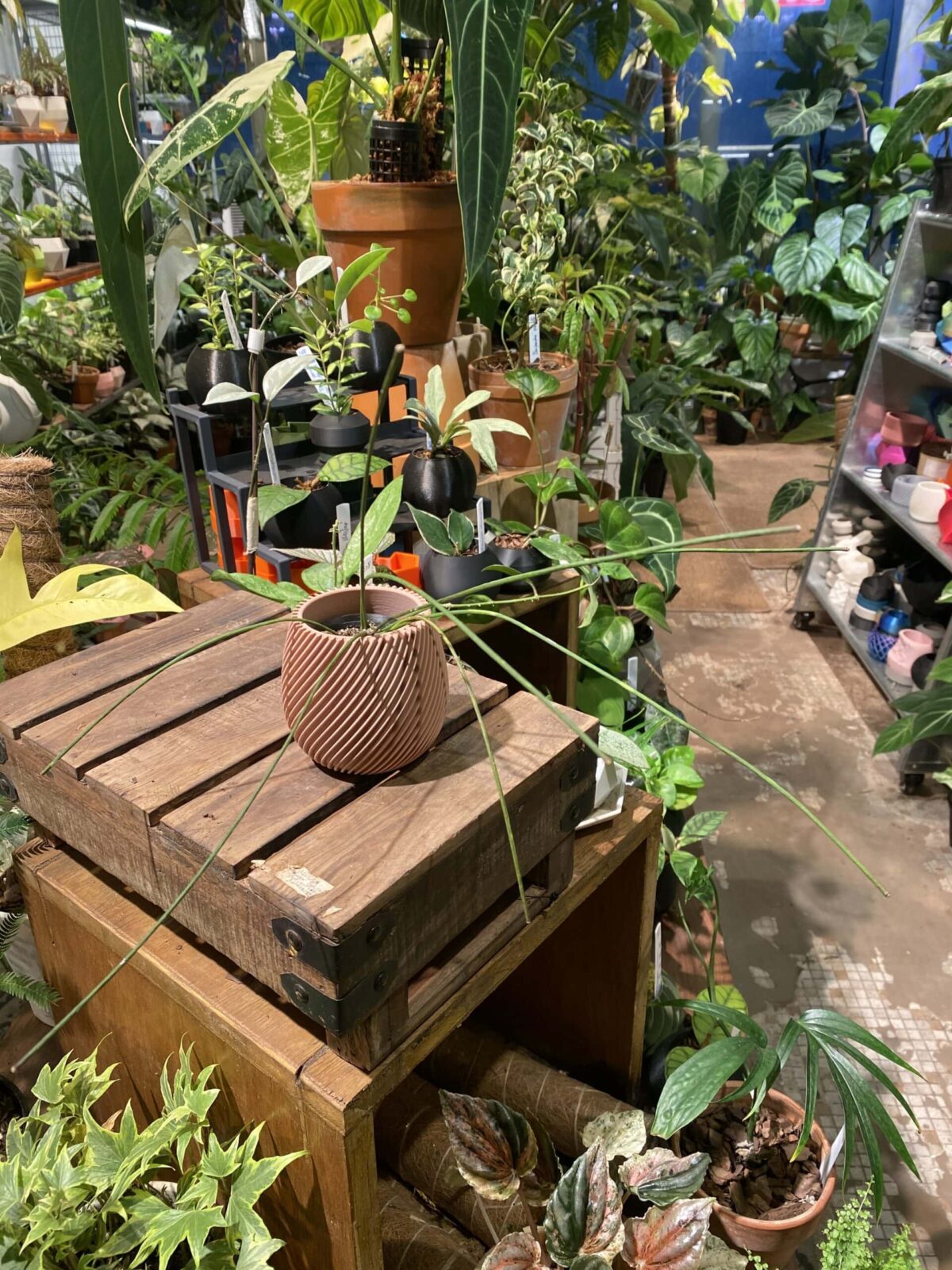
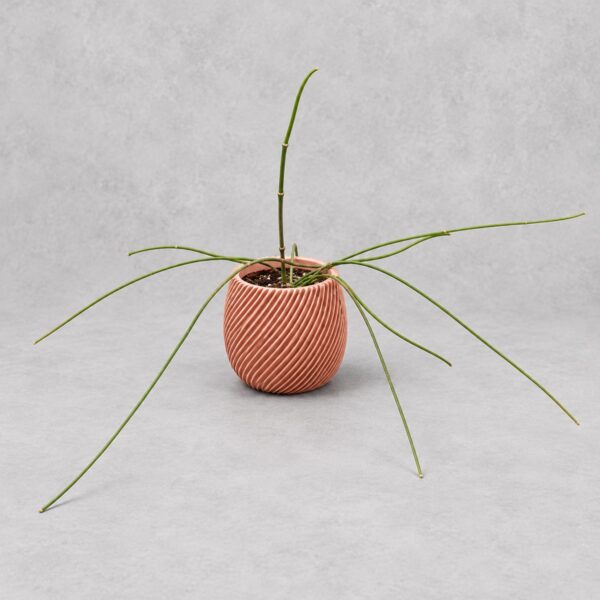
Shop this plantNature's ultimate minimalist masterpiece — almost entirely leafless, relying on its verdant green stems for photosynthesis, and blooming amber wax flowers — a truly unique presence in any Hoya collection.
Botanical status: confirmed
Also known as: Broom-Like Hoya
Brand: Plantjai
Origin & characteristics
The Broom-Leaf Hoya is native to tropical Southeast Asia, and is one of the most distinctive members of the entire Hoya genus. Its most striking feature is that it's almost completely leafless — the whole plant consists of slender, verdant green stems, which take over the role of photosynthesis normally performed by leaves. At maturity, it produces small clusters of star-shaped, waxy flowers at the stem tips, ranging in colour from yellow to amber, sometimes with a soft apricot or pink blush.
Indoors, its vines can reach 0.6–1.2 metres, with moderate to slow growth. Thanks to its extremely minimalist appearance, the Broom-Leaf Hoya is a real conversation piece in any plant collection, often described as a "modern art piece of the plant world."
Light
- Ideal position: an east-facing window, or a bright indirect light spot 1.5 metres from a south- or west-facing window
- Light requirement: bright indirect light
- Why it matters: the Broom-Leaf Hoya relies entirely on its stems for photosynthesis, giving it a higher light requirement than typical leafy Hoyas — insufficient light directly causes stalled growth
- Notes: it can tolerate a small amount of gentle morning sun, but harsh midday sun will scorch the stems
- Tip: if you only have a south-facing window, hang a sheer curtain or move the plant back 1.5 metres to reduce light intensity
Watering
- Principle: "better dry than wet" — water only once the mix is almost completely dry
- Frequency: roughly every 12–18 days (adjust to season and environment)
- Checking method: insert a finger 2–3 cm into the soil and feel for dryness; or lift the pot to gauge its weight — a light pot indicates dryness
- Method: water thoroughly until it drains from the base, discarding saucer runoff after 30 minutes
- Winter adjustment: reduce watering frequency, waiting even longer after the mix dries out before watering again
- Notes:
- ❌ Never let it get too wet — without leaves to buffer excess moisture, root rot sets in extremely quickly
- ❌ Don't mist for humidity, as it may cause stem rot
- ✅ A fast-draining mix is the key to successful care
Soil & pot
- Mix recipe (an extremely fast-draining epiphytic blend):
- 5 parts orchid bark (medium to large grade)
- 2 parts perlite (3–5mm)
- 2 parts pumice
- 1 part horticultural charcoal
- A very small amount of coco coir chunks (for anchoring only)
- Pot choice: must have drainage holes — a terracotta or breathable plastic pot
- Critical requirement: drainage holes are non-negotiable — even the most fast-draining mix will turn soggy in a pot without holes
- When to repot: roughly every 1–2 years, or once roots fill the pot
- ❌ Avoid: regular potting soil, sphagnum-moss-based mixes, decorative pots without drainage holes, self-watering pots
Temperature & humidity
| Item | Ideal range | Notes |
|---|---|---|
| Growing temperature | 18–29°C | A warm environment suits it best |
| Minimum temperature | 15°C | Growth stalls if sustained below 15°C |
| Humidity | 50–70% | Moderate humidity is sufficient |
| Drought tolerance | Strong | More drought-tolerant than most Hoyas |
- Although the Broom-Leaf Hoya can tolerate fairly dry air, moderate humidity helps keep the stems plump and green
- A pebble tray can help raise ambient humidity (keep the pot base clear of the water surface)
- Avoid placing near AC vents, heaters, or ventilation outlets
Common problems
| Issue | Likely cause | What to do |
|---|---|---|
| Stems turning soft and rotting | Overwatering or mix too wet | Stop watering immediately, cut away rotten stems, repot in fresh fast-draining mix |
| Stems wrinkling and yellowing | Excessive drought or withered roots | Check root health, adjust watering frequency |
| No flowering | Insufficient light or immature plant | Provide brighter indirect light, and never cut off the peduncle |
| Stalled growth | Insufficient light, temperature too low, or aged mix | Check environmental conditions, repot with fresh mix if necessary |
| Mealybugs | Pests hiding along the stems | Wipe with 70% alcohol on a cotton swab, then treat with insecticidal soap or neem oil weekly |
How to explain to customers
"Isn't this Broom-Leaf Hoya special? It's almost completely leafless, relying entirely on these verdant green stems for photosynthesis — nature's most minimalist design! It has such a modern art feel at home, friends will definitely ask where you got it. To care for it, remember three words — better dry than wet — because without leaves to absorb excess moisture, root rot sets in very quickly. So the soil needs to be the most fast-draining mix possible, mainly bark, perlite, and pumice — regular potting soil definitely won't do. It needs plenty of light, bright indirect light being ideal. When it flowers, you get amber waxy little flowers at the stem tips, so pretty! Most importantly, never cut off the flower spur — it'll rebloom from the same spot next time."
Fun facts
- The Broom-Leaf Hoya's species name "spartioides" comes from the Greek "spartos," meaning "broom," describing its slender, upright, broom-like stem structure
- It's one of the rare flowering plants that photosynthesises entirely through its stems, an adaptation that allows it to survive in extremely arid environments
- The Broom-Leaf Hoya is listed by the ASPCA as non-toxic to cats and dogs, making it one of the very few rare species you can confidently place somewhere your pets can reach
- Although it lacks traditional leaves, it still produces the classic star-shaped Hoya wax flowers — proof that flowers are truly the soul of a Hoya!
Keywords
Broom-Leaf Hoya, Hoya spartioides, leafless Hoya, Broom-Like Hoya, stem photosynthesis, minimalist plant, interior design plant, Plantjai, amber flowers, waxy flowers, pet-safe plant, drought-tolerant plant, epiphyte, rare Hoya
參考資料(想知來源可展開)
References
- Royal Botanic Gardens, Kew — Plants of the World Online: Hoya spartioides, https://powo.science.kew.org/
- ASPCA — Toxic and Non-Toxic Plant List, https://www.aspca.org/pet-care/animal-poison-control/toxic-and-non-toxic-plants
⚠️ Non-toxic to cats and dogs; sap may cause mild skin irritation in sensitive individuals.
Plantjai · Causeway Bay collector indoor plants · WhatsApp +852 66807550
For Hong Kong homes and offices. Stock and pricing follow the product page.
IN STORE NOW
Plants for this guide
Related plants in stock now — live prices, delivery or Causeway Bay pickup.
FREE PLANT ADVICE
Send us a photo before you change anything
WhatsApp a photo of the plant and your window light. Our Causeway Bay team will suggest care steps or plants that suit your space.
STORE · CAUSEWAY BAY
4/F, 39 Yiu Wa Street, Causeway Bay
Daily 12:30–8:00pm · ~3 min walk from Times Square
Map & directionsPlant Care