
How to Care for Hoya Polyneura Albomarginata in Hong Kong | Plantjai

Plantjai 植仔 · Care Encyclopedia
Hoya Polyneura Albomarginata
Hoya polyneura albomarginata 魚尾外錦毬蘭
Hong Kong care guide — useful before you buy and after it arrives.
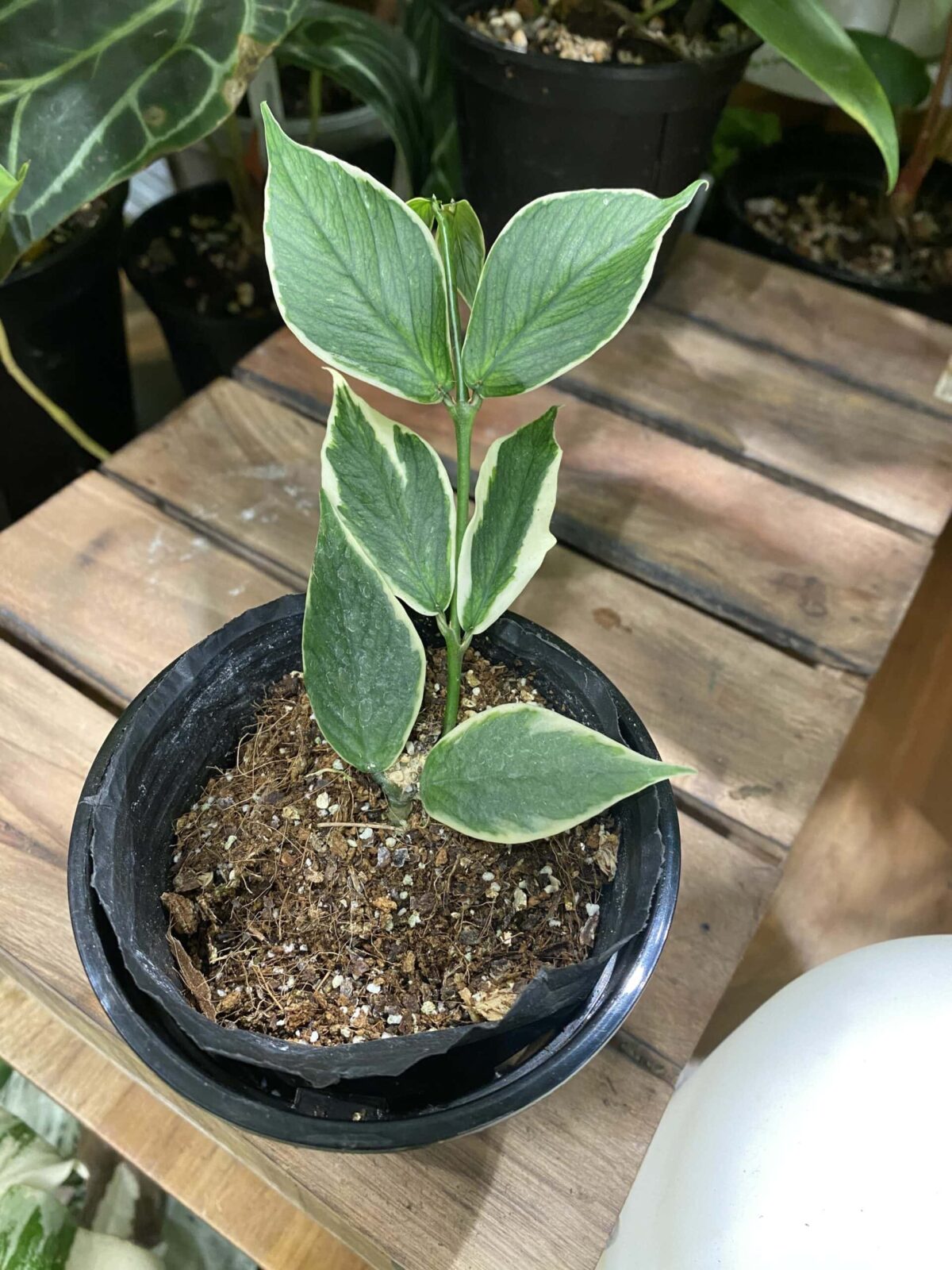
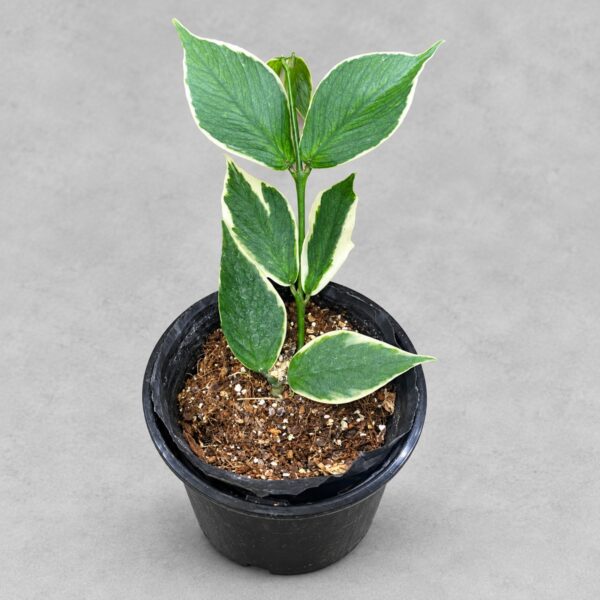
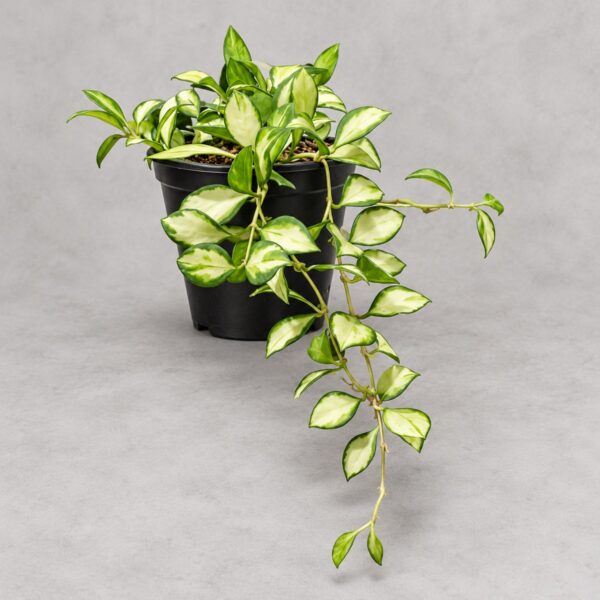
Shop this plantA variegated form of the fishtail Hoya with white to creamy margins on the leaf edges, the fish-bone venation paired with a variegated border — every leaf looks like a piece of delicate embroidery.
Origin & characteristics
The variegated fishtail Hoya is a variegated form of the species Hoya polyneura, whose original form is native to tropical montane forest in India's Western Ghats, growing epiphytically on tree trunks and rocks. 'Albomarginata' refers to white (albo-) variegation on the leaf margins, classified as marginal variegation, meaning the variegation occurs at the leaf edge with the centre remaining green. Its leaves are long and paddle-shaped, with a deep green base and silvery-white fish-bone venation, plus a white or creamy leaf border, creating rich visual layering. Its growth habit is vining or lightly climbing, with delicate, elegant vines; mature plants produce pale pink to creamy star-shaped flowers with a red centre and a subtle sweet fragrance.
Botanical note: Hoya polyneura 'Albomarginata' is a horticultural cultivar name, sometimes noted in literature as Hoya polyneura f. albomarginata. Since multiple variegated forms of the fishtail Hoya exist in the trade (including central and marginal variegation), refer to the actual variegation pattern on your specific plant if in doubt.
Light
- Ideal light: bright indirect light, with an east- or west-facing window being most suitable. To keep the white variegation vivid, it needs more light than the solid green form, but avoid harsh midday direct sun.
- Light reference: roughly 2,500–4,500 lux at leaf level. Measurable with a phone light meter app.
- Notes: too little light causes variegation to fade or even revert, with new leaves potentially coming in solid green; too much light easily scorches the white variegated portions, turning them brown. Rotate the pot 90 degrees weekly for even light exposure on all sides. When natural light is insufficient in autumn/winter, consider supplementing with a full-spectrum LED grow light (3,000–5,000K) for 10–12 hours daily.
Watering
- Watering principle: alternate wet and dry, watering once the top 1–2 inches of soil dries out. Variegated cultivars have more delicate root systems, making them more sensitive to standing water.
- Seasonal adjustment:
- Spring/summer (growing season): water roughly every 7–10 days, adjusted for ambient humidity and ventilation
- Autumn/winter (slower growth): water roughly every 14–21 days, only once the soil is fully dry
- Watering method: water slowly until it drains from the base, discarding saucer runoff within 15 minutes. Never let water sit at the base for long periods.
- Observation cues: leaves curling slightly downward signals thirst; plump, glossy leaves indicate adequate hydration. If the white variegated portions develop a translucent, water-soaked appearance, this may indicate overwatering or insufficient air circulation.
Soil & pot
- Soil recipe: needs an extremely fast-draining, breathable mix. Recommended recipe (by volume):
- 40% medium-grade orchid bark (pine bark, 6–12mm particles) — provides structure and aeration
- 30% peat moss or coco coir — retains slight moisture
- 20% coarse perlite (3–5mm) — enhances drainage
- 10% horticultural charcoal — filters impurities, inhibits fungus
- Pot choice: plastic or glazed ceramic pots retain moisture better; terracotta is more breathable but dries faster, requiring more frequent watering. Drainage holes at the base are essential.
- Repotting: repot every 2–3 years, in spring. Hoyas like being slightly pot-bound, so choose a new pot only about 1 inch larger than the current one.
Temperature & humidity
- Ideal temperature: 18–27°C (65–80°F).
- Minimum temperature: never below 10°C (50°F); prolonged temperatures below 13°C stall growth and may even cause cold damage.
- Humidity: 60–80% is ideal. Below 50%, leaf edges easily dry out and curl — use a humidifier or group plants together to raise humidity.
- Note: avoid placing near AC vents, heaters, or doors/windows, since dramatic temperature swings cause brown spotting on the variegated portions.
Common problems
| Issue | Likely cause | What to do |
|---|---|---|
| White variegation turning green | Insufficient light | Move to a brighter spot, gradually increasing light |
| Variegated portions browning and withering | Sunburn from excessive light | Move away from strong light, filter with a sheer curtain |
| Yellowing leaves | Overwatering causing root rot | Check roots, trim rot, repot in fresh soil |
| Curling, soft leaves | Underwatering or humidity too low | Water an appropriate amount, raise ambient humidity |
| Stalled growth | Temperature too low or roots have filled the pot | Check temperature, consider repotting in spring |
| Brown spots on leaves | Fungal infection, usually from prolonged leaf-surface moisture | Avoid wetting the leaf surface, improve ventilation, use a copper fungicide for severe cases |
Pet safety: Hoyas are non-toxic to cats and dogs. Although the sap doesn't contain lethal toxins, consuming large amounts may cause mild digestive upset, so it's best to discourage pets from chewing on the leaves.
How to explain to customers
"The variegated fishtail Hoya is the variegated version of the fishtail Hoya, with a white variegated border on the leaf edges that looks just like embroidery. It likes bright indirect light — enough light is what keeps that lovely white border looking its best, since too little light causes it to fade back to green. For watering, let the soil surface dry out fully before watering — the roots really dislike standing water, and root rot is a real problem. Humidity should ideally be 60-80%, so use a humidifier if your home is dry. Remember to bring it indoors in winter, since it doesn't tolerate cold well. When it flowers, you get fragrant pale pink blooms!"
Fun facts
- The fishtail Hoya's venation pattern resembles fish bones, giving it the English name "Fishtail Hoya," though its veining more closely resembles a nerve diagram, hence the alternate name "Nerve-leaf Hoya."
- The white variegated portions lack chlorophyll and cannot photosynthesize, which is why marginal variegation cultivars need more light than solid green forms — relying on the green portions to produce enough nutrients.
- Never cut off the peduncle (flower spur) after a Hoya flowers, since old peduncles can rebloom repeatedly — cutting it off wastes all that stored energy.
- Hoya polyneura's native habitat, India's Western Ghats, is a UNESCO World Heritage Site with extraordinarily high biodiversity.
Keywords
Hoya polyneura albomarginata, variegated fishtail Hoya, fishtail Hoya, variegated leaf, marginal variegation, white variegation, Fishtail Hoya, bright indirect light, high humidity, well-draining soil, Hoya care, epiphyte, non-toxic to pets, Plantjai
參考資料(想知來源可展開)
References
- Royal Botanic Gardens, Kew — Plants of the World Online: Hoya polyneura, https://powo.science.kew.org/
- ASPCA — Toxic and Non-Toxic Plant List, https://www.aspca.org/pet-care/animal-poison-control/toxic-and-non-toxic-plants
⚠️ Non-toxic to cats and dogs; sap may cause mild digestive irritation if ingested in quantity.
Plantjai · Causeway Bay collector indoor plants · WhatsApp +852 66807550
Plantjai shop · In stock online
Hoya polyneura albomarginata
HK$580.00
Hong Kong delivery · Causeway Bay pickup
For Hong Kong homes and offices. Stock and pricing follow the product page.
IN STORE NOW
Plants for this guide
Related plants in stock now — live prices, delivery or Causeway Bay pickup.
FREE PLANT ADVICE
Send us a photo before you change anything
WhatsApp a photo of the plant and your window light. Our Causeway Bay team will suggest care steps or plants that suit your space.
STORE · CAUSEWAY BAY
4/F, 39 Yiu Wa Street, Causeway Bay
Daily 12:30–8:00pm · ~3 min walk from Times Square
Map & directionsPlant Care