
How to Care for Hoya Burtoniae in Hong Kong | Plantjai

Plantjai 植仔 · Care Encyclopedia
Hoya Burtoniae
Hong Kong care guide — useful before you buy and after it arrives.
Shop this plantVelvety-textured leaves and a rich honey scent when it flowers — a sweet choice for anyone getting into Hoyas for the first time.
Origin & characteristics
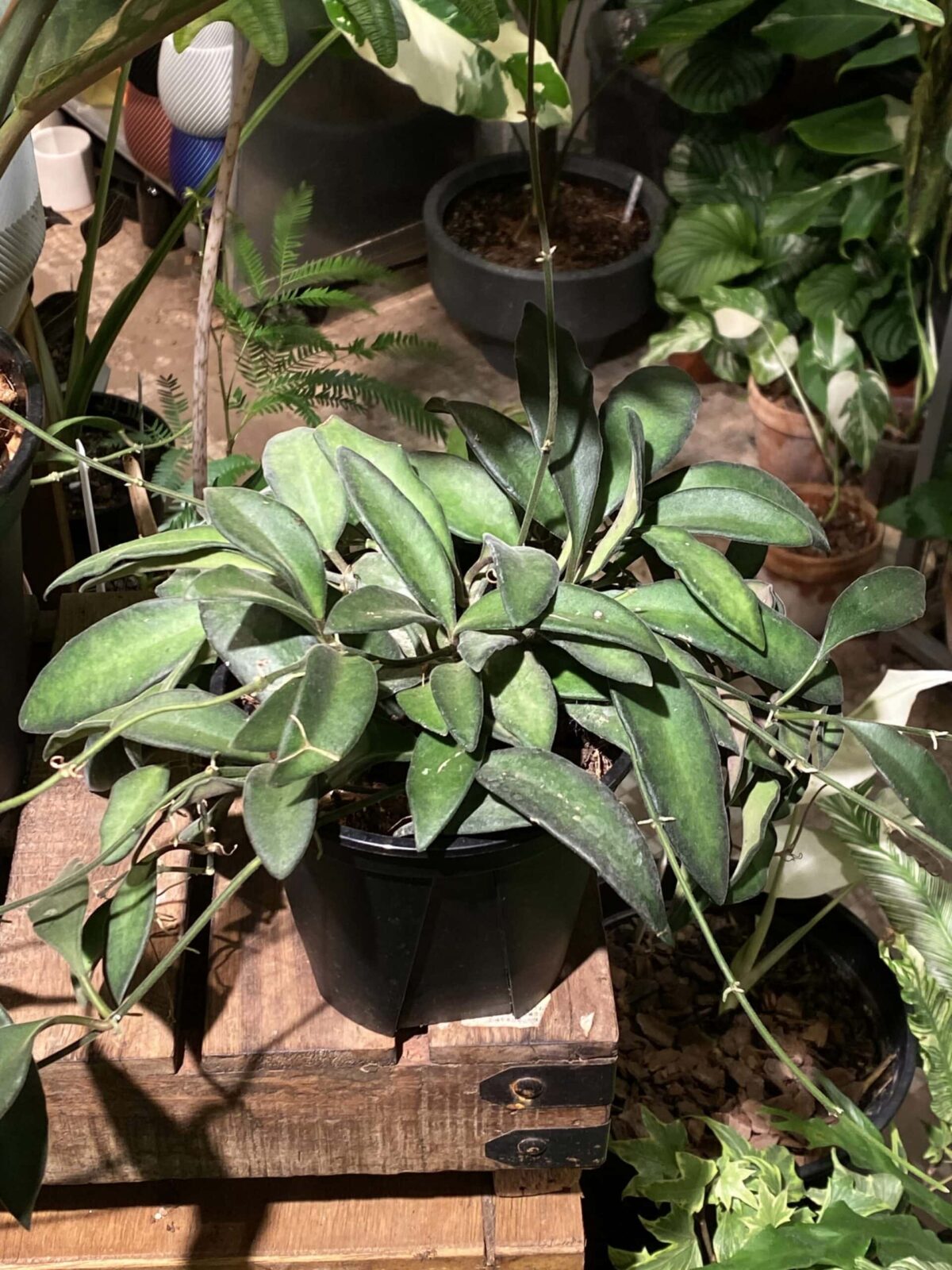
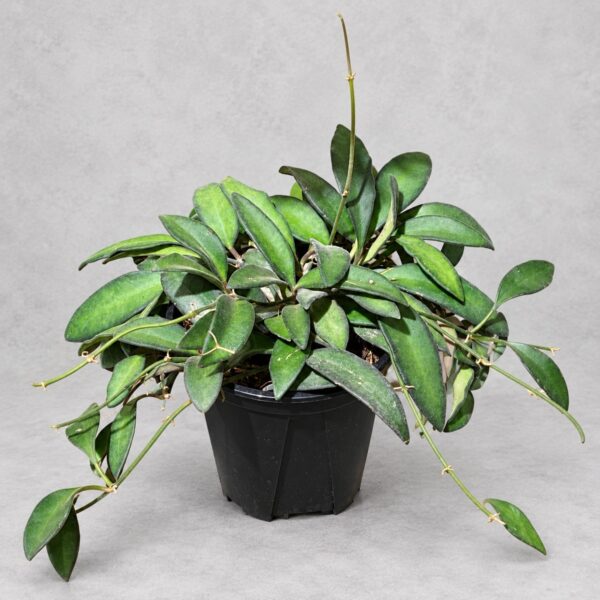
Native to Southeast Asian tropical rainforests, Hoya burtoniae is a perennial evergreen climbing vine in the Apocynaceae (Hoya) family. Its small, oval leaves are covered in a fine, soft fuzz, giving them a velvety feel. Leaf colour is deep green with silvery markings, while the undersides are flushed purple-red — genuinely ornamental. Star-shaped flowers cluster into globe-shaped umbels in shades from deep red to brown, with a waxy sheen at the centre; blooms last a long time and carry an intense honey-like fragrance.
Growth is moderate, and it does well in hanging pots or trained onto a moss pole. The vines trail naturally or can be guided to climb. Hoya burtoniae is an easy-care species with strong environmental adaptability, well-suited to Hong Kong indoor conditions. Non-toxic to pets, so it's safe for households with cats and dogs.
Light
- Ideal light: bright indirect light, roughly 8,000–15,000 lux
- Placement: east- or north-facing windows are ideal; a west-facing window works too if kept away from direct sun
- Avoid: harsh midday direct sun, which easily scorches the fuzzy leaves
- How to tell: vivid green leaves with clear markings indicate suitable light; thin, pale leaves suggest too little light; scorched yellow patches mean too much
- Tip: a north-facing window paired with a grow light also supports healthy growth
Watering
- Frequency: roughly every 5–7 days in summer, every 10–14 days in winter
- Method: let the top 2–3 cm of soil dry out before watering thoroughly, avoiding standing water
- Water quality: room-temperature tap water is fine; letting it sit overnight to dissipate chlorine is better; rainwater or filtered water is best
- Note: avoid frequently misting the fuzzy leaves — moisture that lingers can cause leaf spot; use a humidifier or a pebble tray instead if you need more humidity
- Winter adjustment: reduce watering frequency below 18°C, keeping the soil slightly dry
- Warning signs: wrinkled, soft leaves indicate underwatering; yellowing, dropping leaves may signal overwatering
Soil & pot
- Soil recipe: use a loose, breathable mix, such as:
- 40% quality succulent soil
- 30% perlite or pumice
- 20% bark or coconut husk chips
- 10% sphagnum moss
- pH: slightly acidic to neutral (pH 6.0–7.0)
- Pot choice: terracotta pots are ideal for breathability; plastic pots work too if drainage is watched
- Drainage: must have drainage holes; adding a layer of clay pebbles at the bottom improves drainage
- Repotting: roughly every 1–2 years, best done in spring, disturbing the roots as little as possible
- Tip: this species prefers being slightly root-bound — there's no need to rush into a larger pot
Temperature & humidity
- Ideal temperature: 18–28°C for best growth
- Minimum tolerance: can briefly handle 10°C, but shouldn't stay below 15°C long-term
- Summer note: above 32°C, boost ventilation to avoid stuffiness
- Humidity: 40–70% relative humidity
- Raising humidity: use a humidifier, a pebble tray, or group with other plants
- Ventilation: good airflow is crucial for preventing pests and disease, but avoid placing it directly in an AC airflow path
Common problems
| Issue | Likely cause | What to do |
|---|---|---|
| Wrinkled, soft leaves | Underwatering or root damage | Check soil moisture and water appropriately; trim any rotten roots and repot if needed |
| Yellowing, dropping leaves | Overwatering causing root rot | Reduce watering frequency, check drainage, repot and trim roots if needed |
| Brown spots on leaf surface | Sunburn or fungal infection | Move away from strong light; remove affected leaves and apply fungicide if diseased |
| Not growing, or growing slowly | Insufficient light or too cold | Move to a brighter spot; winter dormancy is normal |
| No flowers | Insufficient light or immature plant | Increase light intensity; Hoyas typically need 2–3 years of growth before flowering |
| Thin, leggy stems | Severe light deficiency | Move to a brighter spot immediately; pruning leggy growth encourages new shoots |
| Fuzz turning black | Prolonged moisture on the leaf surface | Avoid misting the leaves directly, and improve air circulation |
How to explain to customers
"This Hoya burtoniae is really easy to look after, perfect for beginners! The leaves have a fuzzy texture that feels lovely to touch, and when it flowers you get an intense honey-like scent. Just keep it near a window with indirect light — no need to water constantly, just wait until the soil dries out first. Remember not to spray water directly on the leaves all the time, or the fuzz can develop mould. It's non-toxic to cats and dogs, so it's totally safe to keep at home!"
Fun facts
- The source of that honey scent: the fragrance evolved specifically to attract night-flying moth pollinators, which is why it's strongest in the evening and at night.
- What the fuzz is for: the leaf fuzz isn't just decorative — in its native habitat, it helps collect moisture from the air and reduces damage from intense direct sunlight.
- Easily confused with a relative: Hoya burtoniae is often mixed up with Hoya sp. aff. burtoniae, which has larger leaves and less fuzz — ask your supplier to confirm the exact provenance when buying.
- Extra-long bloom time: a single flower cluster can stay in bloom for 2–3 weeks, and after flowering, never cut off the peduncle — it will bloom again from the exact same spot.
Keywords
Hoya burtoniae, Hoya, Apocynaceae, indoor plant, climbing plant, non-toxic to pets, fuzzy leaves, honey-scented flowers, hanging plant, beginner-friendly, indirect light, drought-tolerant, Hong Kong indoor plant, Plantjai
參考資料(想知來源可展開)
References
- Royal Botanic Gardens, Kew — Plants of the World Online: genus Hoya, https://powo.science.kew.org/
- ASPCA — Toxic and Non-Toxic Plant List, https://www.aspca.org/pet-care/animal-poison-control/toxic-and-non-toxic-plants
⚠️ Non-toxic to cats and dogs; sap may cause mild skin irritation in sensitive individuals.
Plantjai · Causeway Bay collector indoor plants · WhatsApp +852 66807550
For Hong Kong homes and offices. Stock and pricing follow the product page.
IN STORE NOW
Plants for this guide
Related plants in stock now — live prices, delivery or Causeway Bay pickup.
FREE PLANT ADVICE
Send us a photo before you change anything
WhatsApp a photo of the plant and your window light. Our Causeway Bay team will suggest care steps or plants that suit your space.
STORE · CAUSEWAY BAY
4/F, 39 Yiu Wa Street, Causeway Bay
Daily 12:30–8:00pm · ~3 min walk from Times Square
Map & directionsPlant Care