
How to Care for Hoya Amicabilis in Hong Kong | Plantjai

Plantjai 植仔 · Care Encyclopedia
Hoya Amicabilis
Hong Kong care guide — useful before you buy and after it arrives.
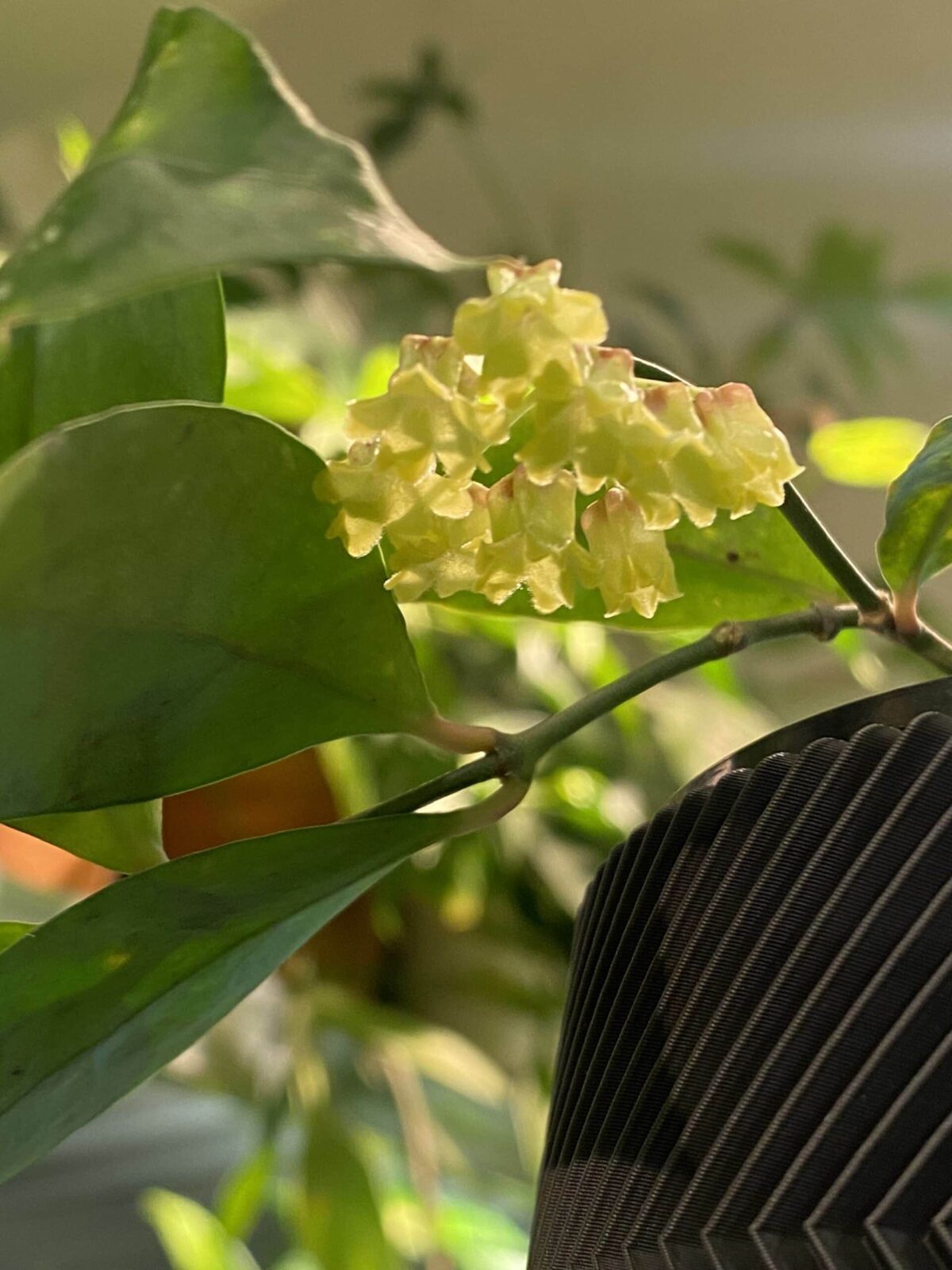
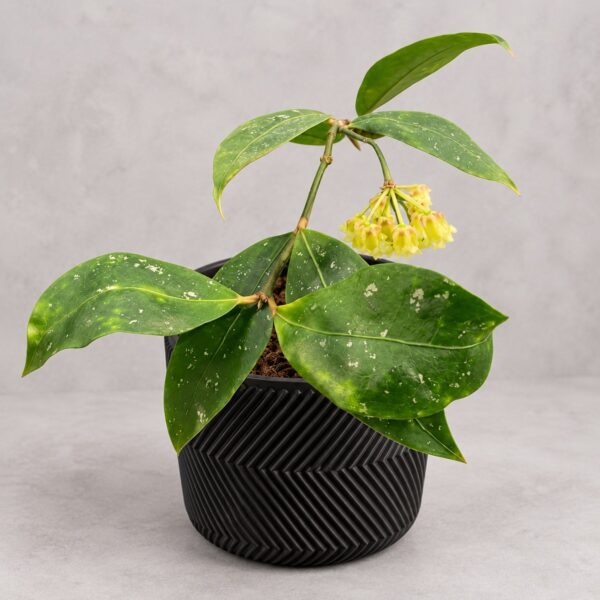
Shop this plantThe world's first Hoya discovered and formally named thanks to a Facebook post — its bright yellow bell-shaped flowers and naturally shrubby form look stunning without any need to climb.
Brand: Plantjai
Classification: Genus Hoya
Toxicity: non-toxic to pets — safe if cats or dogs happen to nibble it
Origin & characteristics
Native range: the Bruno area of Purworejo, Central Java, Indonesia, growing at 900–1,000 metres elevation within pine forests (Pinus merkusii), commonly found inside hollow tree trunks.
Plant characteristics:
- Its most distinctive trait is a shrubby growth habit — unlike most Hoyas, it doesn't climb or trail
- Leaves are thin and leathery, with a refined texture
- Flowers are bright yellow and bell-shaped, similar to Hoya nuttiana, with rectangular corona lobes
- Before pollination, it closely resembles Hoya ignorata
- First spotted in 2017 in the Facebook group "Hoya Indonesia," and formally described and named in 2019 by botanists Sri Rahayu and Michele Rodda
- The species name amicabilis comes from the Latin amicabiliter interventus, honouring social media's role in the species' discovery
Light
- Bright, indirect light is ideal — an east- or north-facing window works best
- Can tolerate brief morning direct sun, but avoid midday direct sun, which easily scorches the leaves
- Insufficient light slows growth and reduces flowering
- Rotate the pot every two weeks for even light exposure, preventing lopsided growth
Watering
- Follow the "dry before you water" principle: let the top 2–3 cm of soil dry out before watering
- Roughly every 7–10 days in summer, extending to every 14–21 days in winter
- Water until it drains from the base, ensuring the whole root system gets moistened
- Never let it sit in standing water — Hoya roots hate being smothered and wet, and root rot is difficult to reverse
- Avoid icy water — room temperature is safest
Soil & pot
Soil recipe:
- Prioritise drainage and aeration, suggested recipe:
- 2 parts quality potting soil
- 1 part perlite (for aeration)
- 1 part orchid bark or coconut husk chips (for drainage)
- A small amount of charcoal chips can be added to help inhibit bacteria
Choosing a pot:
- Terracotta is the top choice — good breathability, helps excess moisture escape
- Plastic pots can work too, but watch watering frequency more closely
- Must have drainage holes — a decorative pot without holes is never suitable
- Hoya amicabilis prefers being slightly pot-bound — don't rush to repot into something larger; every 2–3 years is enough
- When repotting, size up just one pot size
Temperature & humidity
- Ideal temperature: 18–28°C — comfortable room temperature supports healthy growth
- Minimum tolerance: around 10°C; below that risks cold damage
- Humidity: 40–60% is ideal, though it tolerates typical household humidity well
- If indoor air is too dry, try:
- Setting it on a pebble water tray (keeping the pot base clear of the water)
- Occasional misting (avoiding the flowers)
- Grouping with other plants to raise humidity together
- Avoid placing near AC or heater vents — large temperature swings make it uncomfortable
Common problems
| Issue | Likely cause | What to do |
|---|---|---|
| Yellowing, soft leaves | Overwatering causing root rot | Stop watering immediately, check roots, trim rot and repot in fresh soil |
| Shriveled, curling leaves | Severe underwatering | Soak the pot for 15–20 minutes to rehydrate, then resume normal watering |
| Slow growth, no flowers | Insufficient light | Move to a brighter spot with adequate indirect light |
| Brown spots on leaves | Sunburn or fungal infection | Avoid direct light, improve ventilation, use fungicide if needed |
| Leaf drop | Temperature too low or sudden environmental change | Move to a warm, stable spot away from cold drafts |
How to explain to customers
"This Hoya is really special — it's the first-ever species discovered and formally named because of a Facebook post! It grows in a shrubby form, so unlike other Hoyas it won't sprawl everywhere, making it perfect for a tabletop or windowsill. When it flowers, you get these striking bright yellow bell-shaped blooms. It's fairly easy to care for too — just remember to let it dry out before watering, and give it a bright spot. It's non-toxic to cats and dogs, so pet owners can grow it worry-free."
Fun facts
- A species born from social media: Hoya amicabilis is the first plant discovered through a Facebook group post. When an Indonesian hobbyist shared photos, it caught the attention of international botanists, who eventually traced it to a specimen from a garden in Java, leading to its formal publication in 2019.
- A shrubby outlier: the vast majority of Hoyas climb or trail, but Hoya amicabilis is one of the rare shrub-forming species, standing out on its own without needing any climbing support.
- A surprising discovery location: Java is densely populated, with most lowland areas already developed for farming or housing, so new species discoveries there are genuinely rare. Finding Hoya amicabilis in a pine forest at nearly 1,000 metres elevation gave scientists hope that higher-elevation areas may still hide undiscovered species.
Keywords
Hoya amicabilis, Hoya, Facebook discovery, shrub-form Hoya, bright yellow flowers, bell-shaped flowers, Java Indonesia, non-toxic, pet-friendly, indoor plant, well-draining soil, indirect light, dry-then-thorough watering, Plantjai
Plantjai · Causeway Bay collector indoor plants · WhatsApp +852 66807550
For Hong Kong homes and offices. Stock and pricing follow the product page.
IN STORE NOW
Plants for this guide
Related plants in stock now — live prices, delivery or Causeway Bay pickup.
FREE PLANT ADVICE
Send us a photo before you change anything
WhatsApp a photo of the plant and your window light. Our Causeway Bay team will suggest care steps or plants that suit your space.
STORE · CAUSEWAY BAY
4/F, 39 Yiu Wa Street, Causeway Bay
Daily 12:30–8:00pm · ~3 min walk from Times Square
Map & directionsPlant Care