
How to Care for Eucalyptus Gunnii in Hong Kong | Plantjai

Plantjai 植仔 · Care Encyclopedia
Eucalyptus Gunnii
Hong Kong care guide — useful before you buy and after it arrives.
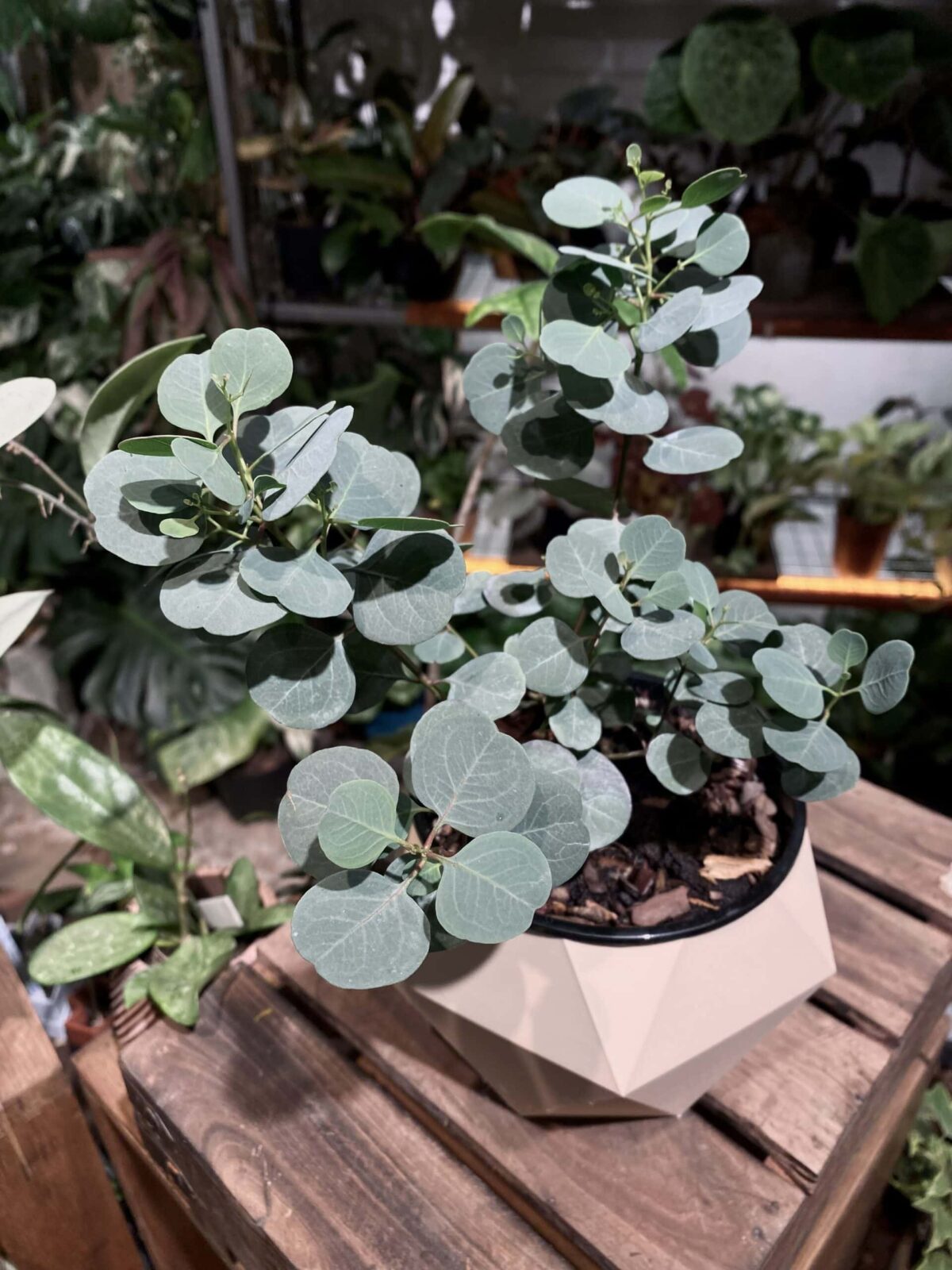
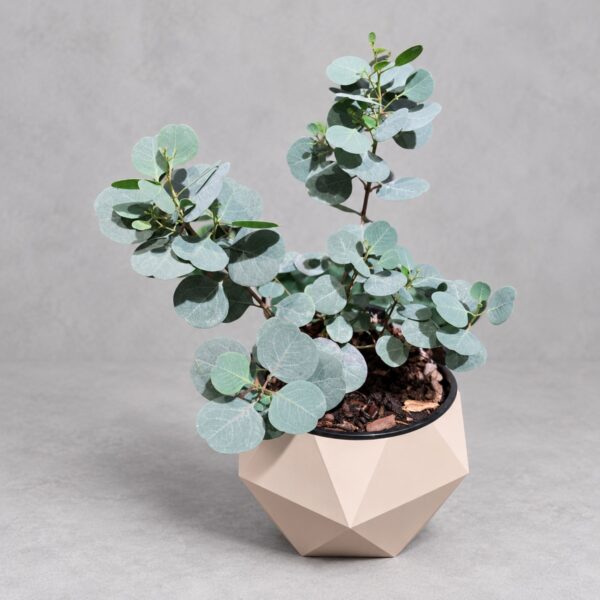
Shop this plantGrey-blue juvenile leaves with a natural matte finish, and a hard prune brings out even rounder, even bluer new growth — a favourite "colour foliage" pick for garden enthusiasts, tough and reliably showy.
Botanical name: Eucalyptus gunnii (confirmed)
Origin & characteristics
Native to Tasmania, Australia, this evergreen tree in the myrtle family (Myrtaceae) is also known as the cider gum. The name comes from its sap's high sugar content, which was historically fermented into a cider-like drink. In the wild it can exceed 20 metres, but with regular pruning it's easily kept to 1–2 metres as a potted specimen.
Its standout feature is "dual-phase foliage": young growth, or growth after a hard prune, is round, grey-blue, thick, and coated in a waxy bloom, making it highly ornamental; as it matures, the leaves become elongated and green. Because of this, enthusiasts often practise regular hard pruning (coppicing) to keep the plant in its more attractive juvenile state. The bark is grey-brown and peels in patches, revealing paler new bark beneath — an added bonus for winter interest.
⚠️ Toxicity note: eucalyptus essential oil is safe for external use on humans but should never be ingested. It's toxic to cats and dogs — pets that ingest it may show vomiting, diarrhoea, and neurological symptoms. Keep it out of reach of pets.
Light
- Full sun to part sun: needs plenty of light, at least 4–6 hours of direct sun daily
- Best placement: near a south- or east-facing window
- Insufficient light leads to leggy stems, greening leaves, and loss of the signature grey-blue colour
- Provide light shade during intense midday summer sun to prevent leaf scorch
Watering
- Principle: keep soil lightly moist during the growing season, letting it run drier in winter
- Water more frequently for the first two weeks after planting or repotting to help it establish
- Established plants are fairly drought-tolerant and can wait until the top 3–5 cm of soil dries out
- Water thoroughly until it drains from the pot, then tip out standing water
- Avoid waterlogging at all costs: eucalyptus roots are extremely prone to rot in wet soil
- Potted specimens need particular care, since roots can't dig deep for water — don't let it dry out for too long either
- Check roughly every 7–10 days in summer, extending to 14 days in winter
Soil & pot
- Drainage first: must use well-draining soil, suggested recipe:
- General potting soil 50% + coarse sand/perlite 30% + leaf mould 20%
- Cider gum adapts to a wide range of soil types, including sandy, nutrient-poor soil — but waterlogging is never acceptable
- pH: 6.0–7.0 (slightly acidic to neutral) works well
- Pot selection:
- Must have drainage holes; terracotta or breathable plastic both work
- Size according to plant size, repotting every 2 years
- Fast-growing cider gum needs enough room to spread its roots
Temperature & humidity
- Ideal temperature: 18–25°C
- Cold tolerance: cider gum is one of the more cold-hardy eucalyptus species, briefly tolerating -10°C to -15°C depending on the strain, though potted specimens are best kept above 5°C
- Keep indoor plants away from AC vents and heaters to avoid sudden temperature swings
- Humidity: 40–60% relative humidity is fine — typical indoor conditions suit it well
- If the air is too dry, mist around the plant or use a pebble tray to boost local humidity
Common problems
Juvenile leaves turning green and elongating
A natural ageing process. Mature cider gum leaves shift from round grey-blue to elongated green. To maintain the juvenile look, do a hard prune (coppicing) in late winter to early spring, cutting stems back to 5–10 cm from the base — new growth will return to juvenile form.
Yellowing, dropping leaves
Likely overwatering or poor drainage. Check for standing water in the saucer and whether the soil has become compacted. Repot with fresh soil if needed.
Leggy, sparse growth
Insufficient light. Move to a brighter spot, or consider a grow light. Spring pruning also encourages fuller branching.
Cold damage
Leaf edges turning brown and withering. Though relatively cold-hardy, potted specimens have less root protection, so bring them indoors during cold snaps. Prune off damaged sections — regrowth usually follows.
Pests
Occasional scale or spider mites. Treat with diluted neem oil or soapy water spray. Good airflow is the best prevention.
How to explain to customers
Introducing it: "Cider gum is one of the easier eucalyptus species to grow — its grey-blue rounded leaves have this lovely matte finish that photographs beautifully. And here's the fun part: if you prune it back, the new growth comes back even rounder and bluer — garden enthusiasts love playing with that."
Care essentials: "It needs a bright spot — at least 4–6 hours of sun a day. For watering, remember 'let it dry before you water' — eucalyptus really hates wet feet, so the soil must drain well. It's more cold-tolerant than most eucalyptus, but potted specimens are still safest kept above 5°C in winter."
Advanced tips: "If you want to keep those round, blue juvenile leaves, go ahead and prune hard every February or March — cut the stems right back to 5–10 cm from the ground. It'll come back with even more striking blue new growth. This technique is called coppicing, and plenty of enthusiasts do it every year."
A gentle reminder: "If you have cats or dogs, keep it up high — eucalyptus is toxic to pets. It also grows fairly quickly, so prune regularly if you want to keep it compact."
Fun facts
- Can it really make cider? Cider gum sap is high in sugar, and early Australian settlers would collect and ferment it into a drink they called "cider" — hence the name.
- Pruning magic: cider gum is one of the few trees that can withstand being cut right down to the ground (coppicing) without any issue — in fact, it responds by producing more of those lovely young, grey-blue leaves. Gardeners sometimes call this dramatic technique the "Chelsea Chop."
- One of the hardiest eucalyptus species: within the eucalyptus family, cider gum is one of the most cold-tolerant, with some strains surviving down to -18°C, which is why it can be grown outdoors in the UK and northern Europe.
- A eucalyptus empire: the genus Eucalyptus contains more than 700 species and is one of Australia's most iconic plant groups, functioning almost as the country's unofficial national tree.
- Breathe easy: the essential oil in eucalyptus leaves (eucalyptol) is a common ingredient in decongestants, cough syrups, and aromatherapy oils — no wonder its scent feels so clarifying.
Keywords
Cider gum, eucalyptus, Eucalyptus gunnii, grey-blue foliage, hard pruning, coppicing, juvenile foliage, cold-hardy, full sun, well-draining soil, hates waterlogging, minty scent, essential oil, toxic to pets, above 5°C, regular pruning, resprouting foliage, colour foliage, ornamental bark
Plantjai · Causeway Bay collector indoor plants · WhatsApp +852 66807550
Plantjai shop · In stock online
Eucalyptus gunnii
Eucalyptus gunnii
HK$228.00
Hong Kong delivery · Causeway Bay pickup
For Hong Kong homes and offices. Stock and pricing follow the product page.
IN STORE NOW
Plants for this guide
Related plants in stock now — live prices, delivery or Causeway Bay pickup.
FREE PLANT ADVICE
Send us a photo before you change anything
WhatsApp a photo of the plant and your window light. Our Causeway Bay team will suggest care steps or plants that suit your space.
STORE · CAUSEWAY BAY
4/F, 39 Yiu Wa Street, Causeway Bay
Daily 12:30–8:00pm · ~3 min walk from Times Square
Map & directionsPlant Care