
How to Care for Epipremnum Pinnatum Cebu Blue in Hong Kong | Plantjai

Hong Kong care guide for Epipremnum Pinnatum Cebu Blue.
A distinctive metallic-blue sheen across every leaf, heart-shaped when young and splitting into a dramatic fenestrated form once mature — a rare "instant upgrade" plant that thrives with minimal fuss.
Origin & characteristics
Origin: native to Cebu Island in the Philippines, 'Cebu Blue' is a perennial evergreen climbing vine in the arum family (Araceae), genus Epipremnum.
Characteristics:
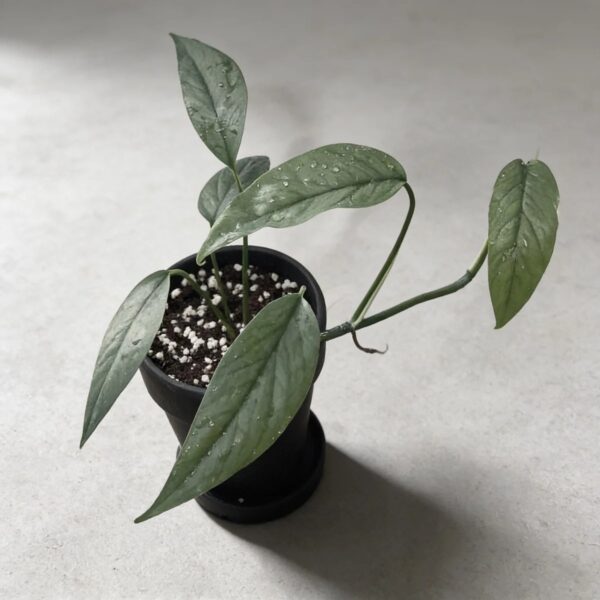
- Juvenile stage: heart- to oval-shaped leaves with a distinctive blue-grey metallic sheen and a thick, slightly waxy texture — at this stage it looks a bit like a standard pothos, but with a noticeably cooler, more elegant tone.
- Mature leaves: as the plant climbs, leaves gradually split into the classic pinnatifid form — deeply cut, feather-like lobes, with 3 to 5 pairs of splits, and mature leaves reaching 30–50 cm long.
- Well-developed aerial roots: roots readily form at the nodes, letting it grip a moss pole or tree bark for support, which in turn encourages larger and more deeply split leaves.
- Growth rate: moderate to fast; under good conditions it can extend 30–60 cm per year.
Light
Ideal environment: bright, indirect light — an east- or north-facing window is ideal.
- Tolerable range: adapts to moderate light and can even briefly handle a dimmer spot, though the blue sheen will noticeably fade and colour will turn duller.
- Avoid: prolonged direct strong sun, especially the midday sun through a south-facing window, which can cause scorched edges or burn spots.
- Reading the signs: if internodes stretch, leaves get thinner, and the blue colour fades, that signals insufficient light — move closer to a window or add a grow light.
Watering
Principle: water when the top 2–3 cm of soil has dried out.
| Season | Watering frequency | Notes |
|---|---|---|
| Spring/summer (active growth) | Roughly every 7–10 days | Check surface dryness before each watering |
| Autumn/winter (slow growth) | Roughly every 10–14 days | Cut back significantly to prevent waterlogged roots |
- Method: water slowly around the rim until excess drains from the bottom, emptying the saucer after 30 minutes.
- Water quality: room-temperature tap water is fine; if your water is on the harder side (as in parts of Hong Kong), rainwater or filtered water occasionally is a nice touch.
- Overwatering signs: yellowing leaves (especially older, lower ones), persistently damp, musty-smelling soil.
- Underwatering signs: leaves slightly curling and softening, or soil fully dried and pulling away from the pot edge — water soon.
Soil & pot
Soil recipe:
Use a loose, well-draining medium, such as:
- 50% quality indoor plant potting mix
- 30% perlite or coco coir
- 20% bark or coco husk chips
Goal: water should drain from the base within 1–2 minutes rather than pooling in the pot.
Choosing a pot:
- Terracotta: best drainage, well suited for beginners, though it dries faster and needs more frequent moisture checks.
- Plastic: retains moisture longer, meaning less frequent watering, but keep an eye on drainage holes staying clear.
- Size: one to two sizes up (about 3–5 cm wider) is enough — this plant dislikes an oversized pot, which stays wet too long and invites root rot.
Repotting: roughly every 1–2 years — once roots emerge from the drainage holes, or the soil dries unusually fast after watering, it's time to size up.
Temperature & humidity
Temperature:
- Ideal range: 18–28°C
- Minimum tolerance: around 12–15°C; below 10°C growth stalls, and prolonged low temperatures may cause cold damage
- Hong Kong summer: generally trouble-free indoors — just avoid direct AC airflow
- Hong Kong winter: safe in most homes, though night temperatures near a window can dip — consider moving it further inside
Humidity:
- Ideal humidity: 50–70%
- Adaptability: not especially fussy — typical Hong Kong indoor humidity (around 60–80%) suits it well
- Raising humidity: if long-term AC use is drying the air, occasional misting, a humidifier, or a pebble tray under the pot all help
Common problems
| Issue | Likely cause | What to do |
|---|---|---|
| Leaves losing their blue sheen, turning dull green | Insufficient light | Move closer to a window or add a grow light |
| Yellowing leaves (starting from older, lower leaves) | Overwatering / poor drainage | Check drainage, reduce watering frequency, inspect roots if needed |
| Scorched or browning leaf tips/edges | Air too dry / fertiliser too strong / water too alkaline | Raise humidity, dilute fertiliser, switch to filtered water |
| Elongated internodes, sparse, thin leaves | Severe light deficiency | Move to a brighter spot immediately |
| Mature leaves not splitting | Lack of a climbing support / plant not yet mature | Add a moss pole and let it climb; be patient |
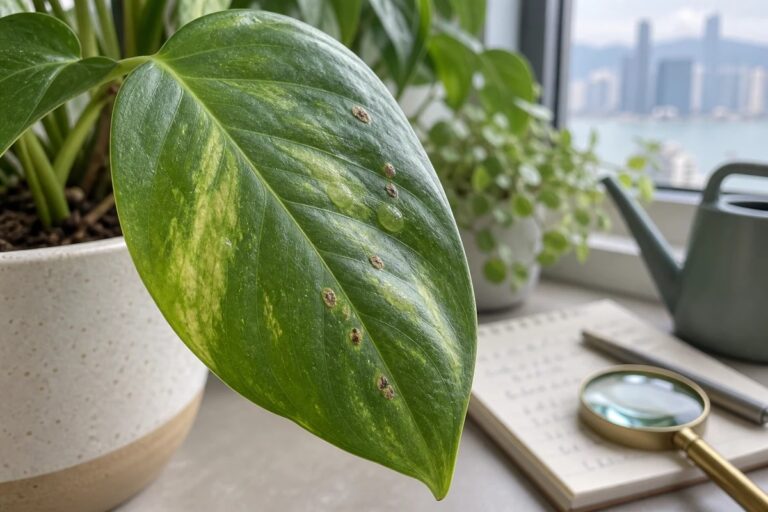
| Brown spots or soft patches on leaves | Fungal infection / excess moisture | Remove affected leaves, improve airflow, reduce misting directly on foliage |
How to explain to customers
'Cebu Blue' is a fantastic beginner-friendly plant — the metallic blue sheen alone instantly upgrades any room it sits in. Keep it out of direct sun; bright indirect light is all it needs to look its best. For watering, less is more — let it dry out between waterings for safety. If you give it a moss pole to climb, the mature leaves will eventually split into that dramatic fenestrated shape, which looks incredible. It's toxic to pets and children, so keep it out of reach, and wash your hands after handling.
Fun facts
- The origin of the "blue": the "Cebu blue" colour isn't actually a blue pigment at all — it's an optical effect from the leaf's waxy cuticle and epidermal cell structure, similar to the structural colour seen on blue butterfly wings. That's why the tone shifts between silvery-blue, grey-blue, and even slightly green depending on the angle.
- A dramatic transformation: many buyers are surprised to see heart-shaped juvenile leaves and assume they've bought the wrong plant — but the dramatic difference between juvenile and mature leaves is a signature trait of the genus Epipremnum. It needs to be given something to climb before it produces the split, mature form, a process that can take several years but is well worth the wait.
- A Philippine horticultural treasure: 'Cebu Blue' is considered one of the most ornamentally valuable cultivars of Epipremnum pinnatum, long in high demand in Southeast Asian horticultural markets. It's only become more affordable in recent years thanks to mature tissue-culture propagation techniques.
- A natural climber: in its native habitat, this plant climbs into the forest canopy, with leaves growing larger and more deeply split the higher it goes. Giving it a moss pole indoors to mimic that upward climb is the best way to see its most dramatic mature form.
Keywords
Cebu Blue pothos, Epipremnum pinnatum, blue foliage plant, arum family, climbing plant, aerial roots, moss pole, beginner plant, low-maintenance, indoor foliage, metallic sheen, fenestrated leaves, toxic plant, calcium oxalate, Hong Kong indoor plants, shade-tolerant, vining plant, Philippine Blue
Plantjai · Causeway Bay collector indoor plants · WhatsApp +852 66807550
Plantjai shop · In stock online
Epipremnum pinnatum 'Cebu Blue'
Epipremnum pinnatum 'Cebu Blue'
HK$298.00
Hong Kong delivery · Causeway Bay pickup
For Hong Kong homes and offices. Stock and pricing follow the product page.
IN STORE NOW
Plants for this guide
Related plants in stock now — live prices, delivery or Causeway Bay pickup.
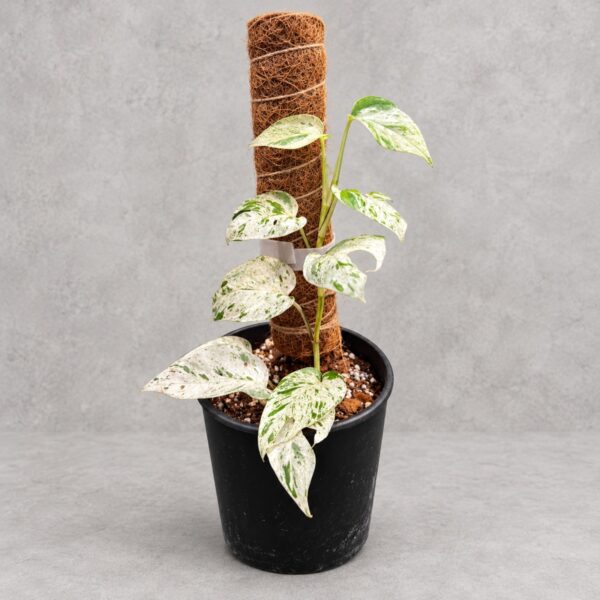
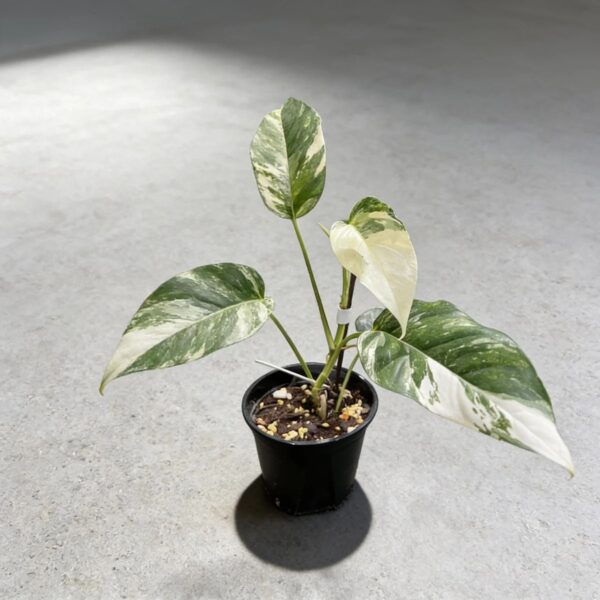
Epipremnum pinnatum variegated
Original price was: HK$2,680.00.HK$480.00Current price is: HK$480.00.
In stock · store pickup
View plantEpipremnum pinnatum 'Cebu Blue'
Epipremnum pinnatum 'Cebu Blue'
HK$298.00
In stock · store pickup
View plant
FREE PLANT ADVICE
Send us a photo before you change anything
WhatsApp a photo of the plant and your window light. Our Causeway Bay team will suggest care steps or plants that suit your space.
STORE · CAUSEWAY BAY
4/F, 39 Yiu Wa Street, Causeway Bay
Daily 12:30–8:00pm · ~3 min walk from Times Square
Map & directionsPlant Care