
How to Care for Elatostema Salvinioides in Hong Kong | Plantjai

Hong Kong care guide for Elatostema Salvinioides.
A tiny emerald jewel that clings to rainforest rock faces — the understated aristocrat of the terrarium world.
Origin & characteristics
Elatostema salvinioides is a rare, miniature plant in the nettle family (Urticaceae), native to the tropical rainforests of Yunnan, China and Southeast Asia. It's a lithophyte in nature, growing on limestone surfaces and in damp rock crevices. The plant is very small, with densely clustered leaves that have a thick, glossy texture and a naturally trailing growth habit. Despite belonging to the nettle family, it has no stinging hairs, so it's completely safe to touch. It produces small white flowers along the stem, adding a delicate touch. Because of its specialised native habitat, it needs relatively high humidity and attentive care.
Light
- Prefers low to indirect light, mimicking the dim conditions of a rainforest floor
- Avoid direct sun entirely — its thin, delicate leaves scorch very easily
- Indoors, keep it well back from windows, or supplement with a grow light
- Terrarium growing is ideal, since glass naturally filters light appropriately
Watering
- Keep the soil consistently lightly moist — never let it dry out completely
- At the same time, ensure good drainage to avoid waterlogged roots
- Mist occasionally to boost humidity, but make sure there's airflow
- Prolonged standing water on the leaves invites fungal issues, so ventilate after misting
- Reduce watering in winter, while still keeping the soil lightly moist
Soil & pot
- Use a well-draining, slightly alkaline substrate to mimic its limestone habitat
- Suggested recipe: peat moss : perlite : fine orchid bark : a touch of limestone powder, roughly 4:2:2:1
- Can be grown on bark or rock slabs to replicate its natural lithophytic habit
- A shallow dish or terrarium setup suits its shallow root system best
- A drainage layer of light expanded clay or pumice at the bottom of the container helps
Temperature & humidity
- Ideal range: 18–27°C, with stable temperatures preferred
- Avoid cold drafts and sudden temperature swings; growth suffers below 15°C
- Humidity must stay above 60%, ideally 80%
- A closed terrarium or bioactive vivarium best satisfies its humidity needs
- In open air, pair with a humidifier or frequent misting
Common problems
| Issue | Likely cause | What to do |
|---|---|---|
| Yellowing, dropping leaves | Low humidity, overwatering causing rot, or unstable temperature | Increase humidity and check for root rot |
| Stalled growth | Light too strong or too weak, insufficient humidity, or lack of nutrients | Adjust conditions and check feeding |
| Brown spots on leaves | Fungal infection, usually from standing water and poor airflow | Improve ventilation and avoid wetting leaves |
| Soft, thin-feeling leaves | Overwatering or underwatering | Check soil moisture and adjust |
| Wilting, dying plant | Root rot has set in | Inspect and trim rotten roots, then replant |
| Difficult propagation | Cuttings need high humidity and warmth to root | Propagate during the growing season for best results |
How to explain to customers
"This is a more delicate, rare species — it does best in a terrarium where humidity stays high. Never let it sit in direct sun; it's used to dim rainforest conditions. It's small, but the leaf texture is really something — it makes an elegant tabletop accent."
Fun facts
Elatostema salvinioides is one of the few foliage plants that actually appreciates alkaline conditions — its native habitat is limestone rock, so adding a touch of limestone powder to the growing medium genuinely benefits it. It belongs to the nettle family but has no sting, and its miniature size makes it a favourite collectible among terrarium enthusiasts.
Keywords
Elatostema, rare plant, terrarium, lithophyte, high humidity, low light, miniature plant, rainforest plant, vivarium
參考資料(想知來源可展開)
References
- Begin With Plants. "Elatostema salvinioides for Sale." https://beginwithplants.com/products/elatostema-salvinioides
- Foliages.in. "Elatostema Salvinioides." https://foliages.in/products/elatostema-salvinioides
- Jiffy Plants. "Buy 1 Elatostema Salvinioides." https://jiffyplants.com/elatostema-salvinioides/
- PictureThis. "How to Grow and Care for Elatostema." https://www.picturethisai.com/care/Elatostema.html
In-depth care guide
Introduction
Elatostema salvinioides is a perennial evergreen herb in the nettle family (Urticaceae), genus Elatostema, native to subtropical and tropical Asia, including Yunnan (China), Laos, Myanmar, Thailand, and Vietnam. Its species name, "salvinioides," references the resemblance between its leaves and those of the aquatic fern Salvinia — small, round, overlapping leaves forming a carpet of green, which is also why its English name is sometimes rendered as "Salvin's-leaved Elatostema."
The genus Elatostema contains over 300 species, making it the second-largest genus in the nettle family. Despite the family resemblance, this plant lacks the stinging hairs of true nettles, so it can be handled without worry.
In the wild, it grows in shaded, damp ravines, streambanks, and on rock surfaces, behaving as both a lithophyte (rock-dweller) and, at times, an epiphyte. These native habits make it an excellent candidate for terrariums and closed bioactive enclosures, which can replicate the high humidity and warmth of its home environment.
The leaves are small, rounded, glossy green, and thick in texture. It spreads horizontally, with stems creeping along the ground or over supports, gradually forming a lush green groundcover — an effect that looks especially good in a terrarium. Some specimens even develop a trailing, cascading habit, making them well suited to wall-mounted displays or elevated positions where they can spill downward.
Light needs
Elatostema salvinioides evolved in the shaded, humid understory and rock crevices of the forest floor, so it doesn't need much light. The ideal is indirect light or partial shade — for example, near the edge of a terrarium, or by a north-facing window filtered through a sheer curtain.
Never place it in direct sun — strong sunlight will scorch the leaves, producing yellow or white spots, and in severe cases the leaves will dry out and drop. If you notice the colour fading or growth thinning out, that's often a sign of excess light.
If growing in a terrarium, position it somewhere bright but out of direct sun — for example, more than a metre from a window. Glass enclosures have a slight light-concentrating effect, so even in a dimmer position, plants inside can still receive adequate light.
Under artificial light (such as an LED grow light), 8–12 hours a day is more than enough. Remember, this plant evolved in shade, so it's better to err on the side of too little light than too much.
Temperature requirements
Elatostema salvinioides prefers a warm, stable environment, with an ideal growing range of 20–28°C. Within this range, growth is fastest and healthiest.
It can tolerate temperatures down to around 18°C, though growth slows below that, potentially entering a semi-dormant state. It should never be allowed to drop below 15°C, or cold damage can occur.
This plant strongly dislikes sudden temperature swings and cold drafts. Keep it away from AC vents, frequently opened doors and windows, and any spot prone to sudden temperature drops. If grown in a terrarium, the enclosure itself provides a more stable microclimate, which is ideal.
In Hong Kong, spring, summer, and autumn are generally all suitable for growing this plant. In winter, if the heater is on, watch for a drop in humidity and provide extra moisture as needed.
Watering method
Elatostema salvinioides likes consistently moist soil, but must never sit in standing water. The right approach is to keep the soil lightly damp — like a well-wrung-out towel, with moisture present but nothing dripping.
Generally, water once or twice a week, depending on ambient humidity and how quickly the soil dries. In summer, heat speeds up evaporation and watering may need to be more frequent; in winter, less so.
A simple test is to lightly touch the soil surface with a finger — water if it feels dry. But if it still feels damp, hold off, or you risk root rot.
If grown in a terrarium, the enclosed environment reduces water loss, so watering frequency should be correspondingly lower. Check the inside of the glass for condensation as a guide — if the walls are consistently covered in droplets, humidity is already high and you can cut back on watering; if the glass is dry, it may be time to water or mist.
Water quality: this plant has no special requirements — tap water, filtered water, or rainwater are all fine. If your tap water has a strong chlorine smell, let it sit overnight first. Use room-temperature water in winter, never ice-cold.
Humidity management
Elatostema salvinioides has a strong preference for high humidity, ideally kept above 60%. This reflects its native habitat — shaded, damp ravines and streambanks where the air is perpetually laden with moisture.
If humidity is inadequate, leaves start to curl and dry out, with edges potentially browning. Prolonged exposure to dry air will gradually weaken the plant and can eventually lead to its death.
Ways to maintain high humidity:
- Terrarium growing: the most reliable method. A closed or semi-closed terrarium can hold humidity at 70–90%, fully replicating its native conditions.
- Regular misting: mist the foliage lightly with lukewarm water daily or every other day for a temporary humidity boost.
- Humidifier: placing a small humidifier nearby maintains consistently high air humidity over time.
- Pebble tray: set the pot on a tray of water and pebbles, using evaporation to raise humidity.
- Grouping plants: placing several high-humidity plants together increases humidity around each through their combined transpiration.
Soil and substrate
Elatostema salvinioides needs a well-draining, organically rich substrate. Since it naturally grows on rock and bark, the medium should be loose and airy, mirroring its native growing conditions.
A suitable recipe:
- Peat moss or coco coir, 3 parts
- Perlite, 2 parts
- Fine orchid bark, 2 parts
- Sphagnum moss, 1 part
- A small amount of crushed limestone or limestone grit (to adjust pH)
In terms of pH, this plant prefers slightly acidic to neutral soil, around pH 6.0–7.0. Since it's a lithophyte, its native environment often has some limestone content, so adding a little crushed limestone helps replicate that.
If grown in a terrarium, a mix of sphagnum moss, bark, and perlite works well — this substrate is light and airy, well suited to a terrarium environment.
Repotting doesn't need to happen often — roughly every one to two years, or once the roots have filled the container. The best time is at the start of spring's growing season.
Feeding
Elatostema salvinioides doesn't need much fertiliser. During the growing season (spring to summer), feed every two to four weeks with a diluted, balanced liquid fertiliser (e.g. NPK 10-10-10) at half strength — if the label recommends 10 ml per litre, use only 5 ml.
Over-fertilising can "burn" the roots, causing leaf edges to yellow and brown. If in doubt, err on the side of diluting more, since this plant naturally grows in nutrient-poor rocky habitats, and rich fertiliser can actually be a burden for it.
Reduce or stop feeding entirely in autumn and winter. At this point temperatures are lower and growth has slowed, so the plant doesn't need extra nutrients — continuing to feed only causes salt buildup that damages the roots.
If using slow-release fertiliser, apply a few granules to the soil surface every three months — this is the most foolproof method, avoiding the risk of accidentally over-feeding.
Propagation
Elatostema salvinioides can be propagated by stem cuttings or leaf cuttings, though because it's sensitive to environmental change, success rates aren't always high — patience and care are needed.
Stem cuttings:
- Choose a healthy stem section, about 5–8 cm long, with several leaves attached.
- Cut with sterilised scissors.
- Insert the cutting into moist sphagnum moss or perlite, about 2–3 cm deep.
- Place it somewhere warm (22–25°C), humid (70%+), and bright but not in direct sun.
- Keep the medium moist; rooting typically begins after 2–4 weeks.
- Once new roots reach about 2–3 cm, transplant into a small pot.
Division:
Once the plant has grown large enough, side shoots can be carefully separated during repotting. Each division should retain a reasonable amount of roots and leaves; replant immediately and keep moist and humid while it settles into its new home.
Natural propagation in a terrarium:
In an ideal terrarium environment, Elatostema salvinioides sometimes roots naturally from its nodes and spreads on its own. Given the right conditions, it will gradually fill the enclosure, forming a lush green groundcover.
Pruning and maintenance
This plant doesn't need much pruning, but any yellowed or diseased leaves can be trimmed off with clean scissors to keep it tidy. Pruning also encourages new shoots, making the plant fuller.
If growth becomes too dense, thin it out to maintain your preferred shape. Healthy cuttings from pruning can be used for propagation.
Check the undersides of leaves and stems regularly for pests or disease signs. While this plant is generally less prone to pests, prolonged warm, humid conditions can still occasionally cause issues.
Detailed common problems
Yellowing leaves: possible causes include overwatering (most common), too much light, or lack of nutrients. Check soil moisture first — if it's persistently soggy, that's a sign of root rot, requiring reduced watering and a root health check.
Curling or drying leaves: almost always a sign of insufficient humidity. This plant is very sensitive to dry air — once humidity drops below 50%, the leaves start to protest. Raise humidity immediately with misting, a humidifier, or moving it into a terrarium.
Stalled growth: if there's been no new growth for a long time, it might be due to low temperature (below 18°C), insufficient light, or a need for feeding. Check environmental conditions and eliminate possibilities one by one.
Root rot: caused by overwatering or poor drainage. Symptoms include unexplained yellowing and a soft base. Once noticed, remove the plant from the soil immediately, trim away all rotten roots (brown, mushy), replant in fresh soil, and strictly control watering afterward.
Fungal infection: in overly humid, poorly ventilated conditions, fungal issues like leaf spot can occur. Prevent by maintaining good airflow and avoiding overly wet soil. If black or brown spots appear, trim affected leaves, reduce watering, and improve ventilation.
Terrarium growing tips
Elatostema salvinioides is a star species for terrarium growing. Some tips:
- Choose the right enclosure: semi-closed or fully closed terrariums work best for maintaining high humidity. Aim for at least 20 cm of depth so the plant has room to spread.
- Substrate layering: lay a 2–3 cm drainage layer of gravel or expanded clay at the bottom, topped with a mix of sphagnum moss and perlite.
- Placement: keep it somewhere bright but out of direct sun, such as 1–2 metres from a window.
- Water management: humidity inside a terrarium is high, so watering should be less frequent than for open-air growing. Check the glass walls for condensation as a humidity guide.
- Companion plants: pair it with other high-humidity species like mosses, ferns, or miniature orchids to build a rich, miniature rainforest scene.
Toxicity
Despite belonging to the nettle family, Elatostema salvinioides doesn't sting the way true nettles do, and it's non-toxic to both humans and pets — a genuinely safe indoor plant. You can grow it without worrying about children or pets nibbling on it.
That said, as a general safety measure, it's still worth teaching children not to eat plants casually, since individual sensitivities vary and reactions to any plant material can differ from person to person.
References
- Begin With Plants. "Elatostema salvinioides for Sale." https://beginwithplants.com/products/elatostema-salvinioides
- Foliages.in. "Elatostema Salvinioides." https://foliages.in/products/elatostema-salvinioides
- Jiffy Plants. "Buy 1 Elatostema Salvinioides." https://jiffyplants.com/elatostema-salvinioides/
- PictureThis. "How to Grow and Care for Elatostema." https://www.picturethisai.com/care/Elatostema.html
Plantjai · Causeway Bay collector indoor plants · WhatsApp +852 66807550
For Hong Kong homes and offices. Stock and pricing follow the product page.
IN STORE NOW
Plants for this guide
Related plants in stock now — live prices, delivery or Causeway Bay pickup.
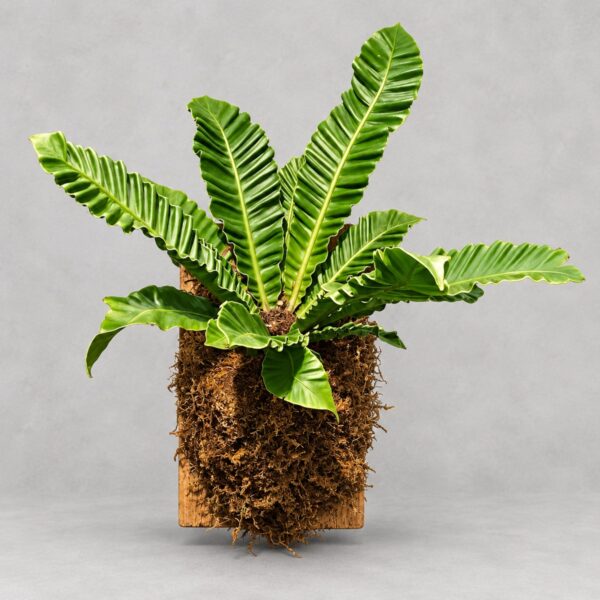
Asplenium nidus var plicatum
Original price was: HK$428.00.HK$180.00Current price is: HK$180.00.
In stock · store pickup
View plant
FREE PLANT ADVICE
Send us a photo before you change anything
WhatsApp a photo of the plant and your window light. Our Causeway Bay team will suggest care steps or plants that suit your space.
STORE · CAUSEWAY BAY
4/F, 39 Yiu Wa Street, Causeway Bay
Daily 12:30–8:00pm · ~3 min walk from Times Square
Map & directionsPlant Care