
How to Care for Colocasia Mojito in Hong Kong | Plantjai

Plantjai 植仔 · Care Encyclopedia
Colocasia Mojito
Hong Kong care guide — useful before you buy and after it arrives.
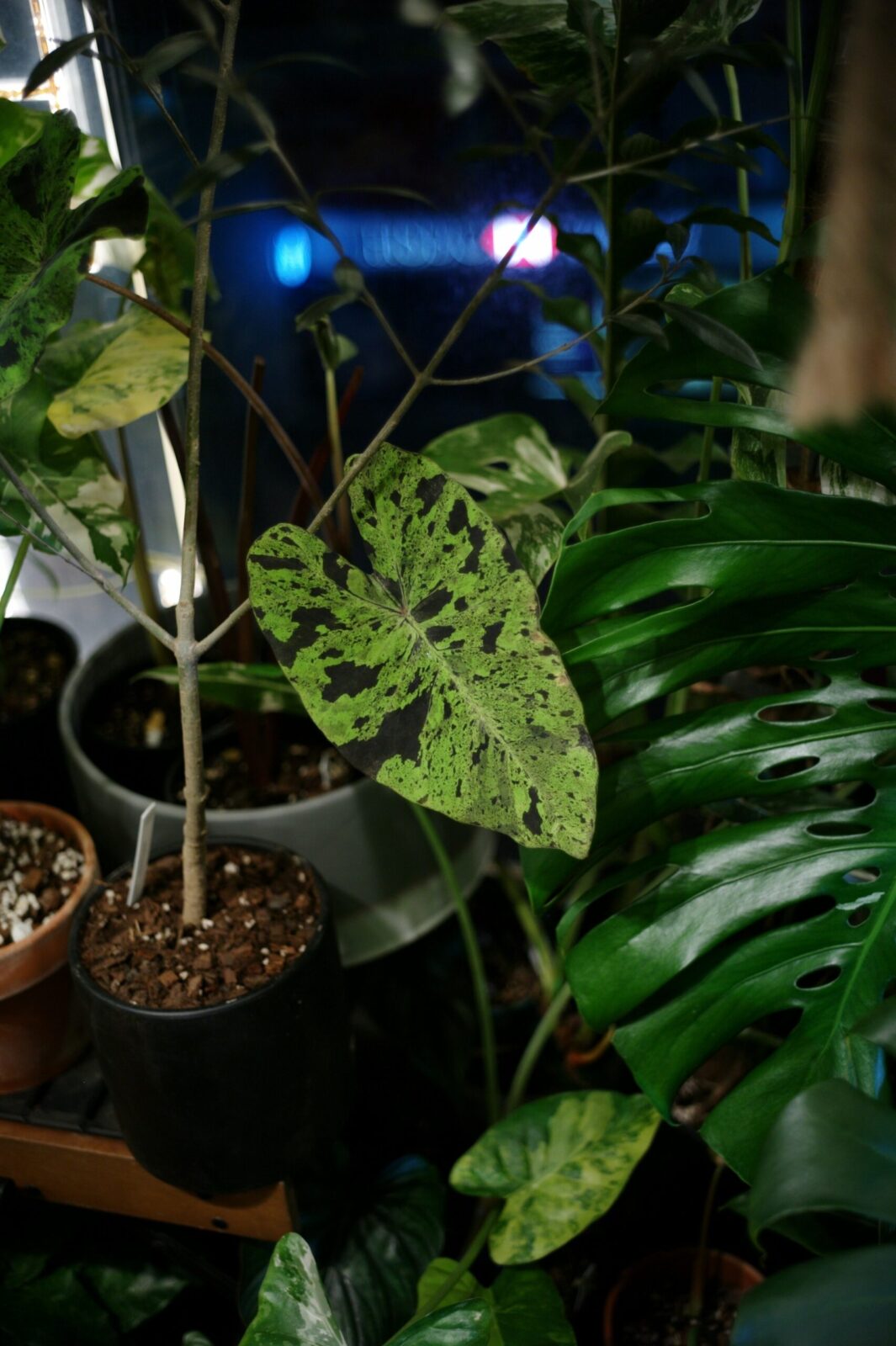
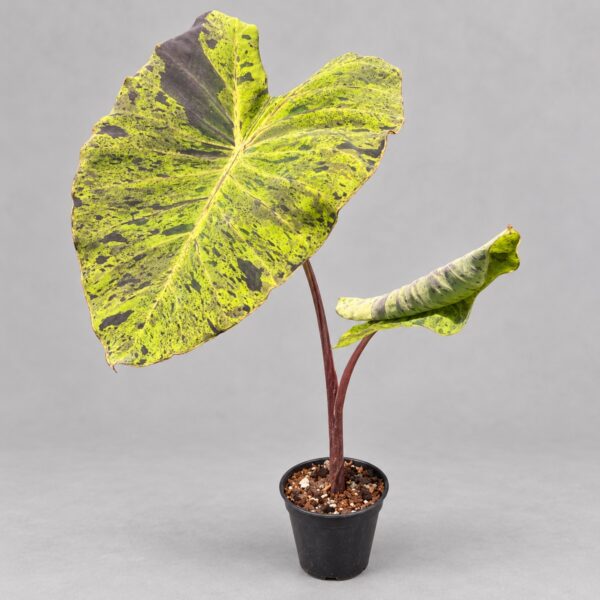
Shop this plantEvery leaf carries its own unique purple-green splatter pattern, like a swirling, ever-moving cocktail.
Origin & characteristics
Colocasia 'Mojito' is an ornamental cultivar in the family Araceae, genus Colocasia, native to tropical Southeast Asia. The heart-shaped leaves have a bright green base speckled with irregular deep-purple markings, and every leaf's pattern is unique. The petiole shifts from pale green to deep purple-red as it matures. Mature leaves can grow quite large, offering strong ornamental value under the right conditions.
⚠️ Toxicity note: the whole plant contains calcium oxalate crystals; the sap can cause skin allergic reactions, and ingestion irritates the mouth and digestive tract. Wear gloves when handling, and keep away from pets and children.
Light
- Enjoys bright diffused light and can tolerate gentle direct light in the early morning or evening
- Tolerates partial shade, but insufficient light causes slow growth and dull leaf colour
- Avoid harsh midday direct sun, which easily scorches the leaves
- In summer, place near an east- or north-facing window
Watering
- Keep the soil lightly moist, watering once the top 2–3 cm dries out when checked with a finger
- Water needs are higher during the peak summer growing season — check roughly every 2–3 days
- Reduce watering frequency in winter to about once a week, or as dictated by soil dryness
- The pot base must never be waterlogged, as this easily leads to root rot
Soil & pot
- Use a well-draining, breathable peat-based mix, adding perlite, coco coir, and orchid bark to boost drainage
- Peat mix : perlite : orchid bark at roughly a 5:2:3 ratio
- Choose a pot with drainage holes; plastic or ceramic both work
- Given its fast growth, check the root system each spring and repot as needed
Temperature & humidity
- Suitable temperature: 18–28°C; growth stalls below 15°C
- Below 10°C, move indoors — frost will cause the plant to wither
- 50% or higher humidity is ideal; typical indoor humidity is generally acceptable
- If the air is too dry, place a moist water tray nearby or mist occasionally to boost humidity
- Avoid placing near AC vents or heaters
Common problems
- Yellowing leaves: possibly over- or under-watering — check soil moisture and adjust watering frequency
- Browning leaf tips: overly dry air or hard water — switch to filtered water and increase humidity
- Small leaves: insufficient light or nutrients — move to a brighter position and fertilise appropriately
- Soft, rotting stems: severe overwatering or poor drainage — check the roots, trim away rot, and repot in fresh soil
- Pests: watch for spider mites and scale insects — treat with neem oil or soapy water spray when spotted
How to explain to customers
"Every leaf on this Colocasia 'Mojito' has a different pattern, which makes it really distinctive at home. Remember to keep the soil lightly moist — it's quite thirsty — but the pot base should never be waterlogged, and it'll stay beautiful!"
Fun facts
The main difference between Alocasia and Colocasia is leaf orientation: Alocasia leaves point upward, while Colocasia leaves hang downward. Mojito's name comes from its purple-green leaf pattern, which genuinely resembles a Mojito cocktail!
Keywords
Colocasia, foliage plant, tropical plant, purple patterning, shade-tolerant, high humidity, fast-growing, toxic plant, indoor plant, Colocasia
In-depth care guide
Introduction
Colocasia 'Mojito' (Colocasia esculenta 'Mojito') is an ornamental cultivar in the family Araceae, genus Colocasia, a variant of common taro. What makes this cultivar so eye-catching is its leaves, marked with distinctive dark green and creamy-white patterning, with the overall pattern resembling a mixed Mojito cocktail — hence its refreshing, summery name. Native to Southeast Asia and the Indian subcontinent, it's a tropical perennial herb. Its leaves are large and broad, heart-shaped with vibrant, varied patterning, making it an instant focal point wherever it's displayed.
Like other Colocasia species, Mojito grows from an underground corm. Under the right conditions, it can grow several feet tall, with leaf diameters exceeding a foot — genuinely impressive in scale. It's worth noting that while common taro is a widely eaten staple, Mojito, as an ornamental cultivar, contains calcium oxalate crystals throughout — including the leaves, stem, and corm — and absolutely must not be eaten uncooked, or it will cause oral burning, swelling, and gastrointestinal discomfort.
Light requirements
Colocasia 'Mojito' enjoys bright diffused light, but cannot tolerate strong direct sunlight, especially the harsh midday sun, which easily scorches the leaves and causes the patterned sections to yellow or develop scorched edges. The ideal spot is a south- or west-facing window filtered through a sheer curtain, or a bright indoor location.
If you have a balcony or garden, Mojito can be moved outdoors in summer, but choose a shaded spot, such as beneath a large tree or under an eave. It grows particularly well and produces larger leaves in a partially shaded outdoor environment. That said, remember to acclimate it gradually before moving it outdoors — don't move it directly into full sun, or the leaves will scorch.
If light is too low, Mojito's growth slows, leaves become smaller and duller in colour, and the patterning becomes less distinct. If you notice it hasn't produced new leaves for a long time, or new leaves are getting progressively smaller, this may be a sign of insufficient light.
Temperature requirements
As a tropical plant, Colocasia 'Mojito' loves warm conditions, with an optimal growing temperature of 20–30°C. Within this range, it grows fastest, with the biggest and most beautiful leaves. Once temperatures drop below 10°C, it starts to struggle, and if this persists for several days, the plant will suffer damage, showing yellowing leaves and stalled growth.
In Hong Kong's climate, spring and summer are generally suitable for Mojito's growth. But if winter temperatures drop below 10°C, bring it indoors or take protective insulation measures. If grown outdoors in the ground, dig up the corm in autumn before winter and store it in a dry, well-ventilated place, replanting the following spring.
For indoor growing, avoid placing Mojito directly in front of an AC vent, and also avoid positions near frequently opened doors and windows, since it dislikes sudden temperature swings and direct cold drafts.
Watering method
Colocasia 'Mojito' loves a humid environment, and during the growing season (spring and summer), the soil should be kept consistently moist, though absolutely never waterlogged. A simple way to judge this is to insert a finger about 2–3 cm into the soil, and water thoroughly once it feels dry, until water flows from the pot's base.
In hot summer weather, water evaporates quickly, and you may need to water two to three times a week. In winter, the plant enters dormancy and growth slows, so reduce watering frequency, letting about half the soil dry before watering again, to avoid the corm rotting from prolonged wetness.
Mojito isn't particularly fussy about water quality, and ordinary tap water is generally fine. But if your tap water has a strong chlorine smell, it's best to let it stand in a jug overnight before use. In winter, use lukewarm water rather than cold, as cold water can shock the root system and affect growth.
If the leaves suddenly droop for no apparent reason, this is often a sign of thirst — prompt watering usually restores them. Conversely, if the leaves yellow while the soil stays consistently wet, this very likely indicates overwatering has caused root rot.
Soil and repotting
Colocasia 'Mojito' needs well-draining, organically rich soil. A general quality potting soil can be used, with added perlite and leaf mould to boost aeration and moisture retention. A good mix is 6 parts quality potting soil, 3 parts perlite, and 1 part leaf mould. Soil pH should ideally be maintained between 5.5 and 6.5.
Repotting is best done in spring, when warming temperatures make the plant more active in growth, allowing for faster recovery. Generally speaking, repotting once every one to two years is fine, depending on growth speed. When choosing a new pot, size up by only one or two increments — don't jump straight to an overly large pot, since more soil volume increases the risk of waterlogging and root rot.
Take care to protect the corm and root system when repotting. If you find offshoot corms growing at the base, these can be separated at the same time for propagation. After repotting, water thoroughly and place in a shaded, well-ventilated spot for a few days to let it adjust to the new environment.
Fertilising recommendations
Colocasia 'Mojito' grows quickly and needs ample nutrition to maintain its beautiful, large leaves. During the growing season (roughly March to October), apply liquid fertiliser once every two to four weeks, using a general balanced indoor plant formula (such as NPK 10-10-10 or 20-20-20), diluted according to package instructions — err on the weaker side rather than too concentrated.
If you want even bigger, more beautiful leaves, consider a slightly higher-nitrogen fertiliser, since nitrogen supports leaf growth. Additionally, applying an organic fertiliser (such as fish emulsion or seaweed extract) once a month supplements trace elements.
Stop fertilising during winter dormancy, since the plant doesn't need extra nutrients at this time, and fertilising anyway risks nutrient burn, damaging the root system.
Propagation methods
The most common propagation method for Colocasia 'Mojito' is corm division, ideally done during spring repotting:
- Remove the plant from its pot and gently brush away excess soil.
- Locate offshoot corms grown at the side of the main corm — each should have at least one growth point (a pinkish bud eye).
- Use a sterilised knife (wiped with 70% alcohol) to cut away the offshoot corm.
- Dust the cut surface with a little sulphur powder or cinnamon powder to prevent fungal infection.
- Plant the offshoot corm in fresh potting soil, about 5–8 cm deep, water thoroughly, and place in a warm, bright spot.
Beyond corm division, experienced growers can also try tissue culture for mass propagation, though this method requires sterile conditions and professional equipment, making it less practical for typical home gardeners.
Dormancy period management
Colocasia 'Mojito' enters dormancy as autumn and winter temperatures drop, with growth stalling and some older leaves yellowing. This is a normal phenomenon, and there's no need to worry.
If growing indoors, move the plant to a cooler (but still above 10°C) spot during dormancy, and reduce watering, letting about half the soil dry before watering again. If growing in the ground outdoors, dig up the corm in autumn, trim the foliage (leaving about 15 cm of stem), and store it in a dry, well-ventilated place over winter, replanting the following spring.
After dormancy ends, roughly late February to early March, move Mojito back to a warm, bright windowsill and gradually resume normal watering — it will slowly begin growing again.
Common pests and diseases
Corm rot
The most common issue, mainly caused by poor soil drainage or overwatering, leaving the corm sitting in wet soil for extended periods. Symptoms include sudden yellowing and a generally listless plant. If you dig it up to check, the corm and roots will appear soft, blackened, and foul-smelling. Prevention involves ensuring good drainage in the potting soil, with drainage holes at the base and no standing water after watering.
Aphids
Aphids cluster on new leaves and tender shoots, feeding on plant sap and causing leaf deformation and poor growth. Severe infestations can lead to sooty mould. Spray with soapy water, or wipe directly with an alcohol-dipped cotton swab.
Spider mites
These appear easily in dry conditions, spinning webs on the leaf undersides and feeding on the sap, causing small yellow spots on the leaves. Once discovered, increase air humidity, rinse the leaf undersides with a water spray, or apply insecticidal soap.
Dasheen Mosaic Potyvirus (DsMV)
A common viral disease in Colocasia, spread by aphids, showing symptoms of yellow-green mosaic patterning on the leaves. There's currently no cure, so prevention through aphid control and selecting healthy plants is key.
Safety notice
All parts of Colocasia 'Mojito' contain calcium oxalate crystals, toxic to both humans and pets. Eating raw leaves, stems, or corms immediately causes oral burning, swelling, drooling, vomiting, and difficulty swallowing. Contact with the sap may also cause skin allergic reactions.
Wear gloves when handling the plant, and wash your hands thoroughly with soap after pruning or repotting. If you have young children or pets at home, keep Colocasia 'Mojito' well out of their reach.
參考資料(想知來源可展開)
References
- Big Plant Nursery. "Colocasia esculenta Ornamental Taro – Growing Guide." https://www.bigplantnursery.co.uk/growing-guides/colocasia-esculenta-ornamental-taro/
- Wikipedia. "Colocasia." https://en.wikipedia.org/wiki/Colocasia
- Alibaba Life Tips. "How to Grow and Care for a Taro Plant: Complete Guide." https://lifetips.alibaba.com/plant-care/taro-plant
- Academic Journals. "Micro-propagation of Colocasia esculenta (cv. Bolosso I) from corm and sprout tip explants." Journal of Applied Biosciences, 2018. https://academicjournals.org/journal/JABSD/article-full-text/AA1F5BC57470
- Gardeners' World. "How to grow colocasia (taro or elephant ears)." https://www.gardenersworld.com/house-plants/how-to-grow-colocasia-taro-or-elephant-ears/
- Plant Delights Nursery. "Colocasia for Sale | Elephant Ear Plants for Sale." https://www.plantdelights.com/collections/colocasia-elephant-ear-bulb
Plantjai shop · In stock online
Colocasia 'Mojito'
Colocasia 'Mojito'
Original price was: HK$880.00.HK$280.00Current price is: HK$280.00.
Hong Kong delivery · Causeway Bay pickup
For Hong Kong homes and offices. Stock and pricing follow the product page.
IN STORE NOW
Plants for this guide
Related plants in stock now — live prices, delivery or Causeway Bay pickup.
Colocasia 'Mojito'
Colocasia 'Mojito'
Original price was: HK$880.00.HK$280.00Current price is: HK$280.00.
In stock · store pickup
View plant
FREE PLANT ADVICE
Send us a photo before you change anything
WhatsApp a photo of the plant and your window light. Our Causeway Bay team will suggest care steps or plants that suit your space.
STORE · CAUSEWAY BAY
4/F, 39 Yiu Wa Street, Causeway Bay
Daily 12:30–8:00pm · ~3 min walk from Times Square
Map & directionsPlant Care